The Interior Medicine newsletter shares interesting facts about materials, non-toxic concepts, brand myth debunking, product testing updates, and site news, sent a few times a month. It's written personally by Meg, and never spammy or sponsored.
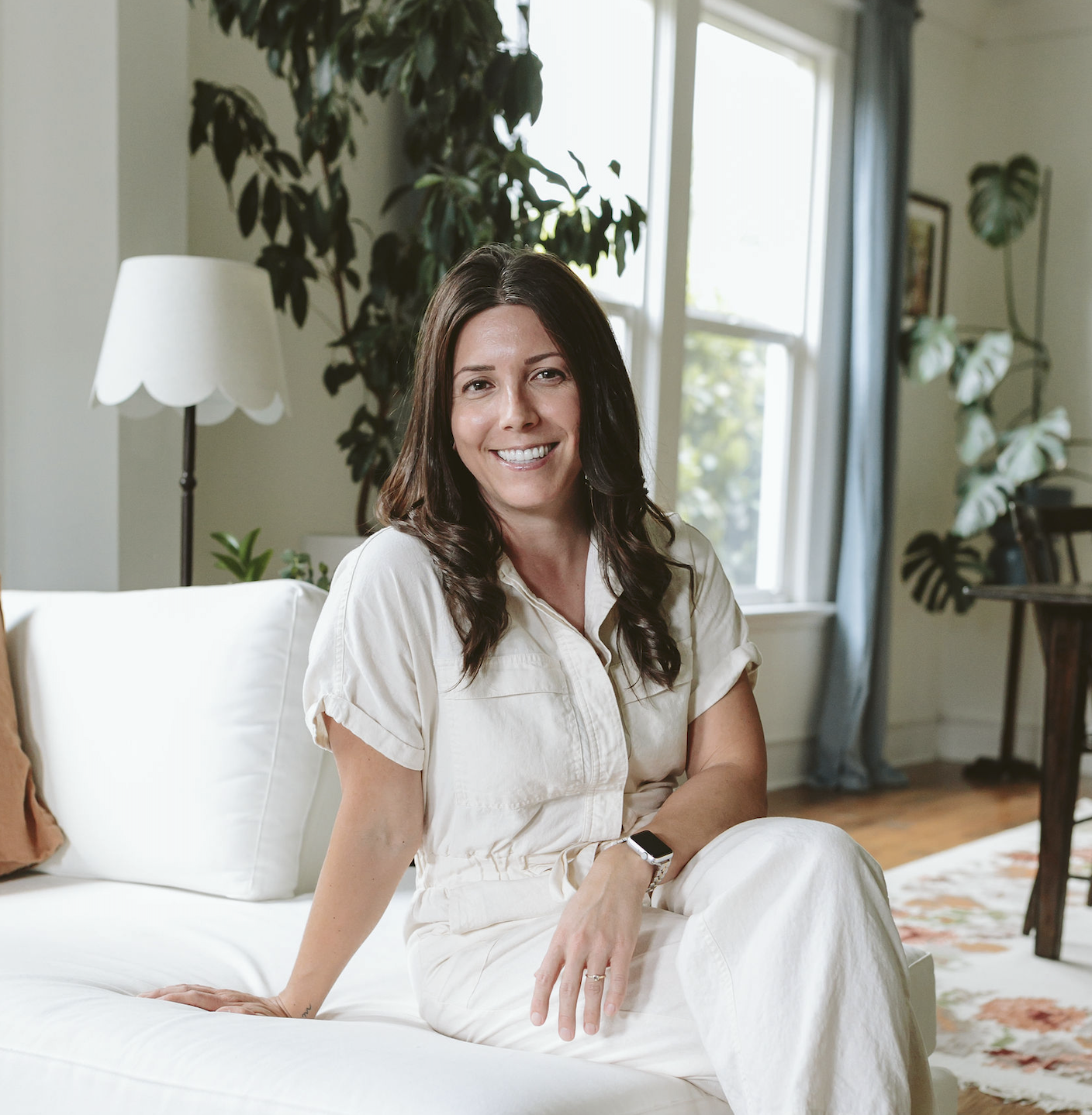
By Dr. Meg Christensen | Physician-founder of Interior Medicine, a non-toxic home resource built on her background in medicine, biochemistry, epidemiology, and clinical research.
Newsletter Block
This newsletter signup form needs a storage option. Edit the block and enter a storage location via the Storage tab.
A few examples of recent newsletters are below, if you’re curious:
Interior Medicine
Newsletter | August 31, 2026
Happy end of Summer! Can you detect little hints of Fall where you live?
I just started noticing it here: I went camping at Mt. Rainier National Park, and saw two bears while hiking! Apparently there were a lot of sightings this week, since they know summer is ending, and are busy finding food.
Whenever I camp, I wear washable wool, since it stays dry and warm and never stinks. I am always interested in how natural fibers work at a microscopic level, and washable wool is really interesting. So in the spirit of Fall, as you might start pulling out your wool blankets, here's a little more about what washable wool is:
Why does regular wool shrink in the wash?
Wool isn't naturally machine-washable because its fibers have tiny scales on them that interlock, get stuck, and clump together when wet and agitated. This is why wool blankets and sweaters shrink or turn into small, solid felted products in the washing machine.
How do you make wool washable?
To prevent wool from clumping and shrinking, the scales need to be removed with enzymes or chemicals, then coated in polymers so they don't interact and get locked together. This two step process is often called "Superwash." It always requires these two steps, but there are dozens of variations on which ingredients are used. Some are safer than others. Most washable wool is made by removing the scales with chlorine, then coating the fibers in a resin called Hercosett.
What is the safest kind of washable wool?
The safest kind of Superwash wool is one that has its scales removed with enzymes, plasma, radiation, or ozone instead of chlorine. Then either no treatment is applied afterward, or a plant-based finish is. Look for GOTS certification, which ensures that the plant-based finish itself is safe, and that the fibers remain organic throughout processing. Or, OEKO TEX is a good second-best option, especially if the company discloses exactly what kind of Superwash they use.
I wrote a little more about it on the wool section of my Fabric Guide. And, I have one washable wool mattress protector here, though I'm keeping my eye out for others with full disclosure, as well as blankets and comforters. Wool that isn't washable is also a more straightforwardly healthy choice: I air out my wool duvet insert in the backyard, letting UV rays and wind clean it a few times a year.

One of my 1,000 photos of wildflowers on Mt. Rainier
That's it for wool facts today. Let me know if you have other topics you'd be interested in me covering for a newsletter issue.
Thank you for reading and supporting Interior Medicine! I am so grateful.
I hope your summer is wrapping up happily!
Meg
Interior Medicine
Newsletter | July 31, 2026
I'm working on a big air purifier update for you! It's taking time because I'm wading through each brand's catalog of units with names like "57PFO3X 2X-Plus," and trying to determine whether that'll fit their "B62a2P1 Max" filters or their more carbon-rich "UltraBLOCK BLEND 4c6 PRO Combo" filters better. Haha.
It's a bit mind-boggling, but worth it: my goal is to deliver a really clear list of air purifiers that are most effective for your health, all weird numbers and marketing aside.
I expect it'll be finished by next week, as long as brands get back to me with answers to my questions. In the meantime, here's what I'm looking for:
1. A high smoke CADR
Clean Air Delivery Rate (CADR) is the most important thing to look for, because it's a consistent number you can use side by side between air purifiers. It lets you rank units against each other, unlike "suggested room size," which is a marketing number, or CFM, which measures how much air the fan moves rather than how much air actually gets cleaned. Higher is better. It's a measure of how quickly an air purifier is able to actually pull particles out of the air, which usually means a strong fan paired with a filter that's well-positioned and sealed around the edges so air can't leak past it. Smoke is the smallest size range where filters struggle most, so a high smoke CADR is the most impressive number for particle removal.
2. A VOC filter filled with activated carbon pellets
This is what captures VOCs from the air, like cooking odors, new-building off-gassing, and smoke smells. The pellets are better at doing this than carbon cloth or deodorizing pads because they have so much more surface area to trap VOCs within. I'm impressed with how many brands are finally adding these to their units! Air purifiers have traditionally only focused on particle removal, which is what HEPA filters do. But in 2018, VOCs from household products officially became 50% of outdoor air pollution, sharing the space evenly with car exhaust particles. They're finally getting a little more of the attention they deserve. For this, focus on how many grams or pounds the filter has: more is better for VOC removal.
3. Do No Harm
Fancy tech is often added to air purifiers by brands trying to differentiate themselves in a crowded space. Sometimes that innovation is great! I'm genuinely impressed with some of the ideas that have evolved, like wool and plant-based filtration material, pet bed shaped purifiers, and others. But, sometimes it backfires: PCO technology in air purifiers actually create formaldehyde and acetaldehyde as byproducts of incomplete VOC breakdown, in some cases leaving the air with more of both than it started with. In terms of tech, stick with the basics (HEPA and carbon) until we know more.
I've also thoroughly updated the FAQ about air purifiers, if you want to do a deep dive on the above and learn much more. Here's a screenshot of one of the nicer looking images I added:
What air purifiers capture, by size
Particle
Gas
Bar shows size range
* Radon appears here only as its progeny, the solid decay products that deliver the dose. Radon gas itself is not captured by filtration, and it keeps producing progeny in the room, so source removal comes first. The two rows are the same element in two populations: fresh progeny form tiny unattached clusters, then stick to room aerosol to form the much larger attached fraction. HEPA removes the attached fraction well, which leaves proportionally more of the unattached fraction, and that one delivers more dose per unit. See my radon guide.
Bands mark which stage captures a pollutant first, not the only stage that can. A HEPA filter would capture pet hair too; the pre-filter simply reaches it first. The boundary between the HEPA and adsorbent bands is a matter of phase, not size: particles get filtered, gas molecules get adsorbed.
What air purifiers capture, by particle size — from the updated FAQ
To sum up where I'm at
I've finished a re-review of the air purifier brands I previously had listed. A few have changed their filters for the worse, and some for the better! See the updated reviews here. I also added IQAir to the mix.
Now, I'm working through Levoit, Coway, Canopy, sans, Intellipure, AirOasis, Windmill, Dayette, and the Corsi-Rosenthal box: all requests I got from you through the Request Tracker. If you want to add others, please do!
Also, a shout out and sigh of relief for Air Doctor for being the only brand with air purifiers that go from 1000-5000 in order of increasing efficacy.
That's it! Have a great weekend!
Meg
Explore More Interior Medicine
About Interior Medicine
Material Health Guides
What Does “Non-Toxic” Actually Mean? A Free Course.