
Best Alarm Clocks for Health
The best alarm clocks are completely dark and silent at night, wake you with gradual, simulated sunrise light, and don't cause any distractions, since light, sound, and stress control your melatonin, cortisol, and circadian rhythm. These alarm clock reviews consider your health first and foremost.
By Dr. Meg Christensen | Physician-founder of Interior Medicine, a non-toxic home resource built on her background in medicine, biochemistry, epidemiology, and clinical research.
Updated July 20, 2026
Sunrise Alarm Clocks
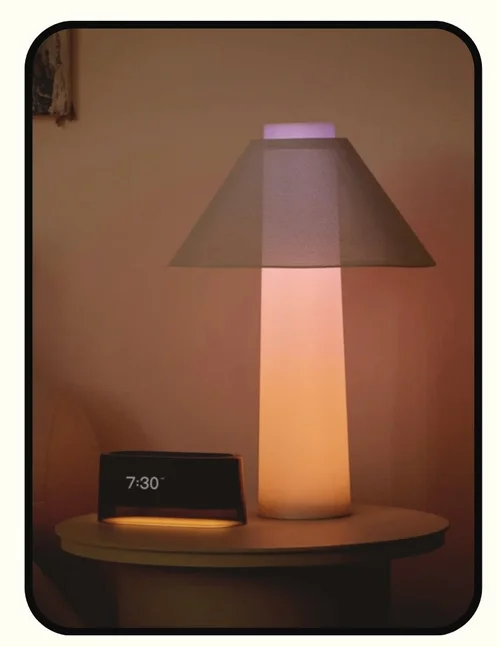 Loftie Sunrise Alarm Clock with Optional Sunrise Bed Lamp
Loftie is one of the best alarm clocks for supporting your circadian rhythm for three reasons: first, the display and lamp have a red light mode for the evenings, go totally dark at night, and wake you up with a simulated sunrise. Second, it’s phone-free and has 6 built-in white noise options, sound baths, and guided meditations for falling asleep or staying asleep. Third, the alarm sound starts gently, with nature sounds or your choice of other noise, if you need more than just light to wake you up, but don’t want to be startled. This is the 4th alarm clock I’ve tried and it’s the one I like most. It is sleek and easiest to operate, and I have their Red Shell option. Check prices on Loftie and Amazon.
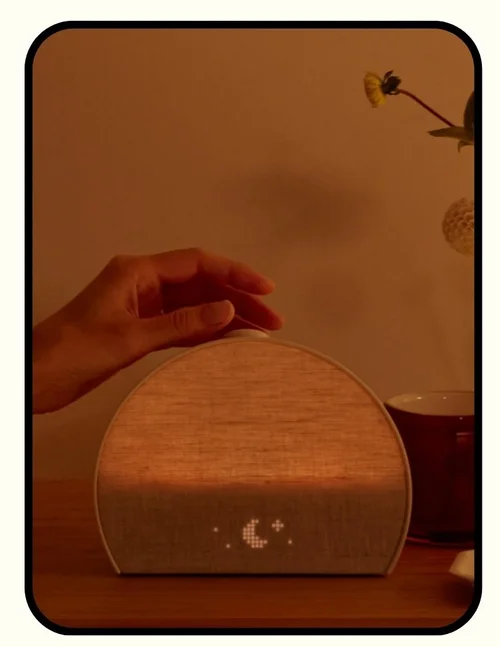 Hatch Restore 3 Sunrise Alarm and White Noise Machine
I’ve tried the Hatch alarm and like it a lot. You only have to use the app to set it up, and I was pleasantly surprised by how specifically personalized it made it. Compared to Loftie, it has more sounds and routines, but the button on top can be a little tricky to press just right. I set it up so it glows red in the evenings, goes totally dark with white noise overnight, and gently wakes me up with a sunrise without sound in the morning. You can customize it in infinite other ways, too. The Hatch+ subscription isn’t required, and I got all the above without it, though it would absolutely be nice if you want even more personalization. Comes in a few neutral colors, well rated, and Hatch accepts HSA/FSA.
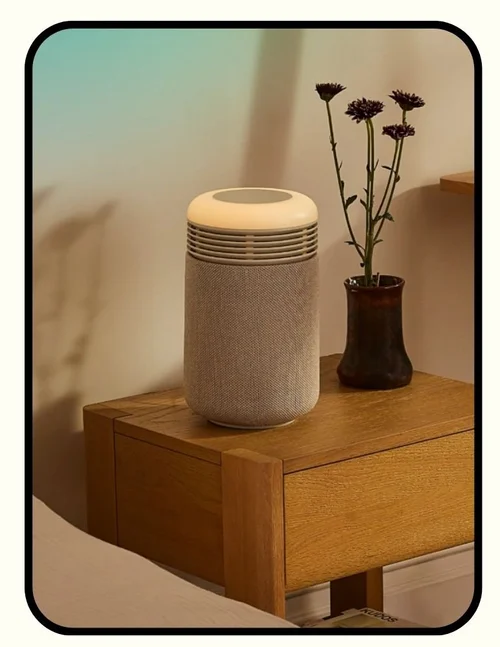 Blueair Mini Restful Sunrise Alarm Air Purifier Combo
I recommend several of Blueair’s air purifier models because they have good certification and testing data, proving they actually work. They now offer a bedside air purifier that also works as a sunrise alarm clock. Such a clever idea. The sunrise alarm can be paired with gentle noise to wake you up gradually. The air purifier is very quiet at night, and you can program it to turn off during the day while you’re at work if you want to save on energy costs. Set up once with the app and let it run.
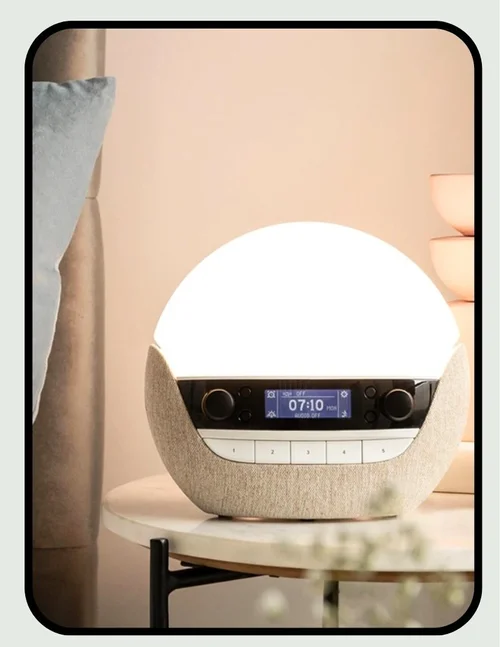 Lumie Sunrise Alarm BodyClocks
Lumie makes several great all-in-one sunrise alarm clocks. Like the Loftie, they don’t require an app or phone, reducing distraction and improving sleep. They also stay completely dark at night, and use low-blue LED light that mimics sunrise and sunset. They have multiple sound options including white noise and FM radio.
Analog Alarm Clocks
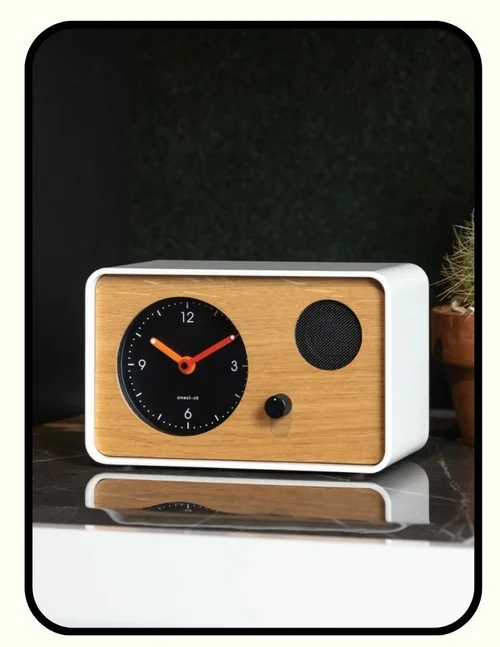 OneClock
This is a dark, quiet alarm clock that plays a different, soothing, gradual waking sound every morning so you don’t start to hate your alarm ring or get used to it. OneClock is the best analog alarm clock that can help make your bedroom a phone-free zone. It doesn’t tick, and keeps your nervous system relaxed but alert upon rising. Made with healthy materials including wood and metal, making for a nice tactile experience. Really impressive features for setting wake-up times and has a tappable light if you need to see what time it is when it’s dark. This is what my husband uses and it never bothers me when he’s waking up earlier than me.
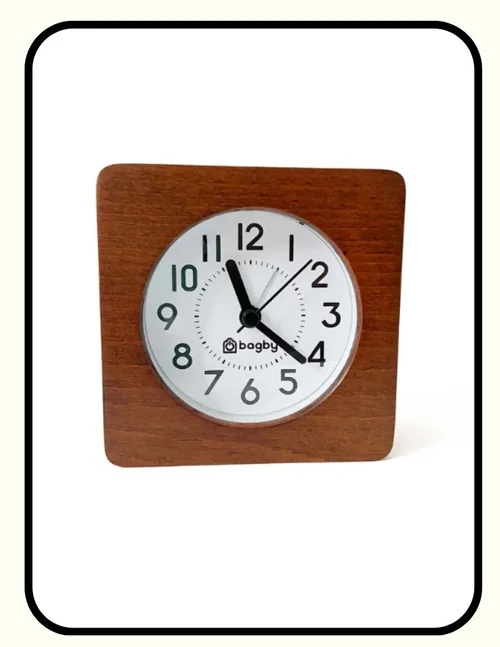 Bagby Digital-Free Alarm
This is an inexpensive analog alarm clock to replace your phone and make the move to a digitally detoxed bedroom. It’s the best battery operated alarm clock, because it’s totally dark and silent at night, and never loses time if there’s a power outage. 80% plastic-free and also EMF free. Has a button if you need to see the time during the night. It has a traditional beep for waking, which isn’t gradual, but is relatively pleasant as far as beeps go. I used this for years, even while traveling. 10% off through this Interior Medicine link is applied at checkout.
Sound Free Sunrise Alarm Clocks
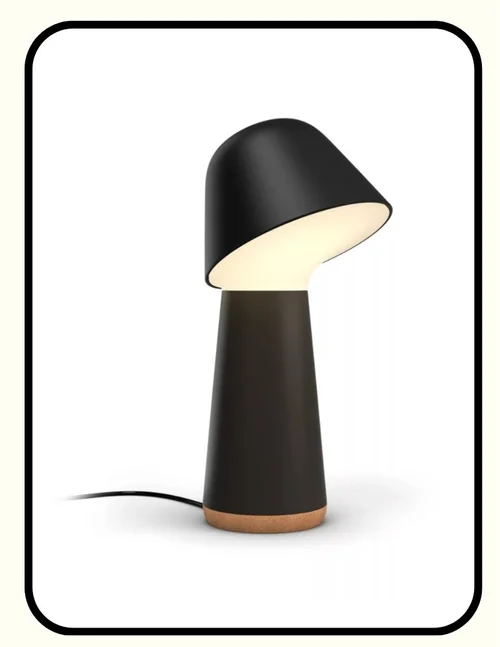 Philips Twilight Lamp
A no-sound alarm clock option similar to programming your own light bulbs, but done for you already, and built into a cute bedside lamp. Gradually increases its sunrise alarm clock light to 1,300 lumens, which is a very bright light on par with a 100W bulb. Philips’ other, SmartSleep alarm clock, gets a lot of positive feedback for how bright it is, but there are lots of complaints about how difficult it is to set up and control, so this is a simpler option, and more aesthetically pleasing.
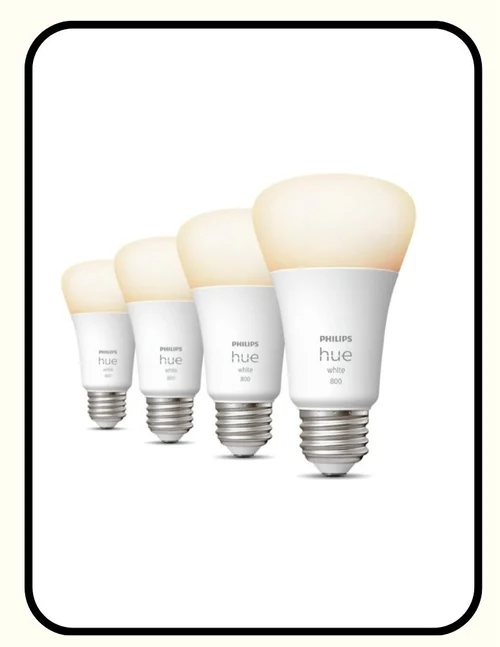 Philips Hue Smart Bulb
This is the best alarm clock for heavy sleepers that don’t respond to loud noise, because these bulbs can get very bright and wake you up with light instead. You can program them to mimic a sunrise — eventually filling up the whole room with bright light. People who tend to sleep through noise report that this is a more effective method for them, but obviously test it out for yourself before an important wake-up ;). Essentially an alarm clock alternative, these bulbs obviously don’t have a built-in white noise machine or snooze features, but can be a phone-free alarm clock option that supports your circadian rhythm and fits into your existing bedside lamp.
Looking for something specific? If you don't see the product or brand you're curious about, you can request a review here, or run it through the Second Opinion Product Checker to evaluate it yourself. Want to go deeper? My free course covers how to evaluate any product's materials yourself.
Join the Newsletter
Join the Newsletter
More Healthy Design for You


Frequently Asked Questions About Alarm Clocks and Sleep Health
Even if you had one made of sea moss, the very concept of an alarm clock would still make it the least natural part of your bedroom. That said, we live in a world with schedules, and most of us need a little help waking up on time. Here’s how to choose an alarm clock that works with your body as best as it can, without adding unnecessary stress.
Circadian rhythm, cortisol, melatonin, and your alarm clock
Alarm clocks have a major impact on your health, since they are present in your bedroom, where you get restorative sleep, and because they have the potential to underpin your entire circadian rhythm. Alarm clocks can affect your health in three main ways.
Light: what kind of light an alarm clock emits, if any (red light at night is good, nighttime blue LED display is bad, gradual sunrise is ideal), is important, because all three can affect your melatonin levels and circadian rhythm before bed, while sleeping, and in the morning.
Sound: the types of noise an alarm makes both during sleep and for waking up matters. An annoying tick at night can cause trouble falling asleep, whereas soothing white noise can minimize acute noise disturbances overnight, and gradual nature sounds instead of loud beeps can impact your morning cortisol levels.
Distraction: a phone-free alarm clock can help minimize distraction before bed, which also reduces cortisol and exposure to blue light. Likewise, having a phone free alarm clock also encourages you to get out of bed first thing in the morning instead of lingering and potentially snoozing.
What is sleepmaxxing?
Sleepmaxxing is the trend of using every possible strategy and gadget to optimize your sleep. This includes sleep trackers, mouth tape, magnesium supplements or drinks, lighting systems, and elaborate wind-down routines. Some of it is useful, and the basics are well supported: a consistent schedule, a dark and cool room, limiting late-night screens, and morning light.
But the pursuit of a perfect sleep score can add unnecessary anxiety and actually make your sleep worse. There’s even a clinical word for it: orthosomnia, the unhealthy preoccupation with perfect sleep. What’s really interesting is that how sleepy you feel is often unrelated to how well you slept. Studies have shown that objective measurements of sleep quality do not match up with subjective ratings. In other words, bad sleep stats don’t have to mean that you feel bad or sleepy the next day.
Data and layering strategies can be useful, but only if it truly helps you sleep better, not if it adds unnecessary perfectionism stress.
How Sunrise Alarms Work
Does a sunrise alarm clock work?
Yes, and potentially for a much cooler reason than you think. It turns out that our ability to see color may have arisen evolutionarily not to enjoy beautiful rainbows, but in order to sync our brains with sunrise and sunset. Millions of years ago, eyes developed the ability to see yellow and blue first — which are the dominant colors at sunrise and sunset— so we know when to wake up, and when to go to bed. This way, as we evolved, our body’s metabolisms were neatly synced with the earth’s 24 hour cycle.
All these years later, light is still the number one controller of your body’s entire 24 hour circadian rhythm. When you have to wake up before it’s dark, the best way to trick your brain into rising early may be a sunrise simulation, rather than noise. Your eyes sense the light, even if they’re closed, and your body will start to suppress melatonin— this naturally and gradually makes you more alert and awake.
For some people, sunrise lamps work better than a regular alarm clock that makes noise, maybe because it mimics our evolutionary form of waking up on time.
Do sunrise alarm clocks help with seasonal affective disorder?
Maybe. While SAD therapy lamps need to emit 10,000 lux of light to be effective, and most sunrise alarm clocks peak around 200-400 lux, alarm clocks may help with seasonal affective disorder in a different way besides blasting your eyes with bright light.
Researchers in 2024 found that looking at alternating yellow-and-blue light was even more effective than looking at a bright SAD lamp (which contains primarily blue light, at very high intensity) in changing your circadian rhythm. Obviously, sunrise alarm clocks don’t flicker this kind of yellow-blue alternating light at you, but, they do emit yellow light, along with a more natural “sunrise colored” spread of wavelengths.
Sunrise alarms can also be a helpful complement by making winter mornings feel more natural and reducing the stress of waking up in darkness.
How bright should a sunrise alarm clock be?
A sunrise alarm clock should reach at least 200-300 lux at its peak brightness to effectively suppress melatonin and wake you up. (For reference, 300 lux is like a standard restaurant level of lighting.)
If you’re a sensitive sleeper, you might need less light to wake up. If you’re a heavier sleeper, you might need 400 lux or more. That’s more like a bright retail store.
The gradual increase matters more than the peak brightness, since it takes time to suppress melatonin and slowly trigger a healthy curve of cortisol release. Look for sunrise alarms that simulate dawn over 20-30 minutes rather than turning on abruptly.
Do sunrise alarm clocks actually work for heavy sleepers?
They can, but light alone is not always enough, and heavy sleepers may need sound as a back-up. A sunrise alarm gradually brightens to suppress melatonin and ease you toward waking before any sound plays, and your eyes register that light (even through closed eyelids!) Light sleepers often wake on the light alone, but heavy sleepers may need the light to start the process, then a gentle rising sound to finish it.
Peak brightness matters more for heavy sleepers, who may want 400 lux or higher at the peak brightness. Some people go a step further with smart bulbs that flood the whole room with bright light. Set your expectations realistically and test it before an important morning. And if only a loud alarm can wake you, that can be a sign you are running short on sleep.
Do I still need morning light if I use a sunrise alarm?
Yes. A sunrise alarm helps you wake up, but it does not replace real outdoor morning light. Sunrise clocks peak around 200 to 400 lux. Outdoor light is far brighter, often 10,000 lux or more, even on a cloudy day. That outdoor intensity is what most strongly anchors your circadian rhythm, sets your daily cortisol timing, and helps you feel alert during the day, then sleepy at night.
Use the clock to wake gently, then get real light in your eyes within the first hour, ideally outside for 10 to 20 minutes. On dark winter mornings, pairing the clock with a brighter light therapy lamp can bridge the gap until you can get outdoors or until the sun rises.
Alarm Clock Light at Night
Is a glowing alarm clock at night bad for my health?
Yes. Your body is ultra-sensitive to even small amounts of light at night, and up to 14% of light still comes in through your closed eyelids. Light at night disturbs your circadian rhythm, which includes your sleep-wake cycle, but also many other processes in your body, like DNA repair and metabolism. This is why people with disturbed circadian rhythms or people exposed to light all night long (like night shift nurses) are at higher risk of cancer and weight gain.
What color alarm clock is best for sleep?
Red alarm clocks are best for sleep because red light doesn't suppress melatonin production the way blue or white light does. If your alarm clock has a display that stays on all night, choose one with a red LED display or one that can be dimmed completely. Blue and green LED displays are the most disruptive to sleep because even small amounts of short-wavelength light can signal your brain that it's daytime, making it harder to fall asleep and stay asleep. If you already have a blue or green LED display alarm clock and can’t afford a new one right now, consider covering up the display with a piece of thick paper or obstructing the screen with an object during the night.
Is red light at night actually good for sleep, or is it a trend?
Red light as a replacement for white or blue light at night is good for sleep. Just exposing yourself to red light isn’t necessarily good for sleep, and sleeping surrounded by red light is not ideal; total darkness is. While red light causes close to zero melatonin disturbance, it’s still light! Any excess light at night, even if it’s red, can cause sleep disturbance if it’s bright enough or long enough.
A dim clock display or dark-mode red display is safe. Use red for your display and any light you truly need at night, keep it dim, and aim for full darkness once you are asleep.
Is green light bad for sleep?
Yes! Green sits close to blue on the wavelength scale, and also suppresses melatonin. A common online myth is that green light is calming or sleep-safe, but for circadian purposes it is not. Green LED displays and green-tinted light still signal daytime to your brain and can make it harder to fall and stay asleep. The least disruptive wavelengths at night are red and amber. If your clock has a green or blue display that stays lit all night, that is the kind to swap, dim, or cover. If you use green light therapy for migraines or pain relief, use it in the morning or early afternoon hours.
Sleeping and Night Noise
Is white noise at night bad for you?
Research is mixed on whether it helps people sleep, but in general, it seems to only be bad for you if it’s too loud. It can be beneficial because sudden noise, especially at night, can actually contribute to heart attack risk, and have negative impacts on cardiovascular health, including high blood pressure. This is because when you experience relative quiet, then hear a sudden noise like a plane, it causes a small spike in cortisol, your stress hormone. This happens automatically, and even while you’re sleeping. White noise can reduce this, if you live in a house or area that is prone to sudden, intermittent sounds like planes, neighbors, or other outdoor noise.
How quiet should my bedroom be?
To avoid negative health effects, your bedroom shouldn’t be any louder than 30 decibels at night, according to the World Health Organization, which has studied the negative health impacts of noise pollution. That’s about the same level of noise as rustling leaves.
Waking Up
What is the healthiest way to wake up?
The healthiest way to wake up mimics natural sunrise in terms of both light and sound. Gradually increasing light signals your body to stop producing melatonin and gently raise cortisol levels like a true sunrise would. Sunrise alarm clocks that simulate dawn over 20-30 minutes are gentler on your cardiovascular system than jarring sounds or a sudden bright light. If you need sound as backup, choose melodic tones or nature sounds rather than harsh beeping. Waking consistently at the same time each day, even on weekends, also supports your circadian rhythm.
Is hitting snooze actually bad for you?
Probably not, if you are getting enough sleep overall. Snoozing has been villainized for years as a bad habit, but two studies show that it may not affect your mood, sleep, or daytime fatigue at all.
A 2024 study in the Journal of Sleep Research found that regular snoozers who snoozed for 30 minutes did as well or even slightly better on memory and math tasks right after waking. This is likely because snoozing kept them out of deep sleep and made getting up feel easier (less of the groggy feeling, technically called sleep inertia).
A 2022 study found that snoozing might cause short-term waking benefits by increasing heart rate and lightening sleep, making it easier to wake up. They also found that snoozers did not sleep less than non-snoozers, feel sleepier, or need to nap more. Snoozers show a slightly earlier cortisol rise naturally, which may be part of why some people wake more easily after a short snooze.
These studies both show that a little bit of snoozing (30 minutes or less) isn’t as bad as we used to think. If you need three alarms just to function, that points to not enough sleep or an underlying sleep issue, not a snooze problem. Talk to your doctor if your snoozing is severe.
Are loud alarm clocks bad for you?
Cortisol is naturally highest in the morning, peaking 15-40 minutes after you wake up, so you can meet the demands of the day. But, alarm clocks with aggressive beeping can raise it artificially too much, increasing your blood pressure and heart rate. On the other hand, waking up to a melodic noise has been shown to make you feel less groggy throughout the morning.
What volume should my alarm clock be?
Your alarm clock should be loud enough to wake you but not so loud that it causes a stress response. Generally, 60-80 decibels is enough for most people (that’s about the volume of normal conversation to moderate traffic.) Alarms louder than 85 decibels can damage hearing with repeated exposure and trigger an excessive cortisol spike. If you need a very loud alarm to wake up, it may indicate you're not getting enough quality sleep or have an underlying sleep disorder worth investigating.
How does my alarm affect my morning cortisol?
Your alarm clock can influence the size and steepness of your morning cortisol rise, which sets the tone for how alert or stressed you feel. Cortisol naturally climbs in the early morning hours while you’re still sleeping. It’s called the cortisol awakening response, and peaks within about 45 minutes of you waking up and being alert. That rise is normal and healthy.
But a jarring alarm with aggressive beeping can push that spike higher and faster than needed, nudging up your heart rate and blood pressure and leaving you startled or anxious. A gradual wake does the opposite, whether you use sound, light, or both. Brightening sunrise light, followed by gentle nature sounds if you need it, lets cortisol rise on a smoother curve that is easier on your cardiovascular system and tends to leave you less groggy.
Why do I wake up right before my alarm?
Because your body’s circadian rhythm is anticipating it. Your circadian system learns your wake time and starts preparing before the alarm goes off. In the last hour or two before your set wake time, your body raises its core temperature and begins releasing cortisol and other wake-promoting signals. If your schedule is consistent, that internal timer can fire just before the alarm. It is usually a good sign. It means you are waking near the end of a sleep cycle instead of getting yanked out of deep sleep, which is why it often feels easier.
How to Create an Anxiety-Free Bedroom
Should I use my phone as an alarm clock?
Using your phone as an alarm clock isn't ideal for sleep health for two reasons.
First, phones emit blue light from their screens, which suppresses melatonin and can make it harder to fall asleep if you check the time during the night.
Second, having your phone next to your bed increases the temptation to scroll before sleep or immediately upon waking, which raises cortisol levels and exposes you to more blue light.
A dedicated phone free alarm clock eliminates these distractions and reduces nighttime light exposure.
Can alarm clocks cause anxiety?
Yes, particularly alarm clocks with jarring sounds. Aggressive beeping or buzzing can trigger an exaggerated cortisol spike and activate your sympathetic nervous system (fight-or-flight response), which may contribute to morning anxiety. If you regularly feel anxious or startled awake by your alarm, consider switching to a sunrise alarm clock or one with gentle, gradually increasing nature sounds. The stress response from repeatedly being jolted awake can affect your mood throughout the day.
Are silent vibrating alarm clocks effective?
Silent vibrating alarm clocks (often worn as wristbands or placed under your pillow) can be effective, especially for heavy sleepers or people with hearing impairments. They wake you through physical sensation rather than sound or light. However, they lack the circadian rhythm benefits of sunrise simulation and may still trigger a stress response if the vibration is too sudden or intense.
On the other hand, for couples with different schedules, vibrating alarms can wake one person without disturbing the others, lowering their anxiety.