
Best Non Toxic Mattresses
The best non-toxic mattresses are made from GOLS-certified organic latex, GOTS-certified organic cotton and wool, and use no synthetic adhesives between layers. But the organic mattress world is full of healthwashing: brands use words like “natural” and “non-toxic" without proof, or lean on a single certified layer in a mattress that isn't otherwise clean. So I evaluate every material in each mattress —(foam, glues, fabrics, and fabric treatments) using the same method for each, then rank brands from healthiest to least healthy.
By Dr. Meg Christensen | Physician-founder of Interior Medicine, a non-toxic home resource built on her background in medicine, biochemistry, epidemiology, and clinical research.

Updated July 27 2026
Best Non-Toxic Mattresses: Perfect Ratings
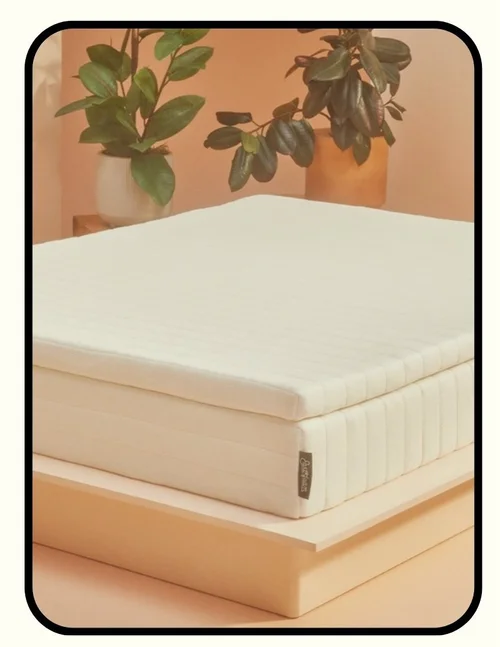 EarthFoam: Best Organic Mattress for Affordability & Longevity
EarthFoam makes 100% organic mattresses with GOLS certified latex and GOTS organic wool and cotton. They’re incredibly transparent about their materials, and they have both a hybrid version with springs as well as an all-latex mattress. For the hybrid version, they don’t use any glue on their coils— impressive! I chose their springless option for my guest room because it’s a more affordable organic mattress (in general, going for pure latex rather than hybrids can save you money while still being 100% organic.) And the pure latex without thick cotton or wool padding means it won’t develop body impressions since latex is so dense and much more durable than regular foam. I like that for guests! (And for myself— I sleep on it once in awhile and it’s sooo comfortable.) You can choose medium or firm, and add a topper for extra plushness if needed. Layers are held together with liquid latex (no synthetic glues, which are common in standard and even some “natural” mattresses). No flame retardants or fiberglass.
Product rating
See the rating scales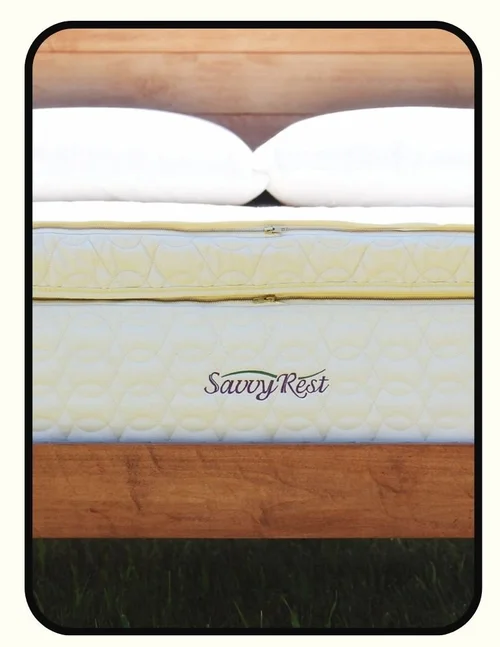 Savvy Rest: Best Non-Toxic Mattress for Custom & Split Firmness
Savvy Rest uses GOTS certified organic wool and cotton in their mattresses, and are emerging as one of the best organic mattresses for two reasons. First, they don’t use glue to hold their coils in place; they’re heat-sealed instead. And, second, unlike most non-toxic mattress brands, they offer plusher Talalay latex in addition to the usual, firmer, Dunlop latex. Their Talalay is, importantly, C2C Gold certified, meaning its third party confirmed to be pure, natural latex without synthetic fillers. Their mattresses are incredibly customizable and they display their certifications prominently. You can do the split mattress option, with different firmnesses on each side of a queen or king, which is 100% what I will be doing next when I need a new mattress, as my husband has a tendency to do acrobatics in his sleep. Layers are bonded with liquid organic latex instead of toxic glues. All of their mattresses are flame retardant and fiberglass free. Ratings below represent the healthiest option: if you go with Talalay, that is rated a Healthy foam.
Product rating
See the rating scales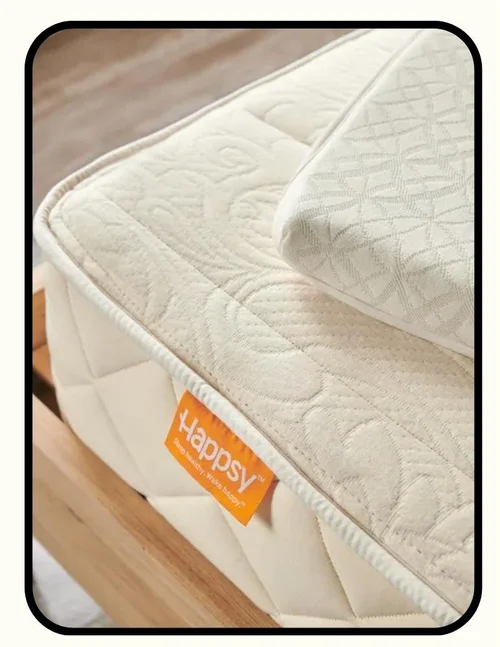 Happsy: Best Organic Affordable Hybrid Mattress
Owned by Naturepedic, Happsy offers just one mattress made with even better certified organic standards at a lower price point. These truly non toxic mattresses are made with GOLS certified organic latex, GOTS certified organic cotton and wool, and zero PLA or glue between layers or even around the coils. They also have a handful of other certifications like GreenGuard GOLD, MADE SAFE, and EWG Verified. You can choose between a medium firm or plush mattress, and further refine the feel with their organic toppers. Like the other top mattresses listed here, Happsy also doesn’t use flame retardants, polyurethane foam, or fiberglass. Impressive.
Product rating
See the rating scales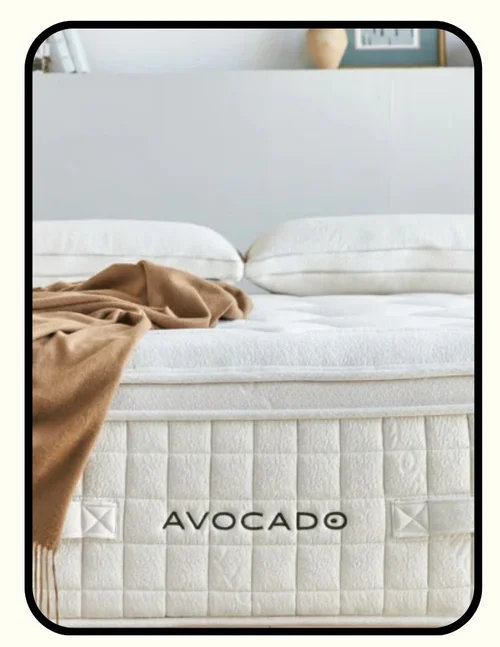 Avocado Green Mattress: Best Organic Mattress for Transparency & Selection
I’ve slept on Avocado's Green Mattress for years and love it, so can attest to the quality and its durability: it’s still just as comfortable and supportive today as it was when I got it 8 years ago, and they have a 25 year warranty (latex, wool and hand tufting lasts forever!) They publish every ingredient and supplier, maintaining transparency even as they've grown into a bigger brand. They haven’t sneakily replaced their certified organic cotton or wool or latex with less-rigorous versions or semi-synthetic mixtures. They currently have 9 different non-toxic mattresses including vegan, luxury, affordable, and springless latex mattresses. All are flame retardant and fiberglass free. For their hybrid mattresses with springs, they publish the exact ingredients used in the glue that holds the coils together (paraffin wax, pine rosin, an antioxidant, and EVA polymer.) That's as clean as an adhesive gets (no formaldehyde, no solvents, and GreenGuard Gold certified, earning a Healthy rating). Or, go for their springless latex 100% glue free mattress.
Product rating
See the rating scales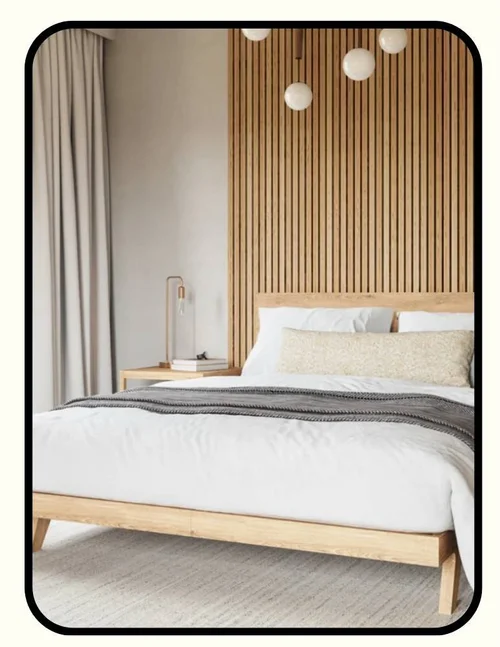 Medley: Best Organic Mattress-and-Frame Match
Medley’s organic mattress is totally organic and has a 20 year warranty, making it both super healthy, eco friendly and durable. Their mattresses are made with GOLS-certified organic latex and wrapped in GOTS certified cotton and wool. They don’t use any glues between layers and they don’t have any springs in the core, so it’s great at stopping motion transfer if you have a partner that moves around a lot. A springless mattress that's as close to memory foam feel as natural materials get. Medley also makes some of the only truly non-toxic upholstered bed frames, so it's ideal if you need both at once.
Product rating
See the rating scales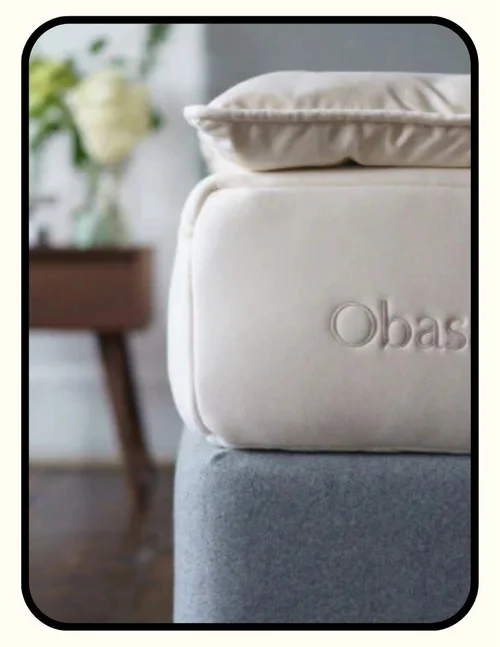 Obasan: Best Customizable Organic Mattress for Ergonomic Support
Obasan custom-builds each mattress based on your height, weight, and body shape for personalized ergonomic support. Their mattresses are completely GOLS and GOTS certified organic with no adhesives between layers and no springs. These are a significant investment, but you do get both premium organic materials and mattress engineering tailored to your body and needs. These round out the top six perfectly pure organic mattress brands.
Product rating
See the rating scales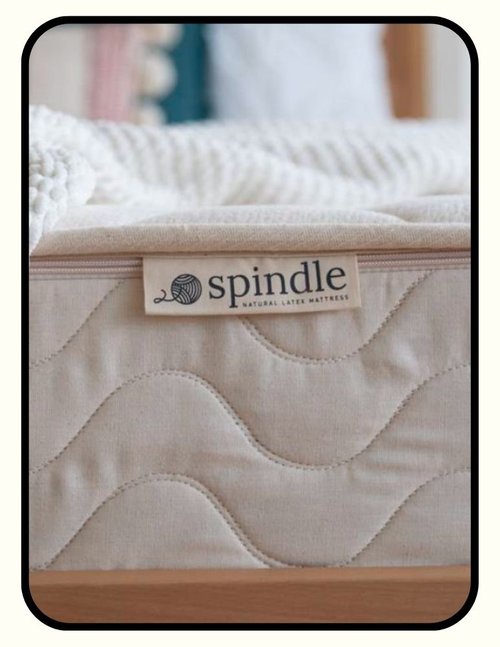 Spindle Mattress Review
Spindle is doing a great job with transparency. They source GOLS certified organic latex and GOTS certified organic cotton to create their organic mattresses, and don’t use any glue between layers. They are very up front about the materials they use on their FAQ down to the thread that holds the seams together. The PDFs of their certificates on their site are outdated, however, I verified in the Control Union’s spreadsheet and GOTS database that they are in fact, up to date and truly organic. Hooray.
Product rating
See the rating scales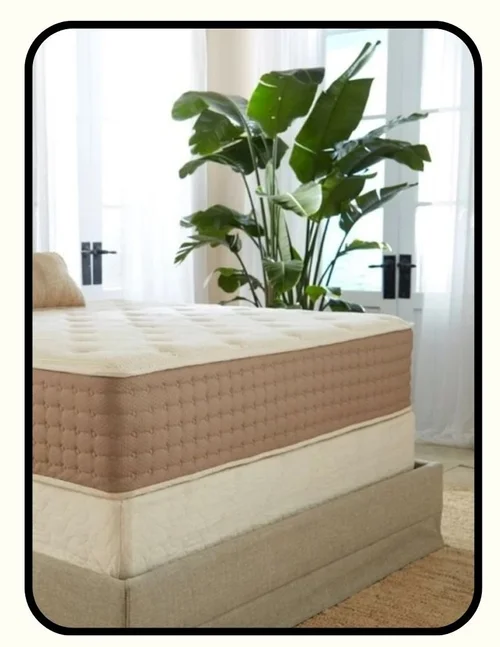 Eco Terra Mattress Review
Eco Terra uses GOLS certified organic latex and GOTS certified organic cotton and wool and has done a really nice job making their certifications and materials transparent. Their Hybrid Latex mattress is truly organic, though their Eco Bliss is not: it’s a mixture of latex and polyurethane foam. The Hybrid comes in medium and medium-firm options from Twin, Twin XL, to Cal King sizes. I asked and confirmed that they do not use glue between layers or to hold the pocketed coils together. All organic certificates are real, verified, and up to date!
Product rating
See the rating scalesPerfect Ratings, Continued
Non-Toxic Mattresses: Near-Perfect Ratings
 Latex for Less Mattress Review
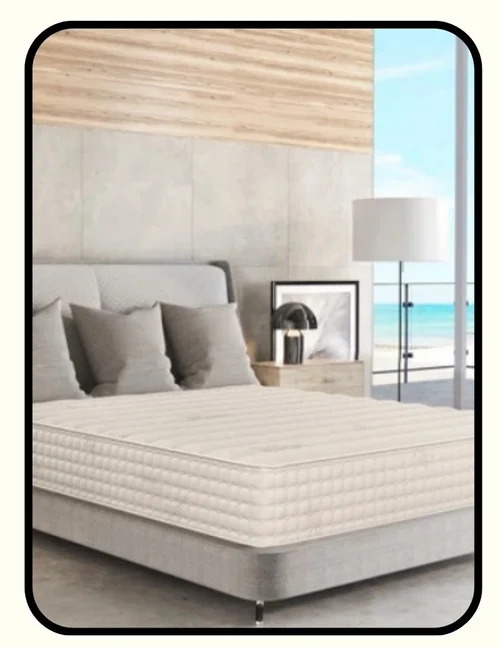
Latex for Less offers a very customizable truly organic springless latex mattress. They use real organic materials including GOTS organic cotton and wool and GOLS certified latex. It comes in 9” and 12” thicknesses and they have soft, medium, and firm options as well as split mattress options for their Queen, so you can customize sides of the bed. They have a hybrid, as well, which doesn’t use glue on the coil pockets or between layers, as well as a natural latex mattress which has OEKO TEX certification. Not as perfectly organic, but natural, and more affordable.
Product rating
See the rating scales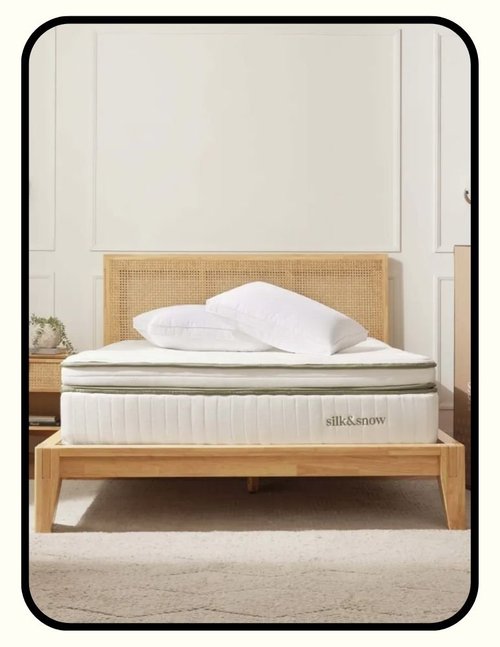 Silk & Snow Organic Mattress Review
Silk and Snow’s S&S organic mattress is made with GOLS certified organic latex and GOTS certified organic wool and cotton and comes in three firmness levels. They use a water-based adhesive between layers and for the coil encasements. I appreciate their fast, knowledgeable and honest response about it: always a good sign. They display all of their certifications and layers very transparently, too.
Product rating
See the rating scales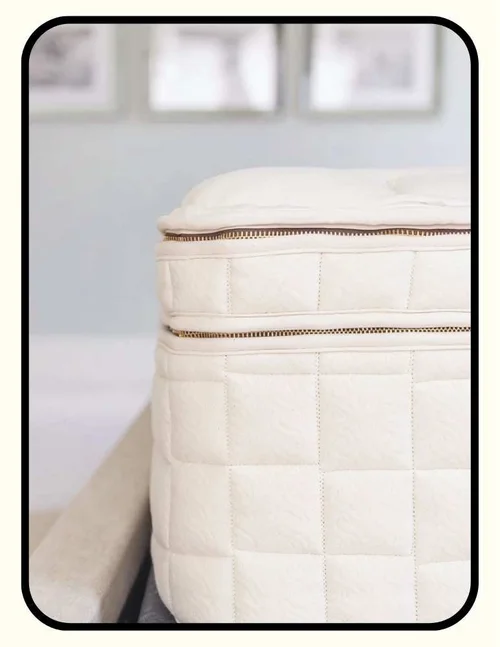 Naturepedic Mattress Review
Readers consistently tell me Naturepedic mattresses are the most comfortable natural mattresses they've ever tried, with excellent customization options. They are using GOLS certified latex (instead of just GOTS certified) as well as GOTS certified cotton and wool. They do use semi-natural PLA (polylactic acid) made from sugarcane in every mattress; this bioplastic is similar to polyester, but made from plants instead of petroleum and is used as a comfort layer. (You can read more about PLA in my Fabric Guide.) They also stand out for their totally glue-free mattresses; they don’t use glue at all on their coils, and instead rely on a heat sealing method for each spring. I appreciate that they’ve gone the extra step of getting certified PFAS-free, as well.
Product rating
See the rating scales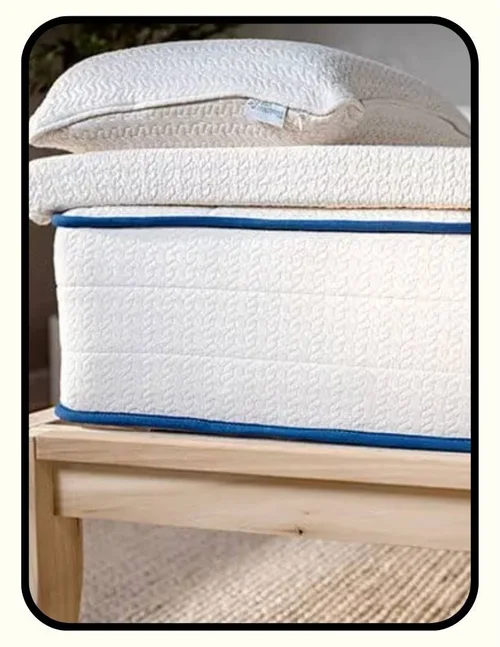 My Green Mattress Review
My Green Mattress has two fully organic mattresses: the Kiwi is consistently the most affordable hybrid organic mattress made with GOTS certified wool and cotton, GOLS certified organic Dunlop latex, and stainless steel springs. Their Natural Escape mattress is made with the same organic materials, but with a thicker 3” latex top and an exceptionally high number of microcoils (1,462) for support and reducing motion transfer. Both have a 20 year warranty, and use zero glues between mattress layers. They use a GOTS approved water-based glue for their coils, and are flame retardant, formaldehyde, and fiberglass free. I appreciate how clear their certifications are.
Product rating
See the rating scales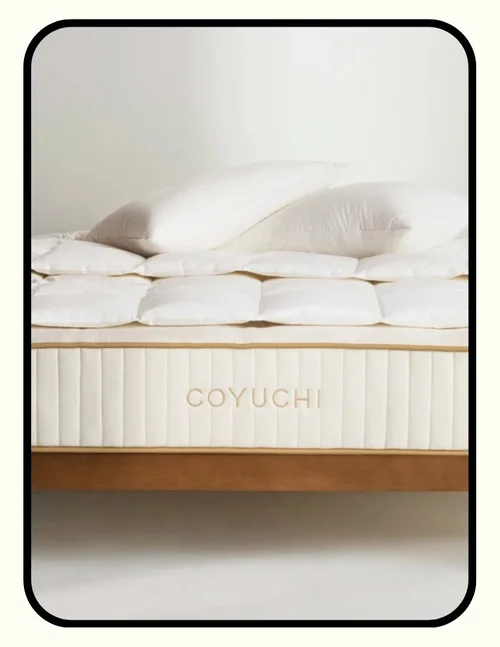 Coyuchi Natural REM Mattress Review
Coyuchi uses entirely organic materials in all three of their mattress options including GOTS organic undyed cotton and wool, plus GOLS organic Dunlop latex with zero adhesives between layers. They offer firm, medium-firm, and plush mattresses now, all hand-tufted and with over 2,000 microcoils (an average high-end mattress has around 1,000) making theirs very supportive and helpful with motion isolation. If you don’t want to pursue the split firmness route (like Savvy Rest or Naturepedic) but have a restless sleeping partner, this is a good choice. It’s also an ideal choice if you tend to have back pain; the high coil density supports side, back, and stomach sleepers alike. They didn’t get back to me on what type of glue keeps their coils in place, so I’ll assume GOTS compliant water-based version unless I hear more. I also appreciate the small detail that they keep their fibers undyed.
Product rating
See the rating scales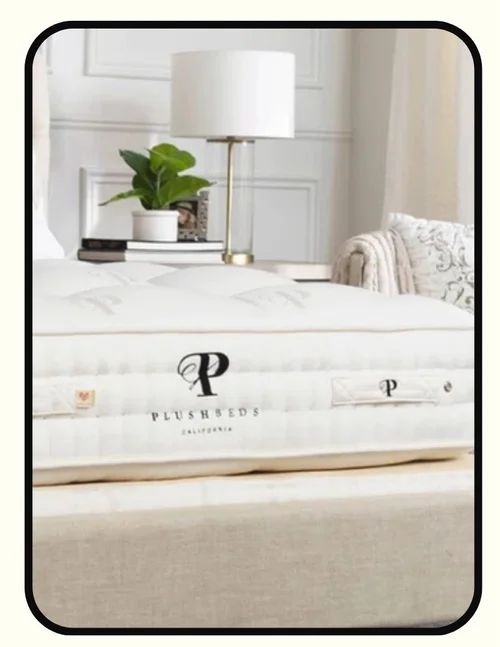 Plush Beds Organic Mattress Review
If you want to have fine-tune your mattress thickness and pillowtops, Plush Beds is great. They offer 9", 10", or 12" thickness in either spring or springless organic latex. Queen, King, and Cal King sizes available as split mattresses (different firmness on each side). All of their organic mattresses are made with GOTS and GOLS certified organic materials. They’re also set apart by their additional unique materials in their ultra-luxury Royal mattresses, like horse, alpaca, and camel hair. They didn’t get back to me on what type of glue keeps their coils in place, so I’ll assume GOTS compliant water-based version unless I hear more. As close to a Hastens as organic mattresses get.
Product rating
See the rating scalesNatural Mattresses
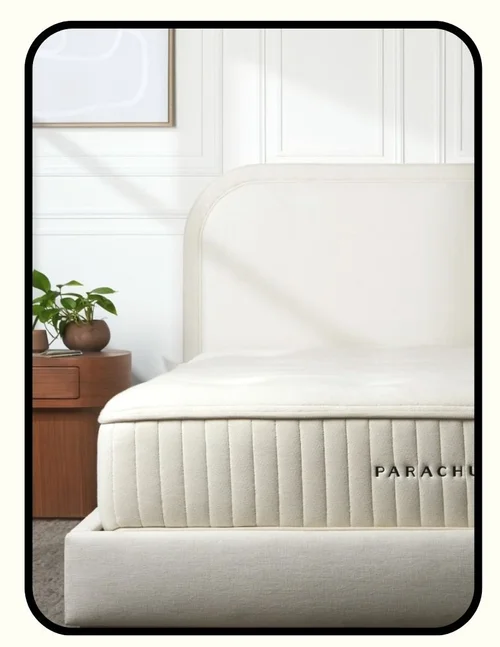 Parachute Eco Friendly Mattress Review
Parachute sells a latex-free organic hybrid mattress, which is nice if you have latex sensitivity but still want natural materials and the support that hybrids offer. Made with GOTS-certified organic cotton, natural wool, and stainless steel springs. The wool no longer carries OEKO TEX certification but does have New Zealand Integrity certification. While this ensures that the wool is sourced humanely and environmentally friendly detergents are used to wash it, it doesn’t test the final wool product for additives and customer service couldn’t confirm anything beyond that it is confirmed flame retardant free. They also couldn’t confirm whether or not glue is used on their coils, and since glue-free assembly is very rare, I will assume not. A relatively non-toxic eco-friendly mattress without synthetic foam or latex.
Product rating
See the rating scales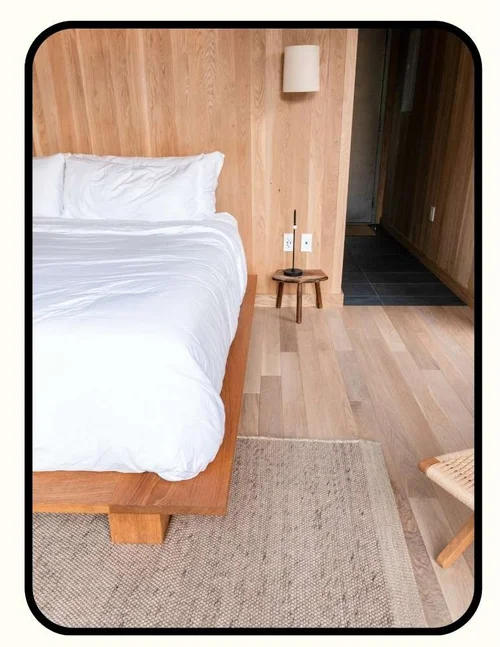 Peace Lily Mattress Review
Peace Lily uses natural latex, though not organic-certified with GOLS, nor does it have other meaningful third party certifications anymore. Their FAQ is helpful in explaining that sourcing truly organic GOLS certified latex is difficult and they state that theirs is 100% natural, though trusting them will be up to you; it’s unverifiable. (The Landesgewerbeanstalt Bayern and SATRA testing they mention is generic for quality, not specific for chemical residues or human health.) They also state that the layers are bonded with latex mixed with water. Still likely healthy and better than polyurethane foam, and affordable, making these a solid middle-ground option.
Product rating
See the rating scalesMore Mattress Reviews
 The Futon Shop (TFS) Mattress Review
Are Futon Shop mattresses non-toxic? They’re better than average in my opinion. They use USDA-certified cotton, which means the fiber starts pesticide-free, but means nothing about the processing of that cotton into a fabric. It may have chemical processing residues left on it, which is what GOTS-certified organic cotton ensures— USDA Organic applies better to food than to upholstery. They do use GOLS certified organic Dunlop latex, OEKO-TEX wool, and coconut coir. “Eco-friendly” doesn't always mean non-toxic. They have lots of different options, so read each description carefully to understand exactly what kind of cotton was used. They do not use glue for their spring mattress or between layers on any. Stitching and hand tufting are used instead.
Product rating
See the rating scales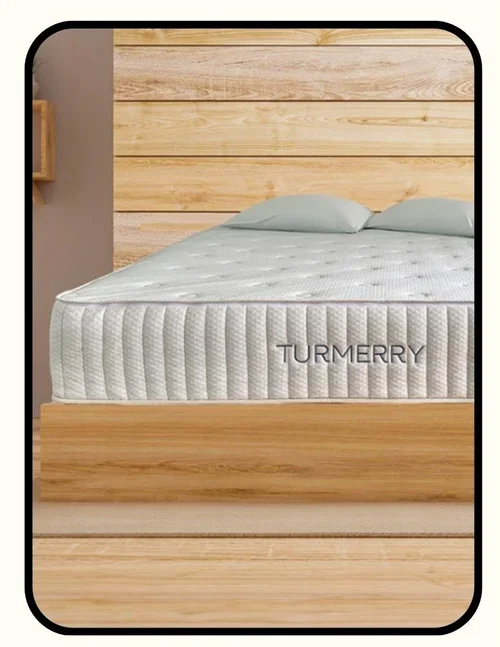 Turmerry Non Toxic Mattress Review
Affordable GOLS-certified organic latex mattresses, Turmerry’s certificate is easily findable within the GOLS database. They do not have OEKO TEX or GOTS certification for their natural wool or organic cotton which is a little confusing at first glance on their certifications page, but they do state that they don’t hold the certifications themselves, just aim for their standards. They use a water-based adhesive to hold the layers together. Very transparent and responsive to detailed questions via email—one of the more affordable organic latex options available.
Product rating
See the rating scales Birch Living Mattress Review
Birch has upgraded from natural to GOLS certified organic latex, but no longer has GOTS certification ensuring their cotton is truly organic from start to finish. A bit of a flip-flop in terms of health, though considering there is so much more latex than cotton by weight, it’s probably a step up overall. They have an optional graphite cooling layer you can select. Graphite is relatively safe (see my Fabric Guide) because it’s simply carbon, and safer than the nano-version of it, graphene, though I’m always a little wary of any proprietary finish in the absence of certifications like OEKO TEX or GOTS. They use a water-based adhesive to hold the layers and coils together and the mattress has GreenGuard GOLD certification ensuring it meets strict standards for off-gassing.
Product rating
See the rating scales White Lotus Mattress Review
Most “soy-based biofoam” is typically 5% soy with the rest being polyurethane foam. White Lotus's Evergreen EcoFoam is an exception: it’s 100% plant-based, made with vegetable oils. This makes it a latex-free semi-natural mattress. They have a note showing that they do not add flame retardants or a handful of other harmful chemicals into their foam mixture, though they don’t have any third party certifications for their foam or the wool and cotton that surrounds it.
Product rating
See the rating scales Essentia Organic Mattress Review
Are Essentia mattresses worth it? If you're vegan or have sensitivities to wool, they're worth a look. They use proprietary latex foam blends, but since these are all GOLS certified, the “proprietary” part is more likely a function of how the latex is processed for density than of added ingredients (GOLS guarantees at least 95% organic rubber tree sap). These have a Kevlar cover- Kevlar is DuPont's brand name for para-aramid, a synthetic petroleum-derived fiber best known from bulletproof vests. It's used because it's inherently flame-resistant, which lets Essentia pass fire tests without chemical flame retardants or wool. This fiber is chemically stable and doesn't off-gas, so it is unlikely to be hazardous, but it still gets the uncertified synthetic material rating below.
Product rating
See the rating scales Saatva Organic Mattress Review
Are Saatva mattresses non-toxic? Their Latex Hybrid and Zenhaven are 100% polyurethane foam-free, using GOLS certified organic latex instead. But, that’s about it. They’ve switched to using polyester instead of GOTS cotton, and use proprietary hot-melt adhesive and antimicrobial treatments that aren't fully disclosed. Their crib mattresses were also found to have PFAS in them. So while their full size mattresses are probably truly healthier than average, without foam, they don't meet the highest transparency standards.
Product rating
See the rating scales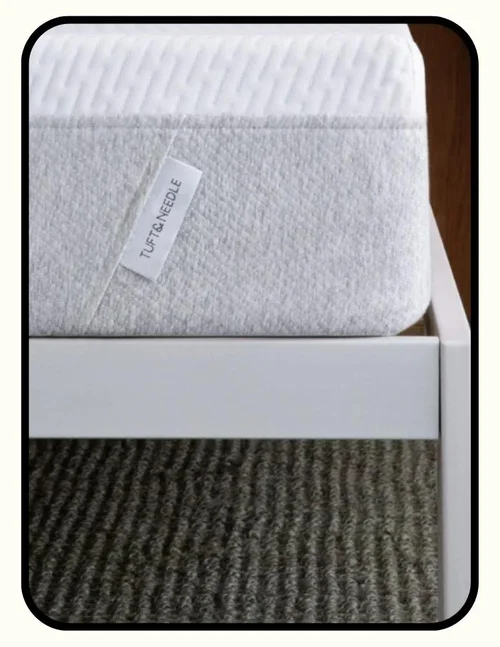 Tuft & Needle Non-Toxic Mattress Review
If you need an affordable less toxic mattress, Tuft & Needle is a decent option because they confirm that they don’t use fiberglass or chemical fire retardants. Instead, they use ammonium phosphate (safe food-grade salt). It has a polyester and cotton cover with water-based, latex-free glues holding the layers together and is affordable. It also has GreenGuard GOLD certification, meaning it won’t off-gas like a typical foam mattress does. Still a polyurethane foam mattress, but significantly safer than standard brands and much more transparent.
Product rating
See the rating scales Nest Bedding Mattress Review
Nest has one semi-natural mattress; the Owl. It’s an interesting blend of Talalay latex with CertiPUR polyurethane foam. They use uncertified cotton and wool, but it’s nice that they aren’t all synthetic, and a water-based adhesive to hold layers and coils together. They also don’t use chemical flame retardants, which is nice, using silica instead. They're responsive to health questions, and while not as affordable as the Tuft and Needle, are still a better-than-average mattress from a health perspective overall.
Product rating
See the rating scales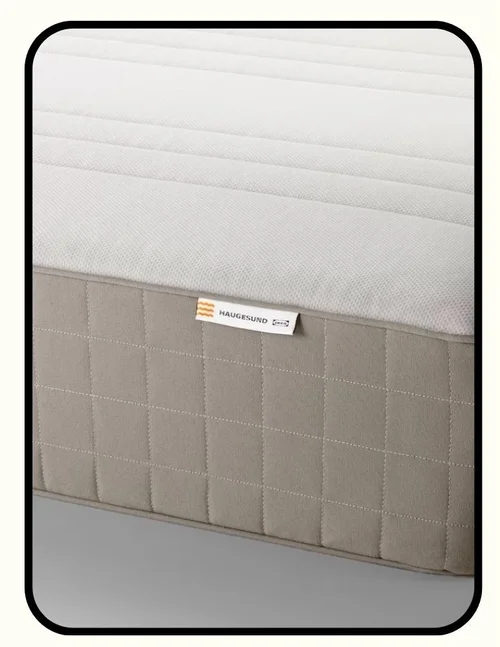 IKEA Mattress Review
Are IKEA mattresses non-toxic? No, but healthier than most conventional options and very affordable. Hybrid construction (springs reduce total foam) and unique rayon/polyester flame retardant encasement instead of chemical-soaked materials throughout—though some zippers and stitching still contain flame retardants. Let it off-gas thoroughly and pair with an organic mattress topper to improve safety.
Product rating
See the rating scales Awara Mattress Review
Are Awara mattresses non-toxic? No, and their transparency is terrible. In mid-2024, Awara added GOLS certification logos to their website, but after repeated emails requesting proof, I received no response and cannot find them in the GOLS database. It turns out they’ve been through fraud issues before, so I will no longer rate their materials, as it’s hard to know what they’re actually made of. The same parent company also owns Nectar, DreamCloud, and the mattress rating website SleepAuthority. There is a lot of healthwashing in the non-toxic mattress world, and this is a perfect example of it.
Don’t see what you’re looking for? Request a review, or check it yourself in seconds with the Second Opinion Product Checker. Spot something outdated? Let me know and I’ll update it. Join the spam-free newsletter for interesting info and to hear when new reviews are up.
FYI, “non-toxic” has no official definition, so I rate every product with the same method. It’s built on third-party certifications and published test data, not brand claims. For a deeper dive, my free course walks you through it.
Everything on Interior Medicine is educational information, not medical advice. Read my full disclaimer.
More Healthy Design For You
How Interior Medicine Rates Non-Toxic Mattresses
“Non-toxic” has no legal or scientific definition, so it’s become a marketing word. I still think a healthier home is worth working toward, and the way to get there is with a consistent system. Every product on Interior Medicine is rated with the same method, based on its materials, ingredients, and third-party certifications. This makes it easier to compare products fairly, spot healthwashing, and make informed decisions.
I rate mattresses using consistent scales based purely on material health, then rank them from healthiest to least healthy.
The rating symbols card you see below each non-toxic mattress brand represents an analysis of every material layer used in the mattress, using the same objective scales for every one. I do this to make things visually easy for you, and to ensure I stay neutral and unbiased by using consistent methods for each brand. This keeps both brand marketing and my feelings out of it.
Material Health
Mattresses are made of foam, fabric, and sometimes adhesives. Each material is rated on its own Material Health Scale, from Healthiest to Harmful. You can see all the detail that goes into each rating symbol in my guides. If you don't want to do a deep dive, here's the short version:
Healthiest to least healthy
- FoamGOLS organic latex > natural latex > polyurethane foam
- FabricGOTS certified organic fibers > natural fibers without certification > semi-synthetics
- AdhesivesNone or liquid latex only > water-based glues > solvent-based glues
How I Apply the Ratings
Healthiest option per brand
The ratings below each brand indicate the healthiest option they have. For brands that offer variations on the healthiest form (like Talalay latex instead of Dunlop, or water-based glue coils instead of springless) a note is always made in the description.
Springs and coil pockets
For hybrid mattresses, I do not rate the stainless steel coils or polypropylene coil pockets. This is because, as far as I know, every single organic mattress company uses stainless steel and polypropylene for their innerspring coils. Since there is no variation between brands, there is nothing to compare and contrast. GOTS-approved, additive-free polypropylene is used for its durability (lasts up to 25 years), inherent resistance to moisture degradation, and ability to heat-seal or stitch instead of glue. You can read more in the polypropylene and springs section of this FAQ below.
I do make a note of brands that have both springless and spring-containing mattresses. I do rate whether those coils involve the use of glue.
Verifying organic certificates
If a mattress brand displays their GOTS and GOLS certificates on their website, and I can verify that they are real in the GOTS Public Database and on the Control Union's GOLS list, I consider them to be truly organic (more on how to do this below). I do not discriminate between whether the brand itself owns the certificate or if they display the certificates of each of their latex and fabric suppliers. This is because very few brands are able to afford certification themselves, but are truly made with organic materials and are making a good faith honest effort to show those material certifications. I don't think small local brands should be penalized for not having the financial resources.
However, if a brand does not disclose their supplier, uses a fake logo, or can't produce a certificate they claim to have, I do not consider them organic even if they say they are, and consider this healthwashing.
FAQ: Your Complete Guide to Non-Toxic Mattresses
Table of Contents
You have affiliate relationships with some mattress brands. Why should I trust you?
Excellent question. The mattress review world, especially the organic mattress world, is notoriously biased because of affiliate relationships. It’s frustrating to not know whether a mattress is being recommended because it’s truly non-toxic or because the reviewer gets more money from that brand than others. Here's how I address this:
1. Transparent individual disclosure
I place an "Interior Medicine Affiliate" label under every single product I'm affiliated with, on this mattress page, and on every product page. I believe that the standard disclosure at the top of a blog or website isn't enough for products that have the potential to affect your health. You deserve to know the affiliate status of each individual product rather than wonder which ones the disclosure actually applies to. This public accountability helps keep me honest and reduces any unconscious bias in my review.
2. Data-driven evaluation standards
My reviews are based entirely on data. I use third-party certification verifications and material analysis, not my personal preferences, subjective feelings, or partnerships with brands. I do not accept paid partnerships or ads and cannot be influenced to rank a mattress as more healthy than it is. (Yes, companies have asked.)
3. Consistent evaluation criteria for every single mattress brand
Every single mattress is held to the same standards, regardless of what the brand claims, and regardless of affiliate status. You can see all the detail that goes into each rating card below each mattress by looking at my Foam Guide, Fabric Guide, and Adhesive Guide. Read the next section below, “How to Verify Organic Mattress Claims” for the very detailed process I go through to verify each one.
Affiliate partnerships enable me to run this website, keep it free, and say no to ads or paid partnerships. Most organic mattress round-ups do not disclose exactly which brands they have a partnership with or make a commission from, so can be incentivized to rate mattresses as healthier than they actually are, even if its subconscious. I believe that my ratings and disclosures are the best way to strike a balance between financial support and editorial integrity. If you’d like, you can read my complete Affiliate Disclosure here, my Editorial Guidelines here, and my Methodology here. While I appreciate it SO MUCH if you use my links if you decide to purchase, providing solid, thorough information is my top priority above making any single sale. Thank you so much for supporting Interior Medicine!
How to Verify Organic Mattress Claims
Figuring out whether a “non-toxic mattress” is truly non-toxic or just deceptive marketing is very difficult. This is primarily because there is no single certification that states with 100% certainty that a mattress is 100% organic. Certifications get you as close to certainty as possible, and are a good proxy for furniture ingredients, but will always leave a small amount of ambiguity. You can read about this in depth and see a visual example of how certifications work in Part 7 of my free course called What “Non-Toxic” Actually Means.
Some brands take advantage of this shred of uncertainty and ambiguity, and mislead people to make a profit. On the other hand, some brands do whatever they can with limited money and resources to show they’re making a good faith effort, producing truly organic mattress. And finally, some brands do everything they can with extensive money and resources to show they’re making a good faith effort.
It’s still worth verifying mattress claims and trusting the certification process, with some guidance below in my step-by-step on how to find a truly organic (or at least, truly non-toxic) mattress:
Step 1: Start by Ignoring “Non-Toxic” Descriptions and Language
An “organic cotton mattress” can mean the cotton used in the encasement is grown organically, but is processed with conventional chemicals and dyes. An “all-latex, certified organic mattress” is a very misleading use of a comma and word order: in this real-life example, the latex wasn’t actually certified organic, but the fabric cover that surrounded it was made of GOTS certified organic cotton. “FSC certified latex” verifies sustainable forest management for the trees that the latex comes from, but says nothing about whether or not they’re organic, whether synthetic rubber fillers are added and what chemical processing the latex goes through.
In the confusing landscape of non-toxic mattresses, language can be misleading marketing. We’ll use it later for confirmation, but it’s not a good starting point.
Step 2: Look for Fabric Certifications
Most organic mattresses contain cotton, wool, or both, as either padding comfort layers, or as an encasement. Verifying how organic or non-toxic the fabrics used in a mattress are is the most useful starting point. That’s because GOTS certification, which verifies fabric is organic, can also verify the whole mattress meets strict standards, making it one of the strongest certifications an organic mattress can have.
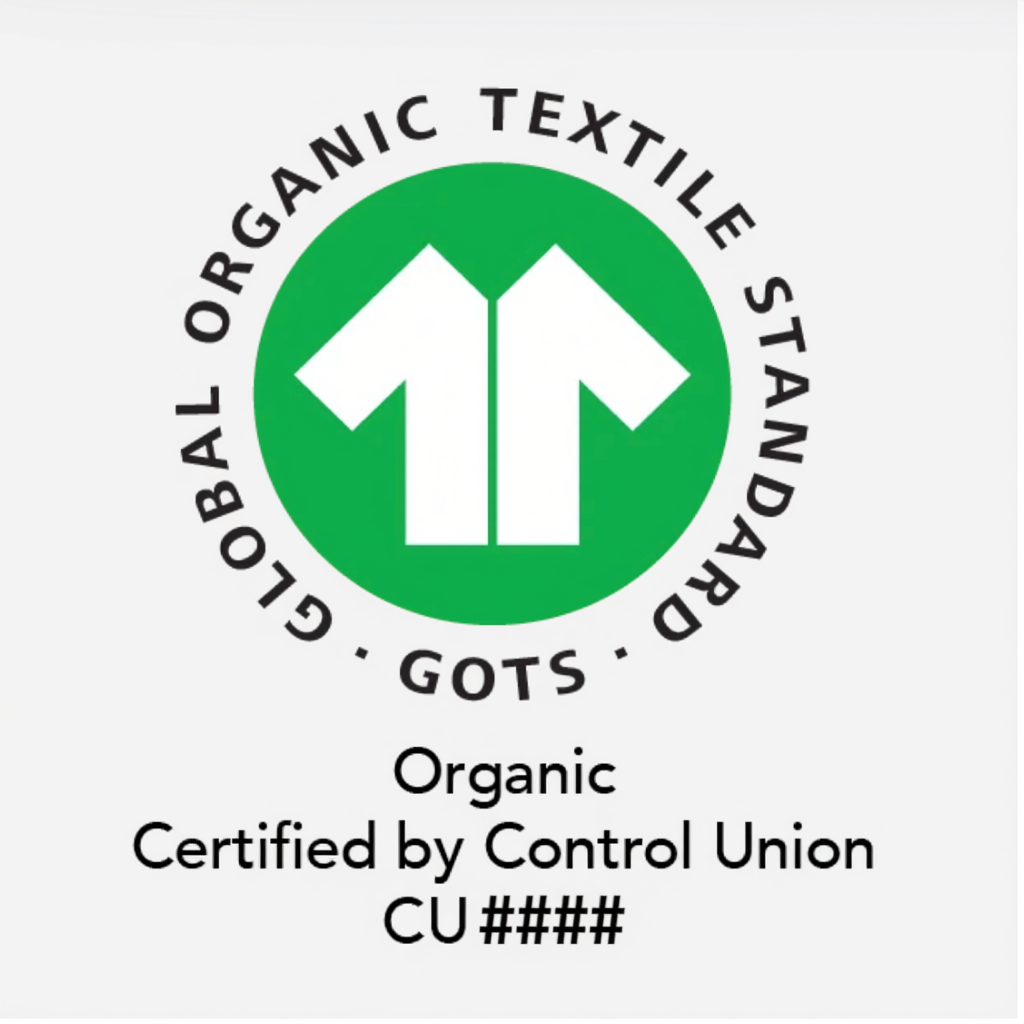
Step 2a. First, look for the best organic fabric certification: GOTS. Look for the GOTS logo on the product page or the website’s materials page. This looks like a little white shirt against a green circle background. Look specifically for the license number at the bottom:
If the license numbers are listed under the logo: look up the license in the public GOTS directory database to confirm it’s active and to see exactly what it covers. It might cover just the cotton, just the wool, both, or even the whole finished mattress. We get into what whole mattress certification means later. Brands with extensive financial resources and truly organic GOTS certified fabrics will generally always have this.
If the license numbers are not listed: ask the brand for their license number.
If the brand gives you their license number or a PDF of certification, verify in the GOTS database. There are many independent groups that certify on behalf of GOTS that are authorized to do so by GOTS— you can see the list here. A brand should send you their license number or a PDF of their authorization. If you see it, move on to Step 3.
If the brand won’t give you their license number, ask them questions and do some digging to figure out why:
Some mattress brands copy-paste the generic version of the GOTS logo to make their fabrics look organic, but they aren’t. You might file a complaint.
Some mattress companies used to be truly certified, but have fallen behind and aren’t current. They might still use the same materials, and they might not. It’s impossible to know and this is an area where your judgement comes into play. It’s still non-compliant.
Search the GOTS database for the company name. Know that some mattress companies operate under a different legal name than their public brand, so if nothing comes up, ask the brand what name they're listed under and what their license number is. The database only shows active certifications. If a brand hesitates to share their number, it may be because the certification has lapsed or belongs to their supplier, and it no longer appears. Either way, a certified brand can always answer this question in one sentence.
Some small organic mattress brands display the GOTS logo to show they use organic fabric from a GOTS certified supplier, without holding certification for the mattress itself. Sometimes that's a resource problem, since certification is expensive and annual. Sometimes they assume customers don't care about the difference, and some customers don't. Either way, the logo use is unauthorized. Only certified companies can display the GOTS logo, and it's reportable as trademark misuse. But the fabric inside may still be exactly what they say it is. The tell: brands acting in good faith describe the certified fabric in words and can name their supplier. Brands relying on the logo to imply whole-mattress certification are claiming something they don't hold. Keep reading for more clues on how to decide whether to trust.
Step 2b. Look for weaker indicators of organic fabric
OEKO TEX: This doesn’t mean cotton or wool starts or finishes organic, but it is a relatively strong indicator that the fabric is safer than conventional fabric. OEKO-TEX certification means the fabric has been tested against limit values for over 1,000 harmful substances including pesticides, formaldehyde, and flame retardants. A mattress company could theoretically start with USDA organic cotton fibers or wool and have OEKO TEX certification overall, in an effort to show that while not fully organic or meeting GOTS standards, they’re still processed safely.
New Zealand Wool: this is not automatically organic. Wool Integrity NZ or ZQ verify animal welfare, traceability, and land management, which are important, but they’re not organic certifications focused on human health. Truly organic wool will be labeled GOTS certified organic wool.
OCS, or Organic Content Standard: this logo should have either 100 or “Blended” listed. OCS100 means the fiber is at least 95% certified organic, and OCS Blended means that at least 5% of the material is. It’s useful for certifying that the fibers themselves are grown organically in agriculture, but it doesn't address the chemical processing afterward.
BCI, or Better Cotton Initiative: the most toxic fertilizers and pesticides used to grow the fiber are banned, though not all of them. It does not cover processing chemicals or what is left in the final product.
USDA Organic Cotton: the cotton starts organic but it does not cover processing chemicals or what is left in the final product.
“Organic” or “Natural” Cotton or wool: absolutely no evidence that it starts or is processed in accordance with organic principles.
In short, the above can all be indicators of better-than-average cotton or wool. Or, they can be used to mislead. You can absolutely choose a mattress made with weaker materials: this isn’t about health perfection. But, informed decision and navigating brand marketing is important. Moving on to the bulk of most organic mattresses: latex.
Step 3: Look for Latex Certifications
Most organic mattresses are made with natural rubber latex from the Hevea brasiliensis tree’s sap instead of polyurethane foam. As with fabric, there are stronger and weaker certifications for latex. They matter a lot because latex can be truly organic, just natural, or at worst, blended with synthetic latex (styrene butadiene) which is derived from petroleum. But unlike fabric, verifying latex certification is a bit trickier. Start with the same first step:
Step 3a. Look for the best latex certification: GOLS. This means the latex is at least 95% organic. Look for the GOLS logo on the product page or the website’s materials page. This looks like a small green rectangle with “gols” in curvy font, and will sometimes have a license number listed beneath it.
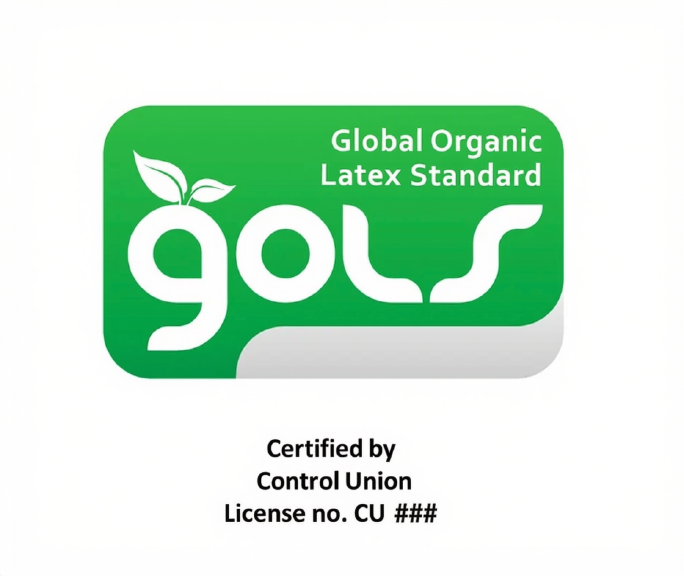
Look up their license number or brand name in the GOLS Project Summary PDF. It’s not as user-friendly as the publicly searchable online GOTS database, and is only updated annually, but it is a useful starting point.
If their license number or name is listed: this is great news. For 2025, there were only 57 entries on the GOLS list. Truly organic latex use is rare. Move on to Step 4.
If their license number or name is not listed: investigate why.
The GOLS certified latex list is a downloadable PDF that’s only updated once a year. Ask when they received certification; it’s possible they got it after the last update. They should be able to send you a copy of their scope certificate, the PDF issued by Control Union that shows their name, their CU number, the processes covered, and the validity dates. Any certified company has this document and will proudly share it. In case of doubt, you can email Control Union directly and ask.
Some mattress brands copy-paste the generic version of the GOLS logo to make their latex look organic, but they aren’t.
Some mattress companies used to be truly certified, but have fallen behind and aren’t current. They might still use the same materials, and they might not. It’s impossible to know and this is an area where your judgement comes into play.
Some brands buy truly GOLS certified latex from a certified supplier on the list and build their mattresses with it, but don't carry GOLS certification themselves so won’t be on the list. This can be legitimate, and the test is transparency: a good brand will name their supplier, and you can check that the supplier appears on the list with "Manufacturing of Mattress and Bedding Products" in their scope.
Step 3b: Consider weaker indicators of organic latex
100% natural Talalay latex: Talalay and Dunlop are manufacturing processes, and only Dunlop is eligible to be organic. Talalay can’t be organic, but it can be natural, especially if it has third party certifications confirming it is. Cradle to Cradle Gold and OEKO TEX both can confirm this.
ecoINSTITUT: This tests the finished product for VOC emissions and pollutant residues. A latex mattress with ecoINSTITUT certifications means it has low emissions, though doesn’t automatically mean the latex is organic.
Cradle 2 Cradle latex: This certifies material health, recyclability, and manufacturing practices, with levels from Bronze to Platinum. Some Talalay latex carries Cradle to Cradle Gold. It's a meaningful screen for hazardous chemistry in the material. Cradle to Cradle latex is usually natural latex that has been vetted for what's in it.
FSC certified latex: FSC verifies sustainable forest management for the rubber plantations. It says nothing about organic growing practices, synthetic latex fillers, or processing chemistry. FSC latex can be excellent and sustainability is important, but it’s not automatically organic latex.
“Organic” or “Natural” latex: an unregulated term. There is no way to tell if the latex is truly safe.
Step 4: Glue
Most glue used in organic mattresses today is low-concern, but it's worth checking what kind is used, and where. (Read more about safe glues on my Adhesive Guide.)
If that surprises you, it's because mattress glue used to deserve its reputation, and it still does in some cheaper, imported, standard options. In conventional polyurethane foam mattresses, solvent-based glues between layers were used in large quantities, and were a major contributor to the "off-gassing" smell once associated with mattresses, before VOC regulations and certification programs pushed the industry toward water-based and hot-melt adhesives through the 2000s and 2010s. The glue used in most organic mattresses is liquid latex, water-based adhesive, or hot melt adhesive. Hot melts are 100% solids, applied when in melty pliable form, and they harden as they cool. This means there's no solvent to evaporate, which is why they're low-VOC.
That said, understanding what glues are used in your organic mattress is important. Ask a brand: do you use glue, where, and is it solvent-based or water-based? Does it have certifications for off-gassing like GreenGuard GOLD?
Here are three specific places to ask about:
Between layers: some organic mattress makers hold layers together with tufting or hand sewn ties. Some use liquid latex. A smaller number use water based low-VOC glue.
Holding springs in place inside their pocket coils: the springs themselves are steel, held inside polypropylene fabric pockets. Those pockets can be ultrasonically welded to each other instead of glued, but many are bonded with adhesive, and the assembled coil unit is often glued to the foam or latex around it.
Affixing the outer layer to the inner layers: organic mattresses almost always use a zippered encasement instead of adhesive.
There are two certifications that we get into in more depth in Step 5, but in short:
Whole-mattress GOTS certification: any adhesive used had to pass the standard's chemical input criteria
GREENGUARD Gold or ecoINSTITUT certification: these test the finished mattress as a whole, so adhesive off-gassing gets caught even when the glue never appears on the materials page.
Most mattress brands talk about the fabric and foam that they use, but rarely do they mention adhesives. This is likely because it’s not something customers think about, though I’ve noticed that is changing, and several are now mentioning how their mattresses are held together.
Step 5: Entire Mattress Certifications. Does the mattress brand need to own its own GOTS or GOLS certificate?
Not necessarily, but brands without them deserve an extra scrutiny step.
Large organic mattress companies with extensive resources carry many certifications including their own GOTS and GOLS certificates. However, a small mattress company can use truly organic GOTS and GOLS certified materials, but not have the certification themselves. Here are some benefits of the company having the certificate themselves:
Whole-mattress GOTS certification: GOTS certification can apply to just the fabrics used in a mattress. But, if a company pursues whole-mattress GOTS certification, it goes beyond just the fabric and means that even non-fiber components like coils, thread, and adhesives must meet certain health criteria. This is really useful for two main reasons, and not as great as it seems for one reason.
First useful thing: theoretically, a sneaky mattress company using GOTS certified fabric and GOLS certified latex could add polyester batting between layers or swap in an uncertified piece of latex and no one would ever know. With whole-mattress certification, an auditor checks entire assembled mattresses every year randomly to make sure this isn’t happening.
Second useful thing: every single organic mattress brand (that I am aware of as of July 2026) uses polypropylene to encase the coils used in hybrid spring mattresses. That’s for durability, mold-resistance, and ability to limit glue use, all things that support health long term. Having GOTS certification for the entire mattress means that even this non-organic fabric layer in the middle of the mattress is inert and free of harmful chemical additives.
One less-useful thing: Some brands use whole-mattress GOTS certification to imply their latex is organic, but that’s not true. GOTS does cover latex in mattresses because it’s considered an accessory. But, the standard allows the latex in a GOTS certified mattress to be certified organic, "organic in conversion," or certified in a sustainable forestry program like FSC (see section 3.3 on page 10). This means that even a fully GOTS-certified mattress can contain non-organic latex. Seeing a GOLS certificate along with whole mattress GOTS is the best combination.
EWG Verified and MADE SAFE: Both of these certifications rely on a mattress brand disclosing everything they've intentionally added to the mattress. The certifier then screens that list against their list of health criteria and what should be excluded or limited. It’s not like EWG or MADE SAFE actually test samples of the mattress in their lab and tell you every single ingredient. Which is fine, and I appreciate the pursuit of more transparency, though ultimately it still runs on trust that the disclosure is complete.
GREENGUARD Gold and ecoINSTITUT: These test the finished mattress in an emissions chamber and certify that VOC levels fall below strict limits (ecoINSTITUT also tests for pollutant residues like heavy metals and pesticides). They're the certifications that catch adhesive and foam off-gassing, which is really important for brands that use water based glues to hold their layers or coils together.
Every certification above is expensive and usually has to be renewed annually. A company with money to spend on marketing can have every single certification and be exactly as organic and healthy as a smaller brand without every single one. In short, the main certifications to depend on are GOTS fabric and GOLS latex from a named supplier, as well as looking for honest answers to direct questions about their certifications or lack thereof.
Step 6: Final Assessment
Back to where we started! While I don’t recommend beginning an assessment of any mattress by reading their “non-toxic” claims, it’s extremely useful as a final confirmation step after you’ve gone through the certification steps above.
In general, brands with nothing to hide have clear materials information on their websites with their certifications displayed easily. They answer questions immediately with specifics, even if the specifics aren’t perfectly healthy. Getting certified is expensive and has to be done every year. If a brand is upfront about this, you can decide whether or not to trust them, and in many cases, they’re making a good faith effort to provide a mattress made with truly organic materials.
Brands relying on healthwashing give vague responses, try to make their products appear more healthy, or never respond. They often let logos, emotional origin stories, and tricky comma placement imply they’re healthier than they are. They’re vague and more reassuring than factual.
No certification stack gets you to 100% certainty, and there is always an element of trust to finding a truly organic mattress. What certifications do is shrink the amount of information you have to take on trust. At the top of this page, I list the brands I’ve gone through this process with and rank them by verified material health.
Is GOLS or GOTS better?
Neither is better, because they certify different things.
GOTS (Global Organic Textile Standard) certifies that any cotton or wool, the processing chemicals, the facilities, and the assembled product start and remain organic. It also goes beyond just fabric and is the only certification that can declare a whole mattress (including it’s non-fabric parts) meets its strict standards. (FYI, GOTS certification treats latex in mattresses as an accessory, so even a fully GOTS certified mattress can legally contain non-organic latex.) GOTS is easier to verify, with a searchable public database of license numbers.
GOLS (Global Organic Latex Standard) certifies the latex, verifying it contains at least 95% certified organic raw latex. GOLS verification relies on an annually published list of certified companies.
The best organic mattresses have both certifications: GOTS for the finished product and GOLS for the latex inside it.
Do Non-Toxic Mattresses Actually Matter?
Yes. Four things make standard foam mattresses uniquely problematic:
Time: You spend roughly 2,920 hours per year (one-third of your life) in near-direct contact with your mattress. That's more time than you spend in close contact with other sources of foam like your car, dining chairs, at your desk, or on your couch.
Proximity: Foam mattresses can release chemicals (VOCs) into the air, with body heat accelerating this process. Heavier chemicals like flame retardants fall out of foam into dust.
Nighttime vulnerability: Sleep is when your body performs critical repair and detoxification. Adding chemical exposure during this time is particularly problematic— your body should stay in recovery mode rather than defense mode.
Lack of disclosure: The polyurethane foam in conventional mattresses contains a particularly upsetting mixture of chemicals, and ingredients lists are usually a secret. What is revealed is upsetting— flame retardants are linked with many health issues, and stannous octoate can cause issues with fertility and fetal growth. Read more in my Foam Guide.
My partner thinks organic mattresses are a scam. How do I explain this isn't wellness woo?
You can show your partner the research on flame retardant bioaccumulation, or that cats get hyperthyroidism from flame retardants in furniture foam (they’re essentially the canaries in the coal mine.) You can show them how PFAS don’t stay bound up in mattress covers, or how foam additives fall out of foam over time. More generally, you can show them what the NIEHS is doing about researching how chemicals in the environment affect us.
An "organic mattress" isn't about being pure or perfectly non-toxic; it's about reducing thousands of hours per year of exposure to chemicals that bioaccumulate and disrupt hormones. And, it’s an area that you have direct control over.
Are organic mattresses necessary?
They are a good idea, as explained above. But whether or not you prioritize getting one now depends on a few things. Here's how I think about it:
You should prioritize a non-toxic mattress if:
You're pregnant or planning to become pregnant (fetal development is extremely vulnerable to mattress chemicals— read more in my Foam Guide)
You have young children who co-sleep or spend significant time in your bed
You have asthma, allergies, or chemical sensitivities (VOCs and dust from degrading foam worsen symptoms)
You're replacing a mattress anyway (if you're already spending money, spend it wisely)
You can afford it without financial stress
You can probably deprioritize if:
Your mattress is older than 5 years and has already off-gassed most VOCs (though degrading foam releases other chemicals as dust)
You have more pressing health concerns that need financial resources
You're moving soon, not bringing your mattress, and won't benefit from the long-lasting investment
Organic Mattress Materials
What is an organic mattress made of?
An organic mattress is made with certified organic materials: typically GOLS certified organic latex, GOTS certified organic cotton, and organic wool, plus non-agricultural components like steel springs. Some organic mattresses also use rubberized coconut coir, a coir-and-latex blend, as a plastic-free support layer, and natural fibers like hemp or silk in fabrics and fills.
They are not made of polyurethane or memory foam, and don’t include chemical flame retardants, and no solvent-based glues.
What is the difference between organic vs natural mattresses?
Organic Mattresses
Organic mattresses are made with organic latex, organic cotton, and organic wool and are grown without synthetic fertilizers, pesticides, or herbicides. After harvesting, no toxic processing agents, chemical dyes, or harmful finishing treatments are used. The materials must remain chemical-free throughout the entire supply chain to maintain organic certification.
"Organic" is a highly regulated term for mattresses. Look for two key certifications: Global Organic Textile Standard (GOTS) for organic cotton and wool, and Global Organic Latex Standard (GOLS) for organic latex. These third-party certifications verify the mattress is truly organic from farm to finished product.
FYI: some mattresses start with organic fibers or foam but are processed with chemicals afterward, disqualifying them from organic certification. Always verify GOTS and GOLS certification—not just marketing claims. You can read more about what makes foam organic in my Foam Guide and what makes fabric truly organic in my Fabric Guide.
Natural Mattresses
Natural mattresses are also made with materials from nature, like natural latex, cotton, and wool, but these materials may have been grown with synthetic fertilizers or pesticides. They may also be processed with chemical dyes, bleaches, or finishing treatments after harvest.
While "natural" means the material originated from natural sources (not petroleum-based synthetics like polyester or polyurethane foam), it's a less regulated term than "organic." However, some natural mattresses carry certifications like Cradle to Cradle (C2C), ecoINSTITUT, OEKO TEX or GreenGuard, which verify the finished product contains fewer toxic chemicals than conventional mattresses—but don't guarantee organic growing practices.
What is the healthiest mattress?
The healthiest mattress is one certified organic as a finished product under GOTS, made with GOLS certified organic latex, organic cotton, and organic wool. These mattresses contain no polyurethane foam, no chemical flame retardants, no fiberglass, and no solvent-based glues, and both the GOTS and GOLS certifications are verified annually by third-party auditors. If a fully certified mattress is out of budget, the next healthiest options use the same natural materials with partial certifications, which is a meaningful step up from conventional foam.
Are organic mattresses flame retardant free?
Yes. Organic mattresses are free of chemical flame retardants and free of fiberglass. Every mattress sold in the US must pass the same federal flammability standards. These are the smolder test (16 CFR 1632) and the open flame test (16 CFR 1633). Conventional mattresses pass these tests using flame-resistant barriers, often fiberglass or chemical flame retardant treatments. Organic mattresses pass the same tests using wool, which chars and self-extinguishes instead of burning, or hydrated silica, an inert mineral barrier.
Do organic mattresses have fiberglass?
No. Organic mattresses do not contain fiberglass. Fiberglass is used in many conventional mattresses as a cheap flame barrier woven into an inner sock around the foam. It’s a serious health problem if the cover is unzipped or damaged, because it can shed glass fragments and easily contaminate a whole bedroom.
Organic mattresses pass the same federal flammability tests using wool or silica. If you’re shopping specifically to avoid fiberglass, a GOTS certified organic mattress is the most reliable route, since polyurethane foam and its barrier systems are prohibited. For any other mattress, ask the brand directly what their fire barrier is made of.
Are there natural fire retardants?
Yes, there are two main natural fire retardants used in non-toxic mattresses to pass fire safety standards:
Wool (Most Common Natural Flame Retardant): Organic wool naturally acts as a highly effective fire barrier without any chemical treatment. Wool’s natural structure resists ignition, self-extinguishes, and creates a protective char layer when exposed to flames. This is why most GOTS-certified organic mattresses use wool batting as their primary fire safety solution—it's natural, non-toxic, and highly effective.
Graphite Powder (For Wool-Free Mattresses): Natural graphite is a mineral that absorbs oxygen and puts out flames quickly. Since fire requires oxygen to burn, graphite quickly extinguishes it without toxic chemicals. While less common than wool, graphite is increasingly used by health-focused brands for vegan and wool-free organic mattress options.
Springs, Polypropylene, and Glue in Organic Mattresses
Are spring mattresses safe?
Yes. Stainless steel springs inside of mattresses are very safe. If you’re confused by this question, the fear that spring-containing mattresses act as EMF antennae stems from a poor-quality study done in about 16 years ago that was misinterpreted on Scientific American’s blog. It still spreads around the internet because it sounds scary, and electromagnetism is hard to understand, making it scarier. Snopes debunks it and does a great job breaking down all the details. Their thinking is very much in line with my thinking.
Why is there polypropylene inside an organic mattress?
Springs in mattresses, including organic mattresses, are wrapped in polypropylene fabric. These are called pocketed coil units. Polypropylene is used instead of natural or organic fabrics for three reasons:
Polypropylene pockets can be sealed with heat, which is what makes glue-free coil construction possible. Earthfoam, Naturepedic, Happsy, and Savvy Rest, listed above, are all organic mattress companies that use this method.
Polypropylene stays dry: cotton and other natural fibers more readily absorb moisture, and a damp fabric wrapped around bare steel deep inside a mattress invites corrosion, mold, and bacteria.
Polypropylene lasts through tens of thousands of compression cycles without tearing, unlike any natural fiber could. A ruptured pocket would cause the coil to shift and the support zoning fail.
This is why nearly every single organic mattress brand still uses polypropylene. It isn’t a scam or a trick, and it isn’t a hidden secret like fiberglass. It’s used for very healthy reasons: less glue, reducing mold and bacterial build up, and ensuring support that can last for decades (this is partly why so many organic mattresses have warranties that last up to 25 years.)
How can a mattress with polypropylene in it be certified organic?
Many GOTS certified organic mattress contain polypropylene-wrapped springs inside, and polypropylene is a synthetic fabric similar to polyester. How is this possible?
All materials used in an organic mattress must meet GOTS limit values for chemical residues, even if they’re just an accessory. Chlorinated plastics like PVC are prohibited outright, and polypropylene passes easily because it needs no plasticizers, contains no halogens, and emits almost nothing. No chemical flame retardants or PFAS are embedded in it. The polypropylene used in certified organic mattresses has passed the restricted-substance and residue screening that GOTS requires.
Polypropylene comes from the same family that’s used in food packaging and medical devices. It’s also used as upholstery fabric sometimes, and in this situation, it can be processed intensively with various chemical additives like UV stabilizers and dyes, or coated with stain and water-resistant chemicals like PFAS. This is a concern when your skin is in direct contact with it in this processed form. But, in its most basic form, polypropylene is quite inert, and this is the kind deep inside of a mattress.
Is polypropylene inside of a mattress safe?
Yes, if it’s a GOTS certified mattress.
Polypropylene is one of the most stable, least reactive plastics available. It needs no plasticizers, contains no halogens, and emits almost nothing. No chemical flame retardants or PFAS are allowed in a certified mattress. GOTS residue screening confirms the specific fabric is inert and safe.
Uncertified mattresses may use coated polypropylene or polyester, or may not test for the residues that polyester processing sometimes leaves (like antimony trioxide.) This is more commonly a problem in cheap, imported mattresses without certifications.
If you want a mattress with no synthetics at all, that’s valid! Coil-free options exist, like all-latex springless mattresses. But if you want a hybrid mattress, polypropylene coil pockets in a GOTS certified mattress are very safe.
Is glue allowed in organic mattresses?
Yes, if it is fully disclosed and meets GOTS requirements, it is allowed. If you’re alarmed, you might be thinking about glue made with formaldehyde and solvents that causes so much of the off-gassing smell in conventional foam mattresses. The situation is very different for organic mattresses, and especially certified ones:
Glue holding the layers together: in standard mattresses, this is done with solvent-containing glue and a multi-layer hybrid can carry a pound or more in total. In organic mattresses, glue is rarely used to hold layers together. They are either stacked (as in multi-layer latex mattresses that you assemble at home), held together with natural rubber latex, hand-tufted with fibers, or in some natural (not organic) mattresses, a non-toxic water-based glue is used.
The coil unit: in standard mattresses, the pocketed coils are glued to each other side by side, and a fabric sheet is often glued across the top and bottom of the assembled spring unit. In organic mattresses, pocketed coils are either heat-sealed, or a GOTS-approved or GreenGuard GOLD approved non-toxic water based glue can be used.
Small stuff: glue can sometimes be used on border attachments and handles on some standard foam mattresses. Covers and tape edges are sewn, not glued.
Certified organic mattresses typically skip the small areas and layer-lamination glue entirely and hold their layers together with the zippered or quilted cover, so the coil unit is the only place glue can appear at all.
What kind of glue is used on mattress coils, and is it a problem?
In a certified organic mattress, it is not a problem or safety issue. Coil units in organic mattresses are held together with hot-melt adhesive, a solid thermoplastic that is melted, applied, and hardened again as it cools. (It’s similar to what you use in a hot glue gun!) There are no solvents to evaporate, which means very little to off-gas once the glue has set. Common formulations are based on EVA or polyolefin polymers, the same families used in food packaging seals. This is a much less concerning category than the solvent-based spray adhesives historically used to laminate foam layers. Most, but not all, organic mattress brands use this method and many of them have GreenGuard GOLD certifications for their mattresses to demonstrate beyond their GOTS certificate that no off-gassing occurs.
I treat glue-free coils as a purity preference and a sign of careful manufacturing, not as a safety dividing line. A GOTS certified mattress with hot melt in the coil unit has still passed residue screening on every component. That said, if you want to reduce glue use in the world, that’s legitimate! In this case, choose a mattress that’s totally glue free (options are listed above.) You can read more about glue safety in my guide here.
For standard mattresses, glue is still sometimes a problem, since they may use solvent-based options that are not GreenGuard GOLD certified for low emissions and don’t have full disclosure of ingredients for their safety.
Organic vs. Standard Mattress Off-Gassing
Do organic mattresses smell?
Yes, organic mattresses can have a mild natural scent, but it's not harmful or unpleasant like the chemical off-gassing from conventional foam mattresses.
What causes the smell in organic mattresses: Natural latex (rubber tree sap from the Hevea brasiliensis tree) has a subtle, naturally occurring scent that fades over a few days to weeks. This is not toxic off-gassing—it's organic material releasing natural compounds, similar to how fresh flowers, essential oils, or wood have a scent. Not all VOCs are harmful; plants and trees produce healthy volatile organic compounds.
What does organic latex smell like? Most people describe natural latex as having a faintly sweet, vanilla-like, or subtly fruity smell. The intensity depends on how much latex is in your mattress:
All-latex mattresses (springless) have a more noticeable scent initially since they're 100% organic latex
Hybrid mattresses with coil springs, wool batting, and thinner latex layers have a much milder scent
Latex pillows and toppers have minimal smell due to their smaller size
I personally noticed the natural latex scent more with my springless all-latex mattress than with my hybrid mattress or latex pillows, which have more diluted latex content.
Allergies and Organic Mattresses
Are organic mattresses good for allergies and asthma?
Yes, organic mattresses are good for allergies and asthma for four reasons:
They are less susceptible to dust mites because latex, wool, and cotton are more breathable and resistant to moisture than polyurethane foam and synthetic fabrics like polyester. You may sweat less with an organic mattress, and any excess moisture will evaporate more quickly. Since dust mites thrive on moisture, this will reduce their numbers.
Latex isdense, creating less spaces for your skin cells (dust mites’ source of food) and allergens to accumulate.
Latex and wool are naturally breathable materials, meaning they won’t harbor the moisture that leads to dust mite or bacterial buildup.
Minimal off-gassing: asthma and allergies can be exacerbated by VOCs and off-gassing associated with standard polyurethane mattresses.
Are latex mattresses dust mite resistant?
Yes, they’re dust mite resistant. However, latex mattresses are not completely dust mite proof. They are significantly more resistant to dust mites than polyurethane foam mattresses.
Why latex resists dust mites better than foam: Dust mites thrive on two things— moisture (sweat) and skin cells you’ve shedded. Your mattress traps both, making it an ideal breeding ground. Natural latex mattresses offer better protection because:
Breathability: Natural latex has an open-cell structure that allows continuous airflow, unlike memory foam's dense, closed-cell design. Better airflow means less moisture accumulation—and fewer dust mites, which need humidity to survive.
Dense material structure: Latex is extremely dense (which is why latex mattresses are so heavy compared to foam). This density leaves less space for shed skin cells to penetrate deep into the mattress, reducing the food source for dust mites living inside.
Do dust mites matter for your health? Dust mites are harmless to most people. However, if you have dust mite allergies, asthma, or eczema, their waste particles and body fragments can trigger:
Sneezing, congestion, and runny nose
Itchy, watery eyes
Asthma attacks or difficulty breathing
Skin irritation and eczema flare-ups
How to make any mattress dust mite proof: If you have allergies to dust mites, use an OEKO-TEX certified 6-sided dust mite encasement (see the one I use here) to create a complete barrier. The fabric weave is so tight (1 micron pore size) that even dust mite feces and microscopic particles can't penetrate. This keeps moisture and skin cells out entirely, preventing dust mite colonization. It also keeps your mattress in pristine condition.
Additional dust mite prevention strategies: Even without an encasement, you can significantly reduce dust mites:
Use breathable organic bedding (cotton, linen, wool, Tencel) to minimize sweating
Add a mattress protector to block most sweat and skin cells from reaching the mattress
Wash bedding weekly on hottest setting to kill dust mites
Vacuum your mattress regularly with a HEPA filter vacuum
Are there organic mattresses for latex or wool allergies?
Yes, there are excellent organic and non-toxic mattress options for both latex and wool allergies. Jump to the top to see more details and compare mattress brands.
Is my mattress causing allergies?
Yes, your mattress could be triggering allergies—especially if you're sleeping on polyurethane or memory foam. Mattresses are breeding grounds (gross, sorry) for allergens that cause sneezing, congestion, itchy eyes, asthma, and skin reactions.
Common mattress allergens:
Dust mites (most common allergen): Dust mites thrive in all mattresses—foam, latex, innerspring, or organic—because mattresses collect exactly what dust mites need: shed skin cells (food) and moisture from sweat (humidity). Dust mite waste particles and body fragments are highly allergenic, triggering respiratory and skin reactions in sensitive individuals.
Solution: Use an OEKO-TEX certified 6-sided dust mite encasement with 1-micron pore size to completely seal your mattress. This blocks dust mites, their feces, and allergen particles from reaching you. See the encasement I use here.
Mold and mildew (moisture-related): Memory foam and polyurethane foam trap heat and moisture, creating ideal conditions for mold growth—especially in humid climates. Mold spores trigger severe allergic reactions and asthma.
Solution: Choose breathable natural materials (latex, wool, cotton) that wick moisture and resist mold naturally. Use a dehumidifier in humid climates, and use an indoor air quality monitor with a hygrometer to keep track of humidity levels.
VOCs and chemical off-gassing (foam mattresses): If you have a new or relatively new polyurethane foam or memory foam mattress, you may be reacting to off-gassing VOCs. VOCs can worsen allergy and asthma symptoms.
Solution: Replace with an organic mattress, or ventilate by opening windows daily to off-gas outdoors. Use an air purifier that is capable of capturing VOCs for days you can’t keep the windows open.
Natural material allergies (less common): If you're sleeping on an organic or natural mattress and still experiencing allergies, you may have sensitivities to:
Latex: Natural rubber protein (rare, affects around 1% of general population, but much higher in healthcare workers)
Wool: Lanolin or wool fibers (rare)
Cotton: Dust accumulation or chemical processing residues (very rare)
Solution: Get allergy testing to identify specific triggers, then choose mattresses that avoid your allergens (see FAQ on latex and wool allergies above).
Are latex mattresses safe for latex allergy?
Yes, natural latex mattresses are generally safe for people with latex allergies. Here's why:
Latex protein is destroyed during processing: The allergenic proteins in natural rubber latex are inactivated during vulcanization (the high-heat baking process that transforms liquid latex sap into solid foam). This heat treatment denatures the proteins responsible for allergic reactions, making finished latex mattresses non-allergenic for most people with latex sensitivities.
Medical latex vs. mattress latex: Latex allergies typically develop from repeated exposure to medical-grade latex products (gloves, catheters, medical equipment) that contain higher levels of residual proteins. Mattress-grade natural latex undergoes more extensive processing, further reducing protein content.
If you have a diagnosed severe latex allergy or want to avoid any risk, choose a 100% latex-free mattress made with:
Organic wool and cotton
All-wool construction
Plant-based foam
Jump to the top to see more details and compare mattress brands. If you're unsure about your sensitivity, request a small latex sample from mattress companies before purchasing.
Why is it so hard to find wool-free organic mattresses?
Wool is the most effective natural flame retardant available, and it’s very comfortable, so it’s the most common natural flame retardant used by organic mattress brands to meet fire safety standards without toxic chemicals.
If you're allergic or sensitive to wool but want a non-toxic mattress, I have vegan mattresses listed above that use natural graphite powder instead, which is a mineral that absorbs oxygen and smothers flames.
Do Organic Mattresses Actually Sleep Better?
Do organic mattresses actually sleep better than foam?
Yes, organic mattresses are more comfortable for most people for 5 main reasons:
No off-gassing: organic mattresses will not irritate your nose and lungs with chemical off-gassing. They smell very faintly of natural latex (sort of vanilla like)
Lower allergies: wool and latex are naturally more resistant to dust mites than regular foam mattresses.
Better support:
Similar support to innerspring foam: if you like the way a standard innerspring foam mattress feels, go with a hybrid organic mattress, which will have both springs and organic comfort layers like latex, cotton, or wool. They feel almost identical to an innerspring foam mattress in terms of support, bounce, and durability.
No body impressions: an all-latex mattress won’t develop body impressions because it is much more dense and durable than foam.
Softer support: if you prefer a memory foam type feel, look for Talalay latex (softer than Dunlop)
Breathability: natural foams and fibers are noticeably more breathable so you sweat less and sleep cooler.
Durability: natural latex will be more comfortable for sleep longer term than regular polyurethane foam because it is significantly more durable.
Do Organic Mattress Sleep Hot?
No. Organic mattresses sleep cooler than synthetic ones. Memory foam mattresses with “cooling gels” is an ineffective bandaid —the foam itself is the problem. Natural materials inherently sleep cooler.
Natural latex vs memory foam:
Natural latexhas an open cell structure that allows air circulation. Talalay latex is even more breathable than Dunlop latex because the manufacturing process creates more air channels.
Memory foam traps body heat by design (the foam softens with heat, creating the "contouring" sensation). It often has cooling gel technology added to it, and while it might be safe, I’m quite skeptical, because the proprietary chemicals that make it this way aren’t disclosed.
Wool and cotton vs synthetic fabrics:
GOTS-certified wool regulates temperature better than any synthetic fabric like polyester or microfiber. Wool fibers absorb moisture (sweat) without feeling damp, and the crimp in wool fibers creates air pockets for insulation when needed and breathability when warm. Cotton absorbs moisture and allows evaporation. A wool comfort layer or mattress topper can significantly improve temperature regulation regardless of what's underneath.
Polyester repels moisture (which sounds good but means sweat sits on your skin instead of being absorbed and evaporated). A washable organic mattress protector is a better idea.
Affordable Organic Mattress Options
Are organic mattresses worth the extra cost?
Yes, if it doesn’t cause undue financial stress, buying an organic mattress is worth the investment for 3 reasons:
Eliminate 8 hours of daily chemical exposure: You spend approximately one-third of your life (2,920 hours per year) sleeping on your mattress with prolonged skin contact, inhalation, and heat exposure that accelerates chemical release. Conventional polyurethane and memory foam mattresses continuously expose you to flame retardants, VOCs, phthalates, and other processing chemicals.
They’re a very easy health upgrade— rare in the health world! Once it’s in your bedroom, you don’t have to think about it, or make any extra effort, unlike diet, exercise, and basically anything else that reduces risk.
Long-term health investment: While organic mattresses cost more upfront than conventional foam mattresses, they last longer, with a 10-20 year lifespan (organic latex is much more durable than foam.) And, there’s always the potential for avoided health costs: Reduced exposure to carcinogens, endocrine disruptors, and respiratory irritants every single night.
How long do organic mattresses last?
Organic mattresses last longer than conventional foam mattresses because natural latex is significantly more durable than polyurethane foam.
Organic mattress lifespan:
Natural latex mattresses: 12-20 years (GOLS-certified organic Dunlop latex is the most durable)
Organic hybrid mattresses: 10-15 years (latex with wool and other comfort layers, plus steel coil support cores)
Conventional mattress lifespan:
Polyurethane foam mattresses: 6-8 years before breaking down, sagging, and losing support
Memory foam mattresses: 7-10 years (depending on memory foam formulation)
Why organic mattresses last longer:
Natural latex is inherently resilient and bounces back to its original shape, resisting body impressions and sagging. It's one of the most durable mattress materials available. Polyurethane foam, by contrast, is a petroleum-based plastic that breaks down chemically over time, losing density and support.
Organic wool and organic cotton covers also outlast synthetic polyester fabrics, which pill and wear faster. Plus, many organic mattress brands use high-quality construction—hand-tufting, natural latex adhesives, and durable steel coils—that extends overall lifespan.
What should I do if I can’t afford an organic mattress?
There are five things you can do if you can’t afford an organic mattress:
Increased cleaning: Dusting, mopping, and vacuuming weekly can pick up any sVOCs (like flame retardants) that come from standard mattresses invisibly shedding over time. You can ventilate by opening windows daily to help release any VOCs off-gassing from foam or treated fabrics. Use an air purifier to help pick up dust and VOCs.
Consider an organic mattress latex topper: Typically much less expensive than a full mattress and may help protect you from chemicals coming from the standard mattress underneath. It will reduce body heat and friction, meaning less off-gassing and chemical additive shedding.
Consider an organic pillow: Your face comes into even closer contact with the materials in your bedroom than the rest of your body, and I actually recommend starting with an organic pillow before anything else in the bedroom in my Top 5 Ways to Detox Your Home Guide.
Discount shopping: Latex-only organic mattresses (no springs) tend to be less expensive. I bought my first organic mattress when I was a grad student, and used Avocado’s payment plan, paying it off in monthly installments over a year. Wait for organic mattresses to go on sale, buy secondhand, or go with the least toxic of the conventional mattresses (Tuft and Needle, listed above.)
Support your health in other ways: Interior exposures are one part of the big picture of your health and there are so many good ways to take care of yourself! Read more about this philosophy here.