
Green Light Therapy at Home
Green light therapy has real clinical evidence behind it, with studies showing it can reduce migraine frequency, fibromyalgia pain, and chronic pain intensity when used consistently. That research supports a 525 nanometer wavelength, so the most effective devices emit light in that precise range. Timing matters too, since green light viewed through the eyes works through a different mechanism than blue light, but can still interfere with sleep if used late in the evening, making daytime use the safer choice.The brands below stick to the studied wavelength and timing rather than stretching the evidence to cover unrelated claims like skincare and daytime use.
By Dr. Meg Christensen | Physician-founder of Interior Medicine, a non-toxic home resource built on her background in medicine, biochemistry, epidemiology, and clinical research.

Updated January 1, 2026
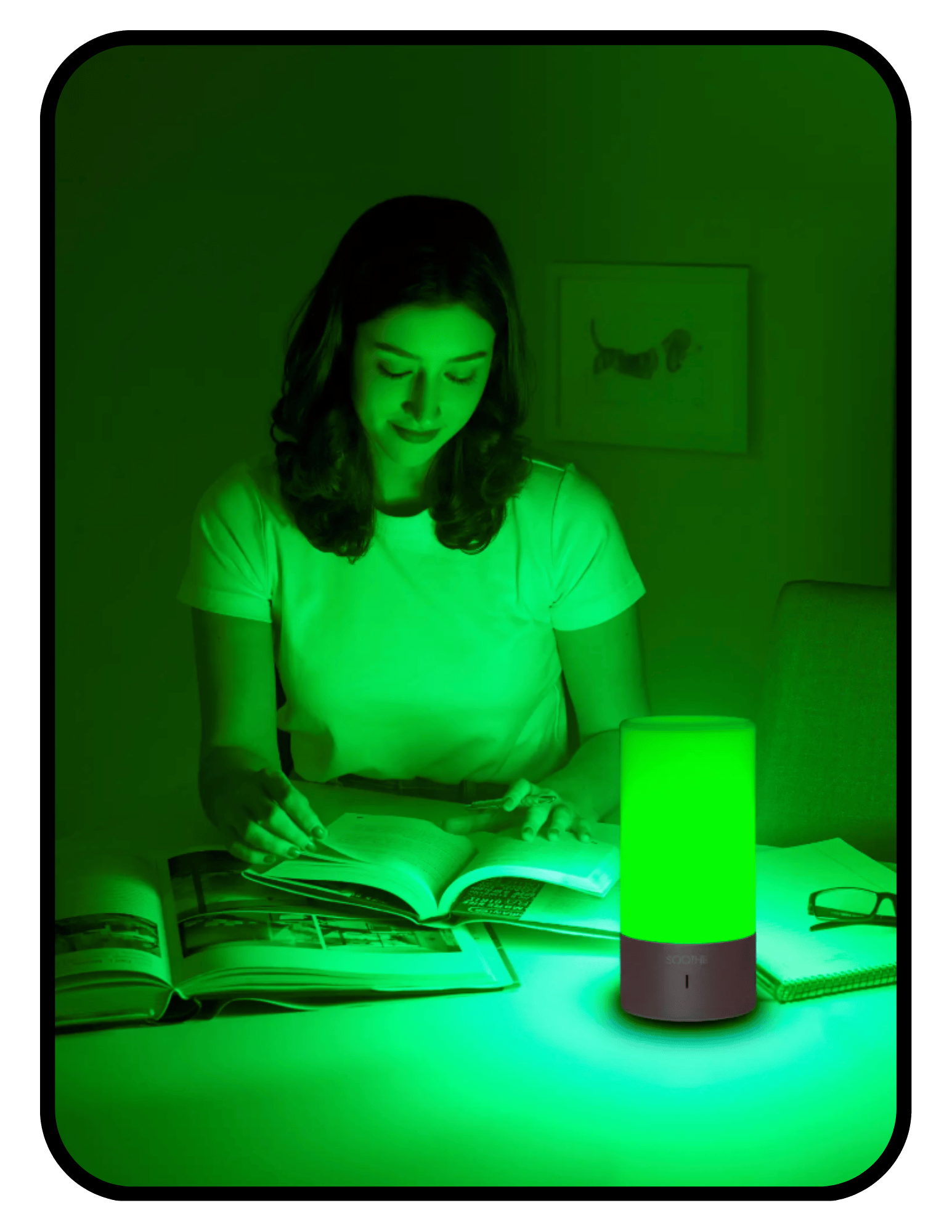
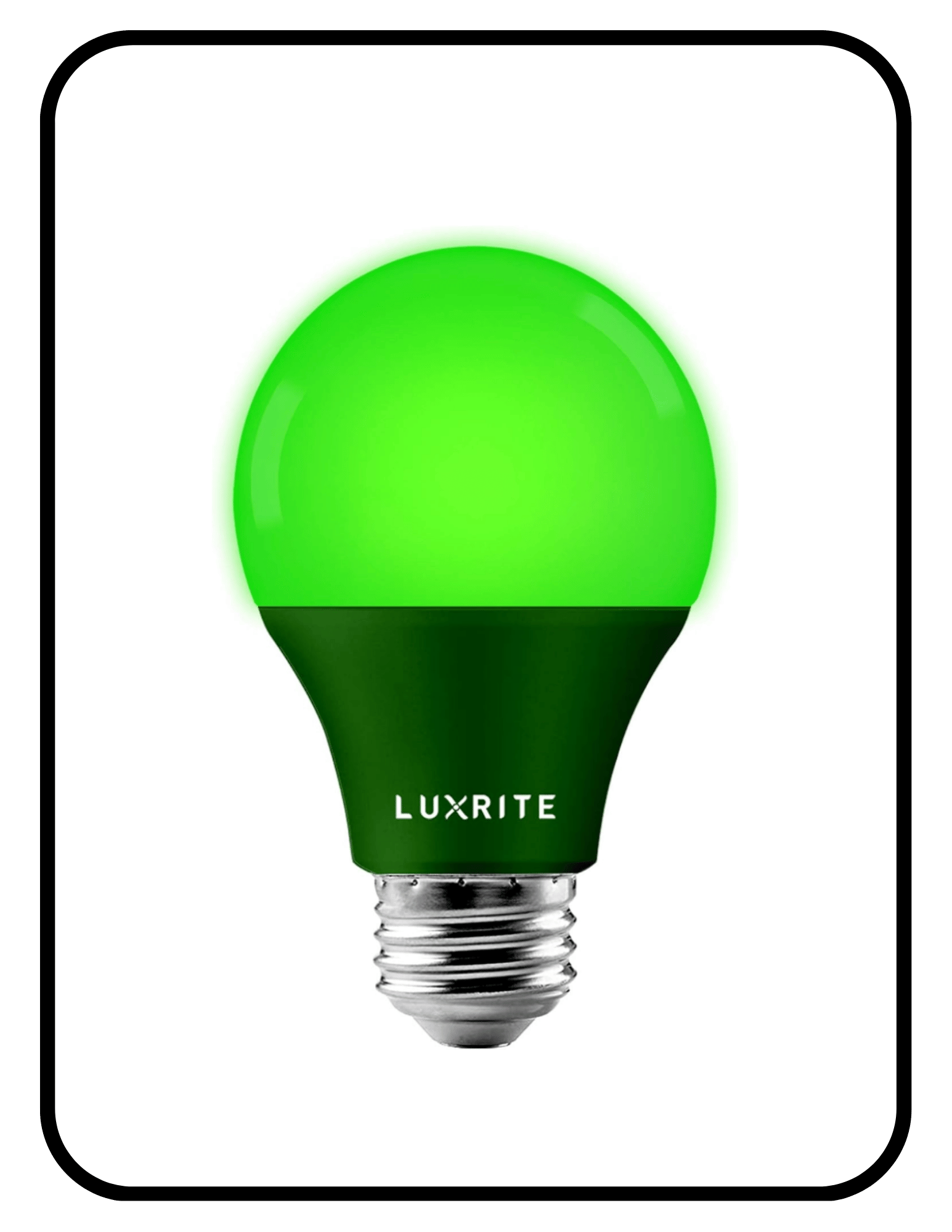
Soothe Green Light Lamp for Migraines
Green light is actually very effective at reducing migraine pain intensity and frequency. This lamp, by Gamma Light Therapy, stands out from other options because it’s more affordable, the brand doesn’t overstate what it can do for your health, and the bulb emits only green light in a narrow spectrum, which matches the studies done on green light therapy so far. I also like that this company recommends using this earlier in the day, when there’s no chance it will interfere with sleep (green light is less of an issue than blue light at night, but can still be bother some people.)
Most green light bulbs, like this one, will emit a range of green wavelengths from 495-570nm. Although it’s broader than the narrow 525nm wavelength that the migraine and pain relief studies have used, we also know that even wearing green tinted glasses has been shown to help with pain reduction (read more below). I like this one because it’s affordable and it produces a nice ambient glow. This is a good, affordable option for plugging into any existing lamp base for green light therapy at home.

Looking for something specific? If you don't see the product or brand you're curious about, you can request a review here, or run it through the Second Opinion Product Checker to evaluate it yourself. Want to go deeper? My free course covers how to evaluate any product's materials yourself.
Join the Newsletter
Join the Newsletter
More Healthy Design For You
Sunrise Alarm Clocks
Blackout Curtains and Blinds
Full Spectrum Light Bulbs
Red Light for Sleep


More About Green Light Therapy at Home
What is green light therapy?
Green light therapy uses specific wavelengths of green light for therapeutic purposes. Unlike the ambient green light that makes up part of the regular light spectrum you’re exposed to during the day, therapeutic green light devices deliver controlled doses of narrow bands of light wavelengths around 520-570 nanometers (green) to trigger specific biological responses.
What are green light therapy health benefits?
There are a handful of research-backed benefits of green light therapy so far. This kind of chromotherapy (the use of colored light to treat health issues) is still relatively new, and I expect a lot more interest and research will come out over the next few years, because it’s legitimately exciting. For now, the evidence for green light therapy isn’t as extensive as it is for red light therapy, but so far the main thing we know about green light is that it can help with pain reduction.
Fibromyalgia pain relief: One study showed that 1-2 hours of daily green light exposure for 10 weeks can significantly reduce pain intensity in fibromyalgia.
Post-surgical pain and inflammation reduction: Green light was shown to reduce post-surgical pain and inflammation in a study done with veterans at the University of Arizona.
Migraine relief: Another University of Arizona study showed in a clinical trial that green light therapy can decrease migraine frequency and severity. Participants experienced an average reduction of 60% in headache days per month after 10 weeks of daily green light exposure.
Opioid use reduction: A researcher at Duke University found that study participants with chronic pain wearing green light therapy glasses used 10% fewer opioids, an encouraging sign that green light can be a non-pharmacological intervention for pain treatment.
Most studies use 1-2 hour daily sessions with narrow-band green LED devices emitting around 525nm wavelength. Benefits typically develop gradually over weeks to months of consistent use.
How exactly does green light therapy work?
Green light reduces pain just by looking at it. The neuroscience behind it is really interesting:
Green light enters the eye, where it activates cones and rod cells. These cells send signals to your thalamus, a part of your brain that acts as a switchboard for sensations, including pain. This stimulates endorphin production (and other natural opioids like proenkephalin), and they are released into your cerebrospinal fluid. From here, they activate opioid receptors in your brain, reducing pain.
Does green light therapy work for skin conditions?
Green light therapy may help with surface-level skin concerns, like hyperpigmentation, redness, and dark spots.
It may be able to help with collagen production, though there’s only a small amount of anti-aging green light research so far.
Green light’s wavelengths aren’t long enough to penetrate skin deeply, and green light is also strongly absorbed by hemoglobin, the main protein in your blood, meaning your surface blood vessels block it from going any deeper. (If you use a heart rate monitor or a fitness watch, you’ll know this from experience, because you’ve probably noticed it takes heart rate measurements with a green light.)
Green light (around 525nm) can potentially reduce dark spots by inhibiting tyrosinase, the enzyme responsible for melanin production, which contributes to melasma and post-inflammatory hyperpigmentation.
So, for skin, we need more studies in humans before we’re sure it works, effects require consistent use over months, and it may not work for all skin types or pigmentation causes. Green light therapy is probably best as a complementary approach, rather than a primary treatment, and I am very excited to see more research come out.
Does green light disrupt sleep?
Yes, green light can disrupt your sleep if the photoreceptors in your eyes are exposed to too much, too late in the day. Green light therapy applied directly to skin or places on your body where it won’t enter your eyes is less disruptive. And green light in general is less disruptive than blue light, which has the strongest impact on melatonin suppression and your circadian rhythm.
The degree of disruption depends on the intensity, time of day, duration of exposure, and where it’s applied. If you're using green light therapy devices, use them earlier in the day, for very short periods in the evening, or only devices that apply green light directly to your skin where it won’t activate your eye’s photoreceptors, to avoid sleep interference.
Is green light disruptive or therapeutic?
Green light can be either disruptive or therapeutic—it depends on the wavelength range, intensity, timing, duration, and area of exposure.
When green light is disruptive: Broad-spectrum green light exposure through your eyes in the evening can interfere with melatonin production and delay sleep onset (though not as severely as blue light can.)
When green light is therapeutic: Targeted green light wavelengths (typically 520-530nm) used at specific times, earlier in the day, with a specific therapeutic purpose.
Green light therapy for migraines: does it work?
Yes, a University of Arizona study showed that green light therapy can decrease migraine frequency and severity. Participants experienced an average reduction of 60% in headache days per month after 10 weeks of daily green light exposure. There were no side effects, and quality of life was improved.
This study used green LED bulbs that emitted light at the 525 nm wavelength. They stayed within 3-6 feet of them, so that they received between 4-100 lux of light, for at least one hour, and up to 2 hours. They didn’t stare directly into the light, but did activities like reading, exercising, or listening to music. The room was otherwise dark. They did this for 10 weeks. The results are amazing!
Green light therapy for depression: does it work?
It might, though there is very little research so far, mostly done in the 1990s and early 2000s. What they show is that green light is more effective than red light and white light for relieving symptoms of depression, though the studies are small, old, and set up in very specific ways that may not apply to your life.
Most phototherapy studies for mood disorders focus on bright white light (10,000 lux) or blue-enriched light, which currently have stronger evidence for treating seasonal affective disorder (SAD) and non-seasonal depression. If you're considering light therapy for depression, bright white light boxes designed for SAD treatment have the strongest research support. Consult with a mental health professional before starting any light therapy for mood concerns.
Green light vs. red light therapy
Green light therapy and red light therapy work through different mechanisms and target different health concerns.
Green Light
495-570nm, penetrates skin superficially, and works primarily through visual pathways and the central nervous system
Works for pain modulation (via eyes and brain), migraine prevention and relief, some skin hyperpigmentation reduction
1-2 hour sessions, light viewed through eyes
Red Light
620-700nm, penetrates deeper into skin and tissues, working directly to increase energy production and blood flow
Works for skin collagen production, wound healing, tissue repair, joint pain and inflammation
10-20 minute sessions, light applied to specific body areas
Which to choose: For chronic pain and migraines, green light has emerging evidence. For skin health, wound healing, and tissue repair, red light has more established research.