
Non Toxic Building Materials
Non-toxic building materials for structural work like flooring, insulation, and pipes generally requires specialized databases and courses rather than general product reviews, since these materials fall outside typical consumer purchases and often need to meet building code. Free resources tend to work well for straightforward DIY projects, while professional-level databases with detailed chemical hazard information suit design professionals and commercial builds where specification matters. Courses on non-toxic renovation are especially useful for anyone managing mold illness or chemical sensitivity, since they cover both material selection and the sequencing of a renovation to limit exposure.
By Dr. Meg Christensen | Physician-founder of Interior Medicine, a non-toxic home resource built on her background in medicine, biochemistry, epidemiology, and clinical research.

Updated February 1, 2026
Info for DIY Home Improvement
a/A Architecture Materials Lists
Free, detailed, and easy-to-use guides from the firm a/A Architecture firm, which is focused on using healthy, conscious, and durable materials. This guide covers better choices for flooring, plaster, roofing, tile, drywall, insulation, and more. This firm is also on my Non-Toxic Design & Build Pros list.
Informed
Free, easy-to-use, lists ranked from healthiest to least healthy for each category of building materials including cabinetry, doors, water pipes, fire protection, acoustical ceilings, window frames, and more. Free when you create an account. Can upgrade to their professional-level database for more specific products with chemical hazard information.



My Chemical Free House Courses
Corinne Segura, founder of My Chemical Free House, is a Building Biologist and expert in specifying healthier building materials, with experience in helping people with mold illness and MCS. She offers a complete Non-Toxic Renovation Home course, or a shorter bathroom and kitchen focused course focused on material specifications for those rooms.
Parsons Healthy Materials Lab
The New School’s Interior Design department offers a list of specific brands of healthier building materials including composite wood products, carpet, mortars, grouts, and sealants. They also have courses and regular events. You can enroll in short courses or opt for their certificate program.
Databases for Commercial Design

International Living Future Insitute (ILFI) Declare Database
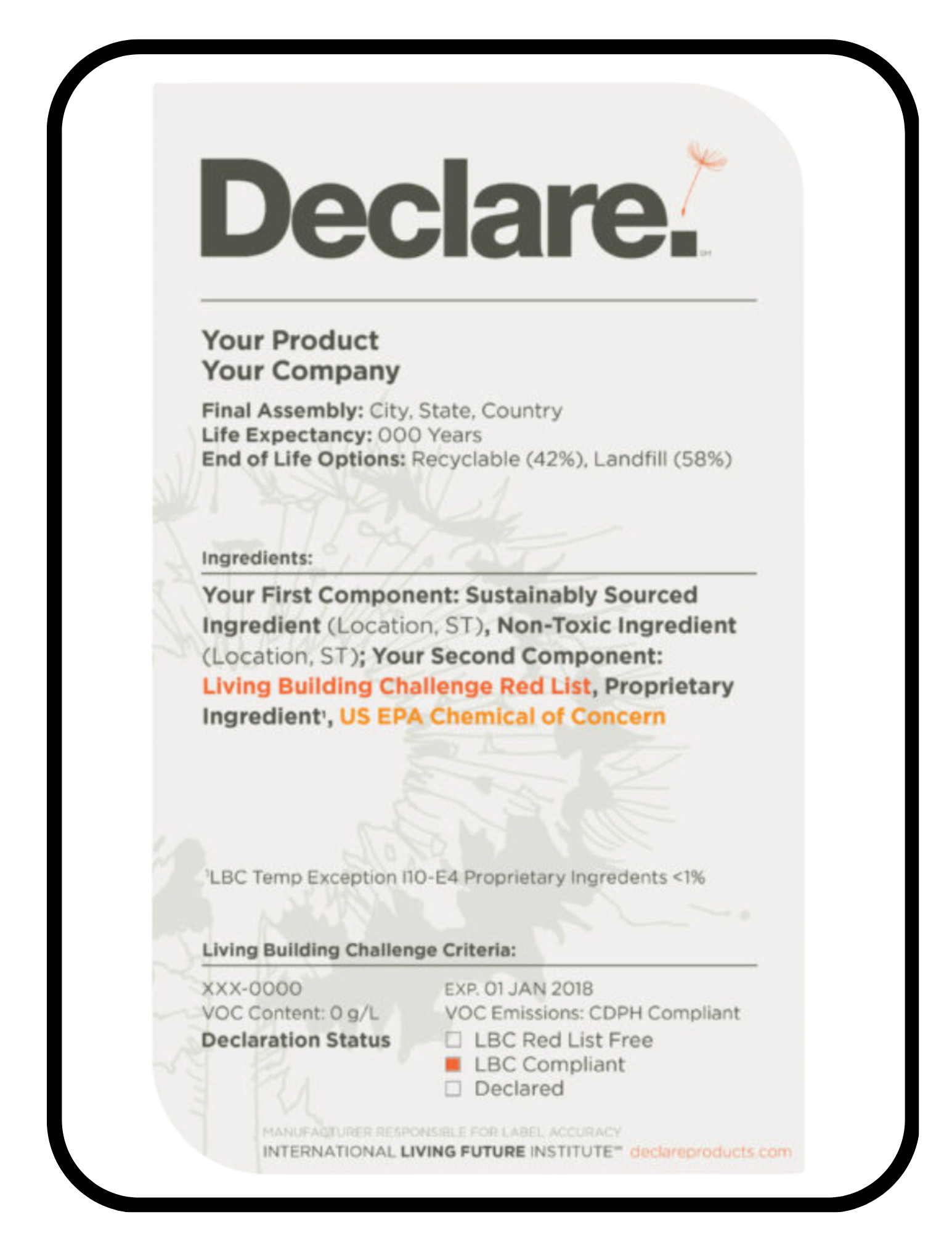
The International Living Future Institute’s large database of specific products, generally for professional and commercial use. Declare labels are like nutritional labels for furniture and building materials. There are three levels, graded on level of disclosure (the highest standard is 100% disclosure at 100ppm) and whether or not any of the ingredients are found on the Red List.
Health Product Declaration Collaborative (HPD-C)
The Health Product Declaration Collaborative includes a database of products that have disclosed their ingredients and their impact on human health.
International WELL Building Institute (IWBI) WELL AP
The IWBI promotes people-first buildings and offers WELL certification, which is similar to LEED, but with a human health focus rather than an environmental one. I did this a few years ago to round out my knowledge when it was commercially focused, but they now have a residential focused program for healthier homes, too.
Mindful Materials
A large database of specific products, generally for professional and commercial use. While it’s not specific for human health, you can sort with this criterion. Evaluates products based on their ecological health, social health, equity, and impact on humans.
More Healthy Design for You


Non-Toxic Blackout Curtains
Organic Mattress Toppers
Shower Filters That Actually Work
Bed Frames