
Non Toxic Mattress Toppers
The best non-toxic mattress toppers are made from GOLS-certified organic latex or GOTS-certified organic wool, both of which relieve pressure, regulate temperature, and create a chemical barrier over a conventional foam mattress without off-gassing themselves. Latex is durable and supportive, especially for side sleepers and back pain; wool is better for hot sleepers, dust mite allergies, and latex sensitivity. I evaluate every topper's foam and fabric material using the same certification-based scale explained in my full methodology.
By Dr. Meg Christensen | Physician-founder of Interior Medicine, a non-toxic home resource built on her background in medicine, biochemistry, epidemiology, and clinical research.

Updated August 25, 2026
Organic Latex Mattress Toppers
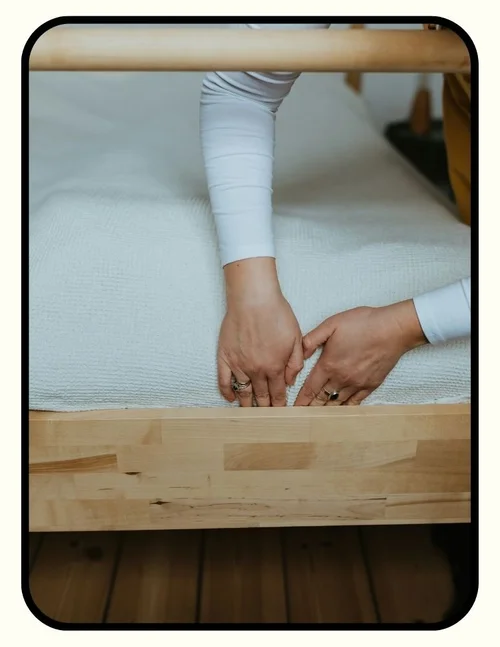 My Green Mattress: Best Latex Topper for Back Pain Relief
My Green Mattress is an affordable brand year-round without sales and their non-toxic mattress toppers are 100% organic. Theirs are made with 2" of GOLS-certified organic Dunlop latex and then are wrapped in unbleached GOTS certified organic cotton, which sets them apart. It's also ideal for back pain sufferers: 2" of more-supportive Dunlop latex adds comfort and shoulder relief without the excessive plushness of Talalay or thicker toppers that can worsen alignment issues. This is a nice balance of softness for pressure relief and firmness for spinal support.
Product rating
See the rating scales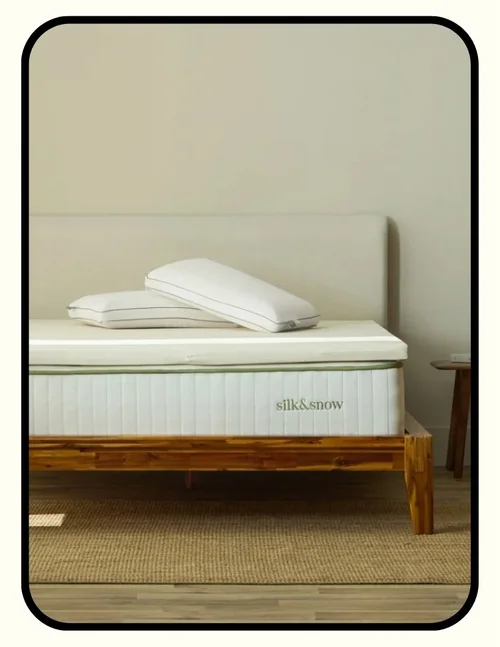 Silk and Snow: Best Affordable Organic Latex Topper
Silk and Snow makes the most affordable organic mattress topper, made with GOLS certified Dunlop latex and a GOTS certified organic cotton encasement. I got this for my daybed to make it soft enough to sleep on, and it is perfect. They offer medium and firm in 2" and 3" thicknesses, and I went with the medium 2". It's supportive but soft enough to sleep on my side. I appreciate how transparent a company Silk and Snow is becoming and love that these are truly organic with clear certifications.
Product rating
See the rating scales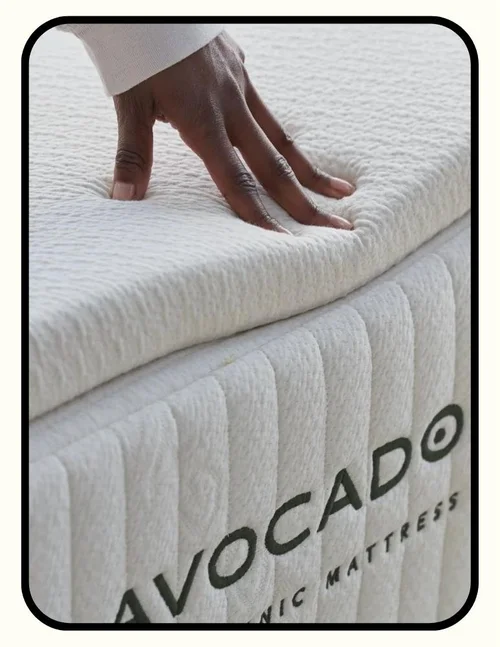 Avocado: Best Organic Latex Mattress Toppers for Side Sleepers
Avocado's 3" GOLS-certified organic Dunlop latex topper is perfect if you're a side sleeper needing shoulder and hip support. I personally use this topper on my own bed because I prefer firm mattresses for support, but need cushioning for side sleeping. This has been perfectly soft and very durable. Latex keeps its shape for decades and mine truly looks and feels the same 8 years later as it did on day 1. Also available in 2" thickness with options for GOLS organic Dunlop or plusher Talalay latex. Comes in every size from Twin to Cal King and is wrapped in GOTS certified organic cotton. As always, Avocado is super transparent about their materials!
Product rating
See the rating scales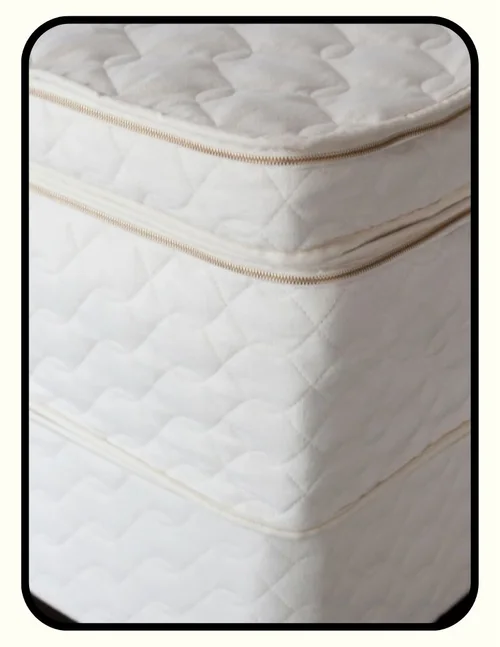 Savvy Rest: Best Organic Latex Mattress Toppers for Thickness, Plushness, and Customization
As always, Savvy Rest offers lots of customization with two latex topper options: a 3" natural Talalay topper (plusher than Dunlop) available in every size from Twin to Cal King, or their ultra-customizable topper with firmness options including GOLS-certified organic Dunlop latex. The premium option features organic wool and cotton casing with a zipper to secure onto their Serenity mattress (totaling 4" thickness, which is rare for toppers) or use standalone on any mattress. One of the spendier options but great for customizations, thickness, and their certified organic materials.
Product rating
See the rating scalesNatural Wool Mattress Toppers
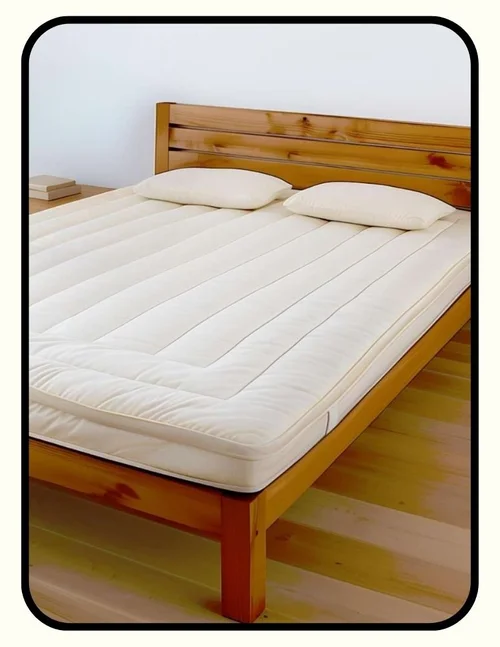 Sleep and Beyond: Best GOTS Certified Organic Wool Mattress Topper for Hot Sleepers
This under-the-radar organic brand makes one of the best rated, most affordable wool mattress toppers that's actually completely certified organic. Wool is the most moisture-wicking, thermoregulating and breathable mattress topper option, which is ideal if you have problems with night sweats and overheating. Wool actively wicks moisture away from your body while regulating temperature in all seasons. GOTS-certified organic wool is encased in GOTS-certified organic cotton, and it's densely stuffed, specified at 1,500 gsm, but still soft.
Product rating
See the rating scales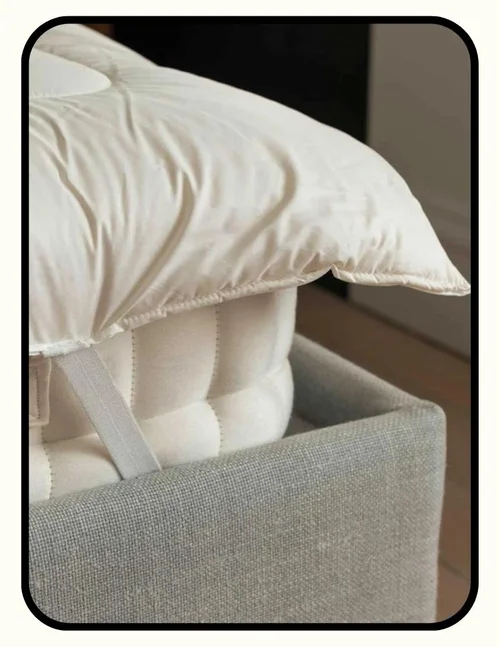 Piglet in Bed: Best Affordable Wool Mattress Topper
This is a thinner organic wool mattress topper that offers the heat and moisture-wicking properties of wool but at a more affordable price. Piglet in Bed's slim wool topper adds minimal puff while extending mattress life and reducing wear. Good for stomach sleepers and many back sleepers that don't need the shoulder loft. Not organic, but made with natural materials and OEKO-TEX certified for chemical safety. Ideal if you don't want to dramatically change your mattress feel but want natural temperature regulation and a little more protection than just a mattress protector.
Product rating
See the rating scalesNon-Toxic Down Mattress Toppers
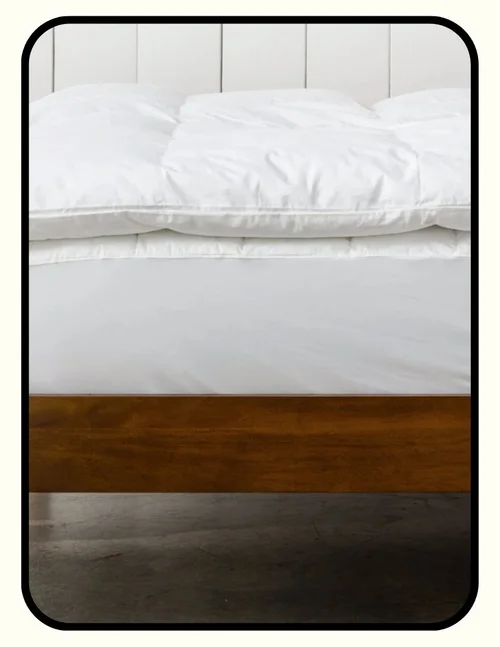 Parachute: Best Non-Toxic Down Alternative Mattress Topper
Sometimes, affordability or completely allergy-free polyester takes priority over natural fibers, wool, or feathers. In these cases, down alternative (polyester) is the way to go. Parachute's down alternative mattress topper is a good choice for two reasons; first, it's OEKO TEX certified, and second, the encasement is made of 100% cotton for a little added breathability over having a polyester encasement. It's also 3 inches thick for a good amount of marshmallow feeling.
Product rating
See the rating scales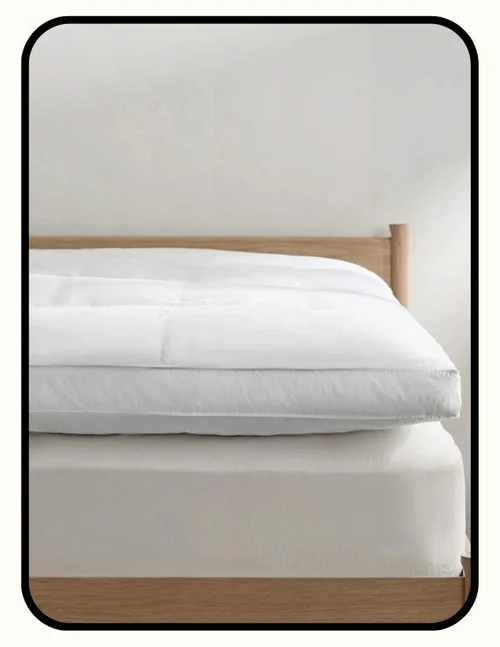 Parachute: Best OEKO TEX Down & Feather Mattress Topper
Parachute offers a luxuriously plush 550-fill natural down and feather topper. This is ideal if you have allergies to both latex and wool but still want natural, non-synthetic materials. Or, if you just like the feel of feathers, choosing a mattress topper with material health certifications is important. Features Responsible Down Standard certification ensuring ethical sourcing, encased in OEKO-TEX certified sateen cotton. Cloud-like softness without polyester "alternative down" or memory foam chemicals.
Product rating
See the rating scalesLooking for something specific? If you don't see the product or brand you're curious about, you can request a review here, or run it through the Second Opinion Product Checker to evaluate it yourself. Want to go deeper? My free course covers how to evaluate any product's materials yourself.
Join the Newsletter
Join the Newsletter
More Healthy Design for You

Your Complete Guide to the Best Organic and Non-Toxic Mattress Toppers
What is an organic mattress topper?
A mattress topper is a removable layer of cushioning material, usually 1-3 inches thick, that sits directly on top of your mattress to modify its feel without replacing the entire mattress. Organic mattress toppers are made from organic materials like latex rubber or wool, without standard polyurethane or memory foams.
What do organic mattress toppers do?
All mattress toppers can help relieve pain or change the texture of your existing mattress. But only non-toxic and organic mattress toppers have the added benefits of sleeping cool and reducing chemical exposure.
Help relieve pain: mattress toppers add a comfort layer between your body and the mattress surface. When you lie down, the topper compresses slightly under your body weight, distributing pressure more evenly across your shoulders, hips, and other contact points. This pressure redistribution is especially helpful for side sleepers who need cushioning at pressure points while maintaining spinal alignment. If you have a firm mattress that provides good back support but feels too hard, especially when you’re on your side, a 2-3 inch organic latex or wool topper adds comfort without sacrificing the foundational support underneath.
Add softness or firmness to an existing mattress: Unlike replacing your entire mattress, a topper lets you adjust comfort levels affordably. Adding a plush layer to soften a too-firm mattress or, perhaps less commonly, a firmer topper to provide more support to a mattress that's too soft are both ways a mattress topper can help change the texture of a mattress you currently have but aren’t totally satisfied with.
Reduce overheating: If you sleep hot, it’s possible that your memory foam mattress is to blame. Memory foam stores heat and can’t release it, which is why so many are marketed with additional “cooling gels.” Organic materials like natural latex and wool are natural in origin and are naturally breathable and temperature-regulating. Wool actively wicks moisture away from your body, while latex's open-cell structure allows airflow, keeping you much cooler than memory foam or regular polyurethane foam does throughout the night.
Help protect you from chemicals in a standard foam mattress: A 2-3 inch organic latex or wool topper creates a protective barrier between your body and a conventional polyurethane foam mattress underneath, reducing both heat transfer (which accelerates VOC off-gassing) and mechanical friction (which releases flame retardant particles into household dust).
Delay a large purchase: If your mattress isn't ready for replacement yet, but needs a comfort refresh, a topper can make it feel better and extend its usable life by several years. This gives you time to save for a high quality organic mattress when you're ready.
What's the difference between a mattress topper and a mattress pad?
Mattress toppers and mattress pads are easily confused, but they serve totally different purposes when shopping for non-toxic bedding.
Mattress toppers are thick (1-3 inches) made from materials like latex, wool, or memory foam. They significantly change how your mattress feels by adding softness, pressure relief, or changing temperature regulation.
Mattress pads are thinner protective layers (typically less than 1 inch) constructed like a quilted fitted sheet. They provide minimal comfort or plushness, but help protect your mattress from moisture, sweat, and stains with a little extra padding. Mattress pads are machine-washable and designed for regular laundering.
Mattress protectors are the thinnest protective layer, not meant to add comfort or plushness at all, but strictly are for waterproofing or sealing out dust mites. (See the ones I recommend here, including organic waterproof mattress protectors, and the best dust-mite proof encasement.)
Which do you need? If your mattress is too firm or you want chemical barrier protection from a conventional foam mattress, choose an organic mattress topper (see organic choices above.) If you just want to protect your mattress from sweat stains, add a washable mattress pad. If you need waterproof protection or dust mite defense, add a GOTS-certified organic mattress protector or encasement. I recommend a topper and either a pad or protector.
Where does a mattress topper go on your bed?
A mattress topper goes directly on top of your bare mattress surface, creating a new top layer before any other bedding, almost like it becomes part of your mattress. It can be hard to visualize, so here is the correct layering order from bottom to top:
Mattress (your existing mattress)
Mattress topper (organic latex or wool topper placed directly on mattress)
Mattress pad, protector, or encasement (optional but recommended—goes over mattress + topper as one unit)
Fitted sheet (stretches over everything)
Your body (sleeps on top of the fitted sheet)
Once you place the topper on your mattress, treat them as a single unit. The mattress pad, protector, or encasement goes around both the mattress and topper together, protecting the topper from dust mites and moisture while keeping it securely in place.
This layering order maximizes protection: the organic topper creates a chemical barrier between you and any foam mattress underneath, while the mattress protector protects your investment in the organic topper from sweat and dust mites that can easily make their way through bed sheets.
How thick should a mattress topper be?
The ideal mattress topper thickness depends on your goals and what your existing mattress is like.
1-inch mattress toppers: Best for subtle softening of a slightly-too-firm mattress or adding a thin chemical barrier over conventional foam. Provides minimal pressure relief so is best for stomach sleepers who need to maintain firm support, not necessarily enough for side sleeping. This is also the most affordable organic mattress topper thickness.
2-inch mattress toppers: Provides noticeable pressure relief for side sleepers without the excessive sinking-in feeling. Creates a substantial chemical barrier between you and a toxic foam mattress underneath. Sufficient thickness for temperature regulation, especially if you opt for a wool topper. These generally cost a little more than 1 inch varieties, but are really easy to find, and still save you money compared to 3 inch or luxury mattress toppers.
3-inch mattress toppers: Maximum plushness and pressure relief. Best for very firm mattresses, side sleepers, or people with significant shoulder/hip pain. The thicker material creates the best chemical barrier for protection from conventional foam mattresses. These can feel too soft for back or stomach sleepers.
For chemical protection specifically: A 2-3 inch organic latex topper should provide the best barrier against VOC off-gassing and sVOC release from polyurethane foam mattresses. Thicker, denser toppers reduce heat transfer to the foam underneath (slowing VOC release into the air) and minimize friction that breaks down foam particles (reducing sVOC release into dust).
Why Organic Mattress Toppers are Healthier Than Foam Toppers
Can an organic mattress topper protect you from a toxic mattress underneath?
Yes, an organic mattress topper can significantly reduce (though not completely eliminate) chemical exposure from a conventional polyurethane or memory foam mattress underneath.Two ways organic toppers provide protection:
1. Reduces foam degradation and sVOC release
An organic topper creates a protective cushion between your body and the foam mattress, reducing the friction and mechanical pressure from tossing and turning during sleep. Less physical stress on the foam means slower degradation, which slows the release of semi-volatile organic compounds (sVOCs).
sVOCs are relatively heavy molecules that don't evaporate into air like VOCs. Instead, they fall out of foam (especially degrading foam) as particles, and settle into household dust. The most common sVOCs in mattresses are flame retardants, which are bio-accumulative endocrine disruptors. An organic wool or latex topper between your body and the foam acts as a buffer that minimizes the mechanical breakdown releasing these chemicals.
2. Decreases body heat transfer and VOC off-gassing
Body heat accelerates volatile organic compound (VOC) off-gassing from polyurethane foam. An organic mattress topper—especially natural latex or wool—acts as an insulating layer that reduces direct heat transfer between your body and the toxic foam underneath. Lower foam temperature equals slower VOC release into your bedroom air.
Natural latex, and especially wool, are both breathable materials that regulate temperature without trapping heat, making them ideal for reducing heat-accelerated chemical release. Heat is easily trapped by polyurethane foam, especially denser memory foam, which is why it can sleep hot.
It’s important to also know what an organic topper CAN'T do:
Doesn't stop all off-gassing: VOCs are gases that spontaneously move from products into the air. While a topper reduces heat-accelerated off-gassing, it doesn't create an airtight seal. Some VOCs will still evaporate into the air, but potentially at slower, steadier concentrations.
Doesn't prevent all dust exposure: some friction may still reach the foam underneath and some sVOCs can still be disturbed when you move during sleep.
Not a permanent solution: The foam mattress underneath continues degrading (just more slowly) and releasing chemicals throughout its lifespan. An organic topper buys you time.
The best organic topper materials for chemical protection:
Natural latex toppers (2-3 inches): Dense enough to create a substantial physical barrier, naturally antimicrobial (resists mold and bacteria), and cooler sleeping to minimize heat transfer to foam underneath. Ideal for vegans.
Organic wool toppers (2-3 inches): Excellent temperature regulation, naturally flame-retardant (eliminates need for chemical flame retardants), and creates a breathable barrier between you and foam. Good for latex allergies.
Ultimately, any thickness, and even a down topper, can reduce some friction between you and the mattress. Just avoid synthetic toppers: memory foam or polyurethane foam toppers just add more toxic foam on top of your existing toxic foam—they don't protect you, they increase your chemical exposure.
How to Choose the Best Organic Mattress Topper
What is the best non-toxic mattress topper material?
GOLS-certified organic Dunlop latex toppers are the best non-toxic choice for most people, because latex is supportive but soft, offering good pressure relief, is very durable (10-20 years), and is much safer than memory foam. You can read about the harmful chemicals used in memory foam and why I don’t recommend memory foam toppers in my Foam Guide.
Best for:
Pressure relief: Latex, especially Talalay latex, is very plush. Dunlop latex can provide pressure relief with slightly more firm support.
Maximum durability and value: Latex is a very durable material, and can last up to 20 years!
Chemical barrier protection: Latex is soft, but dense, so provides an adequate barrier between you and a foam mattress with harmful chemicals.
People without latex allergies: The latex protein is heated during baking, meaning most people, even with a latex allergy, won’t have a problem, but it’s still a good idea to check!
GOTS-certified organic wool toppers are the best non-toxic choice for temperature regulation and if you’re allergic to latex. You can read more about why GOTS certification is important in my Fabric Guide, which covers wool.
Best for:
Hot sleepers needing cooling: The unique structure of wool draws away excess moisture and heat.
Dust mite allergy sufferers: Because wool does not stay moist, dust mites cannot thrive in it.
Natural flame resistance: Wool is very difficult to ignite and is often used as an organic alternative to chemical flame retardants.
Latex allergy alternatives: All-wool toppers do not contain latex, if you have a severe latex allergy.
Are organic wool mattress toppers worth it?
Yes, especially if you’re looking for temperature regulation, dust mite resistance, protection from a foam mattress underneath, or need an organic alternative to latex mattress toppers.
Worth it when:
You sleep hot or have night sweats (wool is excellent at thermoregulation)
You have asthma or dust mite allergies
You want natural flame resistance without chemicals
You have latex allergies
Consider latex instead if:
Wool toppers (5-10 year lifespan) are typically less durable than latex (10-20 years) and the fibers may compress over time.
You need significant pressure relief (side sleepers with pain)
Which organic mattress topper is best for side sleepers?
GOLS-certified organic latex toppers, 2-3 inches thick, are best for side sleepers.
Why latex is ideal for side sleepers:
Superior pressure relief at shoulders and hips
Maintains spinal alignment (soft enough for comfort, but firm enough for support)
Responsive (not slow-response, like memory foam)
Doesn't trap heat
Latex is durable and responsive for 10-20 years
Thickness guide for side sleepers:
Avoid 1-inch toppers: Too thin for adequate side-sleeping pressure relief.
2-3 inch toppers: ideal for pressure relief; the more the plusher. Choose based on comfort preferences and budget.
How firm should a mattress topper be?
Start with Dunlop latex unless you have specific needs. Dunlop latex is slightly firmer than Talalay latex, and it accommodates most sleeping positions and body weights with balanced pressure relief and support.
Adjust based on:
Sleeping position: Consider softer Talalay if you’re a side sleeper. Stick with Dunlop if you’re a back sleeper. Consider feather or down (or a thinner Dunlop) if you’re a stomach sleeper.
Body weight: Wool or Talalay if under 130 lbs. Denser Dunlop will compress less if over 200 lbs.
Health priorities: Dunlop for back pain and added support, Talalay for shoulder pain, wool for temperature regulation. Either latex or wool for allergy control.
Mattress underneath: Softer materials if very firm mattress underneath.
Do I need a mattress topper if I have a firm mattress?
Yes. A mattress topper can be very helpful for a firm mattress if:
You're a side sleeper with shoulder or hip pain
Your firm mattress feels uncomfortably hard (even if it provides good support)
You want chemical protection from a polyurethane memory foam mattress underneath
What mattress topper materials are safest for allergies and asthma?
For allergies and asthma, GOLS-certified organic latex, GOTS-certified organic wool, and OEKO TEX-certified down are the safest mattress topper materials. They are resistant to dust mites and mold, and don't off-gas irritating chemicals like synthetic foam toppers do, which are known to irritate the respiratory airways and worsen asthma.
GOLS-certified organic latex toppers for allergies/asthma:
Natural latex is inherently antimicrobial and resistant to dust mites, mold, and mildew without chemical treatments. For people with asthma triggered by dust mites or mold, latex toppers provide a hostile environment for these allergens.
Important note on latex allergy: Natural latex toppers aren’t known to trigger allergic reactions, even for people with known latex allergies, because the latex proteins are denatured when the latex is heated and baked into shape. However, always be cautious and consider completely avoiding if you have a severe allergy. Always talk with your doctor first if you have a latex allergy.
GOTS-certified organic wool toppers for allergies/asthma:
Wool is naturally hypoallergenic and resistant to dust mites because it does not store excess moisture or heat within its fibers. The lanolin in wool (even after washing) also creates an inhospitable environment for dust mites, which trigger approximately 20 million Americans' asthma and allergies. Wool also wicks moisture away from your body, preventing the humid environment where mold and mildew thrive.
Important note on wool (lanolin) allergy: if you are specifically allergic to the lanolin in wool, avoid a wool topper. True wool allergy is very rare but always talk to your doctor if you think you have one.
Are feather/down toppers safe for allergies/asthma?
Yes, but latex or wool are probably better choices because they are denser. Feather allergies are actually very rare, and people experiencing allergy with a feather or down mattress topper are usually actually reacting to dust mites within the encasement, not the feathers themselves. Feather mattress toppers do provide good temperature regulation but it’s very easy for dust mites to penetrate the fabric encasement. If you do opt for a feather mattress topper, add a 6-sided 1-micron pore size encasement around your entire mattress and mattress topper, so that dust mites cannot enter into it and cause problems.
Why to avoid synthetic foam toppers if you have allergies or asthma: Memory foam and polyurethane toppers off-gas VOCs (formaldehyde, benzene, toluene, styrene) that irritate airways and trigger asthma attacks. Synthetic foam also provides a hospitable environment for dust mites.
Non-Toxic Mattress Topper Maintenance
How long do organic mattress toppers last?
Organic mattress toppers typically last longer than foam toppers because they are made with more durable materials. Polyurethane foam is much more prone to breaking down with friction, which is why it’s recommended to replace standard mattresses every 7-8 years.
GOLS-certified organic latex toppers: 10-20 years with proper care. Organic latex is very durable, in addition to being non-toxic.
GOTS-certified organic wool toppers: 5-10 years. Compression of the fibers can reduce effectiveness.
Luckily, there are ways to extend your organic mattress topper’s life. How to maximize lifespan:
Use a mattress protector to keep away from moisture
Rotate 180 degrees every 3-6 months
Can you wash a latex or wool mattress topper?
No, you cannot machine-wash latex or wool mattress toppers.
Latex toppers
Latex mattress toppers are too large and heavy to wash in a machine, and water that gets deep into the foam can be trapped in its dense structure.
How to clean a latex mattress topper instead of washing it:
Spot-clean stains with damp cloth and mild detergent (use minimal water)
Air out every 1-2 months
Use washable mattress protector to avoid needing deep cleaning
Best option: keep it completely protected to avoid any cleaning, by using a 6-sided mattress encasement around your entire mattress and mattress topper, then top it all with a waterproof mattress protector before putting your sheets on.
Wool toppers
Machine washing causes felting (permanent compression and shrinkage) and drying with heat damages wool fibers
How to clean a wool mattress topper instead of washing it:
Shake and air out every 1-2 months
Vacuum gently on low suction
Spot-clean stains with mild wool-safe detergent
Brief sun-drying in indirect sunlight if needed
Best option: keep it completely protected to avoid any cleaning, by using a 6-sided mattress encasement around your entire mattress and mattress topper, then top it all with a waterproof mattress protector before putting your sheets on.
Do organic mattress toppers need to air out before use?
No. GOLS-certified organic latex and GOTS-certified organic wool toppers do not require off-gassing time because they contain no synthetic chemicals that release harmful VOCs. However, depending on your level of sensitivity or smell preferences, they may benefit from brief airing to dissipate natural odors from packaging.
Organic latex toppers:
What you might smell:
Faint natural rubber scent (mild, fruity, vanilla-like, earthy— not chemical)
Packaging odors (if it is wrapped in plastic, or shipped in cardboard)
Airing recommendations:
Low sensitivity: Use immediately
Higher sensitivity: Air out for 24-72 hours, or place outdoors in shade
What organic latex does NOT smell like: Harsh chemical smell (formaldehyde, benzene). If your "organic" latex topper smells strongly chemical, verify GOLS certification. See my Foam Guide for more details.
Organic wool toppers:
What you might smell:
Subtle natural wool/lanolin scent (earthy, slightly sweet, “sheepy”)
Packaging odors (if it is wrapped in plastic, or shipped in cardboard)
Airing recommendations:
Low sensitivity: Use immediately
Higher sensitivity: Air 24-72 hours, or place outdoors in shade
Compare to synthetic foam: Memory foam off-gasses for months or years. Organic toppers don't require off-gassing like toxic synthetic foam. They may have a mild natural scent that dissipates quickly with minimal airing. The absence of harsh chemical smells is one of the clearest signs you've chosen a truly non-toxic product.
Reviews by Room ➜ Bedroom ➜ Mattress Toppers