
Best Shower Head Water Filter
The best shower filter is NSF certified and shares test results showing exactly how much of each contaminant was removed for how many gallons. A filter that truly works can mean softer hair and less irritated skin, but with an unverified one you have no idea how long it keeps working, or whether it works at all. Most brands don't share test data: instead they list scary-sounding contaminants the skin can’t even absorb, use the phrase "exceeds NSF standards" with no testing, or brag about how much chlorine was removed… for the first few gallons without mentioning it drops to near zero afterward. In short, healthwashing is rampant in the shower filter world! I personally test top models, contact brands for their test results, and rank shower filters from best to worst based on lab data, not aesthetics, fear, or potential for affiliate commissions. Read more about how I keep ratings unbiased and consistent in my full methodology.
By Dr. Meg Christensen | Physician-founder of Interior Medicine, a non-toxic home resource built on her background in medicine, biochemistry, epidemiology, and clinical research.

Updated October 13, 2026
NSF Certified Shower Filters
 Best Shower Filter for Chlorine Removal: Aquasana
Aquasana is the best chlorine filter for shower use, removing 80-90% of chlorine for 10,000 gallons, which is roughly 6 months of daily showering for two people. While it's not certified to remove other contaminants, this makes it the best shower filter for eczema, asthma, and hair health, since chlorine irritates skin and lungs while causing dry, brittle hair. This filtered showerhead attachment works with your existing shower head or hose, or you can purchase their complete filtered showerhead system. I appreciate that they don't make unverified claims (shower filters can't effectively remove heavy metals—more on this below) and their filter only needs replacing twice yearly. I used this for a long time, and it's a reliable workhorse. Check their website for direct prices and frequent sales, or Amazon.
Product rating
See the rating scale Best Low-Maintenance Shower Filter: Multipure
Does the Multipure showerhead filter work? Yes, their shower filter attachment contains 100% KDF-55 media and is WQA-certified to meet NSF 177 standards, filtering at least 50% of chlorine for 25,000 gallons (around 1 year, or a little more, for 2 people). It attaches to any standard showerhead or handheld shower hose. While the chlorine removal rate isn't as high as Aquasana, and it's not verified to remove PFAS, this is the longest-lasting certified shower filter option available. So in short, if you're busy and want a shower water purifier that requires minimal maintenance and infrequent filter changes, Multipure has consistent chlorine reduction and a long filter life.
Product rating
See the rating scale Best Shower Filter for Chloramine & Chlorine Combined Removal: AquaYouth
This is the best shower water filter for chloramine removal. Chloramine is much harder to remove from water than chlorine, and 1 in 5 homes now have chloramine as their water disinfectant (check to see yours with the EPA water tool.) Their carbon filter is also NSF 177 certified to remove chlorine for 3,500 gallons and vitamin C is an effective way to remove chlorine from bathwater, so this filter has dual action. Once you buy the refillable filter, add Vitamin C powder inside of it once it's gone (~ every 4 weeks) to maintain efficiency. Definitely some effort, but also the only way to remove chloramine through a shower filter (see why catalytic carbon doesn't work well by jumping to the FAQ below). Vitamin C powder is inexpensive and available on Amazon or at your local health store. Check prices on their website or on Amazon.
Product rating
See the rating scale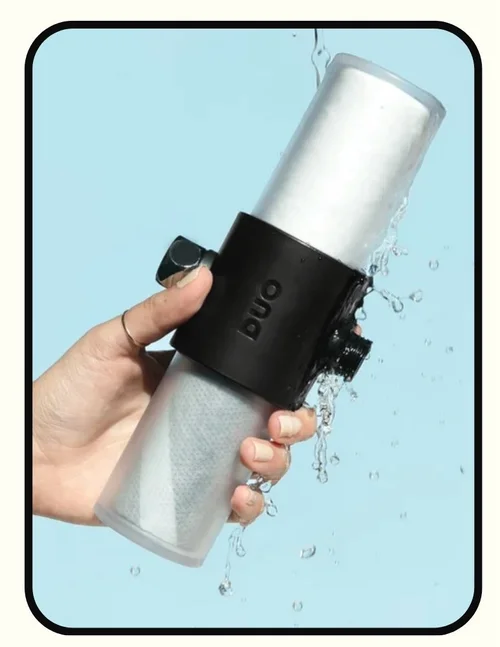 Best Shower Filter for PFAS Removal, Microplastics, and Chlorine: Weddell Duo
The Weddell Duo is the best shower filter overall because it's the only NSF-certified option that removes 99% of PFAS for 5,000 gallons, 96% of particulates, and 87% of chlorine for 8,000 gallons. This shower water filter removes more contaminants than any competitor while maintaining high water pressure. They stand out for transparency: all claims are third-party certified with results displayed prominently on their website. They have NSF 42 for particulate removal which captures some microplastics but they do not have full NSF 401 microplastic removal certification. This is the fourth shower filter I've tried, and it's the best, one of the more affordable shower filters and captures so much of the sediment and rust in my pipes. I use it every day and my hair is softer and less frizzy, and my skin is noticeably less dry. Check their website for sales or Amazon. A heads up for Amazon: be sure to only buy replacement filters with the Genuine symbol sold from the Weddell store, not the "for Weddell" ones.
Product rating
See the rating scale Best Massage Shower Filter with NSF Certification: WaterChef
At first glance, WaterChef appears to remove 96.6% of chlorine for 10,000 gallons—but that's not quite true. They have NSF 177 certification through IAPMO for removing at least 50% of chlorine for 10,000 gallons, with a maximum removal rate of 96.6%. Since they don't clarify the minimum percentage, it likely meets NSF's 50% threshold. What sets WaterChef apart is that it comes as a complete filtered showerhead system with adjustable spray options, including a pulsating massage setting. WaterChef was also responsive and speedy in sharing their IAPMO testing when I reached out.
Product rating
See the rating scale Most Affordable NSF Certified Shower Filter: Sprite
Most Sprite models have NSF 177 testing and certification for chlorine removal. Sprite also offers the most affordable shower filters on the market, with IAPMO testing for removing at least 50% of chlorine for 5,000-25,000 gallons, depending on the model. They offer universal shower filter attachments with or without integrated showerheads. Some models have mixed reviews, so check customer feedback to avoid units that leak. Their website makes it easy to verify certification information, or you can purchase through Amazon.
Product rating
See the rating scaleNSF Certified Shower Filters
Shower Filters with Test Results
 Hydroviv Shower Filter Review
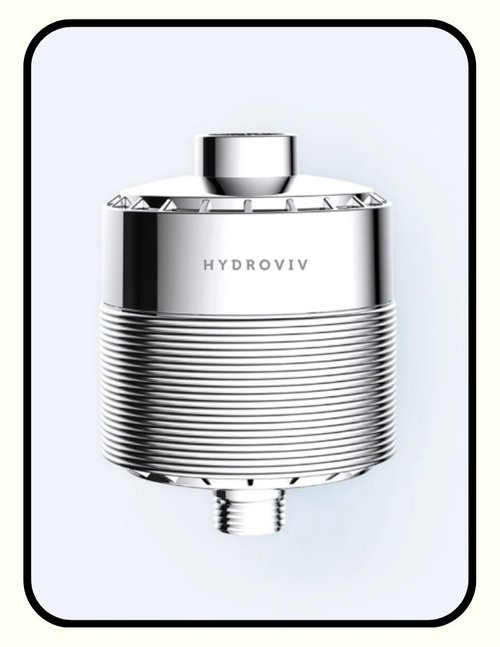
What does the Hydroviv shower filter remove? Chlorine, and like most other filters, that's probably it (read more in my guide below.) Their new shower filter released in May 2025 has test results showing at least 50% chlorine removal for 8,000 gallons. They don't have NSF certification, but shared results done by FilterTech in China with me. They also disclosed it's made with KDF and calcium sulfite, as is their updated inline filter 2.0. Their "bacteriostatic" feature is simply KDF. Attaches to any standard showerhead or handheld shower hose.
Product rating
See the rating scale Rorra Shower Filter Review
Rorra is now NSF 177 certified through WQA, and they share their results on their website, removing at least 56% for 8,000 gallons. Instead of waiting to hit that 8,000 gallon point, they recommend changing filters every 4,000 gallons where they have an average removal of 91%. That is about every 90 days based on that calculation, which is honest and reasonable. Their filters are made with a lot of KDF and calcium sulfite and I appreciate their transparency and elevation over time.
Product rating
See the rating scaleNo Shared 3rd Party Test Data, But Reasonable
 Hello Klean Shower Filter Review
Is the Hello Klean showerhead good? Their new Shower Head+ sets them apart because it tracks how many gallons it has filtered and tells you when to change it, which usually works out to around every 3 months, though this is nice because it's so individualized. They offer 3 different shower filter styles: a handheld option (shown above), an inline attachment, and a rain shower filter that mounts directly to your showerhead. The handheld contains two filters, one in the handle and one in the head. They clarify their filters don't truly soften hard water (none do), but they now use an additional filtration media, CRS, that helps the minerals feel less harsh. CRS is maybe short for Catalytic Radical Softening and it binds to minerals to reduce scale. The KDF and carbon in these should still help reduce chlorine, though they don't share third party test data.
Product rating
See the rating scale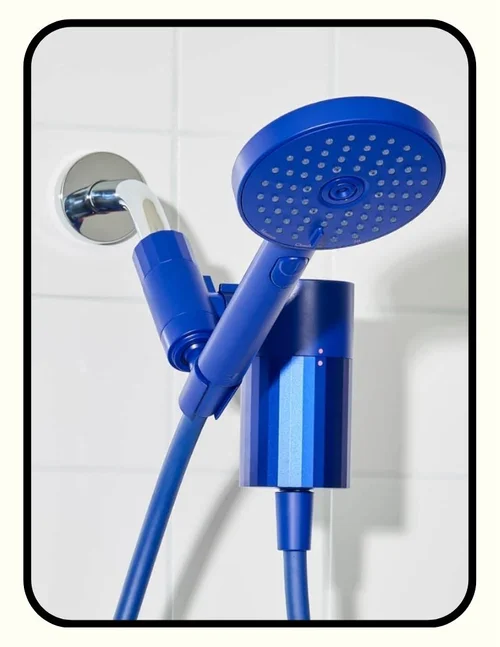 sproos! Shower Filter Review
sproos! shower heads don't have third-party testing, but I rank them highly in this category because their filter is made with KDF (one of the gold standards for chlorine removal), and they don't make exaggerated claims about contaminant removal. I've also tried it: it's very easy to install and maintains water pressure, so while I can't verify exactly how many gallons it works for to remove chlorine, it's a solid filter. This is an eco friendly shower filter—their refill cartridges are recyclable and they don't use chrome plating. They also recommend replacing the filter every 3 months, which is reasonable for an uncertified filter (compared to the 6 months a heavier-duty, tested filter might last). Available in cute colors as just a showerhead, or a showerhead with a filter.
Product rating
See the rating scale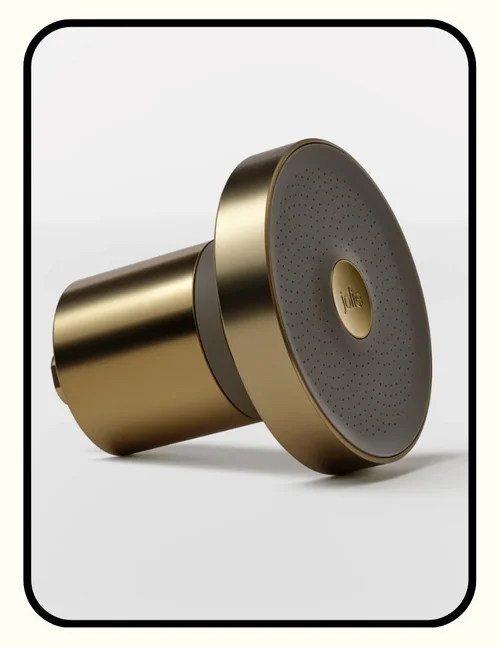 Jolie Shower Filter Review
Is the Jolie shower filter worth it? Yes, if you want some chlorine removal and a beautiful showerhead. Jolie is not certified, but provides more specifics than most other uncertified shower filter brands—their chlorine removal rate was tested in-house (not by a neutral third-party lab) at 85% for 90 days. This is believable, unlike others claiming 99.9% removal for unrealistic timeframes. It probably doesn't remove heavy metals or minerals efficiently, but without third-party testing, it's impossible to know. This is still a great shower water filter for softer skin and hair if that's your main focus. Note that this is a complete filtered showerhead system—you can't attach it inline to a handheld shower hose. However, it's very aesthetically pleasing and comes in several nice finishes and colors.
Product rating
See the rating scale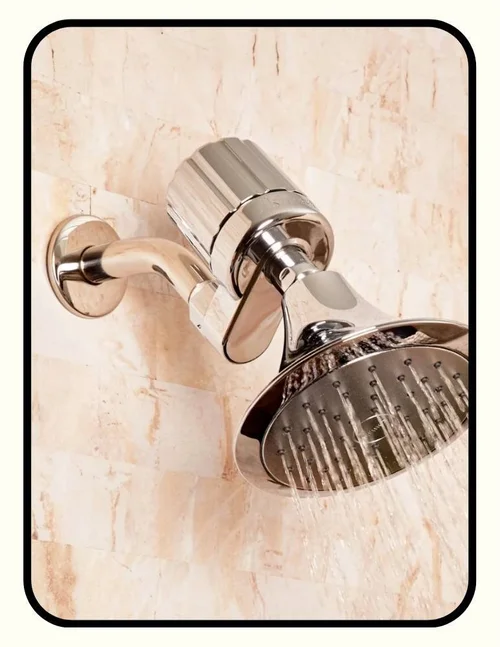 Kitsch Shower Filter Review
Does the Kitsch shower filter work? It should help your hair! It contains 86% KDF, which is excellent—KDF is one of the gold standards for chlorine removal in shower filters, so you want a high concentration. The rest is calcium sulfite, which they happily disclose. Refreshingly, Kitsch doesn't make exaggerated claims about contaminant removal—just that their product will make your hair softer and shinier. I really appreciate this honesty, since it won't mislead anyone into thinking their filter is doing more for their health than it actually is. Attaches to any standard showerhead or handheld shower hose. Like the others in this uncertified-but-reasonable category, it's aesthetically pleasing.
Product rating
See the rating scale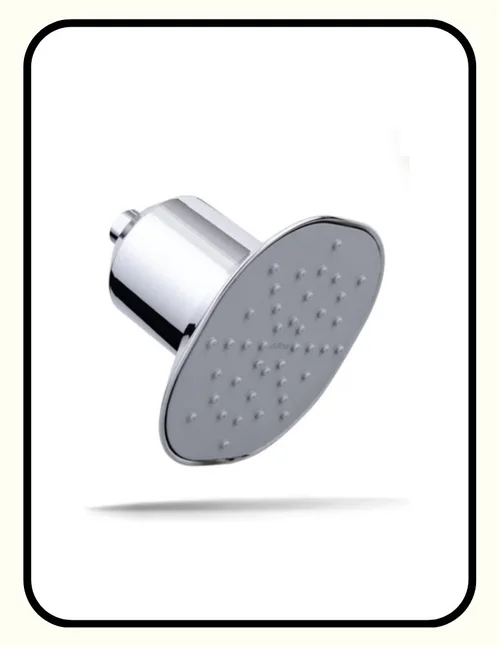 Afina Shower Filter Review
Is the Afina shower filter worth it? It's made with 95% KDF and 5% calcium sulfite, putting it on par with most other uncertified shower filters here. They make some bold claims without evidence to back them up—their website says they outperform NSF 177 standards, but when I emailed, they declined to share test results. The KDF will certainly remove some chlorine, though I'm deeply skeptical it can meaningfully remove heavy metals or much else. This is a fine shower filter that will do what most others do (decrease chlorine exposure), and they were friendly with speedy email responses. Attaches to any standard showerhead or handheld shower hose.
Product rating
See the rating scale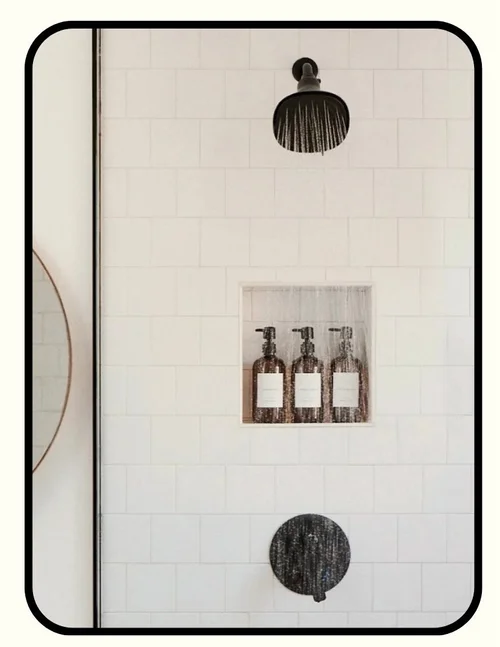 Canopy Shower Filter Review
Is the Canopy showerhead worth it? Canopy makes numerous claims, and while I'm sure their KDF, carbon, and calcium sulfite mixture can remove chlorine and some impurities, I'm very skeptical it can meaningfully remove much more (read more about why below). Though the idea of scent in the shower is lovely, their essential oil blends contain synthetic fragrance, so I'd recommend using your own 100% organic essential oils instead, if you go this route. They're aesthetically pleasing and creative, and their customer service was clear and prompt. Attaches to any standard showerhead or handheld shower hose.
Product rating
See the rating scale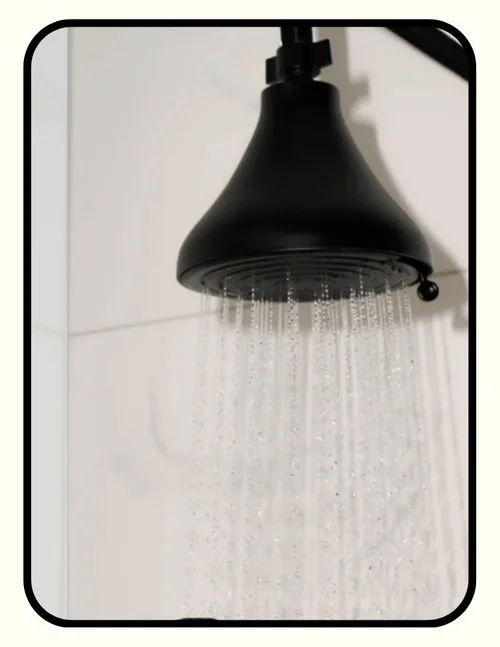 NUUD Shower Filter Review
The NUUD showerhead filter is made of KDF, carbon, and calcium sulfite, and like many others in this category, relies on subjective customer experience results like softer hair and skin instead of third party testing. But, the filtration media is legit, and they recommend replacing filters every 3 months, which is also reasonable. I think this is a totally fine showerhead like the others in this section, with a nice look.
Product rating
See the rating scale Korabeauticals Shower Filter Review
Another KDF, carbon, and calcium sulfite option, the Korabeauticals Aquashield is in this category because while they say it's tested to NSF 177 standards, it's not actually tested or certified by NSF. Read more below about that detail in language. That said, the filtration media is good and they don't make a ton of crazy claims. They do state that the filter should be replaced every 4-6 months, which seems long to me considering there's no data on how well it performs and other, near-identical filters need replacing every 3 months.
Product rating
See the rating scaleNo Shared Results
 Filterbaby Shower Head Review
Does the Filterbaby shower filter work? I asked for test results but they say they are not public information. They have some website statements about outperforming every other filter and removing 98% of chlorine for 10,000 liters but without test data I highly doubt it, as even the shower filters with the best test results on the market cannot do that. I would love to see the proof. They have toned down some of their overstatements like removing arsenic from water which is good. These are really cute and available at Nordstrom and Target and have the backing of several MDs, but I just do not understand the hype without the data and with the exaggerated claims. Their filters are made with carbon and a "pleated" fiber. I'd rather see tried-and-true materials like KDF when they don't share results.
Product rating
See the rating scale eskiin Shower Filter Review
April 2026 Update: the NSF published this—Eskiin Inc. does not have any product certified by NSF and is not authorized to use the NSF certification mark or make any claims of NSF certification. (My prior review: Does the eskiin shower filter work? Probably not as well as they claim. Their Amazon listing says they "exceed NSF 177 standards," but they stated via email they're waiting to share testing results—making me a touch suspicious their filter doesn't do as much as stated. A 15-stage filter sounds impressive, but it's the same size as a regular filter, meaning tiny amounts of each filtration material. I generally prefer filters made with as much KDF as possible (the gold standard for chlorine removal) rather than being "diluted" with numerous other filtration materials.)
Product rating
See the rating scale Crystal Quest Shower Filter Review
Crystal Quest does have third-party testing done by an IAPMO lab, but it doesn't quite match their filter description, which states it can remove many more contaminants in addition to chlorine for up to a year. The lab testing verified the shower filter removes 72-89% of chlorine for up to 500 gallons (29 showers), but that's it. I'm glad to see testing, but felt misled that their claims were listed next to a large "IAPMO Tested" logo when only one claim was actually tested and didn't perform well. It's possible it removes chlorine longer and removes more contaminants, but without testing, it's impossible to know.
Product rating
See the rating scale AquaBliss Shower Filter Review
Quite popular, the AquaBliss is one of the last on my list because it doesn't have any testing to back up their claims and is made with so many different types of filtration media that it's probably not even removing much chlorine—basically the only thing a shower filter is capable of (read more below).
Product rating
See the rating scale Sonaki Shower Filter Review
Does the Sonaki shower filter work? Sonaki is another Vitamin C-based shower filter. They make a lot of claims without any data or solid information to back them up. While it's true that Vitamin C is capable of removing chloramine from water, it's used up very quickly, requiring replacement likely every month (there are no third party tests for this, so this is an estimate.) Sonaki says it has third party testing that "exceed international industry standards" but aren't listed in NSF, WQA, or IAPMO, and their "test results" are a very tiny screenshot of…something? The non-vitamin C filters have several stages but no information about what type of media is in them. One says it is polypropylene and "endorsed" by NSF, which NSF does not do. The AquaYouth at the top of this page is a vitamin C filter but with certification.
Product rating
See the rating scale PRIMALS Shower Filter Review
Is the PRIMALS shower head worth it? No. It contains 15 types of media which sounds good until you realize this is a classic marketing technique—effective filters are made with as much KDF or other proven media as possible rather than being "diluted" with numerous other filtration materials. They also overstate the filter's ability to remove fluoride (which is only possible at low pH with very slow-moving water—read the FAQ below for more.) Also, fluoride ions dissolved in tap water aren't absorbed through your skin and don't volatilize into steam, either. Removing pharmaceuticals and heavy metals can't be done with a shower filter, which processes hot water very quickly at high pressure: it's even difficult for a slow-moving under sink filter to do. Finally, any shower head with NSF 177 has to meet flow rate requirements, so this filter's claim that it doesn't slow flow rate down is not impressive unless you're comparing it to other uncertified filters.
Product rating
See the rating scale Sante For Health Shower Filter Review
I agree with Sante that they have a larger volume of filtration media than many filters, but that's about it. They use a combination of KDF-55 (55% copper and 45% zinc) and KDF-85 (85% copper and 15% zinc), making the mixture 70% copper and 30% zinc. High copper is good at reducing hydrogen sulfide (rotten egg smell common in well water) into harmless copper sulfide. Nothing more special than the KDF-55 used in most filters to remove chlorine. One of the other media is SIR-900, which can theoretically remove lead, arsenic, and fluoride—but even the spec sheet for SIR-900 shows that its ability to do this drops dramatically when the water pH isn't 5.5 and the flow rate is faster than 1 gpm/cubic foot. Shower water's pH is 7.5 and flow rates are 1.5-2.5 gpm/cubic foot on average. This is a classic use of filtration media that doesn't pay attention to the context. Finally, catalytic carbon may be more effective at filtration than standard activated carbon, but no shower filters made with it have undergone testing and shared results and certification to my knowledge.
Product rating
See the rating scale SentryH2O Shower Filter Review
I appreciate that SentryH2O sent water samples to MyTapScore for testing. Getting NSF, WQA, or IAPMO certification—or even another independent lab—is really expensive, and this seems to me a good faith effort to show their media works. But, I’m still not convinced, at least as far as their shower filter goes. The water samples they tested came from the sink, which of course is a much different context than the shower because the hot, high-pressure flow drastically reduces what a shower filter can capture. I think it’s an overstatement to claim that their shower filter removes cyanide, chloramine, heavy metals and other toxicants, especially when they don’t share what blend of filtration media they use. It might work to reduce chlorine and some other water contaminants, but without testing under shower filter conditions it’s impossible to know.
Product rating
See the rating scaleWater Softeners
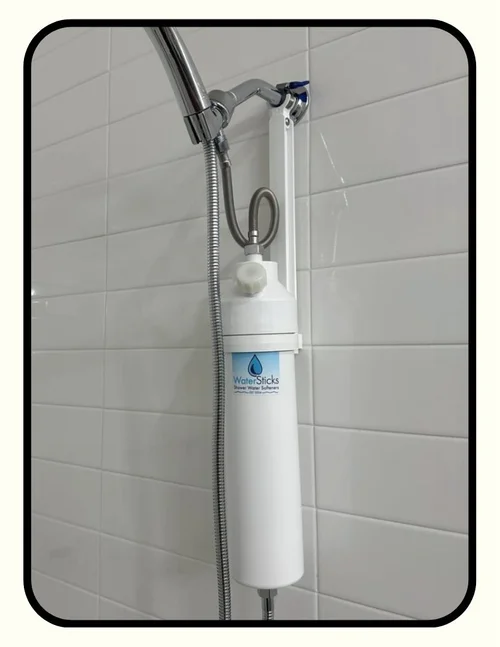 WaterSticks Shower Filter Review
Not last on the list! Watersticks is just in its own category because this is the only and best shower filter that can actually soften hard water. WaterSticks makes the best hard water shower filter available. All the other filters here might remove a small amount of minerals, but most filtration media can't do that—you need a true water softener. The ShowerStick is specifically designed to remove the calcium and magnesium that make your water hard. They use NSF-certified filtration media, which they promptly emailed me the certificates for. While they don't have third-party testing done for the shower filters themselves, they debunk many shower filtration myths on their website and are honest about what they can actually filter. Attaches to any standard showerhead or handheld shower hose. A great option if you're looking for a filtered showerhead for high mineral content water.
Own category: water softener
Not rated on the health function scale. This is a water softener for hard water, a different job than the chlorine-reduction filters rated above.
Don’t see what you’re looking for? Request a review, or check it yourself in seconds with the Second Opinion Product Checker. Spot something outdated? Let me know and I’ll update it. Join the spam-free newsletter for interesting info and to hear when new reviews are up.
FYI, “non-toxic” has no official definition, so I rate every product with the same method. It’s built on third-party certifications and published test data, not brand claims. For a deeper dive, my free course walks you through it.
Everything on Interior Medicine is educational information, not medical advice. Read my full disclaimer.
More Healthy Design For You

How Interior Medicine Rates Shower Filters
“Non-toxic” has no legal or scientific definition, so it’s become a marketing word. I still think a healthier home is worth working toward, and the way to get there is with a consistent system. Every product on Interior Medicine is rated with the same method, based on its materials, ingredients, and third-party certifications. This makes it easier to compare products fairly, spot healthwashing, and make informed decisions.
Shower Filters are rated with the Health Function Scale, consistent across all product categories. For shower filters, the tier reflects how well a filter's performance is verified, not just claimed.
TIER 01
Highest
What qualifies
NSF/ANSI 177 certified (the shower-specific chlorine standard) plus additional NSF certification such as 53, 42, or 401 with results published alongside gallon capacity. This means it is third party tested and able to remove chlorine, plus PFAS, particulates, or microplastics, for a certain number of gallons (specific contaminants stated in each review).NSF 177 + NSF 53, 42, or 401
TIER 02
High
What qualifies
NSF/ANSI 177 certified, with results published alongside gallon capacity. This means it is third party tested and able to remove chlorine for a certain number of gallons (stated in each review).NSF 177
Evidence
NSF 177 runs water with 2 mg/L of free chlorine through the filter at shower temperature (104°F) at the filter's rated flow, at least 1 gallon per minute. To pass, the filter must cut chlorine by at least 50% (Andrew, NSF International, 2004).
TIER 03
Moderate
What qualifies
Uncertified but publishes third-party or in-house test data. This means it very likely removes chlorine for a certain number of gallons, though non-certifying third party labs are sometimes less strict about flow rate or have lower standards than NSF, IAPMO, or WQA. In-house data relies on trust rather than independent evidence.Lab or brand test data
TIER 04
Low
Lower Confidence
What qualifies
Uncertified with no test data, but makes claims consistent with what its filter media can actually do. This means the filter contains proven media like KDF or activated charcoal at high levels and likely removes chlorine. Without testing we don't know how it's constructed, how much media is in it, or how long it works. Instead of saying "Low Filtration" I say "Lower Confidence" because we don't know, but it's possible.Proven media, no test data
Evidence
KDF (a copper-zinc alloy) and activated carbon both convert free chlorine to harmless chloride (Wong 2007).
TIER 05
Lowest
What qualifies
Uncertified and makes claims unsupported or contradicted by its filter media. This means the media inside is unproven and the company hasn't had its products tested or verified, meaning it may not work at all.Unproven media, no test data
Evidence gaps
NSF 177 only measures free chlorine. It doesn't test chlorine reduction when chloramine is present, and it isn't a health effects standard.
NSF 42, 53, and 401 are drinking water standards, so for a shower filter they confirm what the media can remove, not how it performs at shower temperature and flow.
Shower filter performance claims are easy to make and hard to verify, since water and its contaminants are invisible. "Reduces 99% of chlorine" means almost nothing without two things: independent certification and testing showing it’s true, and the gallon capacity at which that reduction holds. Chlorine reduction drops as the filter media exhausts, so a percentage with no capacity figure tells you nothing about how the filter performs after the first few showers. It may work for 1 shower, 29 showers, or for 200+.
A note on what I do and don't do to test these: I've personally used the Multipure, Aquasana, sproos!, and Weddell filters in my own shower, so some of what I describe comes from hands-on use. I don't rely on a handheld chlorine meter the way some reviewers do. Low-cost chlorine meters aren't reliably accurate, and chlorine test strips are worse: a Washington State study found them unreliable, and they depend on subjective color-matching in a matter of seconds. My ratings come from third-party certification and published test data that comes from a lab equipped to do this accurately, with personal use as a background context.
Your Complete Guide to the Best Shower Filters: What Works, What Doesn't, and Why It Matters
As a physician who evaluates home products for health impacts, I created this guide because I was so frustrated by how difficult it is to find accurate information about shower filters. I have to set my phone down and walk into the other room when I see influencers sponsored by ineffective filter brands promoting them (haha.)
What makes Interior Medicine different: I don't recommend shower filters based on subjectives, pretty packaging, or which brands pay the highest commissions. Every top recommendation on this page is based exclusively on third-party certification data from independent labs like NSF International, IAPMO, and WQA—the only way to verify that a filter actually removes what it claims. I've done the certification verification work so you don't have to wade through databases and technical reports yourself.
If aesthetics matter to you and you want a beautiful shower filter that probably works, rather one that has test data to back it up, that's completely valid. I just want you to know what each shower filter is actually capable of first, even if you go with a less effective one. Informed decision, not perfection, is one of the foundational philosophies of Interior Medicine.
FAQ Table of Contents
What Are Shower Filters and How Do They Work?
What is a shower filter?
A shower filter is a water filtration device that attaches to your shower to remove contaminants from your shower water. Most shower filters are small attachments that screw onto your existing shower arm (the pipe coming out of your wall). They have a universal fit, so they work with any standard home shower setup.
Shower filters come in two main styles:
Inline shower filters: Attach between your shower arm (the pipe coming out of the wall) and your existing showerhead nozzle.
Complete filtered showerheads: Come with their own spray nozzle built in
Both types effectively filter your shower water before it reaches you —the difference is just whether you keep your current showerhead or replace it entirely.
How do shower filters work?
Shower filters work by using filtration media to capture, remove, or neutralize contaminants as water flows through them. The filtration media acts as a barrier that treats the water just before it comes out of your showerhead.
There are four main types of effective shower filter media, each working differently:
1. KDF (Kinetic Degradation Fluxion)
KDF is the most common and effective shower filtration media for chlorine removal. It's a combination of copper and zinc that works through a process called redox (reduction-oxidation). As water passes through KDF, it donates electrons to chlorine molecules, converting them into harmless chloride. KDF is also bacteriostatic, meaning it inhibits bacterial growth inside the filter—preventing mold and buildup.
2. Calcium Sulfite
Calcium sulfite shower filters work similarly to KDF. The calcium sulfite rapidly reacts with chlorine as water passes through, converting it into harmless chloride.
3. Activated Carbon (Activated Charcoal)
Also called activated coconut carbon or activated charcoal, this filtration media is highly porous and works by physical adsorption—trapping contaminants permanently inside its tiny pores. Activated carbon effectively captures chlorine and other volatile organic compounds (VOCs), including some chloramine, but not much.
Catalytic Carbon: this is a further-processed (usually with high heat) version of activated carbon that is claimed to be better at removing contaminants from shower water than regular activated charcoal. The only brand I know of that uses this and has third party testing to support that it works is Waterchef, listed above. Their chlorine removal results are about on par with other brands that use regular activated carbon. I’m not sure there’s an advantage yet, and catalytic carbon needs a lot of contact time to remove chloramine, which the fast water moving through a shower filter does not accommodate. I’m skeptical of brands that say their catalytic carbon is far superior to other types of media.
4. Vitamin C (Ascorbic Acid)
Vitamin C is effective at removing chloramine, though you have to change the filter often, as it gets used up quickly. It’s also able to neutralize chlorine through a chemical reaction (see my Bath Filters page for why I recommend vitamin C powder over most bath filters.) It does slightly lower water pH, making it more acidic, which your skin barrier is generally happy with (your skin barrier thrives around 5.5, lower than most water supplies which range from around 6.5-8.5, depending on how hard it is.)
How is chloride different from chlorine?
Although chloride and chlorine sound similar and only differ by one letter, they're completely different substances with different properties:
Chlorine: A highly reactive gas that's toxic to humans and harsh on skin and hair. This is what cities add to tap water for disinfection.
Chloride: A stable, harmless ion that occurs naturally everywhere. When chlorine gains an electron (through the filtration process), it becomes chloride. Chloride is a component of table salt (sodium chloride) and is an essential electrolyte in your body.
This conversion from chlorine to chloride is exactly what quality shower filters do.
What is KDF in shower filters?
KDF stands for Kinetic Degradation Fluxion. It's a shower filter media made from a blend of high-purity copper and zinc granules. KDF is considered the gold standard for shower water filtration for chlorine removal. It's the most reliable and long-lasting filtration media for shower filters, which is why most NSF-certified shower filters contain KDF.
In general, if you see KDF as the main media used in a shower filter that doesn’t have testing, it’s probably a safe bet. This will be much more effective than a shower filter with “12 layers of contaminant removal media,” because you know KDF works (and these mystery materials probably don’t.)
That said, if a shower filter uses something other than KDF and has testing showing how well it works, that’s great too. This is the case with the Weddell Duo and the AquaYouth.
In short, KDF is a shortcut to identifying whether an uncertified shower filter has a chance to be effective.
What is KDF-55 vs KDF-85?
Both are combinations of zinc and copper.
KDF-55 is 55% copper and 45% zinc, and is good at removing chlorine from municipal water. As water passes through KDF, the KDF donates electrons to chlorine molecules, converting them from free chlorine into harmless chloride.
KDF-85 is 85% copper and 15% zinc and is good at removing iron and hydrogen sulfide from well water. It works the same way, through redox reactions, but the higher amount of copper means it can better convert hydrogen sulfide (rotten egg smell) into harmless copper sulfide.
Can KDF-85 remove chloramine?
No, it is not used to remove chloramine from water. It’s possible it can remove a small amount, but not at the high temperature, fast speed, and low contact time a shower filter operates at. No shower filter has NSF 42 certification showing it can remove chloramine, but many claim they can. I’d love to see testing.
What is chloragon? What is chlor-gon? What is chlorgon?
Three different spellings for the same thing: Sprite filters proprietary blend of copper, zinc, and calcium sulfite. This is essentially KDF with calcium.
Health Benefits of Filtering Your Shower Water
Are shower filters worth it?
Yes. From a medical perspective, shower filters are an affordable, low-effort way to reduce daily exposure to environmental contaminants like PFAS, microplastics, and excess chlorine. For most people, a quality shower filter costs less than $100 and requires minimal maintenance—just replacing the cartridge every few months.
However, only certified shower filters are worth it. Uncertified filters with no independent testing are essentially placebos. You need third-party verification to know you're actually removing contaminants.
Why should you remove chlorine from shower water?
Removing chlorine from your shower water is important because excess chlorine exposure can negatively affect your health in two main ways:
1. Skin and hair damage from direct contact
When chlorinated water contacts your skin and hair, it can cause:
Dry, itchy skin
Worsening of eczema or other dry skin conditions
Dry, brittle, frizzy hair
Scalp irritation
Luckily, your skin barrier doesn't absorb chlorine into your bloodstream very well, so you don’t need to worry about this.
2. Chlorine vapor inhalation
Hot shower water releases chlorine gas into the air as steam. For sensitive people, or people with high levels of chlorine in their water, inhaling chlorine vapor can be associated with:
Lung irritation
Throat irritation
Respiratory discomfort, especially for people with asthma
These negative health effects from chlorine inhalation are typically associated with higher concentrations found in swimming pools, and even then, don’t bother most people. However, if you’re sensitive, you may notice irritation from shower steam, depending on your water.
Are shower filters good for your hair?
Yes, because they remove chlorine, which is a major cause of frizz and hair damage. Chlorine strips away your hair's natural protective oils (sebum), so a shower filter can help with:
Softer, more manageable hair
Less frizz and breakage (this is the first thing I noticed when I added a shower filter!)
Better moisture retention
Improved hair color longevity (for dyed hair)
Reduced scalp dryness and irritation
Many people notice shinier, healthier-looking hair within just a few weeks of using a shower filter. This is what some brands use as their main selling point— customer before and after photos. I think that’s great, and anecdotal experiences do matter! In general, I trust these filters work well at least at first, but what’s missing is how long they work that well. Do these people with newly glowing skin have to replace their filter every few weeks? Months? That’s where data helps!
Do shower filters help with eczema and sensitive skin?
Yes, they can. From a dermatological perspective, chlorine can be an environmental trigger for inflammatory skin conditions. Studies show that chlorinated water disrupts the stratum corneum (your skin's outermost protective layer), increases transepidermal water loss, and triggers inflammatory responses.
By removing chlorine, quality shower filters help:
Reduce skin irritation and itching
Minimize eczema and psoriasis flare-ups
Maintain your skin's natural moisture barrier
Decrease the need for heavy moisturizers
Research specifically links hard water combined with chlorine to increased rates of atopic dermatitis in infants and children. If you have chronic dry skin or eczema that doesn't improve with topical treatments alone, your shower water may be a significant contributing factor.
What Do Shower Filters Remove? (Chlorine, PFAS, Microplastics)
What can shower filters remove?
Most shower filters remove chlorine effectively, and that's about it. The exception is the Weddell Duo (listed at the top of the page), which is the only shower filter tested and certified to remove more than just chlorine. It also removes PFAS and particulates like microplastics.
For hard water specifically, the WaterSticks Shower Stick can remove calcium and magnesium. While the complete unit doesn't have NSF testing, the filtration media inside is NSF-certified.
Despite marketing claims listing 10-15 contaminants, most filters have only been tested for chlorine removal. Without certification, there's no way to verify what else (if anything) they actually remove. If a shower filter with activated carbon claims it removes arsenic, it might! It just might capture 1 arsenic atom once in the first week, and never again.
Which shower filter removes PFAS?
The Weddell Duo is the only shower filter tested and certified to remove PFAS. Other brands may claim PFAS removal, but none have third-party certification to prove it yet. I have my eye out!
To verify a shower filter removes PFAS, look for NSF/ANSI 53 certification with specific test results showing:
Exactly which PFAS compounds were removed
The percentage removed
How long the filter maintains this removal capacity (number of gallons)
Here is an example of the type of detailed test results you should expect.
Why should you remove PFAS from shower water?
PFAS (per- and polyfluoroalkyl substances) contaminate tap water in approximately half of US water supplies. These "forever chemicals" are extremely difficult and expensive to remove at the municipal treatment level, which is why using drinking water filters and shower filters are a good idea in the meantime.
From a medical perspective, PFAS exposure is linked to serious health problems including:
Obesity and metabolic disorders
Various cancers
Immune system dysfunction
Hormone disruption
Developmental issues
PFAS interfere with many of the body's cellular receptors, which is why they affect so many different systems.
Can you absorb PFAS through your skin?
While drinking and eating contaminated food are the primary PFAS exposure routes, a small amount of emerging research suggests PFAS may also be absorbed through skin, unlike heavy metals, which don't penetrate skin barriers well. We don’t know if this is serious yet.
I'm more cautious about PFAS than other contaminants because we're still discovering how they behave in the body, especially short-chain PFAS compounds that replaced older formulations. But, the evidence we do have continues to confirm that PFAS are really bad for people.
Given the uncertainty and the serious health risks associated with PFAS accumulation, I recommend reducing exposure wherever possible, including through shower water if you have a certified filter available.
Can you breathe in PFAS from shower steam?
Probably not. While PFAS are definitely present in indoor and outdoor air, shower water would need to be extremely hot for PFAS to volatilize into steam.
That said, there are at least 12,000 types of PFAS, and we still don't fully understand how they all behave or how their breakdown products act in different conditions. The precautionary principle suggests minimizing exposure when practical. You can learn more about the precautionary principle and my stance in the What “Non-Toxic” Actually Means course section of this site.
Do shower filters remove microplastics?
The Weddell Duo, listed in first place above, is tested and certified to remove particulates, including microplastics, from shower water. No other shower filters currently have third-party testing proving microplastic removal.
What are microplastics?
Microplastics are tiny plastic particles (less than 5mm) that contaminate water supplies worldwide. While research on microplastic health effects is still emerging, reducing exposure where possible is a reasonable precaution.
Are there any plastic-free shower filters? Are there any stainless steel shower filters or all-metal showerhead filters?
The great irony of shower filters that remove microplastics from the water is that they’re made with plastic themselves. I use one anyway, for a few reasons:
First, testing is done on water that has run through the filter, so you know that even if the encasement adds any microplastics, it's still being removed at that high % when it goes through the filtration media. The water that comes out of filter will still have less microplastics than the city tap water. You can tell by looking at certifications and test results. For microplastics, look for NSF/ANSI 401 certification to confirm this.
Second, there are no totally plastic-free shower filter filtration media with plastic-free encasements on the market that are certified to remove PFAS, chlorine, or anything else in your water. I check occasionally for this, but please let me know if you find one.
The best options are either choosing a Weddell Duo (listed first in my review above) because it’s the only one with the NSF 53 testing proving it can remove particles the size of microplastics. Or go with a sproos! or other brand made with a metal body which is made of slightly less plastic. The cartridges still contain plastic, but it’s a step in the right direction.
Until we have totally plastic free shower filters, I think avoiding microplastics in other ways is ideal, like avoiding olefin upholstered couches and polyester blankets and plastic rugs and polyethylene crib mattresses…and so on.
Can Shower Filters Remove Heavy Metals, Lead, Arsenic, and Fluoride?
What is SIR-900 shower filter media?
SIR-900 is a resin that can theoretically remove lead, arsenic, and fluoride, if used in a slow-flowing water filter at a proper pH and temperature. It does not work to remove these contaminants in a shower filter. The spec sheet for SIR-900 shows that its ability to remove these contaminants drops dramatically when the pH isn’t 5.5 and the flow rate is faster than 1 gpm/cubic foot. Shower water’s pH is 7.5 and flow rates are 1.5-2.5 gpm/cubic foot. Shower water moves too fast and is at a neutral pH. This is a classic use of media that doesn’t pay attention to the context, and is misleading marketing. If any brand that uses this in their filter can show test results of these contaminants being removed under normal shower conditions for any length of time, I’d be very excited to see them.
Can shower filters remove heavy metals?
No. Despite many brands claiming otherwise, shower filters cannot remove meaningful amounts of heavy metals, and no shower filters are tested and certified for heavy metal removal.
Why shower filters can't effectively remove heavy metals:
From a chemistry standpoint, heavy metal removal requires specific conditions that don't exist in shower filters:
Filter size: Shower filters are small with limited media
Water temperature: Hot water reduces the media's ability to bind contaminants, especially heavy metals
Flow rate: High pressure and fast flow don't allow enough contact time
Chemistry: Effective heavy metal removal needs cold water, slow flow, and large carbon blocks
Example: If a shower filter claims arsenic removal, it might capture trace amounts initially—but a larger activated carbon block filtering cold tap water at moderate flow can remove significantly more. For meaningful arsenic removal from shower water, you'd need a whole-house reverse osmosis system, not a shower filter.
But, you probably don't need to remove heavy metals from shower water anyway, because they don't absorb through skin (more details below). When I see a brand using heavy metal removal as a primary selling point, it makes me a bit suspicious about what else they’re overstating.
I have lead pipes. What shower filter removes lead?
No shower filter removes lead in meaningful amounts. That may sound scary, but, from a medical toxicology perspective, showering with water from lead pipes is still safe for three reasons:
1. Lead doesn't absorb through skin
Inorganic lead (the solid, metallic form found in pipes) is very poorly absorbed through skin. While trace amounts might theoretically penetrate under specific conditions, dermal lead absorption requires high concentration and extended contact time. With showers, lead concentration is relatively low and contact time is brief—so lead cannot effectively penetrate your skin barrier during a shower.
2. Lead doesn't aerosolize into shower steam
You cannot breathe in lead from shower steam. Lead doesn't become airborne from hot water.
3. The real concern is drinking water
The main route of lead exposure is drinking contaminated water. This is why it's critical to use a water filter certified for lead removal (NSF 53) on your drinking water. Just be careful not to drink shower water if you have lead pipes.
If you're still concerned about lead:
Install a whole-house water filtration system certified to remove lead
Consider lead pipe remediation/replacement
Watch for shower filters that achieve NSF 53 certification for lead (currently none exist, likely because showering isn't a primary lead exposure route and the required technology would be very advanced) But, you never know how technology will unfold!
Important note: NSF 372 certification does NOT mean a filter removes lead—it only means the filter itself doesn't contain lead components.
What shower filter removes arsenic?
None. No shower filters effectively remove arsenic, despite some brands advertising this capability to appear more effective, but this is misleading marketing rather than meaningful health protection.
But like lead, though it sounds scary, from a toxicology perspective, you don't need to worry about arsenic in shower water:
Inhalation: shower water would need to reach 1,137°F to aerosolize arsenic into steam, so this is impossible.
Skin absorption: Arsenic cannot pass through intact skin
Drinking water: The primary way arsenic enters your body, not through skin or air.
Instead, prioritize removing arsenic from your drinking tap water using a filter certified for arsenic removal (NSF 53).
What shower filter removes fluoride?
None. No shower filters can remove fluoride, and there are no shower filters with testing proving fluoride removal.
Why fluoride in shower water isn't a concern: Fluoride is not absorbed through your skin. Fluoride exposure from tap water comes from drinking it, not showering in it.
If you want to reduce fluoride intake, focus on tap water filtration for your drinking water. Look for reverse osmosis systems or filters specifically certified to remove fluoride.
Understanding Chlorine, Chloramine, and Disinfection Byproducts in Shower Water
What is chloramine vs chlorine?
Both chloramine and chlorine are disinfectants added to public water supplies, but they have different properties and require different filtration.
Chlorine:
Traditional water disinfectant
Strong odor ("pool smell")
More volatile—evaporates easily
Highly reactive with organic materials
Creates more disinfection byproducts (DBPs)
Chloramine:
Made by adding ammonia to chlorine
Less odor
Stays in water longer
Less reactive with organic materials
Water utilities are starting to prefer chloramine because it's more stable and creates fewer harmful byproducts. About 20% of US homes now receive chloramine-treated water, up from 10% a decade ago. Some water utilities change back and forth seasonally! Check with your local water supply to learn more.
Is there a shower filter that removes chloramine?
Maybe, but probably not effectively. No shower filters have third-party testing specifically certifying chloramine removal, though some brands claim they can remove it. I believe that some might (the AquaYouth in particular— jump up to see my detailed review.)
Why chloramine is harder to remove than chlorine:
Chloramine is a more stable compound than chlorine, making it more difficult to filter. While activated carbon may be capable of removing some chloramine, it likely needs longer contact time than a shower filter with fast-flowing water can provide.
Your options if your water contains chloramine:
Vitamin C shower filter: May work, but would require very frequent filter replacement (and again, no testing confirms how long it remains effective.) If you do go this route, replace the Vitamin C filter frequently (every 1-2 months) as a best estimate.
Whole-house reverse osmosis system: The most effective option for chloramine removal
You can check with your water supplier to find out whether your water is treated with chloramine or chlorine. About 1 in 5 homes now have chloramine-treated water—a number that's doubled in recent years and will probably continue to grow.
Do catalytic carbon shower filters remove chloramine?
Probably not. Yes, catalytic carbon is capable of removing chloramine from water, but the water must flow by at a slow rate. No brand that claims their catalytic carbon removes chloramine has undergone testing or certification. I’m skeptical this effect could last for more than one shower, or we’d see this technology in lots of filters, with lots of independent third party testing confirming it’s really true.
Can a combination of KDF-85 and catalytic carbon remove chloramine?
Probably not. KDF 85 is good at redox reactions with iron and hydrogen sulfide, and nothing about it is particularly magical for removing chloramine. Yes, catalytic carbon is capable of removing chloramine from water, but the water must flow by at a slow rate. No brand that claims their catalytic carbon and KDF 85 combination removes chloramine has undergone testing or certification. If it was true, we’d see this technology in many shower filters, with independent third party testing confirming it’s really true. If you can find a shower filter with NSF 42 certification specifically showing chloramine reduction was tested and successful for more than 500 gallons (around 30 showers’ worth), please let me know!
Do Centaur catalytic carbon shower filters work?
Probably not, if you’re trying to remove chloramine, which they’re often advertised for. Yes, catalytic carbon is capable of removing chloramine from water, but you need a lot of it, and the water must flow by at a slow rate. So far, I’ve only seen one brand that has self-claimed theirs removes chloramine. I’m skeptical this is true and skeptical this effect could last for more than one shower, or we’d see this technology in lots of filters, with lots of independent third party testing confirming it’s really true.
Why are chlorine and chloramine used in shower water?
Chlorine and chloramine are added to municipal water supplies as disinfectants to kill harmful microorganisms. This water treatment prevents the spread of serious waterborne diseases including typhoid, dysentery, cholera, E. Coli, and viral and fungal diseases. No big deal. Water disinfection is one of the most important public health achievements of the 20th century. However, the disinfection process does create some unintended byproducts.
What are disinfection byproducts (DBPs)?
Disinfection byproducts are chemical compounds formed when disinfectants like chlorine or chloramine react with organic materials naturally present in water. This is an unintended consequence of the water treatment process. Common types of DBPs include trihalomethanes (THMs), haloacetic acids (HAAs), chloroform, and others.
From a public health perspective, water disinfection saves lives. DBP formation is currently an unavoidable trade-off that states and health authorities balance with effective disinfection, taxpayer dollars for new technologies, and other considerations.
Can shower filters remove disinfection byproducts (DBPs)?
Maybe, but it's unproven. Theoretically, activated carbon filters could remove some DBPs, but no shower filters currently have third-party certification proving DBP removal.
For drinking water filters, you'd look for NSF 53 certification with specific test results showing DBP removal. However, this certification doesn't exist yet for shower filters.
What to do in the meantime:
Wait for certified shower filters: The technology may develop as consumer awareness grows
Whole-house reverse osmosis system: This is currently the only way to completely remove DBPs from shower water.
Advocate for better water treatment: Ideally, water treatment plants will move toward using other effective alternatives that produce fewer harmful byproducts.
Shower Filter Effectiveness: What the Science Says
Do shower filters actually work?
Yes, but only if they're independently tested and certified. Effectiveness depends on five critical factors:
1. Type of filtration media: The filter must contain media capable of removing your specific water contaminants (for example, KDF for chlorine, vitamin C for chloramine)
2. Quantity of filtration media: More media = better and longer-lasting performance. A teaspoon of KDF filters far less than a cup of KDF. This is why larger filters can outperform small ones, or ones with many layers of different types of media.
3. Filter longevity and sustained effectiveness: A filter might remove 99% of chlorine initially, but performance at 90 days or 6 months is what matters for real-world use. For example, Aquasana is verified to remove 80-90% of chlorine for 10,000 gallons (approximately 588 showers). But, the Crystal Quest is only verified to remove 72-89% of chlorine for only 500 gallons (approximately 29 showers)
4. Your definition of "works:" A shower filter’s effectiveness depends on your goals: if you’re just looking for softer skin and hair, a shower filter that does some chlorine removal, even that is uncertified, will probably help. But, if you’re looking for asthma or respiratory relief, or protection from PFAS, only certain filters work.
5. Contaminant levels in your water: the amount of contaminants in your local water supply affects filter performance. You can check your city's water quality in the EWG Tap Water Database here.
Are all shower head filters a scam?
No, but many are, and it’s increasingly a problem.
Interest in using a shower filter has grown alongside the huge surge in interest in skincare (currently a $172 billion industry that’s projected to grow to $300 billion by the early 2030s). Using a shower filter can truly help with skin and hair issues, but the surge in demand has attracted brands whose marketing outpaces their evidence. Filtration under shower conditions is hard: hot water, high pressure, and fast flow rates limit what any small cartridge can capture. Certified filters work within those limits and prove it with third-party testing. Scam filters ignore those limits and claim to remove 10 to 15 (or many more) contaminants, including things like lead, fluoride, and heavy metals that no shower filter has ever been certified to remove.
The pattern to watch for: a long list of contaminants, no certification, no published test results, a long list of strange filtration media types, or no disclosure of what filtration media is inside.
The legitimate filters are easy to spot once you know how: NSF/ANSI 177 certification that proves chlorine can be removed and for how many gallons, or published third-party test results under shower conditions, with specific removal percentages and a gallon capacity.
How effective are shower filters at removing chlorine?
Shower filter chlorine removal effectiveness varies wildly by brand and certification. NSF 177 -certified filters are required to remove at least 50% of chlorine for the stated number of gallons shared in a test report. High quality filters will be able to maintain chlorine removal significantly above this, at 80% or more, for 10,000 gallons. Lower quality filters, or those without NSF 177 certification may remove very little chlorine, especially after thousands of gallons have passed through it.
How can I tell if my shower filter is working?
There are three main ways to verify your shower filter is working effectively:
1. Trust third-party certification (most reliable)
Filters tested and certified by reputable labs will work as advertised:
NSF International: The gold standard for water filter certification
IAPMO (International Association of Plumbing and Mechanical Officials): Another third party lab that uses NSF standards.
WQA (Water Quality Association): Another third party lab that uses NSF standards.
Look for specific claims about:
Which contaminants are removed
Percentage removed
How many gallons the filter removes what percentage of which contaminants for
2. Test the water by mailing a sample to a reliable water-testing lab
You can send water samples to a lab for before-and-after testing. I recommend MyTapScore.
Benefits of professional water testing:
Direct confirmation of what's being removed.
Identifies disinfection byproducts created when chlorine/chloramine interact with your pipes
Personalized understanding of your specific water quality
Can help you decide what kind of shower filter or whole-home filter you need
Downsides:
Can be expensive ($100-300+ per test) especially if you are taking a before sample and an after sample to confirm the filter is working.
May not change your solution, if you plan on getting the same shower filter no matter what the outcome
3. Trust your skin and hair
Noticeable improvements in skin and hair quality likely mean the filter is effectively reducing chlorine. However, this method only confirms chlorine removal—it doesn't verify removal of other contaminants like PFAS or heavy metals.
Are chlorine test strips accurate for testing shower water? Can you use a test strip to see how well your shower filter is working?
No, test strips are not actually an accurate way to test chlorine levels in your water or if your shower filter is working. A study done by Washington State confirmed that they are unreliable. Moreover, they rely on subjective color interpretation, often giving you just seconds to match colors to a reference chart.
Can I use a chlorine meter to test my shower filter?
Maybe, but it's complicated. A digital chlorine meter (called a colorimeter) can work if you use a professional high-quality model (costs at least $700) and follow proper testing protocols.
Low-cost chlorine meters are not reliably accurate (like the one used in the Wired article about shower filters). In general, I prefer NSF certification or professional lab testing.
How often should you replace shower filters?
Shower filter replacement frequency depends on:
Filter capacity: Measured in gallons (typically 5,000-25,000 gallons)
Household size: More people = more showers = faster depletion
Water quality: Higher contaminant levels exhaust filters faster
Manufacturer recommendations: Usually every 2-6 months
General guidelines:
High-capacity certified filters: Every 4-6 months
Standard uncertified filters: Every 2-3 months
Vitamin C filters: Every 1-2 months
Signs your filter needs replacement:
Return of chlorine smell
Skin and hair feel different
Reached gallon capacity (track, or sign up for automated regular filter replacements through the company)
Understanding NSF Certification for Shower Filters (NSF 177, NSF 42, NSF 53)
What is NSF for shower filters?
NSF stands for National Sanitation Foundation (now simply called NSF International). It's an independent, third-party testing organization that verifies water filter performance claims are accurate and truthful.
What NSF certification means:
NSF has physically tested the product in their labs
Test results match the manufacturer's claims
NSF can conduct surprise inspections to ensure ongoing quality
The product meets strict performance standards
NSF certification protects consumers from misleading marketing claims by holding water filters to rigorous, standardized testing protocols.
Why is NSF certification important for shower filters?
NSF certification is important because it proves a shower filter actually does what the manufacturer claims. Without third-party verification, you're relying solely on the company's word.
What NSF certification verifies:
The filter removes specific contaminants at stated percentages
There's sufficient filtration media inside
The filter remains effective for a specific number of gallons/showers
Performance is consistent at typical shower flow rates and temperatures
Without certification: Companies may not actually know what their filters remove. Those who refuse to share testing data (claiming it's "proprietary") likely have subpar performance results—otherwise they'd publish and promote them.
What does "tested to NSF standards" mean?
"Tested to NSF standards" is NOT the same as "NSF certified." This phrase means the company tested their product themselves, sent it to a private lab, or used a third-party lab other than NSF for testing.
This happens for two main reasons:
1. Cost considerations (good faith scenario)
NSF certification is expensive to obtain and maintain. A startup company with a genuinely effective product may not have funding for NSF certification, so they:
Test the product themselves
Send it to a less expensive private lab
Show performance results without official NSF certification
This may be done responsibly or irresponsibly—the standard may or may not match NSF's rigor. Whether you trust these results is your decision.
2. Cannot meet NSF standards (transparency scenario)
If a company's filter cannot meet full NSF standards, they may send it to reputable third-party labs like WQA or IAPMO to show it comes close.
Example: It's very difficult for shower filters to meet both:
High flow rate requirements mandated by states
NSF's strict PFAS removal standards at those flow rates
A brand might use WQA or IAPMO testing to demonstrate their filter meets the highest level possible at standard flow rates, even if it doesn't reach NSF thresholds. Both WQA and IAPMO are reputable third-party labs using standards similar to NSF.
What is NSF 177 certification for shower filters?
NSF 177 certification is specifically designed for shower filters. It verifies a filter removes at least 50% of chlorine from water passing through it under shower-specific conditions:
High water pressure
Hot water temperatures
Performance range examples:
Some NSF 177 certified filters remove 80-90% of chlorine for 10,000 gallons
Others remove 50-90% of chlorine for 25,000 gallons
Most shower filters on the market still have no NSF 177 certification at all
Key point: NSF 177 is the baseline standard for shower filter chlorine removal. Higher percentages and longer lifespans indicate better performance.
What is NSF 42 certification for shower filters?
NSF 42 certification covers "aesthetic" water quality—impurities that affect water's appearance, taste, or smell (but not necessarily health).
Contaminants covered by NSF 42 include:
Chlorine (odor and taste)
Particulates like iron (rusty appearance)
Sediment
Other aesthetic contaminants
Important limitation: If a shower filter is NSF 42 certified, it doesn't mean it removes every contaminant on the NSF 42 list. A filter might be NSF 42 certified to remove only chlorine, or only iron, for example.
Always check: Look at the specific test results to see exactly which NSF 42 contaminants were tested and removed.
Usage note: NSF 42 certification is more common for drinking water systems than shower filters, since these two filter types operate under very different conditions and standards.
What is NSF 53 certification for shower filters?
NSF 53 certification covers health-related contaminants—substances that pose actual health risks rather than just aesthetic concerns.
Contaminants covered by NSF 53 include:
PFAS (forever chemicals)
Lead
Chromium
Mercury
Other heavy metals and carcinogens
Important limitation: If a filter is NSF 53 certified, it doesn't mean it removes every contaminant on the NSF 53 list. A filter might be NSF 53 certified to remove PFAS effectively but not remove lead, for example.
Always check: Review the detailed test results to see exactly which NSF 53 contaminants were tested and removed, at what percentages, and for how many gallons.
Usage note: NSF 53 certification is rare for shower filters because the high water pressure, hot temperatures, and fast flow rates make it extremely difficult to remove health-related contaminants. It's much more common for drinking water filtration systems.
What is NSF 372 certification for shower filters?
NSF 372 certification means the shower filter itself does not contain lead in its components. It does NOT mean the filter has been tested to remove lead from water.
This certification addresses the filter's materials and construction, not its filtration performance.
What is WQA certification?
WQA stands for Water Quality Association. Their "Gold Seal" certification is actually the oldest third-party testing and certification program in the water treatment industry.
WQA uses rigorous standards similar to NSF and is a trusted alternative for verifying shower filter performance claims.
What is IAPMO certification?
IAPMO stands for International Association of Plumbing and Mechanical Officials. Like NSF and WQA, IAPMO is a trusted third-party testing laboratory and has been a national standard in water quality testing and consumer protection for decades.
IAPMO certification provides independent verification of filter performance claims.
If a filter says "NSF Certified," "WQA Certified," or "IAPMO Certified," is it legitimate?
Not necessarily—you must check the specific details of what's certified.
Common misleading claims:
"NSF Certified filtration media": This usually means they use KDF (which is good). But, it does NOT mean the complete filter has been tested for real-world performance. It doesn't verify how many gallons the filter works for or what it actually removes
"IAPMO Certified" with a long list of contaminants: but, after the long list, if you follow through to actual IAPMO certification results often shows testing only for chlorine. And, performance may be for an unimpressive number of gallons
Always verify! Click through to see the actual certification documents and test results, not just marketing claims.
Where can I verify shower filter certification and testing?
You can look up any shower filter brand in these three major certification databases:
NSF International: https://info.nsf.org/Certified/DWTU/
WQA (Water Quality Association): https://find.wqa.org/find-products#/
IAPMO: https://pld.iapmo.org/
Pro tip: You can also email the brand directly to request certification documents. Even if they give you the runaround or an unsatisfying answer, you're sending a message that third-party testing matters to consumers.
How much water does a shower use?
The average shower uses approximately 17 gallons of water. This matters for calculating filter lifespan. Also, notice what measurement brands use! Many use liters to look like they filter more, but gallons are almost 4 times bigger. (3.78 liters = 1 gallon.)
A 10,000 liter filter = approximately 155 showers
A 10,000 gallon filter = approximately 588 showers
A 25,000-gallon filter = approximately 1,470 showers
What shower filters maintain high water pressure?
Any shower filter tested and certified by NSF, IAPMO, or WQA will maintain high water pressure. Part of earning certification requires proving the filter works effectively at required flow rates for residential showerheads. See more details on each by jumping to the top of this page.
Red Flags: Avoiding Misleading Shower Filter Claims
Why are there so many misleading shower filter claims?
The shower filter industry is full of healthwashing and exaggerated marketing claims. I suspect this happens for a few reasons:
1. Invisible contaminants = easy to fake results
Water contaminants are invisible and often odorless, making it extremely easy for companies to claim purification that isn't actually happening. Professional water testing (to verify before-and-after performance) costs hundreds of dollars, so most people never verify claims. Companies exploit this by making exaggerated promises they never have to prove.
2. General filtration facts misapplied to specific products
Some brands take legitimate research about filtration media and inaccurately apply it to their specific product. For example, research shows KDF can remove heavy metals from water under ideal conditions. But a teaspoon of KDF in a small shower filter with hot water rushing through at high pressure may not remove any heavy metals at all—or only for a very short time. The claims are context-dependent but marketed as absolute truths.
3. Competitive pressure to exaggerate
If your competitor's "contaminants removed" list has 15 items and yours has 3, your product looks less effective to the untrained eye. This creates pressure to add unverified claims just to match competitor marketing, perpetuating the problem across the entire industry.
4. Recurring revenue locks in customers
Most shower filters run on replacement cartridges, so a single purchase usually commits you to buying refills for as long as you own the filter. That recurring revenue is the real product. It also explains the sharp rise in shower filter options over the last year: the market is suddenly packed, many from brands that didn't exist a year ago, because a subscription business built on a cheap consumable is attractive whether or not the filter works. A flood of new sellers competing for that recurring income raises the volume of marketing claims faster than anyone is verifying them. To be clear, making a living, owning a business, and selling good products that help with health is absolutely fine. A lot of the brands above do that. The problem is when the recurring revenue is the only point, and the actual filtration is an afterthought or deception.
Why do other "best shower filter" lists look different than Interior Medicine’s?
Most shower filter reviews are based on subjective personal experience—which matters! However, it doesn't prove what's actually being removed from water. "My hair feels softer" doesn't prove chlorine removal percentage, and "my skin isn't itchy anymore" doesn't verify filter lifespan.
Some reviewers use handheld chlorine test meters, which is better than nothing, but these devices are far less accurate than professional lab equipment. Without proper calibration and testing protocols, results can be misleading.
Finally, many shower filter round-ups and blog posts are paid by brands to review their products, or are incentivized to state one brand is better than another because they get a larger affiliate commission, not because it works better.
Why my guide is different: I rely on third-party lab testing from NSF, IAPMO, and WQA. They’re ultra-boring organizations but provide highly accurate, validated equipment and standardized testing protocols.
You have affiliate links. Why should I trust your reviews?
This is a valid concern! The water filter review space is notoriously biased because of affiliate relationships, and it’s frustrating to not know whether a filter is being recommended because it really works or because the reviewer gets more money from that brand than others. Here's how I address this:
1. Transparent individual disclosure
I place an "Interior Medicine Affiliate" label under every single product I'm affiliated with. I believe that the standard disclosure at the top of the page isn't enough for products affecting your health. You deserve to know the affiliate status of each individual product. This public accountability keeps me honest.
2. Data-driven evaluation standards
My reviews are based entirely on third-party lab test results, not on my personal aesthetic preferences, subjective feelings about softer hair or skin, or unverified handheld test results.
3. Consistent evaluation criteria for all brands
Every shower filter is held to the same standards, regardless of affiliate status:
Best: Third-party certification (NSF/IAPMO/WQA testing)
Good: Private lab testing with shared methods and results
Acceptable: Internal testing with shared data (even if just surveys like "85% said their hair is softer")
Poor: No testing, unverified claims
Every shower filter is treated the same, whether I have a relationship with the brand or not. If you’d like, you can read my complete Affiliate Disclosure here, or click any "Interior Medicine Affiliate" logo. While I appreciate you using my links if you decide to purchase, obviously you never have to. I'm far more interested in providing excellent information than making any single sale. Thank you so much for supporting Interior Medicine!