
Non Toxic Coffee Makers
The safest non-toxic coffee maker is made entirely of stainless steel and glass, since heat, acidity, and daily repetition make coffee one of the exposures most likely to pull chemicals out of plastic. Most brewers use some plastic somewhere, so I evaluate where it sits along the brew path and rate every material against the same certification-based scale explained in my full methodology.
By Dr. Meg Christensen | Physician-founder of Interior Medicine, a non-toxic home resource built on her background in medicine, biochemistry, epidemiology, and clinical research.

Updated September 22, 2026
Non-Toxic Drip Coffee Machines
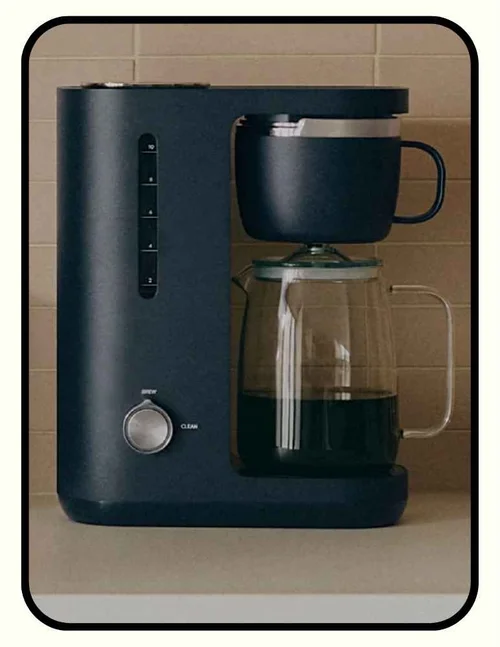 Caraway 100% Plastic-Free Non-Toxic Coffee Maker
Caraway makes the best non-toxic drip coffee maker because the entire brew path is made of glass and stainless steel, meaning no plastics ever touch your coffee. Even the basket is stainless steel, not requiring a paper filter. They use silicone to seal non-brew-path components (for example on the carafe’s lid) but it never comes into contact with your coffee. It’s compact and comes in a few attractive colors, and brews up to 10 cups. Since coffee is a daily exposure, a healthy plastic-free coffee maker is worth it.
Product rating
See the rating scales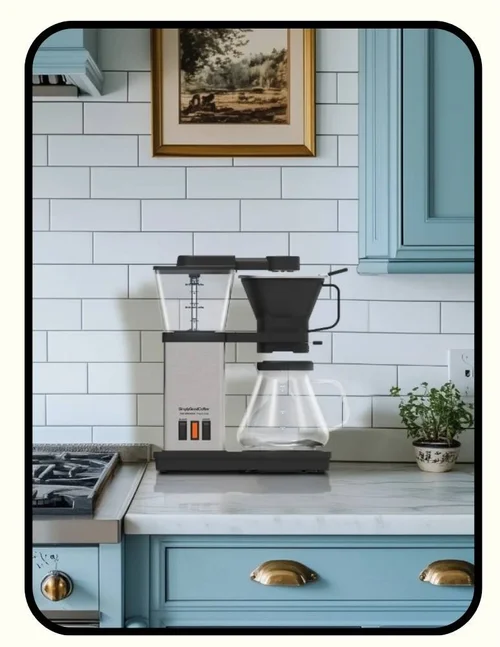 Simply Good Coffee Stainless Steel and Glass Coffee Maker
Simply Good Coffee uses stainless steel and glass along the entire brew path, and like Caraway, silicone gaskets for sealing, that also never come into contact with the brew path. Their brewer makes up to 8 cups and they have a programmable option, too. They also offer packs of filters that are made with unbleached paper and without adhesive.
Product rating
See the rating scales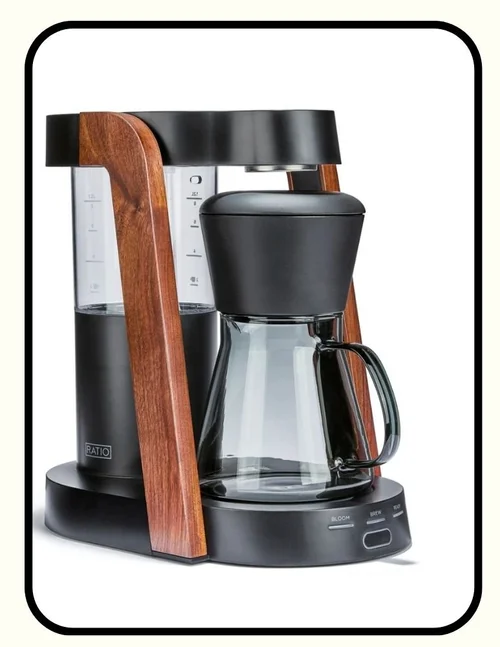 Ratio Eight Series 2 Low Plastic Coffee Brewer
Ratio’s newest non-toxic coffee brewer uses handblown borosilicate glass for the hot water lines and cold water tank, and a stainless steel basket. They’re very transparent about where and what kind of plastic they use: Tritan for the cold-to-hot water tank seal only (see my Plastics Guide for details). The carafe is borosilicate glass and the wooden details are real hardwood. The brew path is the most important aspect when heat, acidity, and time could potentially extract any chemicals. They also have a bundle to upgrade their older models to being plastic-free. Clever!
Product rating
See the rating scales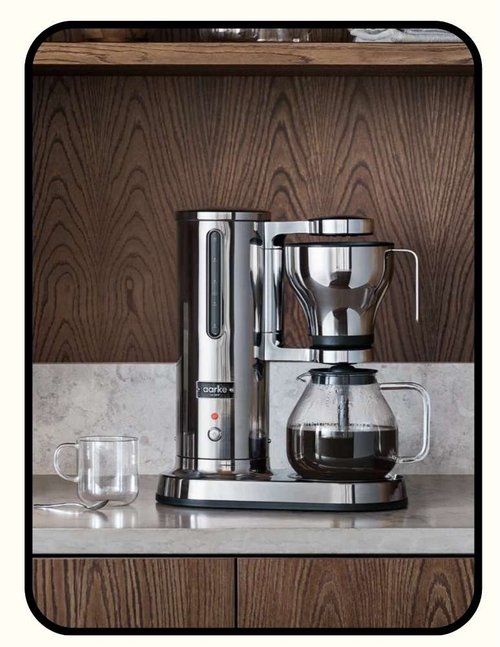 Aarke Low Plastic Coffee Brewer
A mostly plastic-free coffee maker, the Aarke is made primarily with stainless steel and glass. Like every other drip machine out there, the filter basket is lined with plastic, but it is Prop 65-approved BPA-free and the tubing inside is made with food-safe high quality silicone that has LFGB certification, making this much better than a cheap or uncertified version. With its stainless steel water tank and glass carafe, it’s a healthier coffee maker than the vast majority of drip machines, and a good less-toxic option.
Product rating
See the rating scales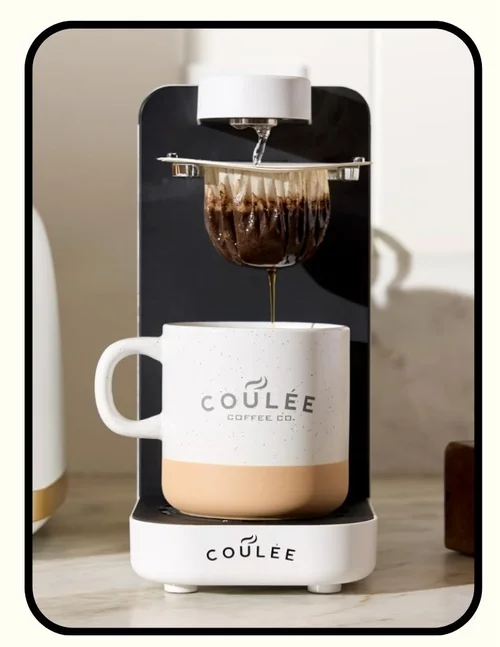 Coulée Plastic-Free Pourover Coffee Machine
The Coulée coffee maker has a zero-plastic water path, holds water in a glass tank and has a stainless steel spout. It uses compostable paper filters that you can purchase pre-filled with their coffee, or add your own. It's essentially a convenient plastic-free version of pourover; it heats the water and swirls it over the grounds for you, making one cup at a time. Their mini version, linked here, has better reviews than their large one, and is quite affordable compared to other brewers.
Product rating
See the rating scales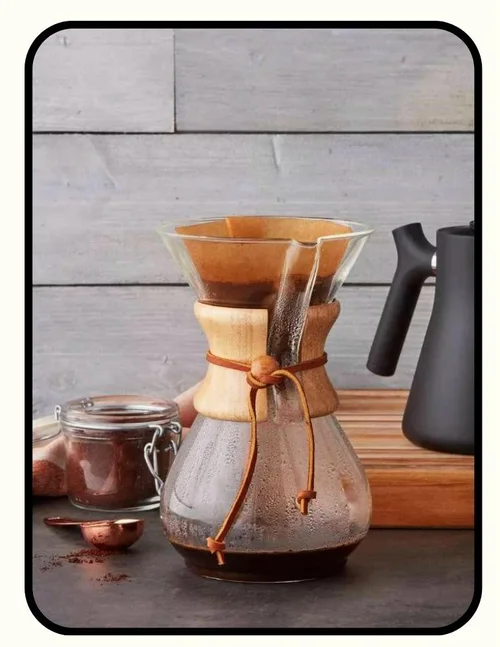 Chemex Zero Plastic Pourover
For a non-toxic coffee maker with no plastic for single cup use, Chemex pourovers are the best. Made of strong borosilicate glass, and rated super highly for decades. I also appreciate their wood handle rather than relying on a silicone sleeve, just a nice detail. Simple and straightforward! I recommend using this with unbleached filters for more material transparency.
Product rating
See the rating scalesNon-Toxic Pourover Coffee Makers
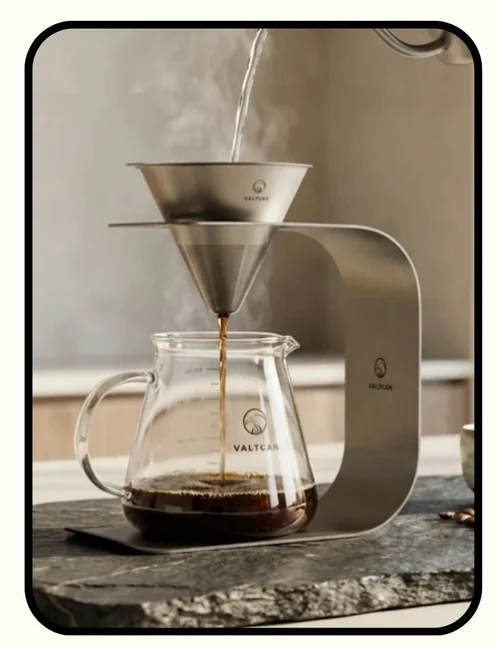 Valtcan Titanium Pourover
This is a 100% titanium pourover filter and stand that has a few material health simplicity advantages: first, it doesn't require a paper filter, since it's laser-perforated with very fine holes, so you are removing any mysterious paper processing chemicals that might be present in standard filters. Second, it's 100% titanium, a totally inert metal. While stainless steel really is a very healthy choice for almost everyone, if you have a nickel or chromium sensitivity, hot water and acidic coffee can coax those elements out. This gets around both problems entirely. This is their kitchen model, with a borosilicate glass carafe, and they have lots of camping-focused coffee products as well.
Product rating
See the rating scales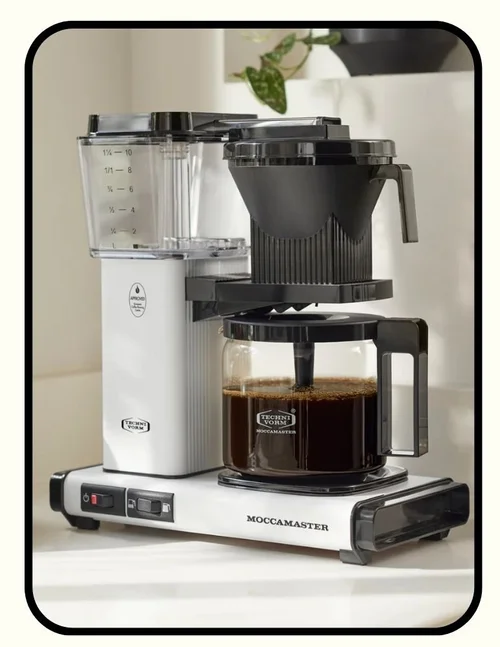 Moccamaster Better Plastic Coffee Brewer
I chose this Moccamaster for myself for 4 reasons. First, they’re very transparent about their materials, and use BPA, BPS, BPF, and phthalate-free plastic that isn’t recycled (meaning no historical mystery additives). They are food-safe per the EU’s strict regulations and made in the Netherlands. Each part is designed for repair, instead of replacement, reducing any long-term sustainability issues from choosing plastic. And, it’s ideal for if you have an allergy to nickel and stainless does not work for you. See my Plastic guide for more.
Product rating
See the rating scalesNon-Toxic Pressure Coffee Makers
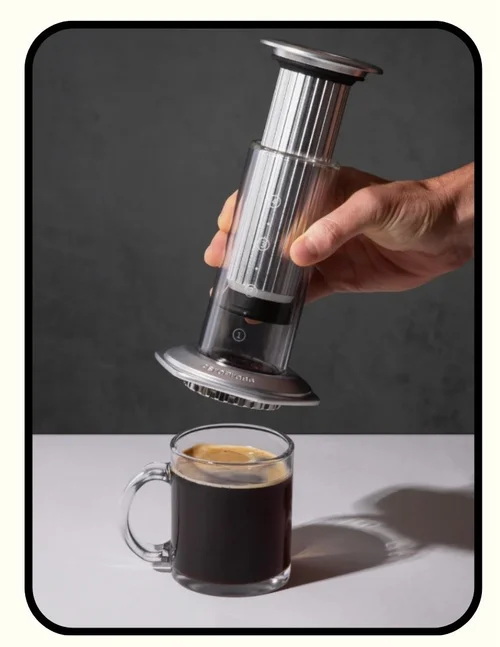 Aeropress Premium Metal Coffee Maker
Aeropress makes this almost totally plastic-free espresso maker— only the silicone seal that keeps pressure in it is made of something other than stainless steel, aluminum, or borosilicate glass. It’s manual, and fast, making espresso-like coffee in about 2 minutes once you get the hang of it. It's made entirely of glass and stainless steel. I used one of these for years and liked it; the coffee it brews falls between a French Press, pourover, and espresso. Great if you don’t want the machine set up, or if you want a French press alternative. (I recommend their reusable stainless filter over their paper ones, available here.)
Product rating
See the rating scales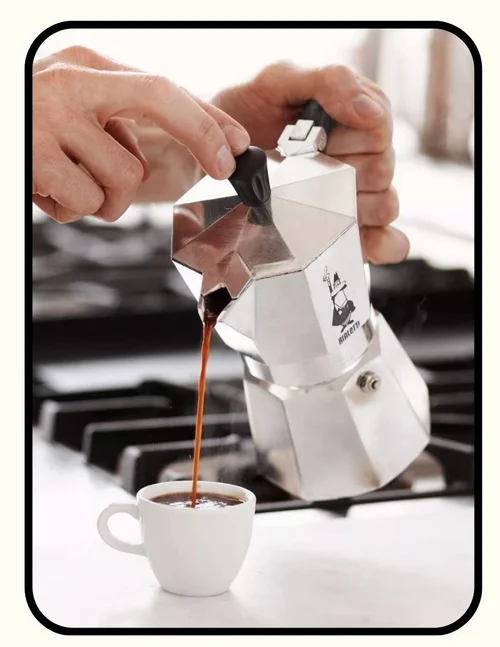 Bialetti Moka Express Plastic Free Coffee
A classic! The Moka Express is a great non-toxic coffee maker that doesn’t require any filters, and their classic model is made of aluminum, so it’s very affordable and the coffee heats up quickly (yes, aluminum is safe for almost everyone— you can read more in my Metal Guide here.) They also now have a very pretty stainless steel version. The handle is plastic for heat resistance but no coffee heat or acid touches plastic at any point during brewing. I use this when I go camping and when I’m visiting my parents, and it’s great.
Product rating
See the rating scalesNon-Toxic Espresso Machines
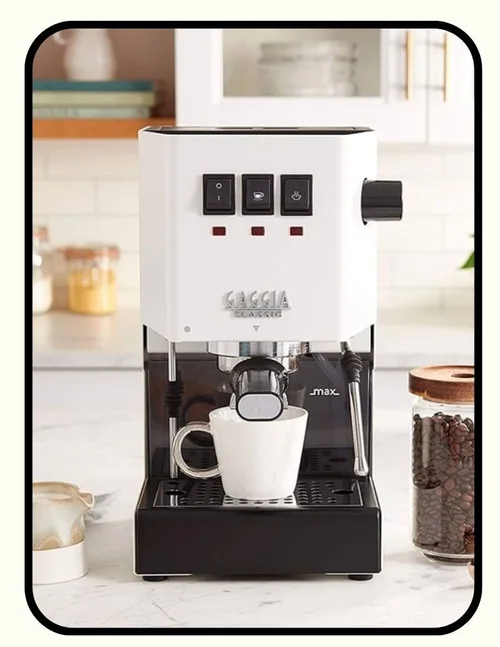 Gaggia Evo Pro Low Plastic Affordable Home Espresso Machine
The Gaggia is a more affordable almost plastic-free espresso machine that comes in close second to the ECM. It has a plastic water reservoir, but the tubing that routes the hot water is metal. Generally, espresso machines actually have a health advantage from an exposure perspective— you can potentially be less worried about them than other brewing methods because the contact time between hot or acidic coffee or water and the machine components is so short. The Gaggia gets great reviews and is a good choice for a non-toxic home espresso machine.
Product rating
See the rating scales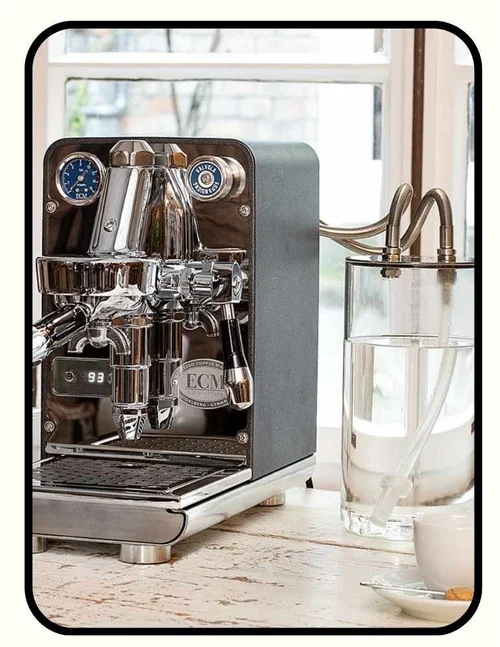 ECM Puristika Low Plastic Espresso Machine
Every espresso machine contains some plastic (thanks to Tom’s Coffee Corner who opens them up to inspect)— in the tubing, the gaskets, or the water tank. The model that comes the closest to being a totally plastic-free espresso machine includes a glass water reservoir and partial stainless steel tubing: the ECM Puristika. It’s an investment, and a little hard to find, but eBay often has some available.
Product rating
See the rating scalesNon-Toxic French Press Coffee Makers
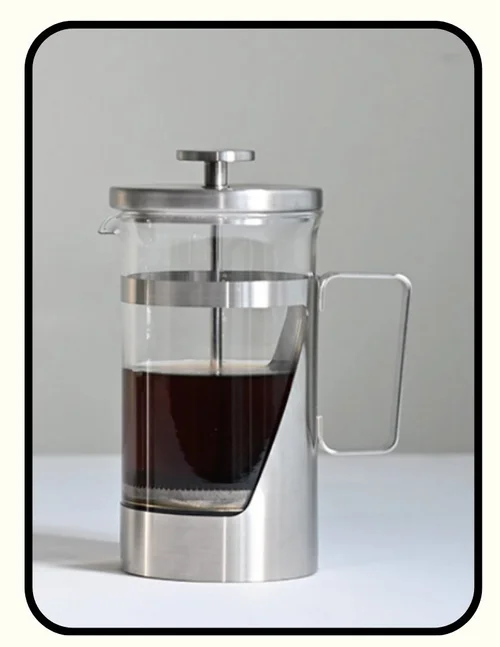 Hario Glass and Stainless Steel French Press
Someone asked me about the Hario line, and I'm glad they did! I really love the brand’s material transparency. Their French Presses are made entirely of stainless steel and borosilicate glass— totally plastic-free. Not all products are plastic-free, but they list materials for each one, and often even what comes in contact with the coffee. Refreshing! See all the details on their website here or check prices on Amazon here.
Product rating
See the rating scales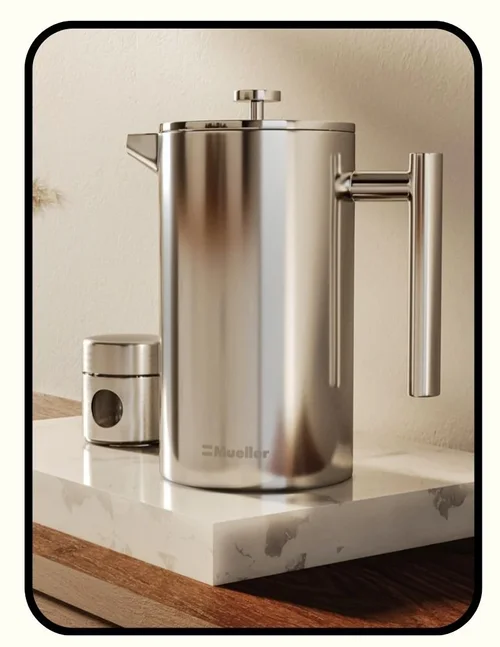 Mueller Stainless Steel French Press
I slightly prefer stainless steel over glass french presses because they require absolutely zero plastic components, they don’t break (so you don’t have to replace them, making them sustainable), and they keep your coffee warm. This non-toxic French Press is made by Mueller, a German company. An affordable non-toxic way to make coffee.
Product rating
See the rating scalesNon-Toxic Coffee Grinders
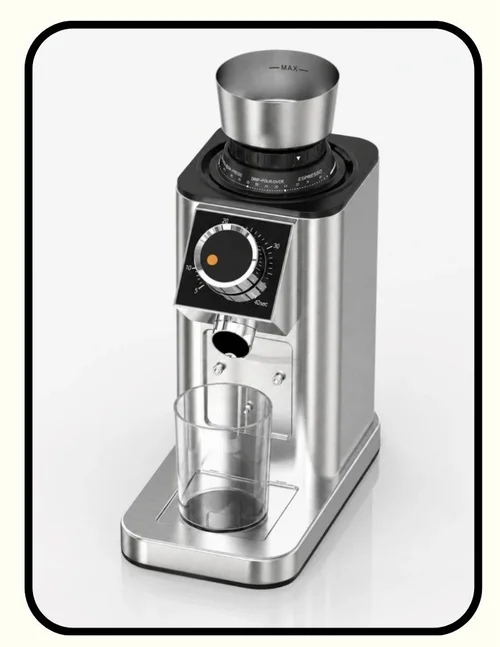 Simply Good Coffee Plastic Free Coffee Grinder
This is the best non-toxic coffee grinder machine available. Simply Good Coffee shows you every single material that every single component is made of. The optional top lid is made of silicone; everything internal is made of stainless steel where most options are made of plastic. The catcher is borosilicate glass.
Product rating
See the rating scalesLooking for something specific? If you don't see the product or brand you're curious about, you can request a review here, or run it through the Product Checker to evaluate it yourself. Want to go deeper? My free course covers how to evaluate any product's materials yourself.
Join the Newsletter
Join the Newsletter
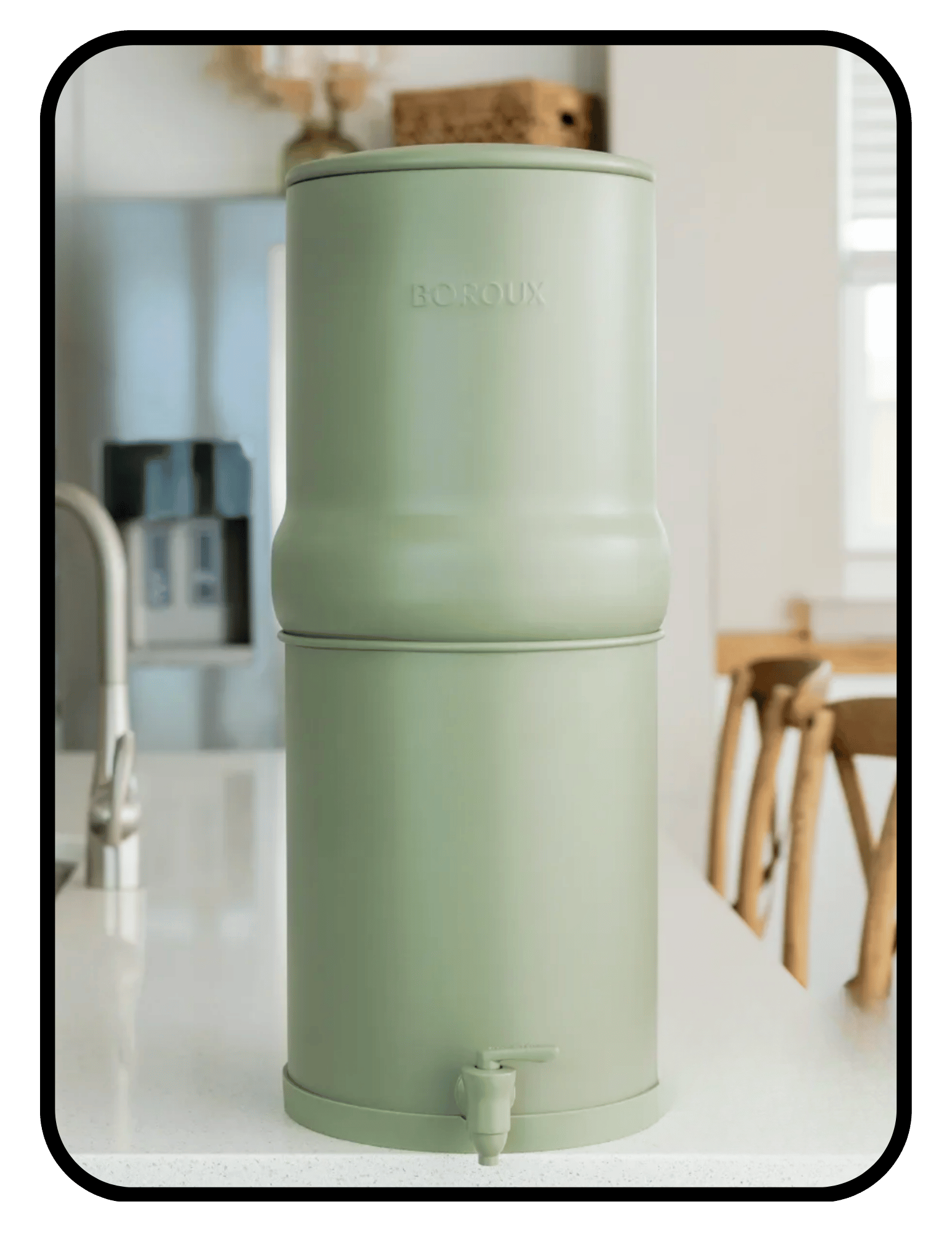

Plastic-Free Countertop Water Filters
What I Use in My Home

More Healthy Design For You

Shower Filters That Actually Work
Organic Pillows
More About Non-Toxic Coffee Makers
What are your reviews of plastic-free coffee brewing systems based on?
My reviews are based on materials: what each component of the brewer is actually made of, and what that means for your health.
I evaluate every brewer, component by component, across the three materials a coffee maker can contain — metal, glass, and plastic — using the consistent scales in my material health guides.
I highlight whether the material is in contact with the brew path, the parts that hot or acidic water and coffee actually touch, since heat, acidity, and daily repetition are the conditions most likely to pull chemicals out of a material. A brewer earns its rating from the highest-quality version available, and I prioritize brands that are transparent about their materials, ideally with third-party certification rather than vague "non-toxic" or "BPA-free" claims.
I don't rate based on taste, design, or price, though I'll often mention them.
What are the safest materials for coffee makers?
The safest materials for coffee makers are metal (stainless steel, aluminum) and glass, especially borosilicate glass, which is heat-resistant so won’t shatter.
Both are stable under the conditions that matter most for coffee: heat, acidity, and daily repetition, which are exactly the conditions that accelerate leaching from plastic.
Plastic is a less safe material, but there are shades of grey. What matters most isn't whether a machine contains any plastic, but whether there is plastic in the brew path, where hot or acidic water and coffee actually make contact. A brewer with a stainless steel and glass brew path and a small plastic part well away from the heat (like a cold-water tank seal) is a very different exposure than one where hot water routes through plastic tubing.
Not all plastic is equal, either: a plastic with third-party migration certification (LFGB or EU 10/2011) is far better than an uncertified one. You can see how I rate each material on my Metal, Glass, and Plastic guides.
Are coffee filters toxic?
Yes, most contain some concerning chemicals. Paper coffee filters are often made with cellulose fibers (from wood pulp or bamboo), or polypropylene plastics. “Wet-strength agents” are added so they don’t disintegrate on contact with hot water. The most common wet-strength agent is polyamide-epichlorohydrin, but melamine formaldehyde, polyacrylamide, and polyethyleneimine are also common additives. Bio-based agents like soy protein are becoming more common as demand for non-toxic coffee filters rises. Finally, many coffee filters are bleached with chlorine so they appear white instead of natural brown.
Considering coffee is a daily exposure for most, it may be worth avoiding these things. However, coffee itself is anti-inflammatory, so that cost-benefit analysis is important to consider, too!
Paper filters remove some of the oily compounds from coffee, which aren’t bad, and are even anti-inflammatory, but create a more bitter taste than unfiltered coffee that not everyone likes. Reusable cloth filters allow more oils to come through.