
Product Reviews ➜ Nursery & Kids ➜ Cribs
Non Toxic Cribs

Dr. Meg Christensen is the founder of Interior Medicine, a physician-created resource on non-toxic home products and household exposures. Her layer-by-layer analysis of materials and products draws on her background in medicine, biochemistry, epidemiology, and clinical research.
Updated December 2025
Crib healthwashing is rampant: vague "non-toxic" labels, unverified certifications, and roundups that reflect affiliate potential more than material reality. I dig into each layer (wood, finishes, and adhesives) and rank cribs from healthiest to least healthy based on verified certifications and what the materials actually are.





Green Cradle makes several styles of organic solid wood cribs, including the 7-in-1 convertible Childspose crib that converts from a bassinet to a changing table to a crib to a toddler bed. They use flaxseed oil as a finish, and a small amount of non-toxic water based wood glue. Can choose an unfinished version. Super healthy.
Kalon’s Caravan crib is made with solid ash wood, and finished with a hand-rubbed organic plant-based oil. You can also choose its unfinished form, if you prefer raw wood. Converts to a 3-walled divan, and then to a toddler bed, as your child grows. Kalon uses water-based, non-toxic glues on all of their furniture.


Both frame and mattress support in all of Simply Nursery’s crib styles are made of solid wood. No MDF, particle board or toxic glues! Several wood stains to choose from; all are plant-based and contain 2% or less of solvent. Once off-gassed, this will be a healthy option. They use a water-based adhesive, and I really appreciated how transparent and friendly they were about materials over email.


Are Babyletto cribs non-toxic? Their Austin, Lolly, and Hudson models are better than the others, because they’re made with solid wood and metal springs, without any MDF, veneers, or plywood. They state via email that all of their products are manufactured overseas so they don’t have specific information about the paint or adhesives, but the entire crib does meet GreenGuard GOLD status so my best guess is that they’re water-based and low VOC. It won’t off-gas excessively, but without knowing what’s in the finishes, I recommend a bumper pad to protect from lots of contact with the rails.
Are Oeuf cribs non-toxic? These have a solid wood frame, but plywood or MDF mattress supports. They state via email that their manufacturer uses proprietary paints and finishes, and water-based adhesives that allow the finished crib to meet GreenGuard GOLD standards. It won’t off-gas excessively, but without knowing what’s in the finishes, I recommend a bumper pad to protect from lots of contact with the rails. Definitely better from a health perspective than a crib made entirely of fake wood or high VOC materials and very cute.


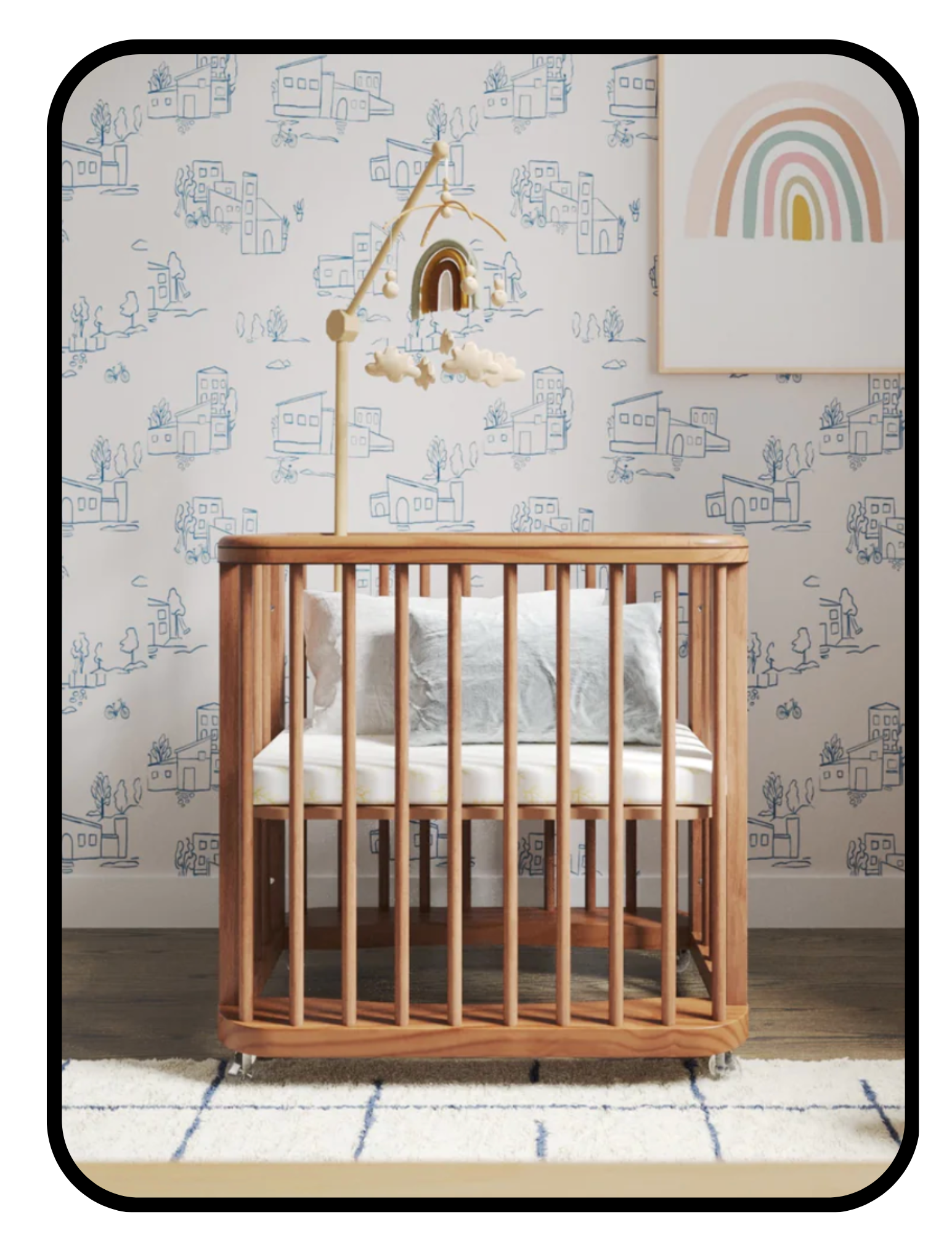

Are Nestig cribs non-toxic? From a material health perspective, they are on par with Oeuf, Babyletto, and DaVinci and Delta. They have solid wood frames, but engineered wood for mattress support. I appreciated their disclosure that their cribs are painted and glued together with the Sayerlack brand of paints and adhesives, which are water-based. The finished crib meets GreenGuard GOLD standards, so It won’t off-gas excessively, but since Sayerlack doesn’t disclose its ingredients, I recommend a bumper pad to protect from lots of contact with the rails.
This crib is made with a combination of woods; solid beechwood, but also beech laminate and beech plywood. I’m awaiting a response about what kinds of glues, paints, and finishes they use to qualify for low-VOC emissions (they have GreenGuard GOLD certification). In an email, they state they use water-based lacquer and glues. It won’t off-gas excessively, but without knowing what’s in the finishes, I recommend a bumper pad to protect from lots of contact with the rails.
Not seeing the product or brand you’re curious about? Ask me here.
FYI ➜ “Non-toxic” doesn’t have a definition, and I use the words chemical-free,toxin, and toxic on Interior Medicine inaccurately. I do this for practical purposes, for now: they’re accessible terms that allow people to find what they’re looking for, and they’re shorthand for a complicated problem. I made an entire (free!) course about this. Check it out here.
Join the Newsletter
Join the Newsletter
More Healthy Design for You

Guide: Detox Your Home in Five Steps


Organic Crib Mattresses
More About Non-Toxic Cribs
How do you choose a non-toxic crib?
There are four crib components to evaluate when you're looking for something healthier than standard:
Wood: many cribs are made with faux woods like MDF, engineered wood, or particleboard that contains formaldehyde, a known carcinogen. Some will advertise being “TSCA compliant”, but this doesn’t mean zero formaldehyde, it is just the minimum legal amount. Be sure to look at both what the frame and the mattress support base are made of— I often see a solid wood frame surrounding an engineered wood base. That said! A bit of engineered wood can be a less expensive option. If you go with a crib made of faux wood with some amount of formaldehyde, you can buy it early and let it off-gas before your baby arrives. You can read more in my free Wood Guide.
Paints, finishes, and stains: it’s also important to consider what kind of paints, finishes, or stains are used on the wood, since babies and growing kids spend time touching and gnawing on the spindles. While GreenGuard GOLD paint and finishes are a step in the right direction, it simply means that they are low-VOC and good for air quality. It doesn’t take into account the other, non-smelly, harmful aspects of paints. Using bumper pads can always mitigate this problem, if you choose a crib with less-than-ideal paint. Or, an unfinished crib will give you total control over what finish to use.
Adhesives and wood glues: these are used to hold most cribs together. These are somewhat less of an issue because once off-gassed, they don’t come into direct hand or mouth contact with your baby. Still, look for water-based, zero-VOC options whenever possible, and favor companies that disclose what brand they use. You can read more in my Adhesive Guide.
Mattress: some cribs are sold with an included mattress. I recommend choosing a crib that either comes with or will fit an organic crib mattress instead of one that includes a polyurethane foam option. The crib mattress industry drives me crazy because there is so much healthwashing! See the my analysis of different brands on the Crib Mattress page.
Why don't you recommend GreenGuard GOLD certified cribs?
I see GreenGuard GOLD used in crib marketing as a substitute for actual transparency, and I'm particularly prickly about this for baby furniture. Not only are babies more vulnerable to chemical exposures than adults, but new parents are often overwhelmed when shopping for nursery furniture and supplies—making vague certifications especially misleading.
GreenGuard GOLD only measures VOC off-gassing under specific limits. It doesn't test for chemicals that don't volatilize into air, including PFAS, heavy metals, and solvents in paint, engineered wood, and adhesives. I'd rather know exactly what's in a crib than trust a company's (or their overseas manufacturer's) definition of "non-toxic."
That said, choosing a crib with GreenGuard GOLD certification and "non-toxic" finishes is still far better than a high-VOC standard crib, and can absolutely be part of a healthy nursery for your baby. My issue is with manufacturers' lack of transparency—never with what you choose.
Are wood stains on cribs toxic?
Wood stains on cribs can be toxic depending on the type—and this matters more for cribs than other furniture because babies mouth and teeth on crib rails. Completely natural stains like coffee are completely safe (though very uncommon or non-existent in purchased furniture). Water-based wood stains are far more common in health-minded cribs and are relatively non-toxic, especially ones with certifications like GreenSeal-11 that ensure the most harmful additives are avoided. Look for stains without VOCs, antimicrobials, chemical drying agents, or heavy metals. Oil-based wood stains with standard chemicals—including solvents that release high VOCs—are very common in conventional cribs and are quite harmful, particularly since babies spend hours with their faces close to stained spindles during sleep.
What's the difference between wood stain and wood finish on cribs?
Wood stains add color to the natural wood grain of crib rails and posts, while finishes protect the wood surface from moisture, drool, and damage from baby's hands and mouth. Stains penetrate the wood; finishes sit on top as a protective layer that babies will directly contact when teething on crib rails. Both the stain AND the finish matter for crib safety since babies are in prolonged contact with both.
Why are oil-based finishes better than water-based finishes for cribs, but water-based stains better than oil-based stains?
For crib finishes, natural oil-based options (linseed oil, hemp oil, tung oil) are minimally processed, food-safe, and very low in VOCs—making them ideal for surfaces babies will mouth. Water-based finishes often contain high-VOC toxic solvents added to improve durability, which off-gas into your baby's breathing zone during sleep.
The opposite is true for crib stains: natural oil-based stains typically have higher VOCs and require solvent carriers that continue off-gassing after application, whereas water-based stains have significantly lower VOC content and use water as the carrier instead of petroleum-based solvents. This matters more for cribs because the nursery is an enclosed space where your baby spends 12-16 hours daily.
What are plant-based oil finishes on cribs, and why are they safer?
Plant-based oil finishes are natural wood treatments derived from plants rather than petroleum, and they're the safest option for crib rails that babies will teeth on. The most common are:
Linseed oil - extracted from flax seeds, food-safe when fully cured
Hemp oil - derived from cannabis plant seeds, naturally antimicrobial
Tung oil - pressed from seeds of the Tung tree (Vernicia fordii), highly water-resistant
These penetrate wood fibers to provide protection while remaining very low in VOCs compared to synthetic finishes. Crucially, once fully cured (typically 30 days), these oils are considered food-safe—important since babies inevitably gnaw on crib rails during teething.
What are solvent-based finishes, and why should you avoid them on cribs?
Solvent-based finishes include varnish, acrylic, synthetic lacquer, and urethane-based products. All require much higher solvent concentrations than water-based finishes, resulting in high VOC emissions that off-gas directly into your baby's breathing zone during sleep. They also frequently contain carcinogenic chemicals including benzene, toluene, and formaldehyde. Since babies spend 12-16 hours daily in their crib with their faces inches from finished wood surfaces, solvent-based finishes pose a much greater exposure risk than they would on, say, a dining table you use for an hour daily.
Is shellac safe for cribs?
It depends which type. Natural shellac comes from the resinous secretions of the female lac bug and has been used safely for thousands of years as a wood finish and food glaze—it's even used to coat candy and pills. Once fully cured, natural shellac is considered food-safe, making it appropriate for crib rails babies will teeth on. Synthetic shellac (also called "shellac-based finishes") contains petroleum-based solvents and releases harmful vapors during application and curing. When evaluating cribs, ask specifically whether the shellac is natural or synthetic, and if natural, confirm it's fully cured before your baby uses the crib.
Product Reviews ➜ Nursery & Kids ➜ Cribs