
Product Reviews ➜ Bedroom ➜ Mattress Protectors
Non Toxic Mattress Protectors
Non-toxic mattress protectors are made with GOTS-certified organic wool or cotton, free of vinyl, PFAS, phthalates, and off-gassing finishes. Mattresses need reliable moisture protection, which presents a trade-off: the healthiest natural fabrics are only moderately waterproof, while fully waterproof options rely on some synthetic content. The best options are the certified non-toxic ones below, which gets you full waterproofing without the usual chemicals. I evaluate every protector's fabric and waterproofing layer using the same certification-based scale explained in my full methodology.
By Dr. Meg Christensen | Physician-founder of Interior Medicine, a non-toxic home resource built on her background in medicine, biochemistry, epidemiology, and clinical research.

Updated August 18, 2026
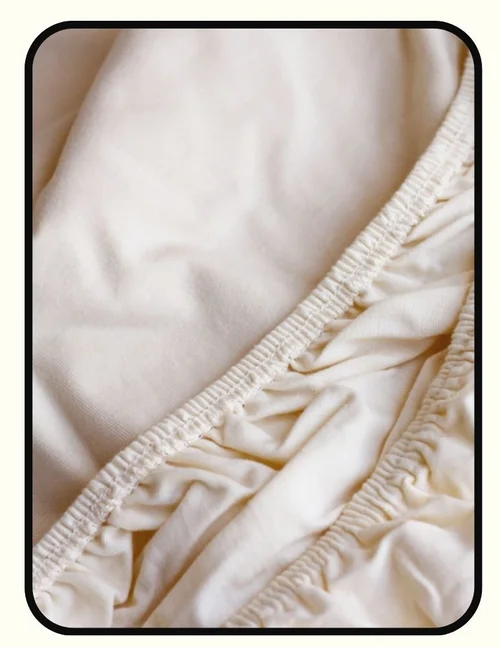 Savvy Rest Organic Waterproof Mattress Protector
This is the most affordable organic waterproof mattress protector. It's made of two layers of GOTS certified organic cotton, sandwiched around an ultra-thin layer of waterproof TPU made from cornstarch. Cornstarch TPU is a breathable, plastic-like film that is the safest way to waterproof a mattress. It's not noisy or rigid, and comprises 5% of the total mattress protector. TPU is not the same thing as a polyurethane (PU) foam, and is much safer (read more below), especially when the ingredients are disclosed, as Savvy Rest always does. The entire mattress protector is GOTS certified, not just the cotton.
Product rating
See the rating scales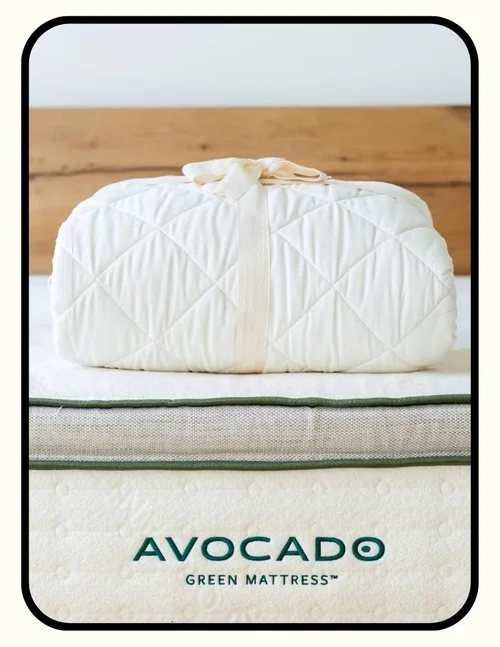 Avocado Organic Cotton Mattress Protector
If you want a wool-free, TPU-free, synthetic-free mattress protector, you sacrifice some waterproofing, so a thick version that can withstand night sweats or accidents, combined with washability, is essential. Avocado makes a 100% GOTS certified organic cotton mattress protector in every size between Twin and California King. Avocado always goes the extra mile with PFAS testing, GreenGuard GOLD certification, and a slew of other verifications that it's as healthy as possible.
Product rating
See the rating scales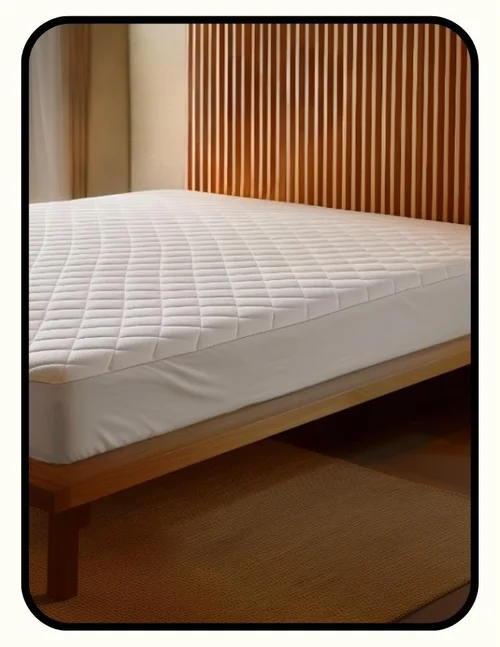 Sleep & Beyond MyProtector Washable Wool Mattress Protector
This is the best washable wool mattress protector. Sleep & Beyond uses Bio-Wash made with enzymes instead of chlorine to make the wool washable. They also don't use synthetic coatings, so there are no microplastic concerns. I confirmed this with them via email. This is a rarity in wool, but especially in wool mattress protectors which are generally great because they're thermoregulating and hypoallergenic. You can read more about washable wool in the Superwash section of my Fabric Guide. Covered in a cotton encasement, the whole thing has OEKO TEX certification. This is a bit of an under-the-radar brand, but they truly do have the OEKO TEX and GOTS licenses to back up all their products and they're relatively affordable.
Product rating
See the rating scales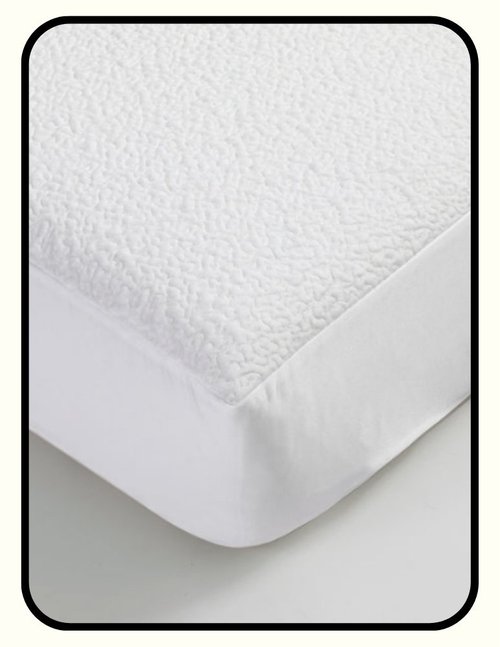 SIJO AiryWeight Eucalyptus Mattress Protector
SIJO offers the most affordable OEKO TEX certified mattress protector made out of Eucalyptus TENCEL, with a polyester backing. The advantage of these synthetics is that they provide full waterproofing. These are also certified Allergy and Asthma friendly, if you have an allergy to wool. Imperfectly healthy, these are the best non-toxic mattress protectors if you're on a budget, vegan, or want an affordable way to buy two mattress protectors that you can rotate during laundry loads.
Product rating
See the rating scalesNon-Toxic Mattress Encasements
 Eco Living Friendly OEKO TEX Certified 1 Micron Dust Mite Mattress Encasement
This six-sided dust mite encasement is the best mattress protector for dust mite allergies because it's made of non-woven fabric, meaning the pores between threads are 1 micron or less in size. This detail is super important because 1 micron is smaller than dust mite feces, fragments (and mold spores, too.) Made of polyester, and amazingly has OEKO TEX certification. Zip it around your mattress and consider it permanent. Add a regular mattress protector on top that you can remove and wash regularly. I have this for my own bed (and pillowcases) and it works wonders for my allergies.
Product rating
See the rating scales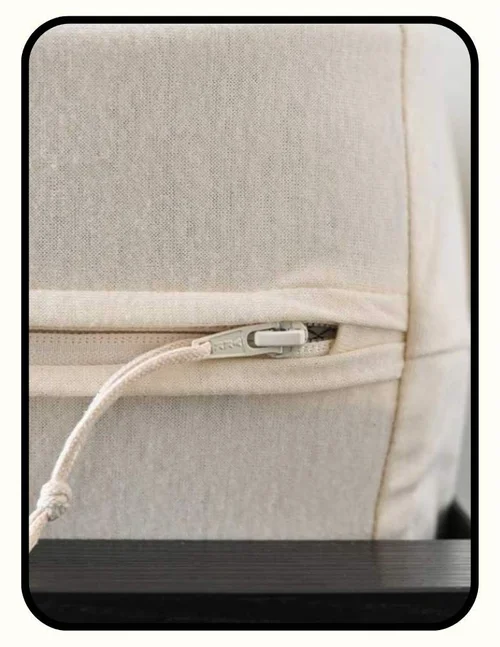 Sleep & Beyond GOTS Certified Organic Waterproof 3 Micron Dust Mite Mattress Encasement
This is a truly organic cotton mattress encasement with a TPU film that adds both waterproofing and some dust mite resistance with a 3 micron weave. That's not as tight as the 1 micron weave that the elf brand has, but will still drastically reduce the amount of dust mite and fragments that can reach your mattress. It also has the added advantage of being GOTS certified organic, instead of OEKO TEX certified polyester.
Product rating
See the rating scalesLooking for something specific? If you don't see the product or brand you're curious about, you can request a review here, or run it through the Second Opinion Product Checker to evaluate it yourself. Want to go deeper? My free course covers how to evaluate any product's materials yourself.
Join the Newsletter
Join the Newsletter
More Healthy Design for You


How I Rate Mattress Protectors
I rate mattress protectors on two separate scales: first for their material health, and second for their health function. Beyond being materially healthy, a mattress protector also serves a health function: keeping moisture out. Sweat, spills, and accidents that reach a mattress create the damp conditions where mold, bacteria, and dust mites thrive, so a mattress protector's health benefit depends on how completely it blocks liquid. This is one of the unusual cases (along with blackout curtains and shower curtains) where synthetics often outperform organic fabrics, which can't achieve full waterproofing on their own.
Material Health
Mattress protectors are made with fabric, sometimes paired with a thin waterproofing layer like TPU. You can see the Material Health Scales here. This is just one aspect of how I rate a protector, and on its own it doesn't account for how well the protector actually does its job.
Health Function
This is the scale I use for a mattress protector’s health function. You can see the standard consistent scale that underpins this here.
Highest: fully waterproofs the mattress, blocking all liquid from reaching it (polyester)
High: minor limitation like breathability or a thinner barrier that isn’t 100% guaranteed to stop leaks but waterproofs the mattress very well overall (wool, TPU)
Moderate is absorbent enough to handle small spills and sweat, but won't stop a larger volume of liquid from reaching the mattress (thick cotton)
Low: absorbs some moisture, but lets majority through (thin cotton)
Lowest: provides no moisture protection (no mattress protector)
More About Non-Toxic Mattress Protectors
Do you need a mattress protector?
Yes! It protects your mattress, which is usually quite an investment, from breaking down quickly, as well as from sweat and germs.
Are mattress protectors and pads the same thing?
Not quite. While both can protect the mattress from stains, spills, and sweat, mattress pads typically have a small amount of padding sewn in to them. Protectors are typically just the fabric, without padding, and it’s primary purpose is protection only, not comfort.
Do you need a waterproof mattress cover?
If you have young kids, are a heavy sweater, or there are any other possibilities of liquids seeping through your sheets and into your mattress, I definitely recommend a waterproof option to prevent mold, bacteria, and dust mites, all of which thrive in damp, humid places.
What is TPU?
TPU stands for thermoplastic polyurethane, and it is a plastic-based film that is used as a waterproofing fabric in mattress protectors.
How is TPU made?
Like PU (polyurethane, the foam found in mattresses), TPU is also created from two basic building blocks — polyols and diisocyanates (you can watch my 60 second video about what these are and how foam is made here). But, there are a few important differences. First, the two building blocks bond together permanently in a much more predictable and controlled way. Once they’re bonded together (“cured”) , they don’t un-bond. This is less true for polyurethane foam, which has additives to poof it up and soften it, and having uncured ratios of these chemicals can cause some health problems.
Also, new forms of TPU can be biodegradable, made with B. subtilis, a soil-based probiotic bacteria— or can even use cornstarch to replace the petroleum-derived polyols.
Is TPU toxic?
It is very unlikely to harm you, and depends on how it’s made. The “old” way of making TPU involved solvents and off-gassing VOCs. Now, biodegradable and bio-based TPUs are being made, which don’t rely on these, and are much safer for workers.
It’s always better in the long run for human health to shift away from petroleum-based products, which is where polyols and diisocyanates come from— it’s not always feasible to go with the most natural waterproofing solution, wool. But, even an “old” TPU is healthier than vinyl and PFAS, protects you from mold, sweat and bacterial build up in your mattress, and is relatively affordable.
Are there natural waterproof mattress protectors?
Yes. The world of non toxic waterproof fabric can be tricky— traditional options, often made with PVC, are notoriously toxic, and many non-PVC options are made with fabric processing chemicals that can off-gas. Here’s what I recommend:
Choose a GOTS certified organic, washable thick cotton one if you are prioritizing material health above all else.
Choose GOTS certified organic fabric with a super-thin layer of polyurethane film (TPU) in between the layers: strikes the best balance for most people between convenience (washability, waterproofing) and material health
Choose an OEKO TEX certified polymer fabric option if you’re prioritizing affordability.
Product Reviews ➜ Bedroom ➜ Mattress Protectors