Ceramic Guide
Ceramic safety is almost always not about the clay itself, but about the glaze, since lead and cadmium have historically been used to make glazes glossy and vividly colored, especially in reds, oranges, and yellows. The highest risk shows up in vintage pieces and certain traditional imported pottery, where older glaze formulations are more likely to still be in use. A "lead-free" claim on brightly colored imported ceramics is worth treating with some skepticism unless backed by third-party testing, since that claim has repeatedly proven inaccurate under independent testing. This guide is one of the rating systems behind the Interior Medicine Method.
By Dr. Meg Christensen | Physician-founder of Interior Medicine, a non-toxic home resource built on her background in medicine, biochemistry, epidemiology, and clinical research.

Published June 1, 2025 | Updated May 20, 2026
What This Guide Covers
Table of Contents
Hazard Lists & Third-Party Certifications for Ceramics
Ceramic
Ceramic safety: is ceramic dinnerware safe? Is vintage ceramic pottery safe?
Lead and cadmium limits and testing: XRF, leach testing, and other methods
FYI: How and why I use the words non-toxic, chemical-free, toxin, and toxic
Ceramic Rating Scale
This scale is a summary of all the information below. Scales keep me consistent and unbiased as I rate and rank products for their potential impact on your health and they’re meant to organize the information in a straightforward way for you, too. Keep reading for the full breakdown on the reasoning behind it, and how to make smart decisions about ceramics in your home.
Ceramic Rating Scale
TIER 01
Healthiest
Description
Ceramic with third-party leach testing on the final product confirming both lead and cadmium below Prop 65 thresholds
- Modern porcelain, stoneware, earthenware, or bone china with published third-party leach test results showing lead and cadmium below Prop 65 thresholds for the whole assembled piece
Look for
- Shareable third-party leach test results from the brand confirming Prop 65 compliance for lead and cadmium
- On European cookware: the LFGB knife-and-fork symbol on packaging
Ask the brand
- Has this product been independently tested by an accredited laboratory for both lead and cadmium leaching, and can you share the actual test results?
In practice
- A small segment of the market. Most ceramic brands rely on Prop 65 compliance pressure rather than publishing test results, which lands them at Tier 2 instead.
- European brands sometimes carry LFGB certification, which is among the strictest food-contact standards in the world. A piece that passes LFGB almost always passes US standards too.
TIER 02
Healthy
Description
Modern ceramic from manufacturers and retailers operating under US Prop 65 compliance pressure or EU food-contact compliance frameworks, where the regulatory pressure functions as the safety floor even without product-specific testing claims
- Modern ceramic dinnerware from established US retailers with documented Prop 65 compliance programs, or from EU retailers operating under EU food-contact regulations, regardless of country of manufacture (most big-box stores)
- Modern ceramic from US, EU, Japanese, Canadian, or Korean manufacturers operating under regulations similar to Prop 65
- Modern handmade pottery where the artist documents clay source and uses commercial lead-free, cadmium-free glazes from US or similar suppliers
Look for
- A US retailer with a stated Prop 65 compliance program for their supply chain
- "EU food contact compliant" on European-sold ceramic
- "Lead-free" and "cadmium-free" specifically (not just "non-toxic")
- Modern handmade pottery where the artist names the clay supplier and the glaze brand and confirms lead-free
Ask the brand
- Does your supply chain comply with California Prop 65 requirements for lead and cadmium in food-contact ceramic?
- Where is this manufactured, and what regulatory testing applies to it?
- For handmade pottery: what clay supplier do you use, and what glazes? Are they certified lead-free and cadmium-free?
In practice
- The largest segment of safer ceramic on the market, and where most US dishware actually is
- Country of manufacture matters less than the regulatory pressure on the supply chain. A Chinese-manufactured piece sold through a US retailer with Prop 65 compliance enforcement is at the same tier as a Portuguese-manufactured piece bought from the same retailer.
TIER 03
OK
Description
Imported modern ceramic where the brand or maker claims lead-free or cadmium-free production but no third-party testing exists and the product is not sold through a major retailer complying with Prop 65. You're trusting the maker's word in the absence of external verification.
- Imported ceramic sold direct-from-maker on Etsy, specialty importer sites, or small websites without US retailer compliance enforcement
- Italian, Portuguese, Japanese, Korean, modern Talavera, or Polish pottery purchased from non-US-retail channels with a brand statement of lead-free production but no test results
- Some artisan imports where the maker is identified and discloses materials, but no product-specific testing exists
You'll see
- "Lead-free" or "cadmium-free" stated on the product page or in brand materials, without accompanying third-party leach test results
- Country and maker identified, often with detailed material descriptions, but without independent testing documentation
Ask the brand
- Has this been independently tested by an accredited laboratory for both lead and cadmium leaching, and can you share the results? A yes moves it to Tier 1.
- Does your product enter US commerce through a retailer with a Prop 65 compliance program? Confirmation moves it to Tier 2.
- An "I don't know" or "we don't test, we just don't use lead" answer keeps it at Tier 3.
In practice
- This is the "trusting the maker's word" tier, where you have a positive claim of safety but no external verification
- A reasonable middle ground for occasional use, decorative items, or buyers with higher risk tolerance. For pregnant readers, children's dishware, or daily food-contact items, the lack of third-party testing or regulatory pressure is a real consideration.
TIER 04
Use Caution
Description
Ceramic with no testing, no traceable manufacturer, and no country-of-origin disclosure. Default tier when chemistry isn't disclosed and origin isn't traceable.
- Thrift store finds and estate sale pieces of unknown origin
- Generic online listings on marketplace platforms (Amazon, Temu, Wayfair third-party sellers) where the manufacturer isn't identifiable
- Unmarked imports without country-of-origin labels
- Handmade pottery from artists who can't or won't answer questions about clay sourcing or glaze chemistry
- Promotional, souvenir, or giveaway ceramics with no brand information
You'll see
- No country of origin or manufacturer name on the product or packaging
- No claims about lead-free or cadmium-free production
- Watch out for "non-toxic" as a standalone claim without specifying lead and cadmium
Ask the brand
- Where is this manufactured, and who is the manufacturer?
- Has this been tested for lead and cadmium leaching?
- A no or "I don't know" keeps it at Tier 4
In practice
- The default placement when there's no information to work with
- Marketplace third-party listings increasingly fall here, including pieces that come up first in search results for "ceramic dinnerware"
- Use context matters a lot at this tier. A decorative vase in this tier carries very different exposure considerations than a daily-use dinner plate in the same tier.
TIER 05
Harmful
Description
Ceramic containing lead, cadmium, or other heavy metals with documented food-contact exposure paths
- Vintage ceramic (pre-1970s US production) with lead or cadmium glazes, especially pieces with metallic decoration, decals, or hand-painted designs
- Untested imported ceramic of any era with brightly colored glazes (reds, oranges, yellows) used for food contact, particularly traditional lead-glazed ceramics from regions with documented lead-glaze histories (some Mexican Talavera, some Indian and Pakistani imports, some Moroccan tagines and tableware)
- Ceramic with a disclosed Prop 65 warning citing lead or cadmium on a food-contact piece
- Handmade pottery used for food contact when the maker cannot answer basic questions about clay sourcing or glaze chemistry, or where studio glazes not certified for food contact have been used
You'll see
- "Vintage" or "antique" ceramic dinnerware without testing documentation, especially brightly decorated pieces or pieces with metallic finishes
- Imported decorative pottery sold as "for decorative use only" or "not food safe" (a disclosure that the chemistry is known to be problematic for food contact)
- Prop 65 stickers citing lead or cadmium on cookware or dishware
- Watch out for "lead-free" claims on imported brightly colored pottery without third-party testing, which has repeatedly been shown to be inaccurate when independently tested
Ask the brand
- For vintage pieces: has this been independently tested for lead and cadmium?
- For traditional imported pottery: is the glaze the traditional lead-glazed formulation, or has the workshop transitioned to lead-free production? If the latter, can the testing be shared?
In practice
- Exposure context is critical at this tier. A vintage piece on a high shelf has very different exposure considerations than the same piece used daily for hot acidic foods like soup, coffee, or tomato sauces.
- The Mexican Talavera workshops have been split between traditional lead-glaze production and modern lead-free production for several decades. Identifying which type a piece is requires either testing or detailed maker information.
HAZARD
Decoder
AB 1200
AB 1200 is a California right-to-know law for cookware and food-contact items, including ceramic dinnerware, bakeware, and cookware. It requires brands to disclose, both on the product label and on their website, whether any chemicals on California's designated list were intentionally added to the food-contact surface or handle. It isn't about exposure limits or whether a chemical migrates into food. It's about transparency on what the manufacturer put in.
Prop 65
A Prop 65 warning on a ceramic product means the brand either knows a listed substance is present above a regulatory limit, or is labeling as a legal precaution. It measures whether your potential exposure meets a certain limit.
Because AB 1200 draws in part from Prop 65, the chemicals flagged by each tend to overlap on any given ceramic product. Each chemical can look alarming on first glance, but there's more nuance to whether you need to worry. Read below to see what each chemical actually means and what to do about it.
The most common possibilities for an AB 1200 disclosure or Prop 65 warning on ceramic products are:
- Lead: historically used as a glaze flux for clarity and gloss, as a colorant, and present in trace amounts in some natural clay sources. Still appears in some traditional imported pottery and vintage decorated pieces.
- Cadmium: the pigment source for red, orange, and yellow glazes (cadmium sulfide, cadmium selenide, cadmium sulfoselenide), and sometimes a trace clay contaminant.
- Hexavalent chromium: used in some green and yellow ceramic glazes.
- Cobalt (II) oxide: the pigment source of cobalt blue in some glaze formulations.
- Antimony trioxide: used historically as a yellow pigment component along with lead, and as an opacifier in some glaze formulations.
- Arsenic: rare in modern production, but appears as a trace clay contaminant in some sources and as a historical glaze component in some vintage pieces.
Prop 65 & AB 1200 on Ceramics
What should I do about an AB 1200 disclosure or Prop 65 warning on ceramic?
Chemicals are sorted into groups based on how much they actually deserve your attention. For other materials, the common warnings sometimes aren't a concern in real life. But for ceramic, the warnings typically do apply, at least for pieces used with food. The context of how you use them matters a lot here: any of the chemicals below are worth avoiding in dinnerware, mugs, bakeware, and cookware, where heat, acid, and daily wear pull the chemicals into your food or drink. The same chemicals in a decorative vase, wall tile, or display piece carry much lower real exposure, since you rarely touch them, let alone coax any of the chemicals out with heat or acid.
Worth your attention: These chemicals can migrate out of glaze and pigment as the ceramic is used, sped up by heat, acid, abrasion, and time. Avoid acidic food and drink (coffee, tomato sauce, citrus, vinegar) in pieces where any of these are disclosed, don't use pieces with visible glaze wear or crazing on the food-contact surface, and reserve disclosed decorative pieces for display only. For children, avoid lead-containing pieces completely rather than mitigating.
Lead: A potent neurotoxin. Causes cognitive deficits, behavioral problems, and developmental delays, with effects measurable at blood levels once considered acceptable. In ceramics, lead historically appears as a glaze flux for clarity and gloss, as a colorant, and in trace amounts from some natural clay sources. Still common in some traditional imported pottery and vintage decorated pieces. Worth avoiding outright wherever possible for food contact.
Cadmium: A kidney toxin and human carcinogen that bioaccumulates in the body over decades. In ceramics, found in red, orange, and yellow glaze pigments (cadmium sulfide, cadmium selenide, cadmium sulfoselenide), and sometimes as a trace clay contaminant. Migration into food increases with acidic ingredients and glaze wear.
Hexavalent chromium (chromium VI): A confirmed human carcinogen, primarily by inhalation, and toxic by ingestion at much lower levels than the trivalent dietary form. Used in some green and yellow ceramic glazes.
Cobalt (II) oxide: The pigment source of cobalt blue in some glaze formulations. Associated with heart muscle damage at chronic moderate doses, and a possible carcinogen by inhalation. Of particular concern for people with cobalt allergy or thyroid conditions.
Antimony trioxide: A possible human carcinogen by inhalation, linked to heart and developmental effects at higher exposures. Used historically as a yellow pigment component along with lead, and as an opacifier in some glaze formulations. The Prop 65 listing is based on inhalation studies, but ingestion concerns rise when antimony is in a food-contact pigment that wears with use.
Arsenic: Rarely a primary glaze ingredient in modern production, but appears as a trace clay contaminant in some sources and as a historical glaze component in some vintage pieces. A known human carcinogen and developmental toxicant.
What does a Prop 65 warning on ceramic mean?
A Prop 65 warning means the product contains, or might contain, a substance on California's list of chemicals known to cause cancer or reproductive harm. It does not necessarily mean the product is dangerous to use. That's because Prop 65 is a right-to-know law, not a product safety law. It requires warnings at levels 1,000 times below the level that would actually cause harm.
There are three reasons a brand might put a Prop 65 sticker on a ceramic product:
The product contains a listed chemical at levels that exceed Prop 65's daily exposure limit.
The product contains a listed chemical below the exposure limit, but the brand labels as a legal precaution because the cost of a lawsuit is much higher than the cost of a sticker.
The product is part of a category where Prop 65 listings apply broadly, and the brand labels the entire line the same way rather than testing each piece.
The sticker doesn't tell you which specific chemical it's for, whether the metal is in the glaze, the clay, or the painted decoration on the outside, and brands often won't disclose the answer even when asked. Knowing the most likely candidates for the product category is the best way to interpret what you're seeing.
What does an AB 1200 disclosure on ceramic mean?
AB 1200 is a California right-to-know law specific for cookware and food-contact items, including ceramic dinnerware, bakeware, and cookware. It requires brands to disclose whether any chemicals on California's Department of Toxic Substances Control (DTSC) designated list were intentionally added to the food-contact surface or the handle. Brands also can't claim a product is "free of" a chemical if any chemical in the same class was intentionally added.
The DTSC designated list contains around 3,300 chemicals, pulled from about 22 regulatory lists worldwide, including Prop 65, the EU's Substances of Very High Concern, IARC carcinogen classifications, and ATSDR neurotoxicants. Because the underlying list is so broad, most AB 1200 disclosures on ceramic list the pigment and glaze chemistry of the piece plus trace minerals from the clay itself. Each one has a reference to an often very alarming-looking toxicity database. The disclosure reads like a cancer warning even when the actual risk from a finished, fired ceramic is very low. Read on for specific examples.
What's the difference between Prop 65 and AB 1200 for ceramics?
Both can appear on ceramic cookware and dinnerware, and a piece can comply with one and not the other.
Prop 65 asks: how much of a listed chemical does a person actually get from normal use of this product? The trigger is whether daily exposure exceeds a limit (for lead, 0.5 micrograms per day). The chemical can be intentionally added, can come from trace contamination, or can leach from natural sources in the raw materials. Prop 65 doesn't care which. It cares about potential exposure.
AB 1200 asks: did the manufacturer deliberately put a listed chemical into this product? The trigger is whether a chemical from the DTSC list was intentionally added to a food-contact surface or handle, regardless of how much actually migrates into food. AB 1200 doesn't care about migration. It cares about what the manufacturer chose to use and a consumer's right to know.
Two examples make the difference concrete:
A modern lead-free ceramic mug uses no intentionally added lead or cadmium, but trace lead from natural clay sources pushes calculated daily exposure to 0.6 micrograms per day. Prop 65 requires a warning when that potential exposure exceeds the limit. AB 1200 requires no disclosure, since lead wasn't intentionally added.
A traditional pottery workshop uses a cadmium-pigmented red glaze. The cadmium is well-fired and locked into the glaze matrix, and leach testing shows migration below the Prop 65 exposure threshold. Prop 65 requires no warning, since your exposure is below the limit. But an AB 1200 disclosure is required, since cadmium was intentionally added to a food-contact surface.
Why does ceramic dinnerware have a Prop 65 warning when it's labeled lead-free?
Because Prop 65 and "lead-free" are measuring two different things, and they don't always line up. It's confusing.
When a brand says a piece is lead-free, they usually mean two things: nobody added lead on purpose when making it, and/or lab testing shows that lead leaching out of the product is below what the FDA allows. Both of those can be true at the same time as a Prop 65 warning being required.
That's because Prop 65 is based on a person's total estimated daily exposure to lead from the product, not on whether the product is labeled lead-free. Tiny amounts of lead can still end up in ceramic from the clay itself or from the factory environment, even when no one added lead to the glaze. If those tiny amounts add up to more than California's daily limit of 0.5 micrograms per day, the warning is required.
Prop 65 is stricter than FDA limits, stricter than most other countries' ceramic rules, and stricter than what most shoppers think "lead-free" means in everyday life. So a Prop 65 warning on a piece labeled lead-free is usually a cautious legal label rather than evidence that the brand is hiding something. The only way to know for sure is to ask the manufacturer.
What are the Prop 65 limits for ceramic dinnerware?
Prop 65 doesn't set a single number for how much lead or cadmium is allowed in a ceramic piece itself. Instead, it sets a limit on how much of these metals a person can be exposed to in a day from a product. The brand then has to do the math, or commission testing, to figure out whether normal use of their dinnerware would push someone over that daily limit.
For lead, the daily limit is 0.5 micrograms per day. This is California's safety limit for reproductive harm. It's already set 1,000 times lower than the amount that showed any effect in the studies the limit is based on. For a ceramic brand to sell in California without a Prop 65 warning, they need to show that using their product normally would expose a person to less than 0.5 micrograms of lead per day. If they can't show that, the warning label is required.
For cadmium, the daily limit is 4.1 micrograms per day. Cadmium also has a separate cancer limit, but that one mostly applies to breathing cadmium dust in factories rather than eating off ceramic plates at home, so it's less relevant for dinnerware.
Over the years, California Prop 65 lawsuits and settlements have translated these daily exposure limits into specific testing thresholds that ceramic brands can target. Those thresholds are stricter than what the FDA requires for the same products.
Why do some ceramic brands carry a Prop 65 warning and others don't, even when the products look similar?
Because the warning depends on three things: what's actually in the specific product, what the brand has tested for, and how the brand has decided to handle labeling.
Two pieces that look identical from different brands can have very different amounts of lead and cadmium in them, based on where the clay comes from, what's in the glaze, how hot the kiln gets during firing, and which pigments are used for color. Even within one brand, two products can have different warnings if one uses a glaze pigment that triggers the limit and the other doesn't.
Brands also make different choices about labeling. Some test their products and only apply the warning when the test results show they need to. Others apply the warning across most or all of their product line as a legal precaution, without testing the specific piece, because the cost of slapping a warning on the box is much lower than the cost of being sued for leaving it off.
This means the presence or absence of a Prop 65 warning isn't a clean way to compare two brands. A safer comparison is whether the brand has actually tested their products using ASTM C738 leach testing (the test that measures how much lead and cadmium come out of the dish into food) and whether they're willing to share the results.
Should I trust a ceramic brand whose AB 1200 disclosure lists cadmium or cobalt?
It depends on whether the brand can show that the chemical stays locked in the glaze or clay.
AB 1200 only tells you that cadmium or cobalt was intentionally added to the glaze. It doesn't tell you whether the chemical migrates into food during normal use.
A well-fired ceramic glaze can lock pigment chemicals into the glaze matrix tightly enough that leach testing shows migration below Prop 65 limits, even when cadmium or cobalt was intentionally added. A poorly-fired or improperly formulated glaze can release those same chemicals into hot or acidic food. The difference is the firing and glaze chemistry, not the AB 1200 disclosure itself.
The question to ask the brand is whether they have published third-party leach test results (using ASTM C738 or equivalent) showing lead and cadmium migration below Prop 65 limits for the specific product. If yes, an AB 1200 disclosure for those same chemicals reflects intentional addition without meaningful migration, which is a different situation than intentional addition with documented leaching. If no testing exists, the AB 1200 disclosure is a real reason to look at a different product, especially for daily food-contact pieces.
Are LFGB and other European standards helpful for ceramic safety?
Yes. Several international standards regulate lead and cadmium in food-contact ceramic.
The German LFGB framework (often shown as a "knife and fork" symbol on packaging) is one of the strictest in the world, with tighter leach limits than the FDA's, plus a separate edge-migration test for any decoration within 2 cm of a cup or plate rim and a sensory test for odor or taste transfer. Practically, a ceramic piece that passes LFGB testing essentially passes FDA Pottery Action Levels and most Prop 65 ceramic thresholds as well, so LFGB-certified European ceramic is strong evidence of food-contact safety even without separate US documentation.
EU Directive 84/500/EEC sets the base lead and cadmium leach limits across all EU countries
ISO 6486 is the international standard test method (the international equivalent of ASTM C738).
Health Canada, Japan's Food Sanitation Law, and Korea's Standards for Food Containers all set their own limits aligned with international norms.
Ceramic Ingredients
What is ceramic made of?
Ceramic is made with clay, which is just very fine-grained soil from the earth that contains specific minerals. Those minerals (hydrous aluminum phyllosilicates, made of aluminum and silicon ions connected with oxygen and hydrogen) are what give clay its plasticity. When water is added, the clay becomes moldable and flexible. When clay is then fired in a kiln, the water is driven off and the bonds between the minerals become permanent. This is why ceramics can last thousands of years.
The firing temperature determines the final density and strength of the ceramic. Higher firing temperatures create denser, less porous pieces.
The health concerns with ceramic come from two places: what's naturally in the clay, and what manufacturers add during processing. Lead and cadmium occur naturally in soil, and some clay deposits contain more heavy metals than others depending on where they're mined. Cheap or unregulated manufacturing can use contaminated clay or add problematic materials to change how the clay works during shaping or to color the final piece.
What is the difference between porcelain vs stoneware vs earthenware?
Porcelain, stoneware, and earthenware are all types of ceramic, but come from the type of clay used and the temperature they’re fired at, which affects their density, porosity, and durability.
Porcelain: comes from kaolin, a type of clay that’s, usually, naturally white. It’s fired at the highest temperature (2200°F +) of the three types of ceramics, making it very resistant to chipping, liquid absorption, and the most refined. It’s also the most expensive.
Stoneware: comes from clay containing more iron, and is fired at medium-high temperatures (2010°F+) and is semi-porous, so often has a glaze on it. It’s durable and less expensive than porcelain.
Earthenware: comes from a mixture of clay types and is fired at the lowest temperature of the three (950°F+) so has to be glazed for food use, because it’s otherwise too porous. Terracotta is a type of earthenware.
Specific Types of Ceramic Safety
Is ceramic cookware safe?
Usually, yes. Most modern ceramic cookware from major retailers in the US is safe for everyday use, especially when it has been tested and meets California Prop 65 limits. The reason "usually" rather than "always" is that ceramic glaze is made with minerals from the earth, and there's always a chance that a tiny amount of lead or cadmium is present.
This doesn't automatically mean the lead or cadmium gets into your food. When ceramic is fired correctly, those metals get locked into the glaze as it hardens. The FDA explains that "when the pottery is fired at the proper temperature for the proper amount of time, essentially all the lead is bound into the glaze. If any migrates to food, it will be an insignificant amount."
The best way to know for sure that a specific piece is safe is to look for leach test results from the brand. Leach testing (specifically ASTM C738) measures how much lead and cadmium actually come out of the glaze into food, rather than just how much is in the ceramic itself (which may be locked in and not migrate out.) A brand that publishes leach test results below FDA limits has shown directly that their product doesn't release meaningful amounts of these metals during normal use.
The ceramic to be more careful with falls into a few specific categories: vintage pieces from before the 1970s, traditional lead-glazed imported pottery (some Mexican Talavera, some Indian and Pakistani imports, some Moroccan tableware), and unmarked pieces with no information about the manufacturer or country of origin. The rating scale above breaks down where different types of ceramic fall.
Is porcelain, stoneware, or earthenware safest?
None of the three is automatically safer than the others. The safety of any ceramic piece depends more on what's in the clay and what's applied on top of it (glaze, paint, or other decoration) than on the type of ceramic itself. Porcelain, stoneware, and earthenware can all be safe for food contact when they're made properly.
Porcelain is fired at the highest temperature of the three, which makes it denser and less porous. That means fewer microscopic spaces where contaminants can hide and a glaze that's more thoroughly fused to the clay. But porcelain from an unknown source or an unregulated manufacturer isn't safer than stoneware from a brand that tests their products and follows quality standards.
In other words, firing temperature mostly affects how durable and porous the ceramic is, not how toxic it is. The more useful questions to ask:
Where does the clay come from?
What country is the piece made in, and what testing rules apply there?
Has the piece been tested for lead and cadmium leaching?
Is the manufacturer a brand with a known compliance program (or sold through a US retailer with one)?
A tested stoneware mug from a reputable maker is safer than an untested porcelain plate from an unmarked importer, even though porcelain is the higher-fired material on paper.
Are ceramic dishes safe for everyday use?
Yes, most modern ceramic dishes from reputable brands are safe for daily use. Properly fired clay locks heavy metals into the glaze, and well-made dishes don't release meaningful amounts of lead or cadmium into food. Whether a specific piece is safe comes down to who made it, with what materials, and whether anyone has tested it.
Generally safe for everyday use:
Dishes from established manufacturers in countries with strict regulations and enforcement (US, EU, Japan, Canada, Korea)
Dishes sold through major US retailers with documented Prop 65 compliance programs, regardless of country of manufacture
Pieces with published third-party leach test results showing lead and cadmium below FDA or Prop 65 thresholds
Handmade pottery from artists who can tell you exactly what kind of lead and cadmium -free clay and glaze they use
Unpredictable, and not a great choice for daily food contact:
Thrift store or discount store dishes with no manufacturer information
“Non-toxic” without any details or specific information about lead, cadmium, or test results
Unmarked imports from unknown countries
Handmade pottery from artists who can't or won't answer questions about their clay and glazes
Pieces labeled "not for food use" or sold as decorative only (this label means the maker already knows the chemistry isn't food-safe)
If you've inherited or thrifted ceramic dishes and aren't sure about them, treating them as decorative or serving-only pieces (rather than daily use with hot acidic foods) reduces exposure considerably. The rating scale above breaks down where different categories of ceramic actually land.
Are vintage ceramic dishes safe?
Vintage ceramic dishes might be safe, but without lab testing each piece, you can't really know. The safer assumption is that vintage ceramic isn't food-safe by default, especially for daily use. When tested modern alternatives are widely available, the risk usually isn't worth taking for everyday eating.
Before stricter regulations took effect in the US around the 1970s, lead and cadmium were commonly used in ceramic glazes. They made glazes glossy, brightly colored, and lower-cost to fire. Brightly colored pieces, orange or red glazes, and items with metallic decoration (gold or silver bands, painted designs over the glaze) are the most likely to contain meaningful amounts of lead.
The clay itself can also contain heavy metals in vintage pieces, especially if it was mined in areas with naturally high lead or cadmium content, or if the manufacturer added these metals to change how the clay worked during shaping or to adjust the color.
If you have vintage pieces you're attached to, a few options for using them more safely:
Use them for display rather than for food
If you want to use them with food, stick to dry foods that don't extract heavy metals (cookies, bread, fruit)
Avoid putting hot, acidic, or salty foods in them (tomato sauce, citrus, coffee, tea, soup, vinegar-based dressings)
Don't store food or drinks in them for more than a few hours
Heat, acid, and time are the three main factors that pull heavy metals out of glaze into food. Cutting down on any of them lowers the exposure.
If you want to know for sure whether a specific vintage piece contains lead or cadmium, lab-grade XRF testing can detect what's present in the glaze. Leach testing can show whether those metals actually come out of the glaze into food during normal use. These tests cost money and most people don't bother for a single piece, but they're the only way to move from "probably not safe" to a specific answer.
Are ceramics from Etsy safe?
It depends entirely on the seller. Etsy doesn't enforce any food-safety standards on pottery listings, doesn't verify "food safe" or "lead-free" claims, and doesn't require sellers to disclose their clay source or glaze chemistry. Small sellers don’t comply with Prop 65 rules the way big-box retailers have to.
A piece listed as a "stoneware mug" on Etsy could come from a studio potter using documented commercial lead-free glazes from a reputable supplier, or it could come from a hobbyist using random art glazes from a craft store that weren't formulated for food contact. The platform doesn't distinguish between them.
What to ask the seller before using an Etsy ceramic piece for food:
What clay do you use, and what supplier?
What glazes do you use, and are they certified food-safe?
Have your finished pieces been independently tested for lead and cadmium leaching? (Very unlikely, but doesn’t hur to ask!)
A seller who can answer those questions specifically and confidently is treating food safety as part of their practice, and their pieces are likely reasonable to use for food. A seller who can't or won't answer, or treats the question as offensive or overly technical, is signaling that food-safety isn't part of their workflow, regardless of whether they list the piece as "food safe."
Decorative-only Etsy pieces (vases, sculptures, ornamental wall hangings) don’t carry the same exposure risk. The questions matter most for pieces that will contact food.
Is pottery from the farmer's market safe to use for food?
Same answer as Etsy, with the advantage that you can ask the maker directly. Farmer's market and craft fair pottery have no third-party food-safety verification. Safety depends entirely on the potter's knowledge and practices, which range widely from professional studio operations to weekend hobbyists.
The advantage of farmer's market buying is conversation. You can ask questions in person, watch how the maker responds, and get a sense for whether food safety is part of their practice or something they hadn't considered. Studio potters who sell at markets tend to talk about clay suppliers and glaze formulations readily, and a potter who answers material-chemistry questions with specificity is usually one whose work is worth trusting. A potter who deflects, dismisses the question, or seems uncertain about their materials is signaling something useful in the other direction.
Specific questions worth asking at a market booth:
What clay do you use?
Where and how do you fire your pieces? (Looking for: details on kiln, temperature, cone number, all signs the potter understands their materials. Stoneware and porcelain fired higher have glazes that lock heavy metals in place.)
What glazes do you use, and are they food-safe?
Have you ever had your finished pieces tested for lead and cadmium? (Most market potters won't have done this, which is fine. The answer to look for is whether they understand why someone might ask.)
For occasional use of a farmer's market mug or bowl, a potter who can answer the first three questions confidently is reasonable to trust. For daily use, daily contact with hot or acidic foods, or use by pregnant readers or young children, the lack of independent testing on most market pottery is worth weighing.
A useful general principle for both Etsy and farmer's market pottery: the maker's comfort with material-chemistry questions is a stronger signal than any single label. Sellers who use food-safe materials know they do, and can tell you why. Sellers who don't know are an unknown, regardless of how the piece is described.
Lead and Cadmium in Ceramic: Limits and Testing
How is lead in ceramic regulated?
Two main rules cover lead in ceramic cookware and dinnerware sold in the US. They measure lead in different ways, which is part of why this topic is confusing.
1. FDA Pottery Action Levels
The FDA limits how much lead can leach (move out of the glaze) into food during normal use. The limits are different for different types of ceramic, because food sits in some pieces longer than others. A coffee cup holds liquid for an hour. A plate holds food for a few minutes. The limits get stricter where food contact is longer:
Plates and saucers: 3.0 µg/mL of leachate
Small bowls (under 1.1 liter): 2.0 µg/mL
Large bowls and casseroles (1.1 liter and over): 1.0 µg/mL
Cups and mugs: 0.5 µg/mL
Pitchers: 0.5 µg/mL
These limits are measured after a standardized acid test, called ASTM C738, that pulls as much lead as possible out of the glaze. The numbers above are enforcement thresholds, not "safe" levels. The FDA can take action against products that go over them. Cadmium has its own set of limits that work the same way.
The problem is, these rules haven't always been enforced well, especially for imported ceramic. Independent testing has repeatedly found imported ceramics (especially traditional lead-glazed pottery from regions without strong testing systems) exceeding these limits by many times over.
2. California Proposition 65
Prop 65 works differently. Instead of limiting how much lead comes out of a specific product, it limits how much lead a person can be exposed to in a day from that product.
The daily limit for lead is 0.5 micrograms per day. This is the Maximum Allowable Dose Level (MADL), and it's already set 1,000 times lower than the amount that showed any effect in the studies it's based on. So it's a very conservative number.
For a ceramic brand to sell in California without a Prop 65 warning label, they need to show that normal use of their product would expose a person to less than 0.5 micrograms of lead per day. There's no specific lead concentration limit for the ceramic itself, just the daily exposure number the product can't push a person over.
A note on the Washington State law
Washington passed HB 1551 in 2024, the first state cookware lead law in the country. It originally set a 5 ppm limit on all metal cookware. The law was amended in 2025 and again in 2026, and the current version applies only to aluminum and brass cookware. Ceramic is not covered, like I hoped it would be, so does not currently apply to ceramic dinnerware or ceramic cookware.
What are the different ways ceramic is tested for lead and cadmium?
Three different tests come up when brands talk about lead and cadmium in ceramic. They answer three different questions, and they aren't interchangeable.
XRF (X-ray fluorescence) testing. Measures what metals are present on the surface of a piece, in parts per million. Doesn't measure whether those metals can get into food (they may be permanently locked into the glaze by chemistry.)
Total content testing. Measures how much lead and cadmium are in the whole piece, including both the clay and the glaze, by dissolving the whole sample in acid. Doesn't measure whether those metals get into food either, just that they’re present. A “worst case” scenario, in some ways.
Leach testing (ASTM C738). Measures how much lead and cadmium actually come out of the glaze when the piece holds an acidic liquid for a day. This is the test that simulates food exposure.
The catch with the first two is that lead in the glaze doesn't automatically mean lead in your food. Properly fired glaze locks heavy metals in place. A piece can show lead on an XRF surface scan or in a total content test and still release essentially none of it into food. The opposite can also happen: a piece can have a low total amount of lead but a poorly fired glaze that releases what little is there.
For food-contact dishes, leach testing is the most useful of the three because it answers the question shoppers usually care about: does using this dish for food expose me to lead?
What is XRF testing and is it accurate?
XRF stands for X-Ray Fluorescence. The instrument looks a bit like a hot glue gun with a small screen on it. You point it at a product, the device shoots a little x-ray at the surface, and based on how the x-rays bounce back, the screen displays what metals are present and at what concentration.
Professional XRF machines cost up to $50,000 and require training to use, both because they emit x-rays (so radiation safety knowledge matters) and because the results need someone who understands calibration and what the readings actually mean.
When the machine is calibrated and the user is trained, XRF is very accurate. Heavier metals like lead are particularly easy for XRF to detect, which is why it's commonly used to screen for lead in consumer products. The US Consumer Product Safety Commission uses XRF for screening, and independent lead-safety advocates use it too.
The limit of XRF is what it measures: surface content, not what migrates into food. For something like the painted exterior of vintage Pyrex, where the paint chalks and wears off into the kitchen, XRF surface content is very relevant. For glazed dinnerware where food contacts the inside of the glaze, leach testing is the more useful test, even though XRF is accurate for what it measures.
What is ASTM C738 leach testing and why does it matter for ceramic dinnerware?
ASTM C738 is the standard lab test that measures how much lead and cadmium come out of a ceramic piece into acidic liquid over a day. It's the test that simulates real food exposure better than any of the other testing methods.
Here's how it works:
The ceramic vessel is filled with 4% acetic acid (essentially strong vinegar) to simulate acidic foods like tomato sauce, citrus, and wine.
The vessel sits at room temperature for 24 hours.
The acid is then analyzed in a lab to see how much lead and cadmium came out of the glaze.
The result is reported in micrograms per milliliter of the acid solution.
The test is designed to push the glaze harder than real cooking would. The standard itself says the test is "expected to accelerate the release of lead from the glaze and to serve, therefore, as a severe test that is unlikely to be matched under the actual conditions of usage." Real cooking and eating don't expose a dish to 24 straight hours of vinegar. So a piece that passes ASTM C738 has already cleared a tougher challenge than its actual use will throw at it.
Other countries use comparable tests (ISO 6486-1 internationally, EU Directive 84/500/EEC in Europe), all using the same acid-soak approach.
A brand that publishes ASTM C738 results showing lead and cadmium below the FDA or Prop 65 threshold for their specific type of dish has shown food-contact safety in the way that matters most.
What is total content testing and how is it different from leach testing?
Total content testing measures how much lead and cadmium are in the ceramic piece overall, regardless of whether they would ever come out into food. The lab grinds up the sample, dissolves the whole thing in acid, and measures what's in the resulting solution. Results come back in parts per million of the material itself.
Leach testing, in contrast, measures how much lead and cadmium come out of the piece into food simulant.
The difference is total amount versus released amount. Two analogies:
A house can have lead paint on every wall (total content high) but if the paint is sealed under good newer paint, very little lead can come out (leach low).
A house can have lead paint on one windowsill (total content low) but if it's in the nursery, and a kid is chewing on it, a lot can come out (leach high).
Total content is useful. Nothing can leach more than is present in the material to begin with, so a piece with 25 ppm total lead can release at most 25 ppm. In practice, a well-fired modern glaze releases somewhere between 1% and 5% of total lead under the standard leach test, so 25 ppm total content typically translates to a much smaller amount actually reaching food.
The most common total content test (CPSC-CH-E1002-08.3) was developed for children's products, not for food-contact dinnerware. Federal law sets a 100 ppm total lead limit on children's products, and this test is how that's measured. It does its intended job well. It just isn't designed to answer the food-migration question that matters for adult dinnerware. That's what ASTM C738 is for.
How do I read a third-party lead test report for ceramic dinnerware?
Knowing what to look for turns a confusing PDF into useful information.
1. Which test method was used. The test method tells you what question the report actually answers. The report should name a specific standard, usually by code:
ASTM C738, ISO 6486-1, FDA Pottery Action Levels, or EU Directive 84/500/EEC are leach migration tests (food contact simulation)
CPSC-CH-E1002-08.3 and similar acid-digestion methods are total content tests
Various XRF methods are surface composition tests
2. Which threshold was used to judge "pass" or "fail." Different rules have different limits in different units. FDA Pottery Action Levels go from 3.0 to 0.5 µg/mL depending on dinnerware type. California Prop 65 settlements have their own thresholds. The federal children's product law (CPSIA) uses 100 mg/kg total lead. A "pass" on the wrong threshold isn't the reassurance it appears to be.
3. The units of the results. Results in µg/mL (micrograms per milliliter) or mg/L (milligrams per liter) of leachate refer to migration into food. Results in mg/kg (or ppm) refer to total content of the material. Confusing! Don't mix them up.
4. Whether the lab is accredited. Look for ISO/IEC 17025 accreditation. Major international labs like SGS, Bureau Veritas, Intertek, TÜV, and Eurofins maintain accredited programs with documented procedures.
5. What was actually tested. The report should say whether the whole assembled product was tested, or only the clay, or only a glaze sample, or only a specific decorated region. Whole-product testing is the strongest evidence. Component-level testing leaves gaps.
6. The lab's own disclaimers. Test reports often include notes about what the result does and does not represent. A line like "The testing in this report does not reflect a user's actual exposure to the tested chemical" is the lab telling you, directly, what the report can't be used for.
Ceramic Clay Origins
Are there places in the world with more lead or heavy metals naturally occurring in their clay than others?
Yes. A 2025 study published in Science used nearly 800,000 soil samples to map heavy metal contamination across the globe. The researchers tracked seven metals (arsenic, cadmium, cobalt, chromium, copper, nickel, and lead) and found that 14% to 17% of the world's agricultural soil exceeds safety limits for at least one of them. You can see the map and findings here.
The study identified a "metal-enriched corridor" stretching from southern Europe through the Middle East to southern China. The contamination in this corridor comes from a mix of natural and human sources: metal-rich bedrock, hot and wet climates that move metals up to surface soil, irrigation patterns, and mining and industrial activity tracing back to ancient civilizations (human activity!)
This matters for ceramic safety because clay deposits come from soil. Clay from regions inside the corridor isn't automatically contaminated, but the baseline risk is higher than in regions outside it. That's part of why country of origin matters when evaluating ceramic, and why testing matters more for pieces from higher-risk regions. A ceramic piece from a region in the corridor that's been independently tested can be just as safe as a piece from outside the corridor. A piece from inside the corridor without testing is harder to evaluate.
Why does the country of origin matter for ceramic safety?
Where ceramics are made matters because safety standards and enforcement vary a lot from one country to another.
The US, EU, Japan, Canada, and Korea have strict limits on lead and cadmium in food-contact ceramics, and they have regulatory systems that enforce those limits (though enforcement is never perfect anywhere). Companies in these regions usually test their products, because they face legal and financial consequences if they don't comply.
Other countries have looser regulations, weaker enforcement, or both. This doesn't mean every ceramic piece from these regions is unsafe. Many companies maintain high standards regardless of what their local laws require. But without strong regulatory pressure, there's less outside force pushing every manufacturer to meet a safety bar.
Country of origin doesn't fully determine whether a ceramic piece is safe. It does affect the odds that the manufacturer followed meaningful standards during production. Combined with the manufacturer's reputation and any available testing documentation, knowing where the clay came from and where the piece was made helps you assess the risk.
Ceramic with no identifiable origin or manufacturer information is the highest-risk category, because there's no way to evaluate what standards (if any) were followed. Pieces sold on marketplace platforms with no brand name, no country of manufacture, and no contactable seller fall into this group.
A practical way to use country of origin:
Lower-risk regions: US, EU, Japan, Canada, Korea, where regulations exist and are enforced
Mixed-risk regions: countries inside the "metal-enriched corridor" described above (southern Europe, the Middle East, South Asia, southern China), where natural soil contamination is more common and regulatory enforcement is uneven, so testing documentation matters more
Highest-risk category: pieces with no traceable origin at all, regardless of region
Ceramic Glazes
What is ceramic glaze made of?
Ceramic glaze is essentially a thin layer of glass fused to the surface of fired clay. When raw glaze is applied to a clay piece and fired in a kiln, it melts and bonds to the ceramic, creating a smooth, waterproof, decorative surface.
A glaze recipe typically has four main components:
Glass (silica): Silicon dioxide, the basic ingredient that becomes glass when melted. The same material that makes window glass.
Flux: A material that lowers the melting temperature of silica so it can melt at kiln temperatures (typically 1800°F to 2400°F) instead of the 3000°F or higher that pure silica requires. Common fluxes include sodium oxide, potassium oxide, calcium oxide, boron, lithium, and historically lead oxide.
Stabilizer: Usually alumina (aluminum oxide), which keeps the glaze from running off the pot during firing and adds durability to the final surface.
Colorant: Metal oxides that produce the glaze color when the piece is fired. Cobalt oxide makes blue, iron oxide makes brown or red, copper oxide makes green or turquoise, chromium oxide makes green, manganese makes purple, and cadmium-based pigments make reds, oranges, and yellows.
Lead oxide was historically the main type of flux used because it's very effective at the job. It melts smoothly at relatively low temperatures, produces a glossy colorful surface, and is cheap. Lead glaze was used for centuries across most of the world.
Since the 1970s, food-contact ceramic in regulated markets has largely shifted away from lead to other fluxes (boron, calcium, sodium, potassium, lithium). The modern alternatives don't melt quite as smoothly as lead does, which is part of why some traditional pottery workshops have been slow to switch.
Lead can still appear in trace amounts in modern ceramic, either from natural lead in clay sources or as residual contamination in factories that historically used lead.
Is lead-free ceramic glaze actually lead-free?
Usually yes, but with a caveat. "Lead-free" generally means that no lead was intentionally added to the glaze, not that the lead level in the finished piece is exactly zero. Since ceramic glaze is made from minerals sourced from the earth, trace amounts of lead can still show up from the clay itself or from natural variation in the minerals used.
The FDA addresses this directly: "when the pottery is fired at the proper temperature for the proper amount of time, essentially all the lead is bound into the glaze. If any migrates to food, it will be an insignificant amount." Properly fired glaze locks any trace lead into the glass matrix, where it stays put rather than migrating into food.
Aiming for zero lead exposure is reasonable as a goal, but it isn't fully achievable in any food source. Lead exists in vegetables, chocolate, tap water, drinking water from old pipes, and soil that crops are grown in. Trace lead from a properly fired lead-free glaze typically represents lower exposure than what comes from a serving of leafy greens or a piece of dark chocolate. Some people still want to avoid even this small contribution, which is a fair personal choice.
The most useful way to know what you'd actually be exposed to from a specific piece is leach testing (ASTM C738), not XRF testing. XRF shows whether lead is present in the surface, but presence doesn't equal migration. Leach testing measures how much lead actually comes out of the glaze into food simulant over a 24-hour acidic challenge. A "lead-free" glaze that has been leach-tested and shows non-detect or below-threshold results has demonstrated the practical claim, which is that food contact won't expose you to meaningful amounts of lead.
Are brightly colored ceramic dishes more dangerous than light-colored ones?
Historically, yes. Now, no.
The pigments that produce saturated reds, oranges, and yellows in ceramic glazes traditionally relied on cadmium and lead. The FDA has repeatedly targeted brightly colored pieces for this reasoning. CDC reports of lead poisoning in US adults has traced back to these brightly colored historic pieces.
Now, we can get bright colors without the same risk. There are now encapsulated cadmium pigments, where the cadmium is locked inside a matrix that doesn't leach during normal use. And there are naturally-colored alternatives like iron oxide reds, chromium-tin pinks, and copper-based greens. A red glazed plate from a modern manufacturer operating under Prop 65 compliance pressure is almost certainly using one of these solutions and is not a meaningfully elevated risk compared to a white plate from the same line.
Light-colored glazes aren't inherently safer. A light gray glaze often contains small amounts of cobalt and iron pigments, a blush contains trace iron and manganese, and any glaze can pick up trace lead and cadmium from the clay underneath, regardless of glaze color. Second, the color-equals-risk shorthand has been around long enough that XRF testers have specifically gone looking for lead in white and neutral pieces and found it, including in pieces from well-known brands.
Bright color is a meaningful signal on untested or imported pieces from unknown origins, where the risk of traditional lead and cadmium pigments is highest. On modern ceramic from sources with Prop 65 compliance pressure or third-party testing, the color of the glaze is not a reliable safety predictor.
What is “ceramic” non-stick coating?
“Ceramic” non-stick coating isn't actual ceramic (clay), nor is it a glaze. It just has "ceramic" in the name because it's applied to cookware similarly to how ceramic glaze is applied to pottery. Confusing, but the ingredients are completely different.
Ceramic non-stick is a sol-gel — invented around 2008 as a less toxic PFAS alternative. It contains silicon, oxygen, and other unknown ingredients in a gel-like liquid state.
FYI: How and why I use the words non-toxic, chemical-free, toxin, and toxic
I use the words non-toxic, chemical, toxin and toxic, even though there is no agreed-upon definition of the term non-toxic, and that everything, even water, is made of chemicals, so nothing is truly chemical-free. Likewise, toxin refers to a natural substance like a plant poison or venom, whereas toxicant is a more accurate term for the chemicals in products that have a negative health impact. I recognize that something that is toxic does not automatically make it a health risk.
I choose to use these scientifically inaccurate words anyway purely for practical purposes, for now. This is because these words are currently the most culturally agreed-upon, descriptive, and accessible terms that allow people to find the information they’re looking for.
In short, “non-toxic” is shorthand for a complicated problem. I’ll update my terminology if this changes!
Healthy Design for You
Safe Ceramic Plates, Dishes, and Dinnerware Sets
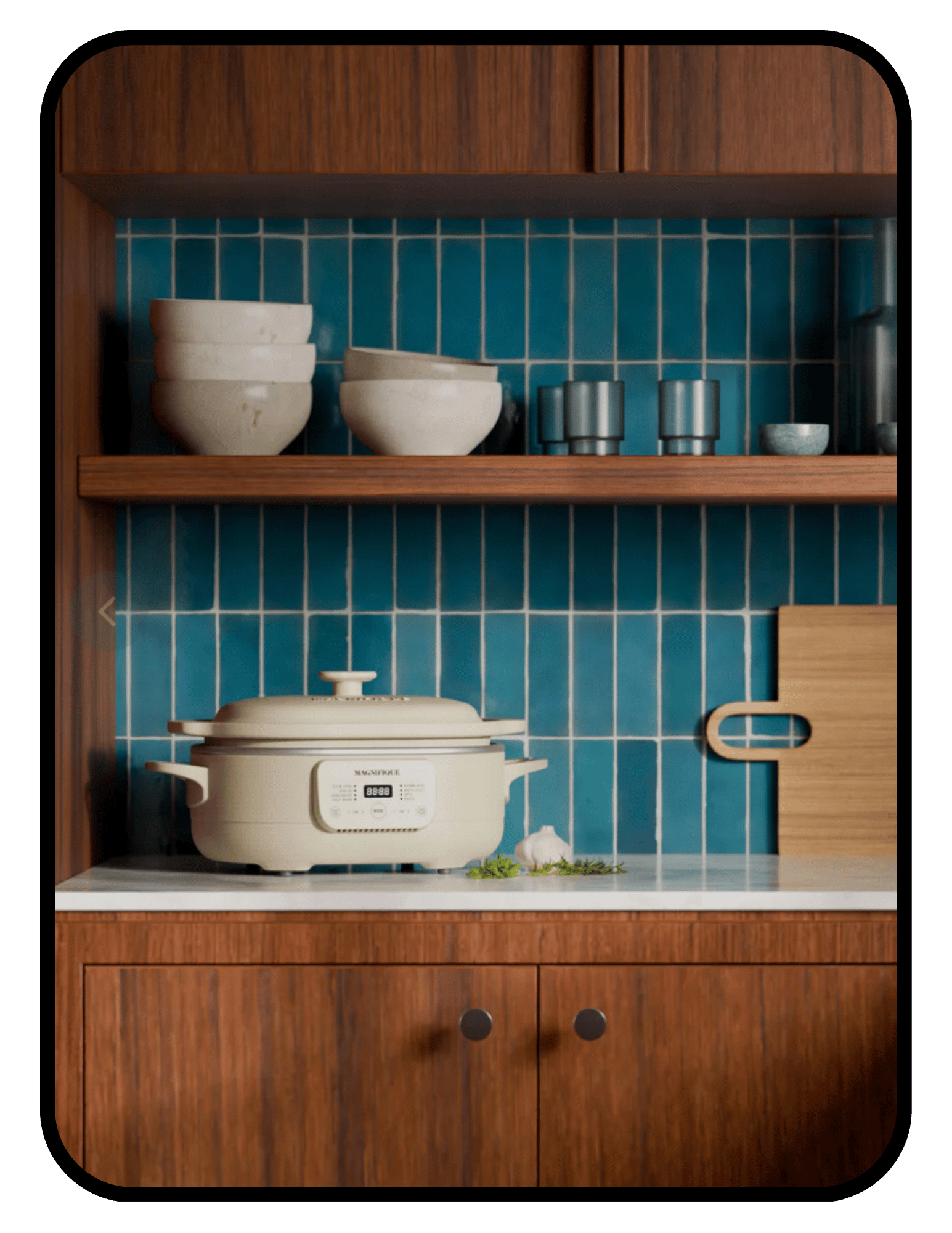
Non-Toxic Slowcookers, Dutch Ovens & Crockpots
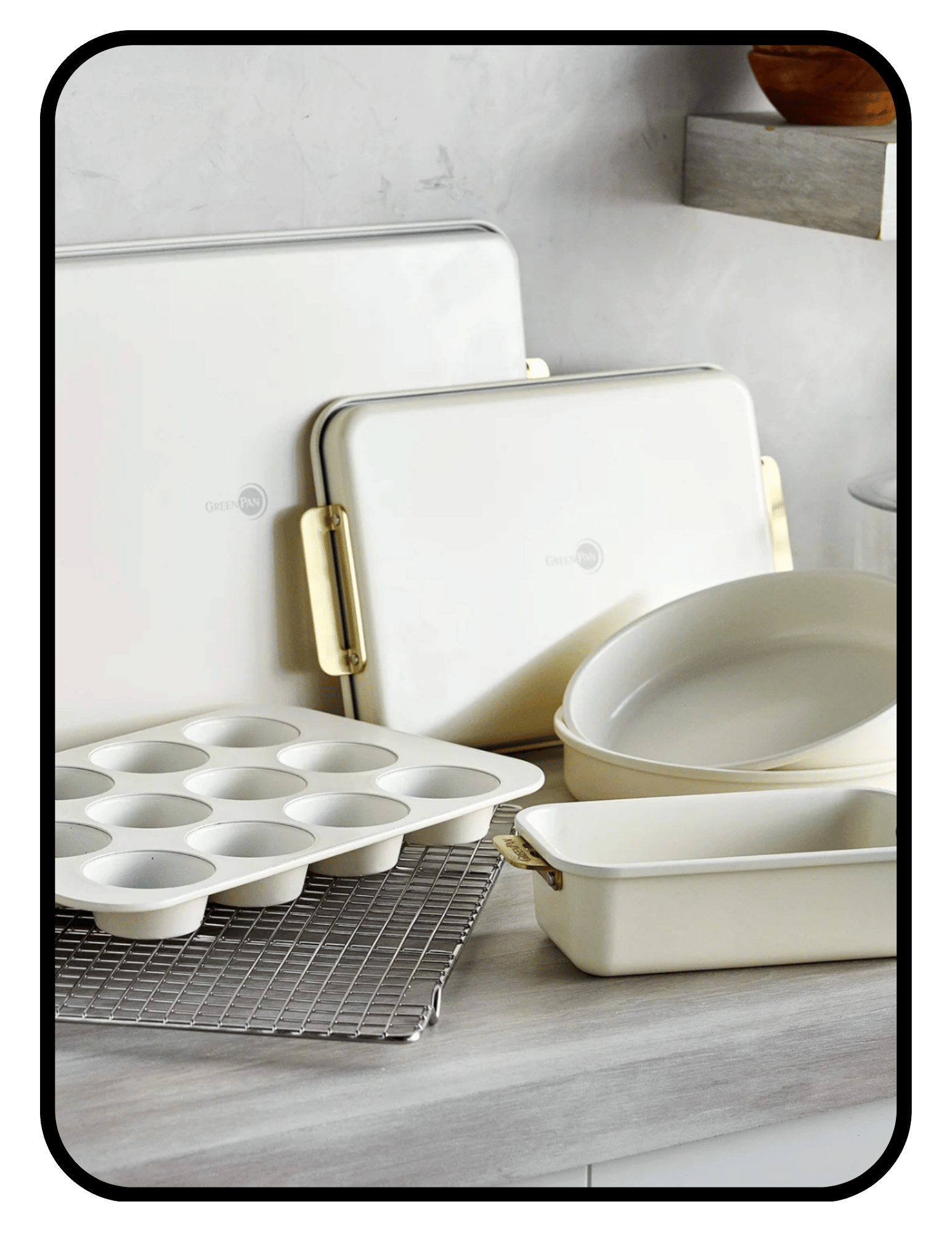
Leach-Tested Ceramic Bakeware
Non-Toxic Furniture