
Non Toxic Comforters and Duvet Inserts
The best non-toxic comforters and duvet inserts have GOTS-certified organic cotton, wool, or silk shells and fills, since even organic fibers are commonly processed with pesticides and chemical finishes when uncertified. OEKO-TEX is the next-best option, covering both natural and synthetic fills like TENCEL or polyester. I've analyzed wool, cotton, kapok, down, eucalyptus, silk, and non-toxic down alternative duvet inserts using the certification-based scale explained in my full methodology.
By Dr. Meg Christensen | Physician-founder of Interior Medicine, a non-toxic home resource built on her background in medicine, biochemistry, epidemiology, and clinical research.

Updated August 20, 2026
 Puredown: Best Organic Down Comforter
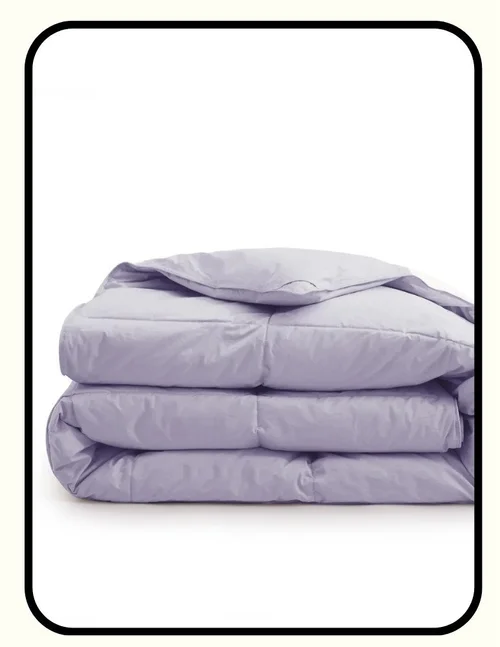
Puredown has the best down comforters in terms of material healthiness, affordability, variety, and ease of use. They offer GOTS certified organic cotton, or OEKO-TEX certified TENCEL-polyester blend comforters, all filled with down and feathers in various weights. Uniquely, most options are colored and finished-looking, so you don’t have to add a duvet cover, making laundry easier. Their down is RDS certified humane, and many products have NOMITE certification, meaning they’re suitable for people with dust mite allergies! Finally, they’re quite affordable. For all these reasons, they’re the best organic cotton down comforter. Other good options include Coyuchi for their GOTS certified cotton, winning out over Naturepedic and Boll and Branch which only have OCS certification. (95% of the fibers start organic, but like USDA, it doesn’t cover how they’re processed.) Naturepedic does have MADE SAFE certification on top, so it means it’s still relatively safe, though it’s not as rigorous as OEKO TEX, which Boll & Branch has. Quince shows up in google search as “organic,” though drilling into the details shows it’s actually just OEKO TEX certified, similar to Avocado. 15% off Puredown with discount code INTMED15.
Product rating
See the rating scales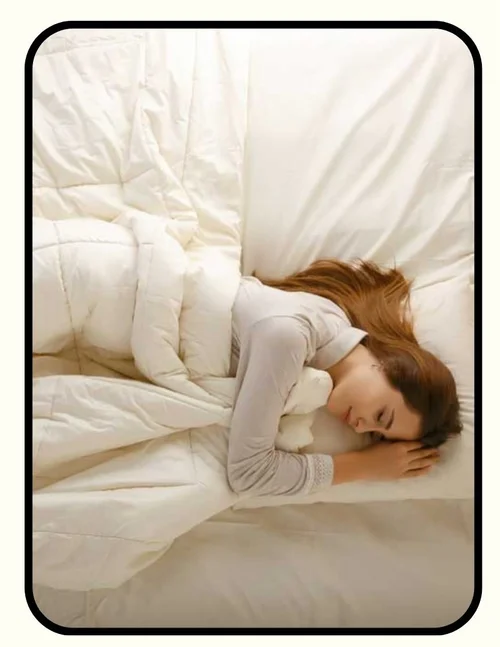 Sleep & Beyond: Best Organic Wool Duvet Insert
This organic Merino wool duvet insert by Sleep & Beyond is fully GOTS certified and has both an organic cotton shell and organic wool filling. Truly natural duvet inserts can be expensive, and this is a relatively affordable organic wool comforter. These come in a wide variety of sizes, from crib to Super King duvet inserts. Spot, sun, or dry clean: I hang mine out in the sun a couple times a year. Wool is naturally thermoregulating and resistant to dust mites, which is why I sleep with it year-round. Savvy Rest also makes really nice wool duvet inserts and have the benefit of being able to choose between natural wool and GOTS organic wool.
Product rating
See the rating scales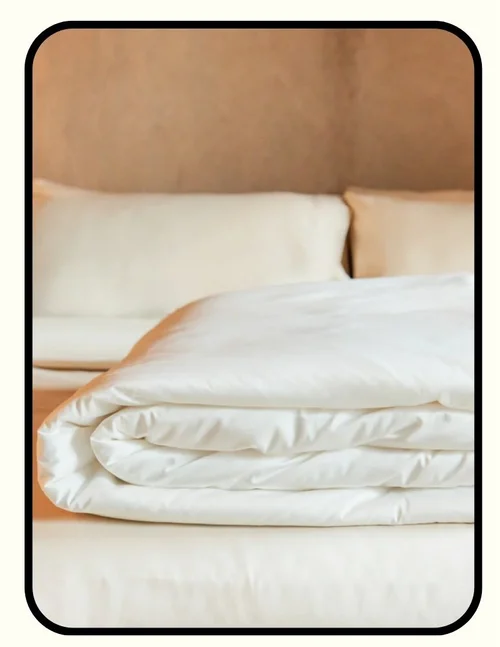 Aeptom: Best Non-Toxic Silk Duvet Insert
Aeptom makes the only silk duvet inserts made with a truly organic GOTS certified cotton shell. Silk is almost never certified organic, so it’s great to see their silk is also OEKO TEX certified. They also have a natural rather than organic cotton shell option, which is nice if you want a more affordable, still very healthy silk duvet. Even more convenient, both options come in light, all-season, or heavy fills. Cuddle Dreams is a more affordable silk duvet insert: its outer shell is made with breathable TENCEL and is also OEKO TEX certified.
Product rating
See the rating scales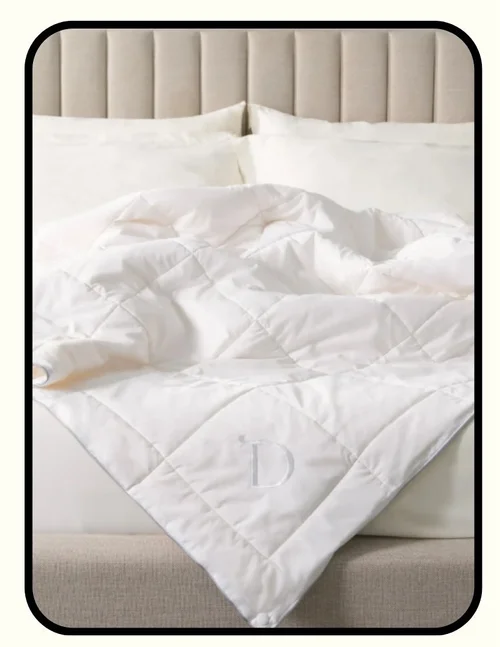 Delara: Best Organic Cotton Duvet Insert
With a GOTS certified organic cotton filling and shell, Delara makes the best organic cotton duvet insert available, and it’s quite affordable! A short description, I’m just relieved this is so straightforward! I’m very impressed.
Product rating
See the rating scales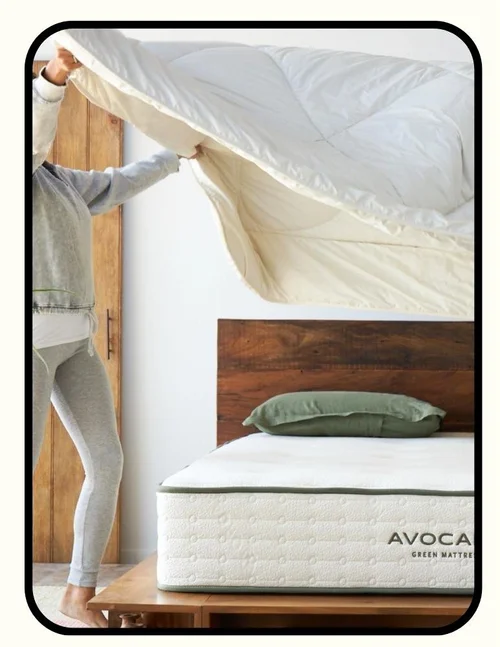 Avocado: Best Alpaca Wool Duvet Insert
Like sheep’s wool, alpaca wool is breathable, thermoregulating, and moisture-wicking, but alpaca is known as a softer and more luxurious option, similar to cashmere. While the alpaca fiber itself isn’t certified, the shell is made with GOTS certified organic cotton percale outer, and Avocado remains one of the most transparent companies around for their materials. These alpaca duvet inserts come in two weights: all season and lightweight.
Product rating
See the rating scales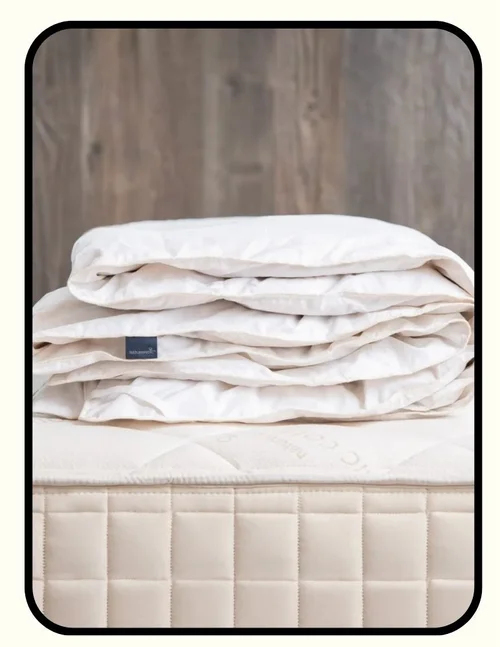 Naturepedic: Best Organic Kapok Duvet Insert
Naturepedic has a totally organic kapok duvet insert filled with fluffy kapok fiber and encased in breathable GOTS certified organic percale cotton. Kapok fibers come from the kapok tree and are fluffy and airy like down, but hypoallergenic, and often more affordable. Kapok works really well in a comforter, where it can be lofty and thermoregulating, and won’t get compressed. Kapok is breathable and this works well for all seasons.
Product rating
See the rating scales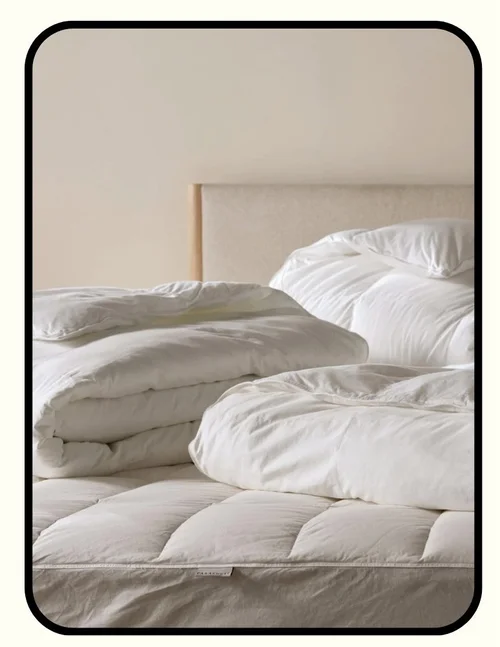 Parachute: Best Non-Toxic Down Alternative Duvet Insert
This is the best down alternative duvet. It’s made with OEKO TEX certified polyester (microfiber). Too much polyester can trap heat, so it’s nice that the shell of this is made of 100% OEKO TEX certified cotton, minimizing any excess heat buildup. I also appreciate how it’s not made of recycled polyester, which can contain more unknown plastic processing chemicals than newly-made versions. Finally, polyester can be a good choice if you’re allergic to feathers, silk, or wool, or need a vegan duvet insert.
Product rating
See the rating scales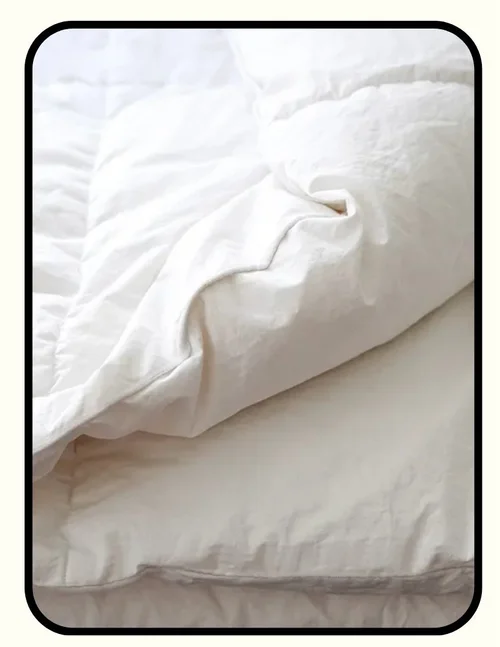 SIJO: Best Non-Toxic Eucalyptus Comforter
Great for allergies, SIJO offers a eucalyptus fiber comforter in two weights: lightweight and all-season. Eucalyptus fibers made from Tencel are semi-natural, much more environmentally friendly than bamboo fibers, and are very breathable. Importantly, SIJO has OEKO TEX certification for their comforters, so it’s been tested for harmful chemicals. It also has Allergy and Asthma Friendly certification, which is great if you need a comforter but have allergies to down, wool, or other natural fibers.
Product rating
See the rating scalesLooking for something specific? If you don't see the product or brand you're curious about, you can request a review here, or run it through the Second Opinion Product Checker to evaluate it yourself. Want to go deeper? My free course covers how to evaluate any product's materials yourself.
Join the Newsletter
Join the Newsletter
More Healthy Design for You


Pillow Inserts
Your Complete Guide to Non-Toxic and Organic Bed Comforters and Duvet Inserts
What's the difference between a comforter and a duvet insert?
Technically a comforter is designed to be used on its own without a cover, while a duvet insert is meant to go inside a duvet cover. All the products I recommend here can function either way, though some like the Puredown options come in colors and patterns specifically for use without a cover.
Are organic comforters worth it?
Yes, especially for comforters and duvet inserts where you're in close contact with the fabric for 7-9 hours every night. Two main reasons:
First, conventional comforters are made through a chemically-intensive process. The outer shell fabric undergoes the processing —conventional cotton or wool uses pesticides during growing, then acids and scouring agents wash the fibers, fiber-strengthening chemicals create the fabric structure, and bleaches and enzymes prepare it for dyeing. Dyes require binders and plasticizers to stick, then finishing treatments add wrinkle-resistance (formaldehyde resins), stain-resistance (PFAS), or flame retardants. But comforters have an additional layer of concern: the fill material. Conventional down and wool fills may be treated with moth-proofing chemicals or antimicrobial agents. Polyester fill comes from petroleum and often contains antimony (used in manufacturing). Because comforters are bulky and washed infrequently, these chemicals remain in the product longer than they would in frequently-washed sheets. GOTS certified organic comforters eliminate pesticides from the fibers and restrict the processing chemicals used on both the shell and fill throughout manufacturing. Read more about GOTS organic fabric processing in my Fabric Guide.
Second, organic comforters directly improve sleep quality. Natural fibers like organic cotton, wool, silk, and down are breathable and regulate temperature, preventing the night sweats and frequent waking that come from sleeping under plastic-based polyester. Organic certification also means no flame retardants or formaldehyde finishes that can off-gas into your breathing zone while you sleep. Since you spend a third of your life under your comforter, the material matters more here than almost anywhere else in your home.
Non-Toxic Comforter Materials
How do I choose between down, wool, cotton, and silk comforters?
It depends on your sleep temperature and priorities!
Down comforters have the most loft with the least weight—they create that cloud-like, hotel-bed feel without heaviness. Down traps air between its clusters for insulation, making it very warm relative to its weight. However, down can overheat some sleepers because it's highly insulating, and it may trigger allergies in sensitive individuals. Down works best for cold sleepers who want luxurious loft, or for lightweight summer options when used in low fill weights.
Wool comforters are the most temperature-regulating option because wool fibers move excess heat and moisture away from your skin. Wool keeps you warm in winter by trapping air, but also keeps you cool in summer by releasing heat and moisture—making it truly all-season. Wool is naturally hypoallergenic, resists dust mites without chemical treatments, and maintains its loft over years. Wool works for the widest range of sleepers, especially hot sleepers and anyone who wants one comforter year-round. The trade-off is weight—wool is heavier than down at the same warmth level, which works great if you like a little weight (nothing like a weighted blanket but not airy like down!) I use a lightweight wool comforter for 9 months of the year, and swap it out for a medium weight one for winter.
Cotton-filled comforters are the most breathable and lightweight option, ideal for hot sleepers or warm climates. Cotton doesn't provide much insulation on its own, so cotton comforters work best as summer-weight options or for people who run very warm. Cotton is also the most affordable natural fill and is fully machine washable. However, cotton compresses significantly over time and doesn't offer the loft of down or the temperature regulation of wool.
Silk comforters are super soft with excellent temperature regulation and hypoallergenic properties. Silk naturally wicks moisture and adapts to temperature similarly to wool, but with a lighter weight and softer drape. Silk resists dust mites and mold naturally, too. However, silk comforters are typically the most expensive option and require more careful maintenance than wool or down. Silk works great for hot sleepers or if you have allergies to both down and wool.
The decision often comes down to: wool for all-season versatility and easy care, down for lightweight warmth and loft, cotton for budget, or silk for luxury temperature regulation.
What is a kapok comforter and is it a good alternative to down?
Kapok is a natural fiber harvested from the seed pods of the kapok tree. In comforters, kapok fibers are fluffy and lightweight like down, providing similar loft and airiness without using animal products, so they’re fully plant-based and hypoallergenic. Kapok works well for people with down allergies or those seeking vegan options, and it's often more affordable than down while still providing good thermoregulation for all-season use. It also naturally resists mold and dust mites without chemical treatments.
Are eucalyptus comforters non-toxic?
Eucalyptus comforters can be non-toxic if they have OEKO TEX certification. TENCEL is a brand name for fibers made from eucalyptus and is considered a semi-natural, semi-synthetic fiber—the cellulose comes from eucalyptus trees but requires chemical processing to become fabric. However, the closed-loop TENCEL process recycles most solvents, making it more environmentally friendly than bamboo rayon or conventional cotton production. For comforters specifically, eucalyptus provides excellent breathability and moisture-wicking without the chemical additives found in conventional synthetic comforters. Not perfectly healthy, but definitely a step in the right direction, and sometimes more affordable, too.
Are cotton-filled comforters as warm as down or wool?
Cotton-filled comforters provide less warmth than down or wool at the same weight because cotton doesn't trap air as efficiently for insulation. However, cotton comforters are breathable and good for hot sleepers, warm climates, or as lightweight summer options (on the hottest nights when I can’t even use my usual wool comforter, I go with just a cotton quilt). Cotton comforters are also fully machine washable, hypoallergenic, and typically more affordable than down or wool options while still being completely natural and chemical-free.
Which is better: down or wool duvet insert?
Both are great natural options, but they perform differently. Down is lighter weight and provides more loft, making it ideal if you want that cloud-like feel without heaviness. Wool is naturally more temperature regulating and works better across seasons—it keeps you warmer in winter and cooler in summer. Wool is also naturally moisture-wicking and resistant to dust mites. Down may trigger allergies if you’re sensitive to it, while wool is hypoallergenic for most people. If you sleep hot, wool is typically the better choice.
Is alpaca wool better than sheep's wool for comforters?
Alpaca wool shares the same breathability, thermoregulation, and moisture-wicking properties as sheep's wool, but alpaca is softer and often compared to cashmere in luxury. The Avocado alpaca duvet insert is an excellent choice if you want that extra softness, though sheep's wool duvets typically cost less and perform similarly for temperature regulation and hypoallergenic properties.
What certifications should I look for in a non-toxic duvet insert?
GOTS certification is the gold standard, meaning the insert is truly organic from start to finish, and OEKO TEX certification is second best, applying to both natural and synthetic materials like TENCEL, bamboo, or polyester. RDS (Responsible Down Standard) or IDS (International Down Standard) ensures humane sourcing of down. You can read more about certifications, why they matter so much, and which ones are better than others in my Fabric Guide.
Organic Comforters by Sleep Temperature
What are the best cooling comforters for hot sleepers?
My theory is that hot sleepers are just using the wrong bedding! In particular, too much polyester can trap heat, since it is plastic and not breathable. If you feel hot and clammy even when the room is cool, check the tags on your current bedding to see if they’re polyester.
Any natural fiber including organic wool, down, organic cotton comforter, TENCEL, TENCEL blends, or silk, are the best types of bed comforters for hot sleepers, and you may even find that you don't "sleep hot" after all. Watch my 1 minute video explanation on why certain fibers and fabrics trap heat and others don’t, here.
What's the best lightweight duvet insert for summer?
For summer and warm sleepers, I recommend TENCEL comforters, lightweight wool duvet or lightweight silk. All are highly breathable and temperature regulating.
What's the warmest duvet insert for cold sleepers?
It might sound counterintuitive, but wool is great for both hot and cold sleepers. Wool duvet inserts are the warmest option because wool fibers thermoregulate — keeping your temperature warm but not excessively so (see my 1 minute video on how this works here).
Best Comforters for Allergies
What's the best duvet insert for allergies?
Wool is your best choice for allergies because it naturally resists dust mites, mold, and mildew without requiring chemical treatments. Wool also wicks moisture away from your body, creating a less hospitable environment for allergens like dust mites, which literally feed off of dead skin cells and moisture.
If you're allergic to wool or feathers, organic cotton-filled options work well since they can be washed frequently to remove allergens, or silk works well because a silk allergy is extremely rare.
What's the best hypoallergenic duvet insert?
Wool duvet inserts are naturally hypoallergenic because wool resists dust mites, mold, and mildew without chemical treatments. If you're specifically allergic to wool or down, silk duvet inserts are also hypoallergenic for the vast majority of people and also resist dust mites naturally.
Are Down Alternative Comforters Toxic?
Are down alternative comforters safe?
Down alternative comforters are typically filled with polyester, which is relatively stable plastic that doesn't easily migrate into your body.
However, the safety depends entirely on what additives are mixed with the polyester. Look for OEKO TEX certification, which ensures the polyester isn't mixed with BPA, phthalates, or PFAS. (It’s common! Even rumpl blankets until recently contained PFAS!)
Are recycled polyester comforters toxic?
Unlike lower-contact items where recycled polyester might be safe, comforters sit directly on your body for a third of your life. Recycled polyester in comforters means spending hours each night wrapped in plastic of unknown origin—potentially containing BPA, antimony, or other additives from decades-old water bottles. The extended nightly exposure makes comforters a higher-risk application for recycled polyester compared to items like curtains or outdoor furniture. When polyester is necessary in a comforter (for budget or allergy reasons), virgin polyester with OEKO TEX certification is the safer choice because you know exactly what went into making it.
What is TENCEL in comforters and duvet inserts?
TENCEL is a semi-natural fabric made from eucalyptus cellulose. In comforters, it's typically blended with other materials rather than used alone. It adds breathability and moisture-wicking to comforters, which is why it works well for hot sleepers. It’s a more environmentally conscious choice than bamboo fiber, since it uses a different process for recycling processing chemicals, and while imperfect, an OEKO-TEX certified TENCEL comforter can be a really healthy, breathable option. You can read all about TENCEL in my Fabric Guide.
Is polyester safe in comforters and duvet inserts?
While there's usually a cotton shell between you and the polyester filling, meaning slightly less close contact with possible polyester additives, the main concern with polyester comforters is actually heat and moisture retention rather than chemical exposure. Polyester is plastic and traps body heat, which disrupts sleep for many people. That said, polyester fill can be acceptable in comforters when OEKO TEX certified (meaning harmful additives like BPA and phthalates are tested for) and when the outer shell is natural fiber like cotton to minimize direct contact. I just specifically avoid recycled polyester in comforters because you're in extended contact with it for 7-9 hours nightly, and recycled polyester may contain unknown plastic additives from its previous life as water bottles or other products, and these fall out of the fibers over time.
When should I choose a down alternative comforter over natural fill?
Down alternative comforters filled with OEKO TEX certified polyester make sense in specific situations: if you're allergic to all natural fibers (down, wool, silk), if you need a vegan option and want something more affordable than kapok or cotton, or if you need frequent washing that some natural fills can't tolerate. The key is OEKO TEX certification, which ensures the polyester has been tested for harmful additives like BPA, phthalates, and PFAS. Look for options where at least the shell is natural fiber (cotton) rather than all-polyester construction, as this minimizes heat retention issues. Virgin polyester with certification is safer than recycled polyester for extended-contact items like comforters. Down alternative works best for people with specific allergy or ethical constraints rather than as a first-choice material for sleep quality.
Non-Toxic Duvet Insert and Comforter Care
Can I wash my organic comforter?
Down comforters are fully machine washable.
Silk duvet inserts can be sun-cleaned, letting UV rays kill bacteria, dust mites, and lighten stains, though dry cleaning is recommended in case of a major spill.
Wool duvet inserts typically require spot cleaning, sun cleaning, or dry cleaning—except for some washable wool brands (this is what I use!)
Always check the care instructions for your specific comforter.
Can I use an organic duvet insert without a cover?
Yes, though most duvet inserts are designed with a simple cotton shell and look best inside a duvet cover. Some comforters are specifically designed for use without covers and come in multiple colors. Using a duvet cover can be very annoying but it protects your investment since you can wash the cover frequently and clean the insert less often.