
Non Toxic Candles & Home Fragrance
There are three things that make candles, incense, and other home fragrance truly non-toxic: the quality of the fragrance itself, the carrier materials the fragrance is blended with, and the throw method, because all three affect your indoor air quality and your health. I evaluate home fragrance thoroughly on all three levels using certifications, ingredients and research.
By Dr. Meg Christensen | Physician-founder of Interior Medicine, a non-toxic home resource built on her background in medicine, biochemistry, epidemiology, and clinical research.

Updated April 1, 2026
Non Toxic Candles


Slow North Candles
I love Slow North and have several of their candle sets. They use 100% natural essential oils for fragrance, 100% soy wax, 100% cotton wicks, glass containers, and no dyes. Transparency at this company is a focus, which of course I love. Use code INTERIORMEDICINE for 10% off.
Are Primally Pure candles non-toxic? Yes, their scent is wildcrafted essential oil, and it’s mixed with beeswax without dyes, then poured into a glass jar with a 100% cotton wick.
Cave Glow Studio Naturally Dyed Taper Candles
If you’re looking for the best non toxic taper candles, these are made with 100% beeswax and are colored with natural dyes. 100% cotton wick. Unscented. Incredibly cute.
This smoke-free and flameless Everlasting Candle Warmer reduces fire risk and smoke generation. This gently heats the wax, letting the aroma from scented candles escape into the room safely.

Non Toxic Incense

Sea Witch Botanicals Non Toxic Incense
One of the very few brands of clean-burning incense that lists their ingredients instead of just claiming “non toxic,” Sea Witch uses natural essential oils, charcoal, natural resins, bamboo and natural clay-based paint.
Earth Tonix Natural Incense
Another one of the very few brands of natural incense that clearly lists all ingredients. Made of charcoal, wood powder, bamboo stick, natural gum/resin, and 100% natural essential oils.

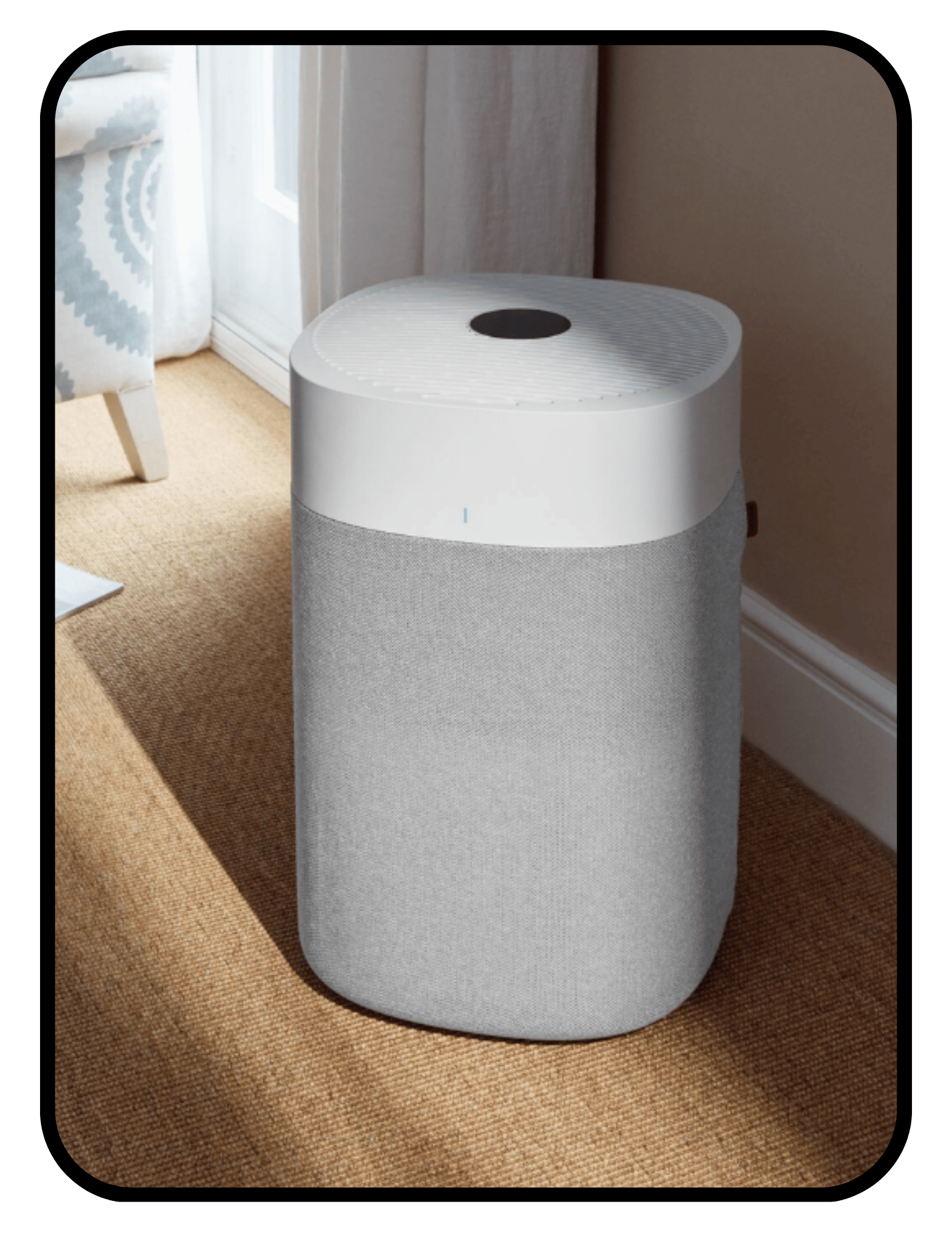
Air Purifiers I Recommend
If burning candles or incense regularly is important to you, help remove dangerous smoke particles and excess VOCs from your indoor air with an air purifier. The brands with third party testing and the ability to do both are listed here on my Air Purifiers page.
Mountain Rose Herbs Non Toxic Incense Alternatives
Mountain Rose Herbs has a great collection of USDA certified organic burnables like sweetgrass braids, palo santo, resins, mugwort, and sage. A guaranteed way to know you’re not exposing yourself to any synthetic fragrances or glues.
Non Toxic Air Fresheners
The Sill’s Fragrant Indoor Plants
Along with opening your windows, fragrant indoor plants are basically the safest air freshener available. An olive tree, eucalyptus tree, or jasmine vine are super-natural ways to bring fragrance indoors. The Sill ships them directly to your house.
Mountain Rose Herbs Organic Essential Oils
Mountain Rose Herbs has a huge and ultra high quality selection of USDA certified organic essential oils.


Vörda Essential Oil Passive Diffuser
Vörda makes solid wood diffusers that absorb, then slowly release essential oils over time, similar to a reed-style diffuser. No plugs, electricity, or cords needed.
Slow North 100% Natural Essential Oils
100% essential oils made by a super-transparent small company that come in thoughtful blends. Diffused in plain water, these act as a natural non toxic air freshener.


Wyndmere Naturals Electric Heat Diffuser
This diffuser from Wyndmere Naturals is totally safe, keeping the essential oil in its pure form and using gentle heat to disperse scent throughout the room quickly.
DIY Essential Oil Mister
Adding your oils in water to a brown glass bottle will help protect them from UV light and plastic exposure. These have a fine mister and are very affordable. Make your own non toxic air freshener this way.
Looking for something specific? If you don't see the product or brand you're curious about, you can request a review here, or run it through the Second Opinion Product Checker to evaluate it yourself. Want to go deeper? My free course covers how to evaluate any product's materials yourself.
Join the Newsletter
Join the Newsletter



More About Non Toxic Candles and Safe Incense
Candle, incense, and other home fragrance safety is not just about the scent itself! Three things matter:
The scent itself: 100% organic essential oils vs. natural essential oils vs. natural-synthetic blend vs. all-synthetic fragrance
What the scent is blended with (the substrate): 100% pure plant-based oil vs. water vs. synthetic resins vs. petroleum-based paraffin wax. And, whether there are any dyes mixed in to make it colorful
How it is dispersed into the air in your home (the throw method): combustion (fire) vs. evaporation vs. ultrasonic particle diffusion
Separating it into three parts captures a more complete picture of a fragrance's impact on your health.
For example, a perfectly healthy, 100% organic essential oil may be blended with 100% organic beeswax and burned along a cotton wick, but burning always releases PM 2.5 into your home. A natural-synthetic blend essential oil may be diffused in pure water, making it a healthier choice overall.
Non-Toxic Fragrances
What is the difference between Fragrance Free vs Unscented?
Fragrance free means no organic, natural, or synthetic scents whatsoever have been added.
Unscented means that the product doesn't have a detectable scent, but it still may actually have fragrances added to it to mask less-pleasant smells from the other ingredients.
Are organic essential oils safer than natural (non-organic) essential oils?
There is very little evidence for this, but in theory, natural (non-organic) plants are typically grown with pesticides and synthetic fertilizers. These chemicals can theoretically remain in the final essential oil or candle, though it’s possible that they’re distilled out and left behind as larger molecules. Third party testing with GC-MS (gas chromatography mass spec) is the best way to know what is actually in an oil.
Are natural fragrances healthy?
Not necessarily! This is for two reasons.
First: misleading terms. Natural fragrance, aroma, parfum, luxury scenting, fragrance oil— are all synthetic fragrances. The word "natural" isn't defined or regulated in personal care products and fragrance in the United States, so it can be mis-used to make the product seem healthier than it is.
Second: natural doesn’t always mean safe or healthy. For some, breathing in essential oils can irritate the throat and lungs, contribute to heart and lung issues, or cause allergic reactions.
Are lavender and tea tree oil endocrine disruptors?
There was a lot of debate about this, but in 2022, a large study looking at 556 children found no increased risk of endocrine disorders in kids regularly exposed to these and kids that weren’t.
What is IFRA certification?
The International Fragrance Association (IFRA) created its own Research Institute for Fragrance Materials (RIFM). This sounds good, but it's entirely self-regulating. Its operations are opaque— they decide what chemicals are "safe" for use in fragrance (rather than requiring disclosure of ingredients, so consumers can make their own informed choice about whether its healthy enough for them or not.) Many of the IFRA-approved ingredients, like benzophenone, methyleugenol and styrene, are known carcinogens. When a company claims its scents are safe because they are IFRA-approved, it's just not true. However, because they do limit some of the most harmful chemicals, I still consider IFRA-certified fragrance slightly better than uncertified synthetic fragrance.
Are there safe scents for home use?
Yes, there are safer and less safe home scents. Safer home scents use 100% organic or natural scents dispersed through evaporation (like reed diffusers), simple diffusion in water, or by being melted with a candle warmer. This avoids combustion and synthetic fragrances entirely. However, since 2025 we now know that terpenes in scents, even natural ones, can react with ozone in the air, creating secondary nanoparticle indoor air pollution, so while this might be safer than combustion associated with burning a candle, it’s not completely without risk.
Synthetic Fragrance
How do I know if a fragrance is synthetic?
Unless it is labeled "100% essential oil," it is probably synthetic. Natural fragrance, aroma, parfum, luxury scenting, fragrance oil— are all synthetic fragrances. These words can represent complex mixtures of up to hundreds of individual chemicals.
Are synthetic fragrances toxic?
Synthetic fragrances do contain toxic substances, but depending on how much you’re exposed to, how, and what your susceptibility is, they can range from relatively harmless to you, to being associated with a possible negative health risk. There is a lot we don’t know because the mixtures in synthetic fragrances are very complicated, and studying “real life” outside of a lab is very hard. Here’s the breakdown, from the candle, to how you breathe it in, to what happens to your health, in order:
Hazard: we know that there are phthalates, polyaromatic hydrocarbons (PAHs), and VOCs in candles, incense, and other synthetic scents. We know that these are hazardous, that synthetic scents release generally more complex VOCs than unscented candles, and that they cause harm in animal studies. We don’t know how many compounds are in the vast majority of scents, and whether humans respond the same way as animals do.
Exposure: we know that they are released into the air and persist in indoor environments, where we breathe them in.
Dose: we know that at high doses, like mechanics, roofers, and tire manufacturers are exposed to, PAHs are linked to chromosomal changes and bladder cancer risk, but we don’t know if PAH levels from candles in a home are high enough to cause the same risk. We do know that ventilation greatly reduces your dose. We also know that we have many cumulative exposures to these substances in all areas of our life, like diet, other personal care products, and the products you interact with out in the world.
Dose-Response: we know that at many doses, people self-report symptoms like headaches, sneezing, or wheezing. We don’t know if candle or scent phthalates are responsible for endocrine effects— it could be any of the other phthalates you’re exposed to.
Susceptibility: if you have asthma or chemical sensitivity, you may be more susceptible to health effects, even at lower doses than other people. We don’t know if there are gene differences in how people metabolize fragrance compounds.
Risk: There are no long-term studies showing how household candle use or other fragrances cause specific health outcomes.
So, does this mean synthetic fragrance is toxic? While there is no solid evidence of risk yet, that doesn’t mean there is no risk. Because there is so much uncertainty, many people choose to apply the precautionary principle and skip synthetic fragrance whenever possible. It also means that someone else could say, “levels are so low they won’t harm you” or blow off candle caution entirely. This will come down to your personality and other aspects of your worldview. I go into this in depth in my (free) What Does “Non-Toxic” Actually Mean? course.
Candles
What are non-toxic candles made of?
Generally, a candle that calls itself non-toxic should use 100% organic essential oils for scent, beeswax or 100% plant or bio based undyed wax, and cotton or wood wicks. This combination avoids petroleum-based paraffin, synthetic fragrances, and dyes that release more harmful chemicals when burned.
Why is burning a candle bad for you?
Burning anything indoors — candles, incense, palo santo, sage — produces smoke. That smoke contains fine particulate matter (PM2.5), carbon monoxide, nitrogen dioxide, and sulfur dioxide regardless of what you're burning or how “clean” the ingredients are. If the candle contains synthetic fragrance, it also releases VOCs and phthalates specific to those fragrance chemicals.
PM2.5 is the same pollutant that drives wildfire smoke advisories and outdoor air quality warnings. Chronic exposure at high levels is associated with cardiovascular disease, respiratory disease, and emerging research links it to cognitive decline. Occasional candle use in a ventilated room is a very different exposure level than the outdoor and occupational studies that established those associations, but the direction of the evidence is a reasonable basis for keeping indoor combustion to a minimum, especially if you consider other sources of daily combustion in your home like cooking or using gas for heating.
If you do burn candles, ventilation is your most effective lever. Choosing candles scented with 100% essential oils eliminates the synthetic fragrance variable, but it doesn't eliminate the combustion one.
Why is paraffin wax in candles bad?
There are a few reasons to avoid paraffin wax candles:
Petroleum origin: paraffin is extracted from petroleum as part of the oil refining process, then treated with solvents and processed to adjust hardness or add color.
Volatile chemical release: when burned, paraffin candles emit VOCs including formaldehyde and compounds like toluene and benzene, as well as PAHs from incomplete combustion. These chemicals are detectable in candle emissions studies, though whether concentrations from typical residential use reach levels associated with health effects is not well established.
Sootrelease: soot is a specific type of PM 2.5, which is a size of particle. It is a carbon-rich particle made by incomplete combustion. Paraffin has a higher carbon content because of its petroleum origin, so it’s more prone to incomplete combustion than natural waxes like beeswax or soy, which have simpler fatty acid compositions that tend to burn more cleanly. That said, fragrance load and wick type also influence soot output, so paraffin without fragrance can perform better than a heavily scented natural wax candle.
A note on labeling: "coconut wax blend" or "soy wax blend" likely means blended with paraffin. If wax composition matters to you, look for a single-origin wax with no blend language.
What is a tallow candle?
Tallow is rendered animal fat, typically from beef or sheep, and is what candles were made from before petroleum-derived paraffin became the standard.
Like other natural waxes, its fatty acid composition is simpler than paraffin's, which is the basis for the assumption that it burns more cleanly. But tallow-specific emissions research is limited, so that is a guess.
What dyes should I avoid in candles?
Benzidine-based azo dyes are the most clearly problematic class — the issue is less the dye itself than its breakdown products, which can include aromatic amines with carcinogenic properties. Benzidine-based dyes are restricted in the US and EU, but azo dyes broadly still dominate synthetic colorants, and a fraction of that family carries the same aromatic amine concern. How much of this translates to inhalation risk from burning a dyed candle specifically hasn't been studied — the toxicology research on azo dyes is largely about occupational skin and dust exposure, not combustion. So this is a precautionary argument rather than a fully characterized risk.
Undyed candles remove the variable entirely. If you want color, natural dyes with disclosed sourcing are the most transparent option.
I like my unhealthy candles. What can I do to make my candles less toxic?
If you already have a candle, incense, or fragrance oil you like, and it isn't very healthy, there are a few things you can do to minimize harm:
Use candles as decorative objects, and don't burn them. Or, burn them very infrequently or on special occasions only. I know this won't work for everyone, but it is what I do— I burn my Christmas-scented incense cones once a year, and enjoy most of my fun-shaped and perfectly-colored candles just as decoration year-round.
Open the windows while you burn candles or incense to let out harmful fumes while still enjoying ambience.
Use an air purifier that removes both PM 2.5 and VOCs after you're done.
Switch to a candle warmer that heats the candle and releases scent without burning
Finally, if you must use a synthetic scent or combustion on a regular basis, just take good care of your health in other ways. Regular exercise, good nutrition, and not worrying too much are also healthy.
Incense
Is incense toxic?
Incense is one of the higher-emission indoor combustion sources, and it's been studied specifically because of concerns about regular use in enclosed spaces. Research has detected carbon monoxide, nitrogen dioxide, sulfur dioxide, PAHs, formaldehyde, and phthalates in incense smoke, which is a more complex emissions profile than most candles, partly because incense formulations often include synthetic fragrance materials and adhesive binders whose combustion byproducts aren't well characterized. Particulate matter output is consistently high across studies, and most incense products don't disclose ingredients, so the specific chemicals you're being exposed to are largely unknown.
If you use incense, ingredient disclosure matters more here than almost anywhere else in the candle and fragrance category. Avoiding synthetic fragrances and adhesive binders reduces the chemical complexity of what's burning. Use it sparingly, ventilate well, by opening windows, or run an air purifier with a HEPA filter afterward.
Non-Toxic Air Fresheners
Are there non-toxic air freshener alternatives?
Yes. The healthiest options avoid combustion and synthetic fragrance entirely:
Reed diffusers using 100% essential oils in a carrier oil
Evaporative diffusers (passive or fan-based) with essential oils
Simple spray bottles with essential oils diluted in water or witch hazel
Candle warmers that melt candles without burning them
Opening windows (still the best air freshener)
See my recommendations above.
Are plug-in air fresheners toxic?
Plug-ins continuously release synthetic fragrance into your air, causing constant, low-level exposure to whatever chemicals are in the cartridge, which typically aren't disclosed. Phthalates are a documented concern in many formulas, but the broader issue is that "fragrance" on a plug-in label can represent dozens of individual chemicals, and reformulations toward "phthalate-free" don't guarantee the replacement ingredients have been adequately studied.
Safer Throw Methods
What is evaporation or manual diffusion?
Evaporation is when a liquid scent is naturally drawn into the air by evaporation over time, much like a puddle evaporates on a sunny day. This happens with reed diffusers, or after using a regular spray bottle (not pressurized aerosol) to spritz a scent into the air.
Manual diffusion, like an electronic evaporative diffuser, promotes the same process, just faster. Think of using a small fan to encourage the scent to evaporate into the air.
Evaporation and manual diffusion are the two ways in which scent moves into the air with the least manipulation, and the least change in its properties.
What is nebulized or ultrasonic diffusion?
Nebulizing and ultrasonic diffusers work differently from passive or fan-based diffusers: ultrasonic diffusers use high-frequency vibration to break an oil-water mixture into a fine mist; nebulizers use air pressure to aerosolize pure, undiluted oil. Both produce small airborne particles, and chamber studies have measured particle sizes in the 10–100 nanometer range from ultrasonic diffusers, which is small enough to reach the lower airways and potentially cross into the bloodstream.
The research here is early, and the health implications of routine nanoparticle inhalation from diffusers specifically aren't well characterized. Caution is reasonable.
What are aerosols?
An aerosol is a suspension of fine liquid or solid particles in air. This suspension is in a pressurized can that uses compressed gas to propel contents into a very fine mist — think spray paint or a pressurized room freshener like the classic Febreze bottles. The resulting particles are small enough to remain airborne and be inhaled, which is what distinguishes aerosol sprays from regular pump spray bottles, where droplets are larger and settle out of the air more quickly.
What are propellants?
Propellants are compressed gasses in aerosol cans that force the scent out in its powerful, misty form. In the "olden days," this gas was CFCs, or chlorofluorocarbons. However, CFC's were banned because they were contributing to a big hole in the ozone layer. Current aerosol propellants are typically hydrocarbon gases like propane and isobutane, or compressed gases like nitrogen or CO2. Since propellants are released into the air along with the product, what they are matters for indoor air quality.
What is the difference between nitrogen and other gas propellants?
Hydrocarbon propellants like propane and isobutane are the most common in consumer aerosols. They're flammable and contribute to indoor VOC load, though a single spray delivers a small amount. The more significant concern with aerosol scent products is contamination rather than the propellants themselves: a 2021 independent lab analysis found benzene in many personal care aerosol sprays, triggering major recalls. Benzene is a known human carcinogen with no established safe exposure level under the regulatory standard, and in those cases it was traced to contaminated ethanol used as a carrier, not intentionally added. This contamination issue is specific to products using certain ethanol sources, but it illustrates the broader problem: aerosol formulations involve multiple ingredients beyond the scent itself, and full disclosure is rare.
Nitrogen is the most inert option because it’s non-reactive, but it's less commonly used because it doesn't maintain consistent pressure as the can empties. If a safety data sheet lists nitrogen as the propellant, that's the better choice among aerosol options. But, avoiding aerosol delivery systems for home fragrance altogether could be your simpler move when alternatives exist.
And yes, while it is true that these are released in such small amounts that one spray will not individually cause harm to you, I generally don’t think of exposures that way. We are constantly being exposed to poor air quality, so if you can make this change without added stress, I think it’s a good idea.
Product Reviews ➜ Air ➜ Candles