
Non Toxic Couches
The healthiest non-toxic couches use GOLS certified organic latex foam, GOTS certified organic fabric, solid wood frames, and low-VOC or water-based glue, with no flame retardants, PFAS, or added formaldehyde. Very few couches marketed as "non-toxic" truly are: brands sometimes certify just the fabric, then call the whole sofa clean, and many "best non toxic couch" round-ups miss the details. I rate foam, fabric, wood finishes, and adhesives separately on a consistent material health scale, then rank couches from healthiest to least healthy. Every rating below shows exactly how I got there, and you can read the full reasoning in my full methodology.
By Dr. Meg Christensen | Physician-founder of Interior Medicine, a non-toxic home resource built on her background in medicine, biochemistry, epidemiology, and clinical research.

Updated October 20, 2026
 Savvy Rest
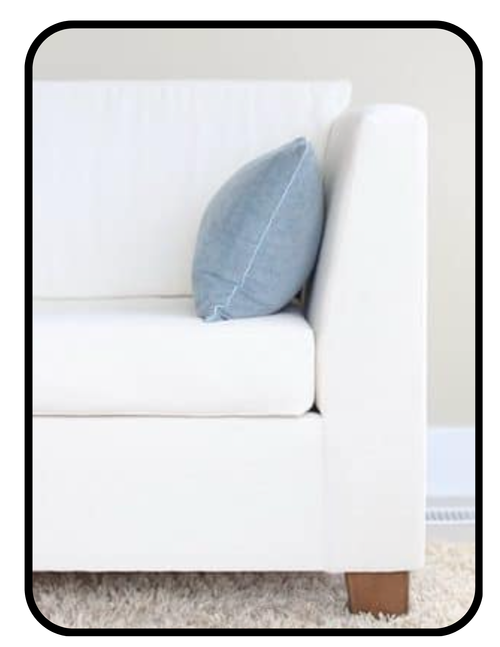
Savvy Rest uses only natural materials and is unique for using plush natural Talalay latex (most latex couches use Dunlop latex, which is organic, but firmer). Their Talalay is C2C certified, which means it’s made without fillers and meets the highest health standard available. They’re an online couch company with one straightforward couch, loveseat, and armchair option. They don’t use foam or synthetic fabrics at all— just latex, cotton, and hemp along with water-based glues and solid wood frames. They have the modern organic couch look perfected, and their certifications are easily displayed and understandable. PFAS and flame retardant free couches.
Product rating
See the rating scales Cisco Home
These are natural couches you can customize, with an even greater range of materials from organic to not organic at all. You can choose from regular polyurethane foam to GOLS certified organic Dunlop latex, to all feather stuffing. Their Iris Linen collection is the upholstery choice that is GOTS certified organic. They also use Crypton Home fabrics, which are free of PFAS and an overall non-toxic performance upholstery choice when going with polyester. They also use solid wood frame, water based stains, plant based finishes, and water based glues. The ratings below represent their healthiest options, if you go their totally natural route. PFAS and flame retardant free.
Product rating
See the rating scales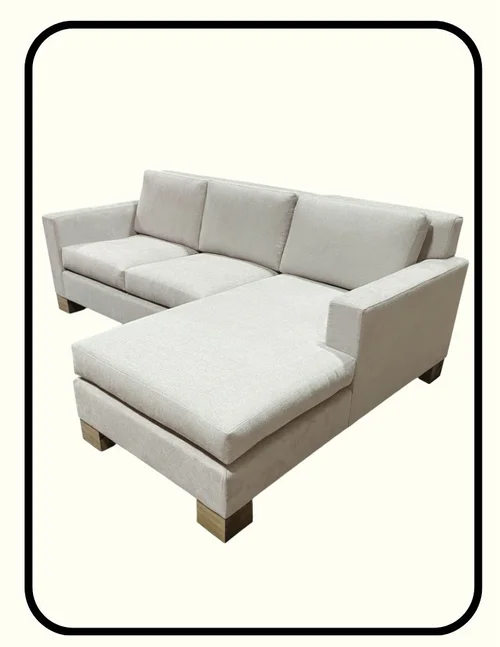 Pure Upholstery
These are also extremely healthy sofas, with a range of natural options, including their OEKO-TEX or GOTS certified organic fabric upholstery. All of their organic sectional sofas contain totally organic couch cushions made with GOLS certified latex — they don’t use polyurethane foam at all. Frames are solid wood and their springs are handmade, meaning these couches will last generations. They’re similar to Ecobalanza but with a wider range of both organic and natural materials. Essentially an organic online couch company with a large display of pre-designed couches on their website, many in the organic modern furniture style. These are flame retardant free and PFAS free couches.
Product rating
See the rating scales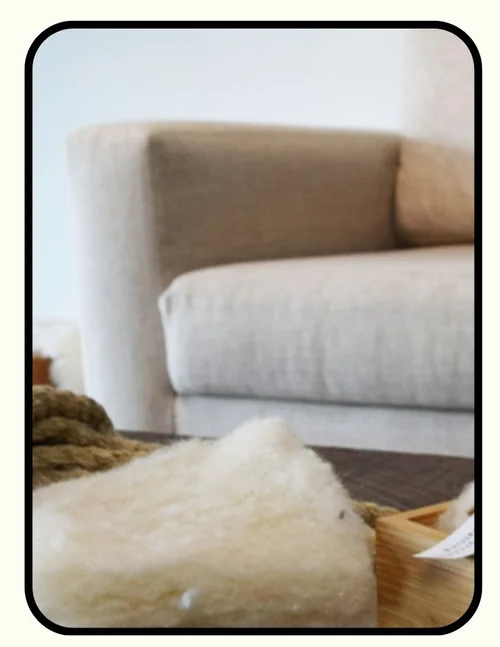 Ecobalanza
Ecobalanza makes the healthiest couches available, all handmade with 100% natural and organic materials. They use zero-VOC glues only when necessary, relying on stitching and construction techniques instead. Entirely solid wood couch frames, without engineered wood, and only natural and GOTS certified organic couch upholstery; no polyester or other plastic-based fabrics whatsoever. You can choose latex, kapok, down, cotton, or wool fillings— they don’t even have foam! Can replicate any couch you like, but with healthy materials, so you can design your own non toxic sectional couch, or organic floor couch, for example. Flame retardant and PFAS free.
Product rating
See the rating scales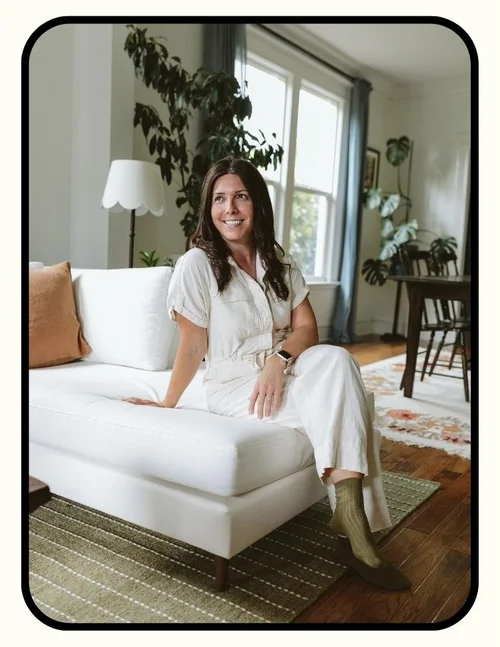 Medley
This is the non toxic couch brand I chose because they’re handmade in the US, have a spectrum of materials balancing affordability and health, and are very transparent with certification. I chose their Mota Sectional in latex and wool, though you can opt for CertiPUR foam for a more affordable non-toxic sectional. Medley is special because they test their CertiPUR foam and source it to ensure there are no flame retardants (most CertiPUR foam is only free of a few.) They offer non-toxic performance upholstery with C0 DWR which makes it the best non toxic couch for pets and kids and their Lala sofa is the most affordable organic sofa available anywhere. They have non toxic sectional couches, and organic sleeper sofas, too. No PFAS, no flame retardants.
Product rating
See the rating scales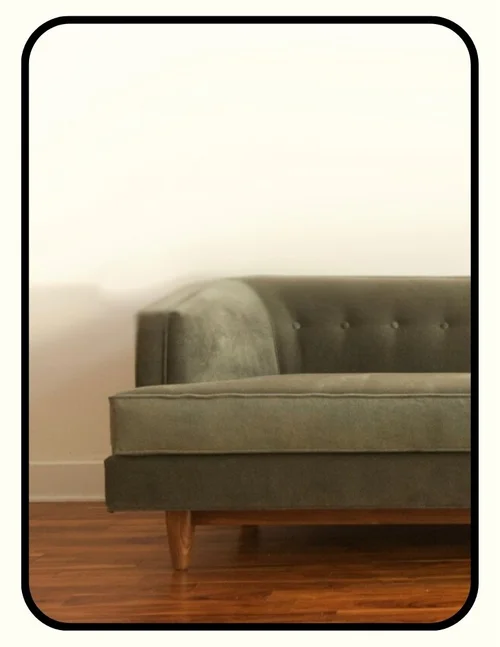 Couch Seattle
Couch Seattle carries a specific “Eco-Conscious” line that also happens to be healthy for humans (not always the case!) You can customize their couches to be semi-natural or totally natural. They uniquely offer polyurethane foam, 100% natural latex, or a latex-synthetic rubber blend. They have GOTS certified organic fabrics and polyester to choose from. Their solid wood frames, water based stains, and low-VOC glues come standard on all couches, even ones made with regular polyurethane foam, if you so choose. The ratings below represent their healthiest options. PFAS and Flame Retardant free.
Product rating
See the rating scales Sabai
Sabai
Is Sabai non toxic? Yes! Sabai makes eco-friendly couches and now, plastic free couches. I have long loved their commitment to sustainability, and you can order and fix parts of the furniture instead of replacing the whole thing. Their materials just keep getting healthier! I’m pumped and it is really rare to see this. They offer several kinds of fabrics, including organic and OEKO TEX certified hemp, and are very clear about the certifications and components in their recycled fabric choices. Their new Elevate line even uses natural latex for their couches, and are very clear about not using PFAS or adding flame retardants. They use low-VOC stain on their solid wood and zero-formaldehyde engineered wood legs and frames.
Product rating
See the rating scales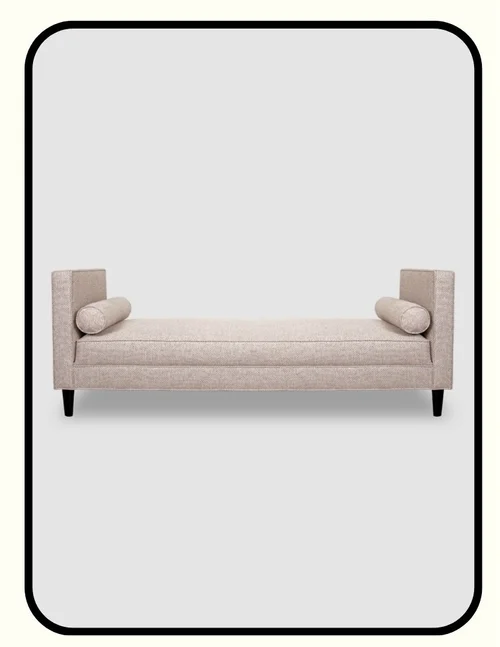 Roger + Chris
Roger and Chris make all of their non toxic sofas out of solid wood and use low-VOC glues and water-based low VOC stains. They’re another choice-forward company with options ranging from CertiPUR foam to latex for the cushions. They have OEKO TEX certified and PFAS free non toxic upholstery, as well as a variety of other options. They also handcraft non-toxic sectionals, ottomans, and sleeper beds. No flame retardants or PFAS if you go with their healthiest options, represented below. Their focus is more on handcrafting and options than strictly organic couches, and I appreciate how clear that is!
Product rating
See the rating scales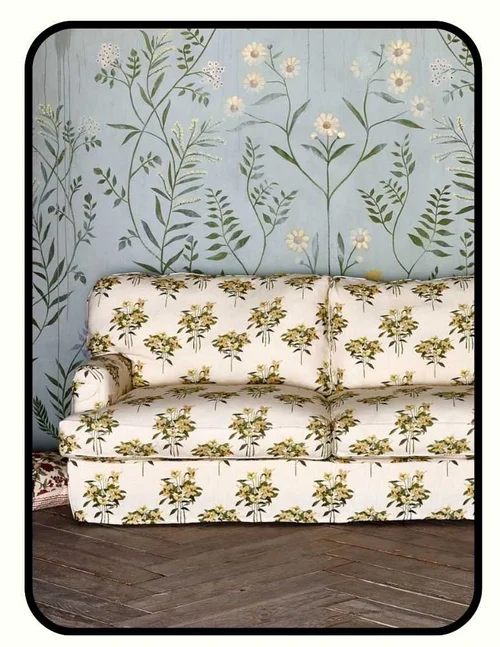 Green Row
Green Row is unique in the world of natural couches: they have patterned slipcovers and a very different style than most healthy options. They use natural but uncertified (not organic) latex, and OEKO TEX fabrics. These materials make them far healthier than standard couches. I didn’t get a response on what kind of wood stains, finishes, or glues they use; I assume standard low VOC because they use a low-VOC sealant on the springs inside. I asked if they use engineered wood; they said each couch is made differently, so you’d have to ask about each one separately before you buy. Worth an email before purchasing.
Product rating
See the rating scales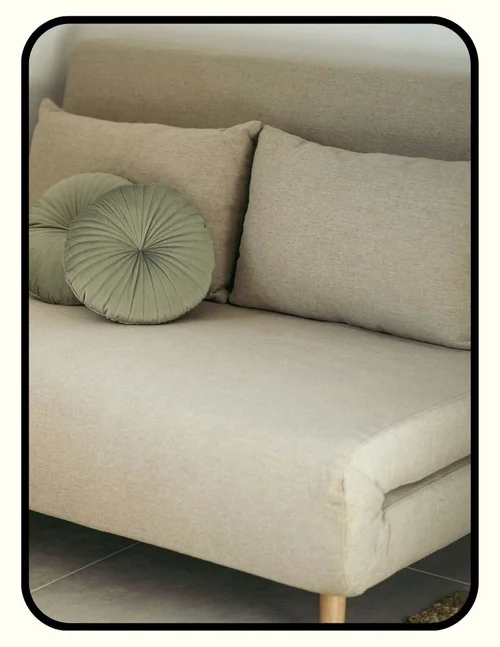 The Futon Shop (TFS)
I love non toxic couch companies that have a spectrum of health options to make room for affordability and practicality, as long as they’re transparent about what materials they’re using. I’m a little prickly about TFS because they use both USDA certified cotton and GOTS certified organic cotton, and often conflate the two— but just because a fiber is certified organic in the field by USDA doesn’t mean it stays organic throughout processing, which is what GOTS ensures. No one should be tricked into thinking something is healthier than it is. That said, they do use GOLS certified organic latex and OEKO TEX certified wool and coconut coir, as well as healthy finishes and glues. I recommend reading the ingredients of each couch carefully and asking questions.
Product rating
See the rating scales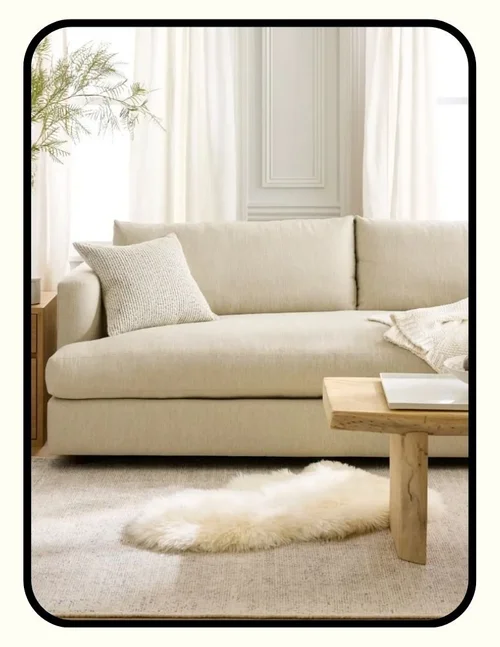 Quince
Are Quince couches non-toxic? For being made of foam and polyester, they are pretty decent, with thorough, transparent and responsive customer service and third party certifications proving their materials are better than standard. Compared to other brands where you have to push and push and wonder if you’re getting an informed answer, this is always a relief. While I don’t have a leather rating system yet, their performance and basketweave upholsteries are made of OEKO TEX certified class II polyester and are free of PFAS. Their frame is a mixture of hardwood and engineered wood which is certified low formaldehyde, and they use low VOC glues to hold it together. Their foam is CertiPUR and they stated they do not add additional flame retardants.
Product rating
See the rating scales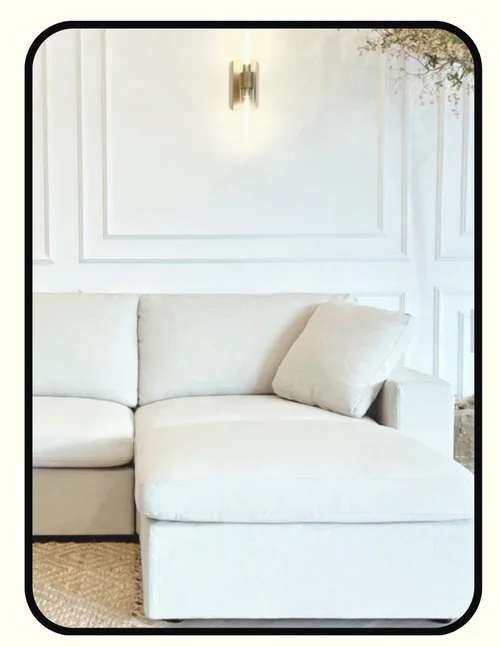 7th Avenue
Are 7th Avenue couches non toxic? Of the sofas made with foam and OEKO TEX certified polyester (and there are so many “non toxic couches” doing this now), 7th Ave currently comes out as the least toxic brand. Their upholsteries are polyester-linen blends with OEKO TEX certification and contain no PFAS, formaldehyde, and they don’t add any flame retardants. (I give CertiPUR a ! rating below because it prohibits the confirmed worst flame retardants, but not unconfirmed bad ones, or all of them. There are still many unknowns to CertiPUR. Read more in the FAQ below.) Their frames are solid wood. They are highly responsive to questions about materials, and one of the best non toxic modular sofas available so far.
Product rating
See the rating scales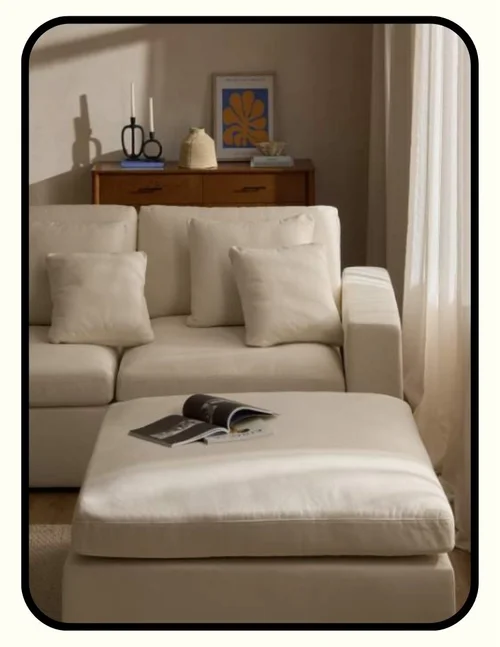 Silk & Snow
Are Silk and Snow couches non toxic? Their modular couches, sectionals, and ottomans are definitely better than standard (though not as organic as their great mattresses are!) I had to do a little emailing to find out that the frame is made with engineered wood, and though they didn’t tell me what type of wood stains, finishes, and glues they use, they did state that they do not use formaldehyde in the creation of the sofa. Without GreenGuard certification, it’s hard to know whether any off-gassing will occur. Happily, they did confirm that their stain-resistant upholsteries are OEKO TEX certified, and all are PFAS free. Likewise, their polyurethane foam is free of flame retardants. They were very responsive to my questions.
Product rating
See the rating scales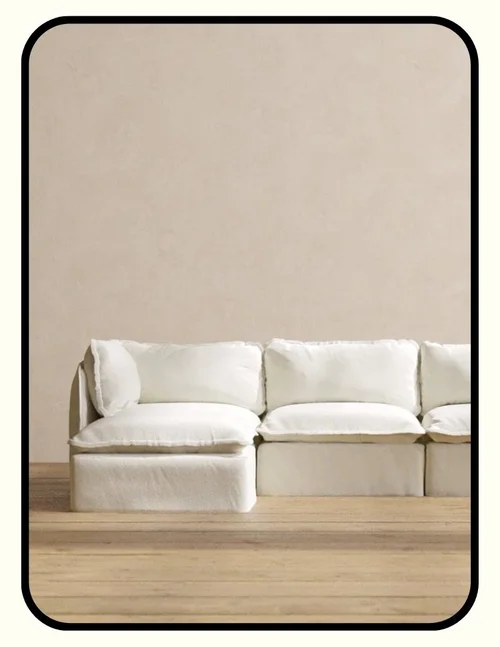 Anabei, Inside Weather, Jackfruit, and Diorama
Inside Weather owns all of these brands. Of the four, Anabei is their most non-toxic couch brand because they cleverly use a steel frame instead of a wooden one, meaning there are no wood stains or formaldehyde-filled particleboards to worry about. This, combined with their OEKO TEX fabrics, makes Anabei a decent choice for a foam couch. They don’t use PFAS, and they use water-based glues— any couch you choose from this group of brands would require some emailing to ensure the selections you make are healthy. Inside Weather is a little less healthy than Anabei, I won’t even rate Diorama because they are just made of so.much.foam, and Jackfruit only has a memory foam option, which has so many undisclosed chemicals.
Product rating
See the rating scales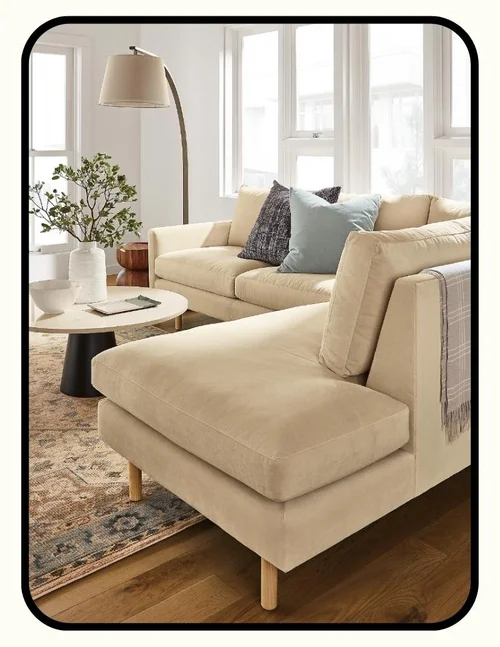 Room & Board
Are Room and Board couches non-toxic? They use CertiPUR foam and go the extra step of clarifying that they don’t allow phthalates, antimicrobials, PFAS, or flame retardants in their couches. They have some natural fiber upholstery options, with a performance finish. They use solid and engineered hardwood for the frame and all of their glues and stains are low VOC. Not bad for a big box brand!
Product rating
See the rating scales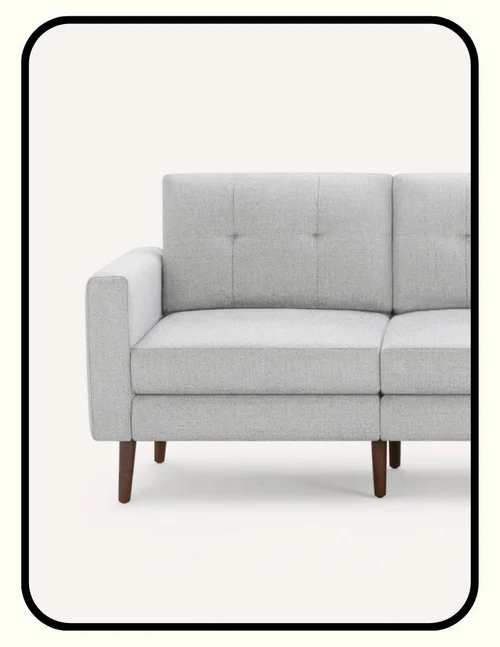 Burrow
Are Burrow couches non toxic? Burrow now has healthier options like OEKO TEX certified fabric and formaldehyde-free engineered wood (in addition to steel and hardwood) in their couch frames, which I confirmed with their live chat agents. They also now use low-VOC stains and glues and all of their fabrics are PFAS free. They use CertiPUR foam, which prohibits the most harmful flame retardants. They are an affordable less toxic couch choice and are making steps in a healthier direction.
Product rating
See the rating scales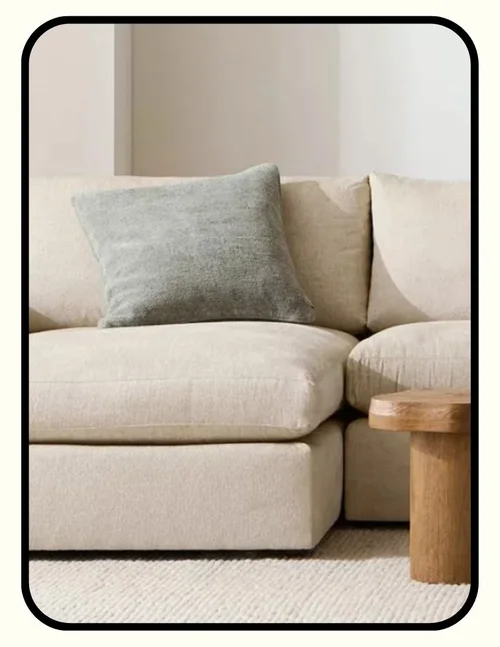 Crate & Barrel
Are Crate and Barrel couches non toxic? GreenGuard Gold couch line just means they off-gas VOCs under a set limit and doesn’t address non-VOC chemicals like PFAS, phthalates, or flame retardants. But! Crate and Barrel has banned flame retardants and all PFAS in non-cookware items, putting them a step ahead of other big couch companies. Mostly polyester upholstery; if you go with a performance option, choose one that is OEKO TEX certified to make it healthier. They use standard polyurethane foam, an engineered hardwood frame, and though Customer Service couldn’t tell me what brand of stains and glues they use, though they are likely low VOC since they have that GreenGuard certification.
Product rating
See the rating scales Pottery Barn and West Elm
Owned by the same company, Pottery Barn and West Elms’ GreenGuard Gold couches doesn’t mean their couches are perfectly healthy, but that they will off-gas VOCs under strict limits. They use standard polyurethane foam and an engineered wood frame. Their upholstery options are mostly polyester, but they do have a 100% cotton option. No OEKO TEX certifications. They do not use flame retardants, but I would email them to confirm there are no PFAS in the fabric you want; they have not banned these like Crate and Barrel has. Their finishes, stains, and glues are confirmed low VOC. The GreenGuard Gold verification does mean that it won’t off-gas as much as a sofa with similar fabrics and stains, so that is good! Shop West Elm here or Pottery Barn here.
Product rating
See the rating scales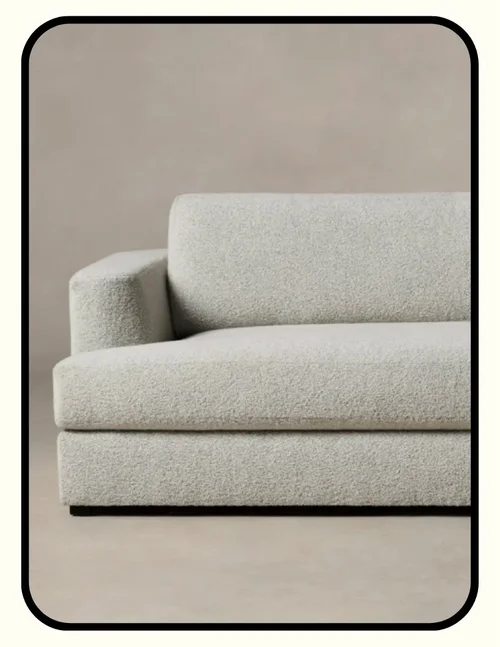 Maiden Home
Is Maiden Home non toxic? No! And that’s OK! I mean “not even trying to be non-toxic” in the most respectful way. Not every brand aims for that and has other priorities, and they told me so specifically when I asked about an update about PFAS in their fabrics. I only include them on this part of the list because they have a “clean aesthetic” that gets mistaken for “non-toxic,” so I get questions about them. Maiden Home uses standard polyurethane foam, and while they previously had some OEKO TEX fabric selections, they wouldn’t confirm if they had PFAS in them (which likely means yes, they do.) They are very responsive to questions and I appreciate their honesty rather than being coy in the name of preserving a “healthy aura.” Their frame is solid wood, and they use low VOC synthetic stains and glues.
Product rating
See the rating scales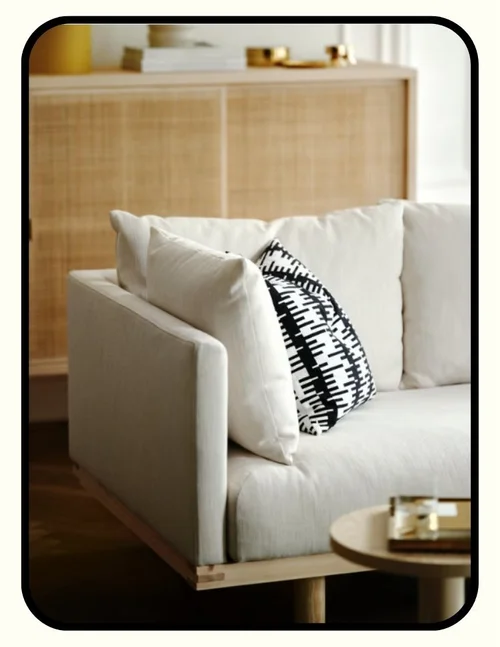 IKEA
IKEA
Are IKEA couches non toxic? They’re better than most. IKEA is incredible for their transparency, and they’ve banned certain chemicals like lead, BPA, and added formaldehyde much faster than the majority of couch companies in the US. Their textiles are PFAS free, including their couch upholstery. They use standard polyurethane foam, and polyester and polypropylene upholstery, along with frames made of veneer lumber, fiberboard, plywood, and plastic frames. Their glues can off-gas noticeably, but I’m glad to hear they’re actively moving toward formaldehyde-free engineered wood and glues. They didn’t set out to be a non-toxic couch brand but their long term sustainability and human health standards have them in the ring. But I am suspicious that because they only state that they don’t use PBDE as a flame retardant, they might add any of the many other ones.
Product rating
See the rating scales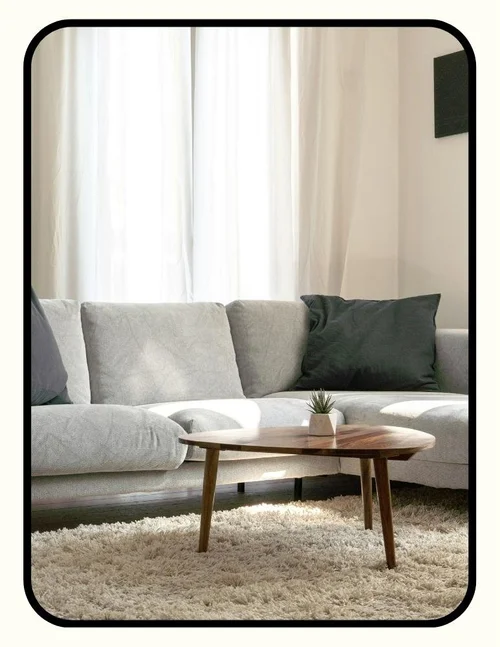 Albany Park
Is Albany Park non-toxic? I don’t think so, and don’t think they’re even attempting to be, but I am including them on this list because I get questions from people thinking they seem safe because they show up on other non-toxic couch roundups. I’m waiting on clarification about their materials, but I am suspicious that because they only state that they don’t use PBDE as a flame retardant, they might add any of the many other ones. Likewise, they only state that they don’t use PFOA or PFOS, but those are only 2 of the thousands of other types of PFAS. I asked about their OEKO TEX certificate so I could clear this up, but they didn’t have it available. Not looking good for a non-toxic couch so far, and I didn’t even bother asking whether the no-slip dots were PVC or EVA because the answers were so hard to get. I’ll update when I hear more.
 BenchMade Modern
Is Benchmade Modern non-toxic? I don’t have great confidence they are, and again, only include them on this list because I get questions about them, not because they make specific claims about being a non-toxic couch brand. I was told via email that their products are free from VOCs (no couch is totally free from VOCs), and that because they’re a flame-retardant free facility that they wouldn’t have PFAS in their fabrics (those are two very different things) so my trust in accuracy and knowledge about the materials they’re actually using and where they’re from are lowered. Their website states that they don’t use PFOS or PFOA, 2 of many types of PFAS, which is a classic healthwashing move. A clarifying email said they’re just given as examples and they’re totally free of PFAS. I think it’s possible they are, but based on the other answers about materials, I’m a little cautious.
Don’t see what you’re looking for? Request a review, or check it yourself in seconds with the Second Opinion Product Checker. Spot something outdated? Let me know and I’ll update it. Join the spam-free newsletter for interesting info and to hear when new reviews are up.
FYI, “non-toxic” has no official definition, so I rate every product with the same method. It’s built on third-party certifications and published test data, not brand claims. For a deeper dive, my free course walks you through it.
Everything on Interior Medicine is educational information, not medical advice. Read my full disclaimer.
More Healthy Design For You
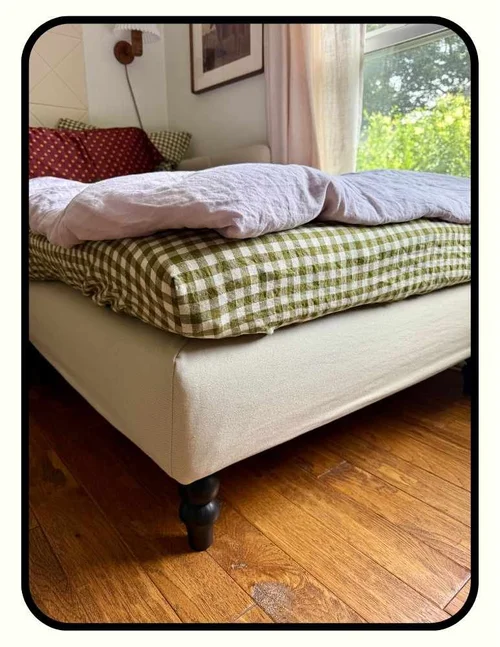

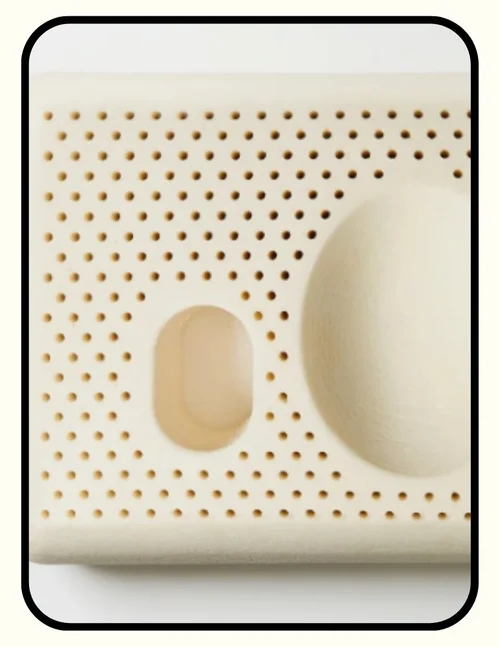
How Interior Medicine Rates Organic Couches
“Non-toxic” has no legal or scientific definition, so it’s become a marketing word. I still think a healthier home is worth working toward, and the way to get there is with a consistent system. Every product on Interior Medicine is rated with the same method, based on its materials, ingredients, and third-party certifications. This makes it easier to compare products fairly, spot healthwashing, and make informed decisions.
The rating symbols you see below each non-toxic couch brand represent my analysis of every material layer, using the same objective scales for every one. I do this to make things visually easy for you, and to ensure I stay neutral and unbiased by using consistent methods for each brand.
I also like being transparent about every affiliate relationship I have, since most organic couch round-ups do not disclose which companies they make a commission from, so can be incentivized to rate couches as healthier than they actually are.
Material Health
Couches are made of foam, fabric, wood, and adhesives. Each material is rated on its own Material Health Scale, from Healthiest to Harmful. You can see all the detail that goes into each rating symbol in my guides. If you don't want to do a deep dive, here's a simplified overview:
Healthiest to least healthy
- FoamGOLS certified organic Dunlop latex > natural latex > CertiPUR polyurethane foam
- FabricGOTS certified organic fibers > uncertified natural fibers > semi-synthetics > synthetics with harmful additives
- WoodSolid hardwood with plant-based finishes > formaldehyde-free engineered hardwood > MDF
- AdhesivesWater-based glues with GREENGUARD Gold certification > solvent-containing glues
Your Complete Guide to Non-Toxic Couches
Table of Contents
How to Actually Find a Non-Toxic Couch (Without Getting Healthwashed)
Shopping for a non-toxic couch is confusing because not only the furniture industry itself uses vague terms like "non-toxic" "natural," and "sustainable" because they sound healthy without committing to anything verifiable, but because round-up lists that don’t really take deep dives into materials repeat these claims.
I've spent years (!) examining couches layer-by-layer—foam, fabric, adhesives, wood finishes. This page ranks couch brands from healthiest to least healthy based on materials, not marketing claims. If you’re curious about why and how I rate, you can read more here about what matters, what doesn't, and how to cut through the healthwashing.
The Four Layers That Determine Couch Safety
Every upholstered couch has four main layers I consider. Most brands only address one (usually the easiest, usually fabric, usually OEKO TEX) while ignoring the others. I think it’s fine to make just one component of a couch healthier, and honor baby steps, but one healthy layer doesn’t make the whole couch organic or non-toxic.
Layer 1: Foam cushions - This is where the majority of chemical exposure comes from. Conventional polyurethane foam contains flame retardants, plasticizers, catalysts, and VOCs. "CertiPUR foam" sounds safe but still allows benzene, phthalates, and some flame retardants. The only completely organic foam option is GOLS-certified Dunlop latex with a certification number you can verify. Talalay latex is also a great option— not organic, but natural, and light years better than conventional foam.
Layer 2: Upholstery fabric - This is the trickiest part of a non-toxic couch, because you want your upholstery to be durable and resist daily life with pets, kids, and general wear and tear. I look for GOTS or OEKO TEX certification on every couch. This is because even USDA organic cotton can undergo conventional fabric processing with chemical dyes, bleaches, and finishing treatments, like PFAS (forever chemicals) used for stain resistance. GOTS certification verifies organic fibers AND safe processing. OEKO-TEX certification tests finished fabric for harmful residues, including PFAS, which is so important because "Performance fabric" without OEKO-TEX certification is almost always treated with PFAS. Read more below about the new PFAS replacement, C0 DWR.
Layer 3: Frame and finishes - Solid wood frames are typically healthier than engineered wood, which often contains formaldehyde-based adhesives, but not always! There are newer, healthier, formaldehyde-free versions of engineered wood available now, which is good, because engineered wood helps add strength to regular wood, which is important for couches supporting lots of people. I also consider how wood is finished— water-based stains and oil-based finishes off-gas fewer VOCs and have fewer harmful additives than conventional options.
Layer 4: Adhesives - I look for low-VOC or water-based adhesives, since standard construction glues contribute to the “new couch smell.” Most brands don't disclose this information at all, and I’ve sent a lot of emails getting these answers.
Why "Non-Toxic" Couch Marketing Is Deliberately Vague
Here are some common tricky healthwashing tactics used in non-toxic couch marketing to watch out for:
"Eco-friendly" or "sustainable" addresses environmental impact (recyclability, carbon footprint), not human health. A couch can be made from recycled materials, like polyester, and still be treated with additives that off-gas VOCs, or contain flame retardants. Eco-friendly and human health friendly are different concerns that don’t always overlap.
"Low-VOC" or "GreenGuard Gold certified" only measures off-gassing chemicals you can smell. It doesn't address flame retardants, phthalates, or other chemicals that fall out of degrading foam into household dust. It's better than nothing, but it’s not the same as non-toxic.
"CertiPUR foam" is an industry-created certification (not true third-party) that prohibits some chemicals while allowing others. It's marketed as safe, but permits formaldehyde up to 0.5 ppm, benzene, toluene, PBDE flame retardants up to 1 ppm, and 13 types of phthalates. For a couch you'll use 3-4 hours daily for years, this matters. You can read more about this in my Foam Guide.
Exposure Routes
How do couch chemicals get into your body?
Understanding the two ways foam chemicals leave couch cushions, and the three ways they enter your body through exposure routes, explains why choosing a non-toxic couch matters for your health. You can read about how chemicals fall out of foam in my Foam Guide and what you can absorb from couch upholstery through your skin in my Fabric Guide.
It’s important for couches, because they represent one of your highest daily exposures. Unlike occasional-use items, you sit on your sofa for hours daily—often 3+ hours of direct contact. When you're relaxing with your face near cushions, reading, watching TV, or napping, you're exposed to off-gassing VOCs. The direct skin contact on arms, legs, and sometimes your face also maximizes dermal absorption of chemicals that have migrated to the surface.
Children face even higher exposure because they play on couches, put their faces directly on cushions, and spend time on floors near furniture where chemical-laden dust settles.
Cats can get hyperthyroidism from certain flame retardants in furniture foam. Their smaller bodies and grooming behavior concentrate these chemicals fast enough that we can measure the health effects within their lifespans. Research using silicone pet tags found that hyperthyroid cats had significantly higher levels of TDCIPP (a common furniture flame retardant) than healthy cats, and cats who preferred napping on upholstered furniture had the highest exposures.
Non-Toxic Foam for Sofas
Are foam couches toxic?
Polyurethane foam is a very chemically intensive material, and foam additives do not stay bound up in the foam. They fall out over time. You can read all about the chemicals in foam, and how they enter your body in my Foam Guide.
How do I check my couch for flame retardants?
Your couch should have a tag on the underside that states whether it meets TB117, a law that ensures the couch isn’t too flammable. If it says it meets TB117, with no other information, it very likely has flame retardants. This is almost a guarantee if your couch was made before 2013. If it has a label that says TB117-2013 with a checkmark next to “contains no added flame retardants” then you are in luck! The Duke University Foam Project has been tracking samples from couch foam for many years, and happily shut down in May 2024 because less than 10% of the furniture foam consumers were sending in for testing came back with flame retardants. We are headed in the right direction!
Does “meets TB117-2013 requirements” mean no flame retardants?
No! This is important because brands will often throw this out there in lieu of being able to state with certainty that their couch or foam doesn’t have flame retardants. TB117-2013 just means that the product doesn’t require flame retardants like the old rule, TB117 did. TB117-2013 means that the product has to pass a “smolder” test instead of a more intense flame test, and that it doesn’t NEED flame retardants, but their use is still allowed. Ask the company directly if their foam contains added flame retardants, and if you already have a couch that says it meets TB117-2013 requirements, look for the checkmark to see if it also says “Contains No Added Flame Retardants.”
Does CertiPUR foam have flame retardants?
It absolutely can. CertiPUR bans the few flame retardants with strong evidence of being mutagenic, carcinogenic, and reprotoxic. There are many flame retardants that don’t have strong evidence of this yet, but are still suspicious. It is not a ban on all flame retardants.
Most couch companies will buy CertiPUR foam without knowing its exact composition and state “We don’t add any flame retardants!” but it doesn’t mean that there aren’t some present. The only brand I know that tests their CertiPUR foam and gets it directly from a known manufacturer is Medley.
Again, you can argue that CertiPUR is a step in the right direction— no known carcinogenic flame retardants is a very good thing. But, I worry that it still contains regrettable substitutions and without disclosure or testing, it’s impossible to know.
The Best Non-Toxic Couch Fabrics
What is the best non toxic couch upholstery?
While a GOTS certified organic fabric is technically the healthiest upholstery for a couch, you might be looking for something with more durability or resistance to daily life’s spills, stains, wear and tear. As someone who bought a couch upholstered in ivory organic cotton canvas (omg what was I thinking), here is what I recommend:
If material health is your #1 priority, choose a certified organic cotton or linen in a dark color. Or, choose any color you’d like and consider a non-toxic couch cover or pad to place on top during heavy use.
If you want to strike a balance between perfect health and practicality, choose an OEKO TEX certified performance fabric. This could be a natural fabric with a C0 DWR applied, or even a safer polyester without any coatings. Either way, this is a much safer alternative to standard couch upholstery which often contains harmful dyes and PFAS coatings.
What is C0 DWR couch upholstery?
C0 DWR stands for Carbon-ZeroDurable Water Repellant. It is a new alternative to PFAS, which are still very common in performance upholstery on couches. C0 DWR is definitely healthier for people, and is usually plant-based, though the ingredients lists are still proprietary secrets as the competition is quite intense— you can read more about in the New Fabric Technologies section of my Fabric Guide.
What is polypropylene couch upholstery made of?
Polypropylene fabric comes from plastic and is often used in couch manufacturing because it can be dyed in a bleach-resistant way, and it repels water and oil without additional PFAS chemical finishes. It’s a really attractive “fabric” for couches, since they are such a high-use item that you want to look clean. However, polypropylene comes with some health concerns, which you can read all about here in the Polypropylene section of my Fabric Guide.
What is olefin couch fabric?
Olefin is polypropylene, and in the couch industry, the words "polypropylene" and "olefin" are used interchangeably.
Couch Wooden Frames
Why does my organic couch have a Prop 65 warning?
Very likely, this is for wood dust. Prop 65 considers the health of people throughout the entire life cycle of your couch, meaning not just you, but the people who manufactured it, too. Without proper protection, if a worker breathes in wood dust, it increases their chances of getting nasal cancer. Once it gets to you, this is not a risk. Prop 65 can be very, very confusing. I recommend reaching out to the manufacturer of your couch to learn more.
Affordable Non-Toxic Couches
Is an organic couch worth it?
Yes, as long as it doesn’t cause undue financial stress, of course. The list of chemicals used to make couches is quite sobering— IKEA is amazingly transparent about what they prohibit and what levels of chemicals like BPA, formaldehyde, and flame retardants they do allow— see the listhere. Most standard couch companies are not this healthy, nor this transparent, which is why this page and Interior Medicine exists! Sofas are materially complicated, and a high-touch surface, making a healthy one important. They’re arguably the most important part of a non toxic living room, since you’re likely spending time in direct contact with it every day. Read about each layer by clicking on the symbols below each brand above. This way, even if you don’t choose the absolute healthiest option (which can be quite an investment) you’ll be thoroughly informed about your decision and can mitigate any imperfectly healthy aspects of it.
I can’t afford a totally non toxic couch: Should I choose safe couch foam or safe couch fabric?
This is one of the most common questions I get, and it's a smart one! When you can't afford both GOLS-certified latex foam and GOTS-certified organic upholstery, I recommend prioritizing safe foam over safe fabric, most of the time, for most people.
Why foam should be your priority:
Foam can contain so many times more chemicals compared to fabric, simply because of the volume used in a couch. This study found that 2.9% of an upholstered chair’s foam was flame retardants by weight—that's 29,000 parts per million of flame retardant chemicals in a single cushion.
The health regulations on polyurethane foam are much more relaxed (CertiPUR) than they are for fabric (GOTS, OEKO TEX.)
When fabric might be your priority instead:
Tighter budget: even if you opt for regular polyurethane foam and an OEKO TEX certified or GOTS certified upholstery, it is still a great, healthier option— I promise! Health is about so much more than any single object in your home and I certainly don’t want you stressing.
Upholstery allergy: if you or a family member is allergic to flax (linen), cotton, or are worried about being allergic to plant-based DWR, prioritize the fabric that works best for you instead of the foam.
Are secondhand couches a safer non-toxic option than new ones?
No, while older couches have finished off-gassing VOCs, which is nice, my concern lies with the foam and the additives like flame retardants within it. Foam breaks down over time, releasing the chemicals of concern into your environment. Moreover, flame retardants have been phased out successfully over the last 10 or so years, but were very common in couches starting in the 1960s through the early 2010s. If you get an older couch, look for one that has only been used lightly, so isn’t experiencing much foam breakdown, and that has a TB117-2013 tag stating that it doesn’t contain flame retardants. Read more below about how foam chemicals move from the cushions into your body, and more affordable alternatives to old couches.
What should I do if I can’t afford a non-toxic couch?
If you need to keep a foam couch: dusting, mopping, and vacuuming weekly can pick up any sVOCs (like Flame Retardants) that come from couches invisibly shedding over time. You can ventilate by opening windows daily to help release any VOCs off-gassing from foam. And, you can consider an organic couch cover which may help protect you from anything nasty underneath.
If you can buy a new couch, and can spend a moderate amount:
Consider buying a floor model from an organic couch company that sells them at clearance prices. You can see Medley’s clearance section here and their Lala couch is the most affordable option of any organic couch. Couch Seattle’s clearance section is here.
Consider buying a couch made with a mixture of materials— choosing regular foam but an organic or OEKO TEX certified upholstery can save you money. Or, vice versa. Choose CertiPUR foam and healthy upholstery. Embrace the baby steps and grey area.
If you need to buy the most affordable non toxic couch, consider an IKEA couch and add an organic or natural couch cover to it. A cover may help in three ways:
Reducing foam breakdown by reducing the amount of friction on the foam. Foam degradation releases semi-volatile organic compounds (sVOCs), which are relatively heavy molecules, meaning they generally don’t off-gas into the air as readily as VOCs do, but fall to the ground into dust instead. An example of sVOCs are Flame Retardants, a very common foam additive in mattresses, which settle into dust. Having an organic and safe layer between your body’s movements and the couch containing sVOCs may help.
Decreasing body heat in contact with the foam. Body heat in contact with foam is known to speed up off-gassing of VOCs. A couch cover should reduce the amount of heat transfer between your body and the polyurethane foam.
Protecting you from fabric finishes. Even IKEA, which is more health-forward than most standard couch companies allow some BPA and formaldehyde in some of their upholstery. A healthy cover or pad may protect you from direct skin contact.
Finally, wait it out and play the long game— keep emailing companies with questions about their materials and asking for less toxic options. Continued consumer pressure on the foam industry and furniture businesses should drive more couch companies to make healthier options with natural materials, driving competition up and prices down.
How to Choose the Best Non Toxic Couch
What is an organic couch made of?
Organic, or at least non-toxic, couches are typically made of the following natural materials:
Frame: solid wood frames and legs
Adhesive: screws and non-toxic glue that hold it together
Cushions: stainless steel springs, or organic or natural rubber latex wrapped in wool to act as a natural flame retardant
Upholstery: organic cotton, linen or OEKO TEX certified polyester.
Importantly, organic couches do not have the Flame Retardants, PFAS, lead, phthalates, BPA, or formaldehyde that standard couches do.
What is the best organic sofa brand?
I’ve ranked the non-toxic sofa brands above strictly in terms of material health, not necessarily what is practical for your life, budget, or priorities. The best non toxic couch for you may rely on other factors besides health, which is great— Interior Medicine is not about health perfection, but about informed decision! Jump up for a detailed side-by-side comparison.
What is the best couch for pets and kids?
5 options, from healthiest to less healthy, that will protect your couch from kids and pets:
Get a completely organic couch including organic upholstery, but add a couch pad or cover for protection.
Go for durable latex cushions but choose OEKO-TEX certified natural performance fabric. It will be PFAS-free and have a C0 DWR coating instead.
Select an OEKO-TEX certified olefin, polypropylene, or polyester fabric— these materials are plastic-based, relatively safe, and cannot absorb water, making them naturally stain- and water-repellant and may not need any coatings at all.
Choose an uncertified olefin, polypropylene, or polyester fabric. Even without OEKO TEX certification, they are still much better options than a natural fabric coated in PFAS for stain resistance. Confirm with the company that there are no PFAS present.