
Product Reviews ➜ Water Quality Tools
Water Filters: Complete Guide to the Best Water Filtration Systems for Your Home
By Dr. Meg Christensen | Updated January 2026
Read the guide below, or click on a category to shop for specific water quality upgrades.

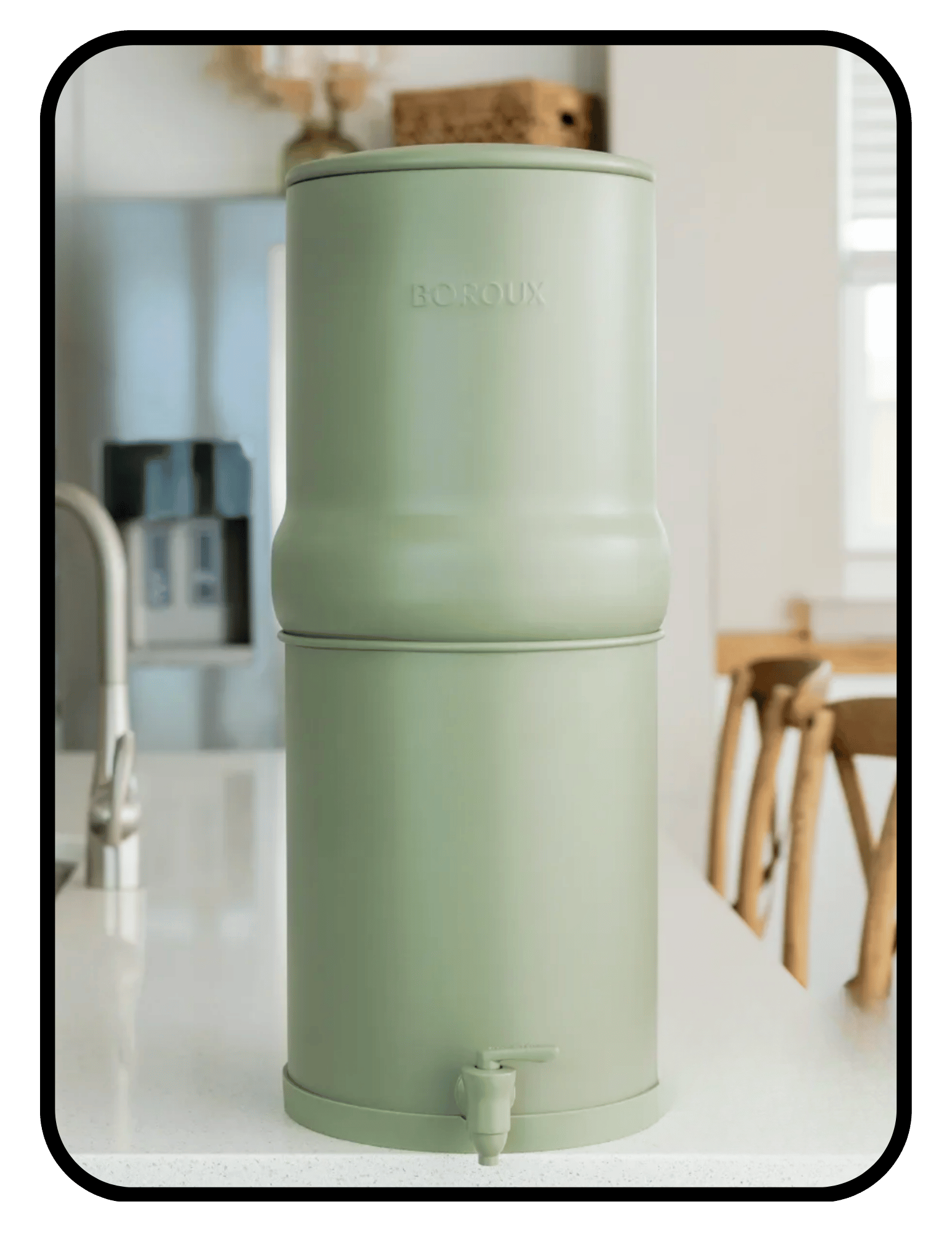
Countertop Filters


Bath Filters

Why Water Filters Matter for Health
Many people assume that if their city’s water meets EPA standards, additional filtration is unnecessary. Some even view home water filters as a scam—another costly burden shifted onto individuals instead of addressed through collective systems.
While I would love for municipal water filtration to be sufficient—removing one more thing from the long list we have to worry about— it just isn’t our current reality, and home water filtration is necessary for health for four main reasons:
First, water treatment standards are designed primarily to prevent acute illness, with less consideration given to reducing contaminants that are linked with long-term health effects.
Second, cities face financial constraints, which means some of the most effective but expensive filtration technologies simply aren’t feasible. For example, removing PFAS from municipal water supplies would cost tens of billions of dollars, something most taxpayers are unwilling or unable to pay.
Third, while chlorine or chloramine are necessary to control bacterial contamination, excessive levels and the reactions they cause with other chemicals in water or pipes can pose health concerns including trihalomethanes and other disinfection byproducts.
Fourth, even when water leaves the treatment plant clean, it can be recontaminated at the point of use. Lead can leach from aging pipes and fixtures in older homes, and some plastic plumbing materials, such as PVC, can introduce microplastics, nanoplastics, plasticizers, and VOCs into drinking water over time.
Water filters protect your health fro the above across all three ways water enters the body: drinking, skin absorption, and inhalation of steam. Drinking unfiltered tap water is the most direct and bioavailable route, as contaminants can enter the bloodstream through the digestive system. Showering and bathing in unfiltered water create additional exposure through dermal contact and absorption, as well as inhalation, when hot water turns contaminants into steam. The most effective filtration setups address all three pathways: drinking water filters for ingestion, shower filters to reduce inhalation and skin exposure, and bath filters for prolonged immersion.
Read on for a deeper dive on health benefits of water filtration, why so many water filtration brands make exaggerated claims and how to spot them, how to prioritize water filters for your home, and how to choose between countertop vs under sink vs whole-home water filtration, or multi-stage vs reverse osmosis.
The Main Health Concerns With Unfiltered Tap Water
Understanding how water contaminants enter your body through different pathways helps you prioritize which water filters provide the most protection for your home.
Ingestion from drinking water creates the highest bioavailability and total body burden. Drinking unfiltered tap water and consuming food prepared with tap water (coffee, tea, soups, boiled pasta, steamed vegetables) means some contaminants will pass through your digestive system and directly into your bloodstream. The average person drinks 2-3 liters of water daily and uses additional water for cooking, creating substantial exposure. This is why drinking water filters—whether countertop water filters or under-sink water filter systems—represent the most important water filtration investment for your home.
Inhalation during hot showers creates concentrated exposure in enclosed spaces. When hot water aerosolizes, volatile contaminants (VOCs) convert to vapor and become airborne in the enclosed bathroom space. Chlorine, chloramine, and trihalomethanes (disinfection byproducts) readily volatilize during hot showers, and you inhale these vapors directly into lung tissue where some are absorbed into the bloodstream. Shower filters that remove chlorine and chloramine from tap water eliminate this inhalation exposure.
Dermal absorption during bathing creates prolonged immersion exposure. Skin contact with unfiltered water allows contaminants to affect the skin in two ways: first, through direct contact, like irritation, and second, absorprtion directly through the skin. This is especially true during hot baths when elevated temperature opens pores and increases absorption rates. Bath immersion creates more extensive dermal exposure than showering because of prolonged contact time (20-30 minutes vs. 5-10 minutes) and full-body submersion. Chlorine disinfection byproducts (such as trihalomethanes) absorb readily through skin during hot baths, as do some short-chain PFAS and other lipophilic (fat-soluble) contaminants. Children face higher dermal exposure relative to body weight because of their larger surface area to body weight ratio, and babies' and children's skin is more permeable than adult skin. Bath filters address this prolonged immersion exposure, particularly important for families with young children who take frequent baths. There is some good news here, as well! Your skin is a very effective barrier against many water contaminants, so you don’t need to worry about every single pollutant in bathtub water.
What are the Health Benefits of Water Filtration?
Water filtration benefits are all about prevention. Water filtration reduces daily, chronic, low-dose chemical exposure, protects developmental health in children, and minimizes cancer risk from known carcinogens in tap water.
The Environmental Working Group's analysis of US tap water reveals that most municipal supplies contain detectable levels of industrial chemicals, agricultural runoff, pharmaceutical residues, and disinfection byproducts—all below regulatory limits, but present nonetheless. While acute toxicity from drinking tap water is rare in developed countries, chronic exposure is a different consideration. PFAS accumulate in your body over decades, heavy metals like lead impair neurological development in children and are surprisingly still common in city water supplies, and trihalomethanes formed during water treatment are classified as probable human carcinogens. The question isn't whether tap water will make you immediately sick—it won't—but whether reducing lifelong exposure to these compounds makes sense for long-term health.
Water filtration becomes particularly important for vulnerable populations. Infants and young children absorb contaminants more readily due to higher metabolic rates and developing organ systems. Pregnant women face additional considerations since many water contaminants cross the placental barrier, with prenatal PFAS exposure linked to lower birth weights and immune dysfunction. People with compromised immune systems, those undergoing chemotherapy, and individuals with chronic kidney disease all benefit from reducing the chemical burden their bodies must process daily.

Why Certification and Capacity Testing Matter for All Water Filters
Water filtration happens invisibly. You can't see chlorine molecules being captured, PFAS compounds being trapped, or lead particles being removed. This invisibility creates a perfect environment for misleading claims—companies can promise purification that isn't actually happening, and you’ll never know the difference. This is especially true because even contaminated water won’t make you immediately sick— it’s the long term health issues.
This is why I very, very strongly recommend only buying water filters with third-party certification from labs like NSF International, IAPMO, WQA, or, at the very least, a private lab. Certification proves three critical things: first, that the filter actually removes what it claims to remove (and at what percentage); second, that it maintains this performance for a specific number of gallons rather than just working initially; and third, that the filter performs under real-world conditions—the water pressure, temperature, and flow rate you'll actually use at home.
Without certification, you're relying entirely on the manufacturer's word. A brand might test their filter once in ideal laboratory conditions and extrapolate those results indefinitely. They might measure removal rates after filtering just 100 gallons and assume the same performance continues for 10,000 gallons. Or they might not test at all, simply listing contaminants their filtration media could theoretically remove without verifying it actually does in their specific product design.
Gallon capacity is particularly important because filter performance degrades over time. A filter might remove 95% of chlorine for the first 100 gallons, then drop to 60% for the next 100 gallons, then become essentially useless. Certified filters specify exactly how many gallons they remove each contaminant for—giving you a clear replacement timeline rather than guessing when your filter stops working. This matters for your health (an exhausted filter may be doing nothing) and your wallet (replacing filters too early wastes money, while replacing too late leaves you unprotected).
When evaluating any water filter—whether for your shower, drinking water, or bathing—look for specific test results showing the percentage of each contaminant removed and the gallon capacity at which the filter maintains that performance. Vague claims like "removes up to 99% of contaminants" or "lasts up to 6 months" without supporting data are red flags that the filter may not perform as advertised. I list this kind of data (or highlight the lack of it) very clearly on each of my water filtration pages, including for Shower Filters, Bath Filters, Under-Sink Filters, and Countertop Filters.
Do you really need to test your tap water before you choose a water filter?
No, you don’t need to, and don’t let it be a burden if you would rather just go straight to choosing an thorough, certified filter— reverse osmosis filters will remove nearly every contaminant, and NSF-certified multi-stage filters will do a great job for the majority of issues. If you’re connected to a municipal supply, you can check your water quality through EWG's Tap Water Database in lieu of testing to get a good amount of information.
However, there are five reasons you still might want to test your tap water before buying a filter:
Saving money: There is a chance your water report will come back showing relatively safe and healthy water! This means you could opt for a less expensive filter instead of investing in a Reverse Osmosis system, for example.
You have well water: It’s always important to test your well water annually, as private wells aren't regulated and contamination can change seasonally or after heavy rains. You may need to change your filters more frequently or change types depending on results.
You aren’t sure about the state of your pipes: Even if you receive relatively healthy water from your municipal supply, it can be recontaminated by lead pipes or PVC pipes in your home’s plumbing, which can introduce microplastics, nanoplastics, plasticizers, and VOCs into drinking water over time.
Confirming your filter works: If you already have a filter, you can make sure it’s working by having a sample of filtered water analyzed. You can either compare it to a second sample of your unfiltered water, compare it to city reports, or decide if the results show water healthy enough for you.
Increase health information: If you’re investigating a health issue (like Erin Brockovich), understanding if your water quality is contributing can be useful information.
In short, don’t delay getting a water filter, and if testing is a hurdle, skip it. But, if budget allows, and any of the above apply to you, I recommend a tap water test kit.

How to Prioritize Water Filters in Your Home
Focus on the exposure pathways that create the highest body burden, starting with drinking water filtration for the most bioavailable route.
Start with drinking water filters for the highest-impact intervention. The best water filter for your drinking water depends on your living situation, budget, and which contaminants you need to remove from tap water. You have two main installation options: countertop water filters that sit on your counter and require no installation (ideal for renters, apartments, or those who want portability), or under-sink water filters that install beneath your kitchen sink and provide filtered water through a dedicated tap (more permanent solution for homeowners). For the most comprehensive contaminant removal, reverse osmosis water filters remove the widest range of contaminants including PFAS, lead, pharmaceuticals, VOCs, heavy metals, and nearly all other concerning substances from tap water. Reverse osmosis systems are the best water filters for removing fluoride, the best water filters for PFAS removal, and the most effective water filters for lead removal. For slightly less thorough filtration at lower cost, choose NSF-certified carbon water filters. If you’re not sure, check EWG's Tap Water Database or your city water report to see what's in your tap water to make a decision. Whether you choose countertop or under-sink installation, filtering all water you ingest (including water used for cooking, brushing your teeth, bedside drinking) provides the greatest health benefit. See Under-Sink Water Filters and Low-Plastic Countertop Water Filters.
Add shower filters second for chlorine removal and inhalation protection. The best shower filters remove chlorine (and some chloramine) from tap water, addressing the combined exposure from inhaling volatilized contaminants in steam and absorbing them through skin during hot showers. Most shower filters use KDF (kinetic degradation fluxion) media to neutralize chlorine —the primary volatile contaminants in municipal water systems. Some, though very few, advanced shower filters also include carbon filtration for broader contaminant removal from shower water. Shower water filters install easily on existing shower arms without plumbing modifications, making them an easy choice whether you’re a renter or a homeowner. The health benefit from filtering your shower water becomes more significant for people who take long or frequent hot showers, have respiratory sensitivities, or have skin conditions aggravated by chlorine exposure. Shower filters that remove chlorine also eliminate the chlorine smell in your bathroom and prevent chlorine from drying out your skin and hair. See NSF-Certified Shower Filters.
Consider bath filters third if you or your children take regular baths. Bath water filters address the prolonged immersion exposure during bathing, which creates both dermal absorption through extended skin contact and inhalation exposure from volatilized contaminants in enclosed bathroom spaces. Bath filters typically attach to the tub spout and filter water as the bath fills, removing chlorine and chloramine from bath water. They're particularly important for babies and young children who take frequent baths, have more permeable skin, and breathe faster relative to body size. Adults who take regular baths for relaxation or therapeutic reasons also benefit from bath water filtration to reduce the cumulative exposure from repeated immersion. The best bath filters use similar technology to shower filters (KDF, Vitamin C, or carbon filtration) and require replacement based on water volume filtered rather than time. See Bath Filters That Actually Work.
Whole-house water filters provide comprehensive coverage but require professional installation. Whole-house water filtration systems install at your home's main water line and filter all water entering your home—for drinking, cooking, showering, bathing, and laundry. These systems provide the most comprehensive water filtration but require professional installation and assessment of your specific plumbing configuration, pipe materials, and water pressure. Because whole-house water filter installation depends heavily on individual plumbing setups and local building codes, I don't make specific whole-house filter recommendations. If you're interested in whole-house water filtration, consult a licensed plumber who can assess your home's plumbing and recommend appropriate systems.
Drinking Water Filters: Countertop vs Under-Sink Options
Choosing between an under-sink and countertop water filter depends on 4 things:
Level of installation skill: Countertop water filters sit on your kitchen counter and don't require installation or plumbing modifications, making them the easiest choice. However, they do filter less than under-sink water filters. If you want minimal installation, choose an under-sink water filter with inline attachment. The disadvantage to this is that using the filter for all water usage, including washing your hands and dishes, is that you’ll need to replace the filter often. The most complicated installation option is an under-sink filter with its own spout. This offers the best filtration and fewer filter changes, though might require drilling a hole in your countertop if you don’t already have one (I did this and it’s honestly not too bad— it just requires a special drill bit. Here is a short TikTok video on how to do it.)
Contaminant removal need: Whether your water is very polluted or you just want maximum filtration, an under-sink model will remove more than a countertop model. If you want basic filtration, countertop water filters are a good option.
Kitchen counter size: Under-sink water filtration systems offer more comprehensive filtration capacity than countertop filters, with hidden installation that doesn't take up counter space.
Whether you rent or own your home: Countertop water filters are the best water filters for apartments, renters, anyone who wants portable filtration they can take when moving. The best countertop water filters use carbon filtration or gravity filtration to remove contaminants from tap water.
Low plastic importance: Countertop water filters often use less plastic than under-sink filters. While under-sink filters do effectively remove microplastics, it still generates plastic cartridges— read my deep thoughts on this at the very bottom of this page. While there are hundreds of countertop water filter options available, I only have ones that are NSF-certified, and lower plastic overall to reduce waste, listed on my Countertop Water Filters page.
Choosing Between Reverse Osmosis and Multi-Stage Filtration
You can enter your zip code into EWG's Tap Water Database and it will tell you what contaminants in your water supply will be removed by multi stage vs reverse osmosis. Here’s a short summary:
Reverse osmosis and multi-stage carbon filtration both remove the majority of common tap water contaminants, but they work through fundamentally different mechanisms and have distinct advantages depending on your priorities.
Reverse osmosis forces water through a semi-permeable membrane that blocks nearly everything except water molecules themselves. This makes RO the most thorough filtration technology available—it captures contaminants that carbon filtration can't, including hexavalent chromium, arsenic, nitrates, and perchlorate. If third-party testing confirms 96-98% total dissolved solids removal (NSF 58 certification), you can reasonably assume the system also removes PFAS, pharmaceuticals, heavy metals, and disinfection byproducts at similar rates. The trade-offs are: water waste—most under-sink RO systems discard two gallons for every gallon of purified water produced, mineral removal, which requires remineralization to avoid drinking completely demineralized water long-term. I only recommend Reverse Osmosis systems that offer remineralization since you need minerals for life. Finally, upfront cost— RO systems typically cost more upfront than other systems because their technology is so advanced.
Multi-stage filtration combines activated carbon blocks with ion exchange media to target specific contaminant categories. Quality carbon block filters are great at removing chlorine, volatile organic compounds, disinfection byproducts, pesticides, and many pharmaceutical residues. Ion exchange media captures heavy metals like lead and chromium, along with PFAS and other charged contaminants. The advantage is efficiency—no wasted water, faster flow rates, and lower upfront costs. The limitation is selectivity: standard carbon and ion exchange combinations cannot remove everything RO can remove.
Your decision should reflect your actual water quality and practical constraints. If you have well water with high nitrate levels, agricultural runoff, or confirmed hexavalent chromium contamination, RO provides the most reliable removal. If you're primarily concerned with chlorine, PFAS, lead, and common municipal water contaminants, a certified multi-stage filter will handle these effectively while conserving water. For renters or those wanting minimal installation complexity, inline multi-stage filters offer performance without permanent modifications. And if sustainability matters but you need comprehensive filtration, some RO systems with higher recovery rates to reduce water waste while maintaining thorough contaminant removal. See the under-sink RO and multi-stage systems I recommend.
Moving Forward With Home Water Filtration
In short, home water filtration is worth it, because it captures many of the contaminants that municipal water supplies don’t, removes disinfection byproducts added by the water supply, and issues that your home’s pipes present, like microplastics and lead. Be sure to choose a system that has certification, testing, and shares results, so you know it’s actually working.
Start with drinking water filters to address the highest bioavailability exposure pathway, then add shower filters for chlorine removal and inhalation protection, and consider bath filters if you or your children take regular baths. Each water filtration upgrade reduces your total body burden from water contaminants through different exposure routes.
The best water filter for your home depends on your specific water quality, living situation, and which contaminants you need to remove from tap water. Whatever you do, just start filtering your water— the health benefit of prevention is worth it.



Product Reviews ➜ Water Quality Tools