
Bath Water Filter
Do bath filters really work? Mostly no, and the best bath filters aren't bath filters at all. It's an NSF-certified shower filter on your tub faucet, or a tablespoon of vitamin C powder. No bath filter can be NSF certified, since existing standards cover shower or drinking-water conditions, not a bathtub's hot, fast flow. Only one bath ball has ever been third-party tested, and it stopped working at 50 gallons (about one bath.) What's worth it, what a full tub can't remove, and why most bath filter marketing is misleading below, plus eight options rated using my methodology.
By Dr. Meg Christensen | Physician-founder of Interior Medicine, a non-toxic home resource built on her background in medicine, biochemistry, epidemiology, and clinical research.

Updated July 8, 2026
Bath Filters That Work
 Best Bath Filter for Chlorine, PFAS, and Microplastics: The Shower Filter Hack
The best bath filter is actually an NSF certified shower filter attached to your tub faucet. Shower filters are much better at removing contaminants than the current bath filters on the market. They’re bigger, so they have more filtration media than a bath tub filter. And, several brands have testing showing that they’re actually effective for thousands of gallons— the Weddell Duo, linked above, is even verified to remove chlorine, PFAS, and particles the size of microplastics. Attaching the filter to your diverter will slow the flow of your bath tub fill, so use hotter water than normal to allow for cooling, but it will also remove the most contaminants. Here is a compatible tub spout with a diverter that fits it, if you don’t have the right type currently.
Product rating
See the rating scale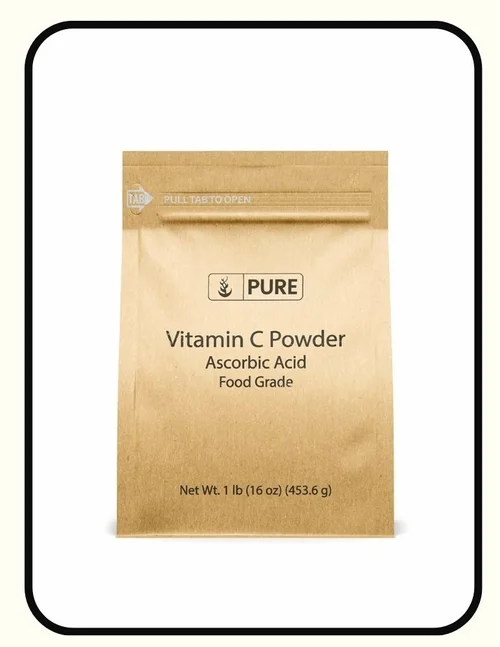 Best Way to Remove Chlorine & Chloramine from Bath Water: Vitamin C Powder
Aside from a shower filter acting as a tub faucet filter, the best way to remove both chlorine and chloramine from the bath water is a tablespoon of vitamin C (AKA ascorbic acid) powder. You can see the very exciting chemical reaction written out here. Adding a tablespoon to your bath water instantly neutralizes the chlorine so it will not irritate your skin. It’s also safe and inexpensive. It won’t remove any of the other contaminants in your water supply, but neither do most filters so this is one of the most affordable and safe ways to filter your bath water.
Product rating
See the rating scale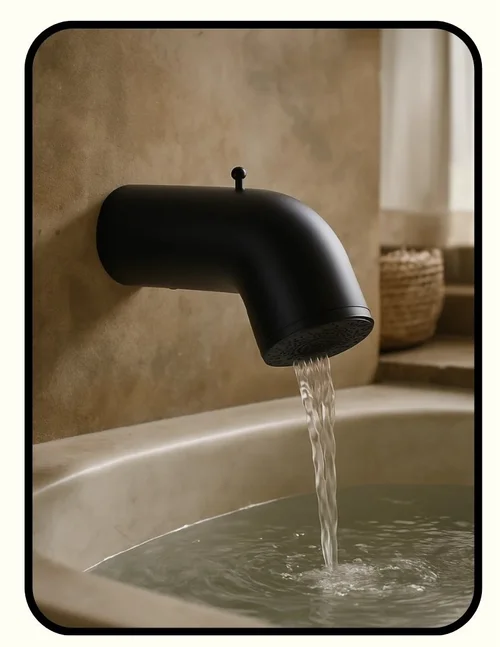 Most Promising Bath Filter Design: Bath Haus
These bath water filters are still in the funding phase, but it appears that they are made of slightly more filtration media than most bath balls, and its design ensures that all the water is forced to go through it, not spill over the sides. They are planning to use KDF, which is an NSF certified copper-zinc mixture that is the gold standard for removing chlorine. I’d love to see testing on this once it’s released to see if it can truly remove chlorine effectively and at what percentage, with hot, high pressure water rushing through it! You can pre-order for estimated Fall 2026 delivery, or sign up to get updates from them. An elegant design.
Product rating
See the rating scale Best Bathtub Filter You Can Buy: Canopy
If you don’t want to slow your bathtub flow or deal with a diverter, the Canopy is the best bath filter for you. While this is probably less effective than a shower filter at removing contaminants because of the higher rate of flow a bathtub has (read more below), this one has legit filtration media, including KDF, carbon, and calcium sulfite, so very likely does remove at least chlorine. They don’t overstate claims about what it can remove, either, and I think that honesty is a good sign. I would personally skip adding their scent — yes, they’re made with pure essential oils, but those are mixed with synthetic ones. Made of BPA-free silicone, dishwasher safe, and comes in a few nice colorways including some subtle ones, if you want a more adult aesthetic. No-install, as well. Overall, the Canopy is probably the best bath water filter on the market so far.
Product rating
See the rating scaleBath Faucet Filters That Don’t Work
 Tru Bath Water Filter Review
Does the Tru bath filter work? It might remove some chlorine from one bath. It has so many layers of different filtration media in a very tiny filter, meaning perhaps only a teaspoon of the materials (like carbon and calcium sulfite) actually proven to remove chlorine and other contaminants. I’d rather the whole filter was just these instead of the “mineralized beads” and “magnetic energy” layers included, which sound magical and nice, but are likely doing absolutely nothing real for your water. On the plus side, it is the least expensive bath filter available, around half of what Crystal Quest charges at the time of writing. If, like any of the others here, I can see test results that prove me wrong about its capabilities, I’d be delighted!
Product rating
See the rating scale Crystal Quest Bath Ball Review
Does the Crystal Quest bath filter work? For about one bath, yes. They had IAPMO, an accredited third-party lab, test their bath ball against the NSF 177 chlorine standard, and they link the report on their website (though it’s hard to find). I really respect that! The problem is what the report shows. At 10 gallons, the bath ball removed 96% of chlorine, which is what fresh filtration media always does. At 25 gallons it dropped to exactly 50%, the minimum passing score. At 50 gallons one unit fell to 40%, failed the standard, and the lab suspended the test. The rated capacity was 250 gallons; it collapsed at a fifth of that. A typical tub holds 35 to 40 gallons, so in plain terms this filter worked well for one bath. Also, the lab tested it gently, restricting flow to 0.5 gallons per minute, while a real bath faucet runs at 4 to 6. Under actual tub-filling conditions, performance would be worse. Meanwhile, their marketing claims it removes chloramines, heavy metals, and pesticides, none of which was tested, and none of which is plausible when the filter can’t hold onto chlorine, the easiest target, past the first fill. This report is the clearest picture we have of how bath balls actually perform, and I’m glad it exists.
Product rating
See the rating scale Santevia Bath Filter Review
Does the Santevia bath filter work? Probably not, and they’re very tricky about the data that they show on their website. If you look closely, it’s just a single water sample where chlorine dropped from 1.87 mg/L to <0.02. The method they cite (HACH 8021) is just a standard way to measure free chlorine in a sample, not a test of filter performance over time. There’s no gallon capacity, flow rate, or water temperature anywhere: was this a single pass of cold water over a brand-new filter at a gentle flow, or hot water at bath-faucet flow rates? Was it gallon one or gallon five hundred? The fine print quotes an NSF 53 requirement about chloroform, which has nothing to do with the single chlorine result shown, and likely refers to their drinking water filters, not the bath filters. The header says testing was carried out by ALS Environmental “and/or” their own in-house lab, so you can’t even tell whether this measurement came from an independent third party.
Product rating
See the rating scale Tubo Bath Filter Review
Does the Tubo bath filter really work? Like the others in this section, probably not. Tubo says it removes up to 99.9% of bacteria and viruses. The point of most bath filters is to remove the excess chlorine that’s in the water supply to kill bacteria and viruses in the first place, and real microbiological claims require certification they don’t have. Their ‘clinically tested’ badge has no clinic, study, or data attached anywhere I could find. As for the ‘8-stage filtration system,’ which does include some credible media like KDF-55, activated carbon, calcium sulfite, and vitamin C, it also has filler with no credible mechanism at bath flow rates (zeolite, tourmaline, mineral balls, and a magnetic ball). Filler means less room for what works. Tubo claims each filter lasts 2,500 gallons with no testing to show for it; the only bath ball ever third-party tested (the Crystal Quest, above) failed at 50 gallons under gentler flow than any real faucet. The Tubo probably reduces some chlorine, for some unknown number of baths.
Product rating
See the rating scaleDon’t see what you’re looking for? Request a review, or check it yourself in seconds with the Second Opinion Product Checker. Spot something outdated? Let me know and I’ll update it. Join the spam-free newsletter for interesting info and to hear when new reviews are up.
FYI, “non-toxic” has no official definition, so I rate every product with the same method. It’s built on third-party certifications and published test data, not brand claims. For a deeper dive, my free course walks you through it.
Everything on Interior Medicine is educational information, not medical advice. Read my full disclaimer.
More Healthy Design For You



How Interior Medicine Evaluates Bath Filters
“Non-toxic” has no legal or scientific definition, so it’s become a marketing word. I still think a healthier home is worth working toward, and the way to get there is with a consistent system. Every product on Interior Medicine is rated with the same method, based on its materials, ingredients, and third-party certifications. This makes it easier to compare products fairly, spot healthwashing, and make informed decisions.
The Health Function Scale is the same scale I use across all product categories that serve a function, like water filters and air filters, running from lowest to highest. For bath filters, the tier reflects how well a product's performance is verified, not just claimed.
This category has a unique problem: there is no NSF certification for tub filters. NSF/ANSI 177 covers chlorine removal by shower filters, and the drinking water standards (42, 53) apply to low, cold water flow for drinking water taps, not the hot flow of bath faucets. So no bath filter can be "certified," and that's why my ratings here lean on what can be verified: certifications from closely-adjacent contexts, established chemistry, and disclosed filtration media.
TIER 01
Highest
What qualifies
Performance proven in the strongest way available for this category. That means either NSF certification carried over from its original context (a certified shower filter attached to your tub spout) or chemistry so well established it's used professionally (vitamin C dechlorination, which water utilities use to neutralize chlorine before discharging water into rivers and streams).NSF 177 shower filter on the tub spout, or vitamin C
Evidence
Vitamin C neutralizes chlorine very quickly. About 1 gram per 100 gallons neutralizes 1 mg/L of chlorine (USDA Forest Service 2005). A large water utility lists vitamin C (ascorbic acid) tablets among its approved products for dechlorinating water from new pipes (WSSC 2011).
TIER 02
High
What qualifies
Disclosed, proven filtration media (KDF, activated carbon, calcium sulfite) in a design that forces water through it, with claims that match what that media can actually do. Without test data, capacity is unknown, so you can't tell whether it works for five baths or fifty.Disclosed KDF, carbon, or calcium sulfite
Evidence
KDF (a copper-zinc alloy) and activated carbon both convert free chlorine to harmless chloride (Wong 2007).
TIER 04
Low
What qualifies
A product with some proven media, but the composition is undisclosed, the design lets water bypass the filter, or the claims start to outrun the evidence.Undisclosed media, bypass design, or overstated claims
TIER 05
Lowest
What qualifies
Claims that are unsupported, implausible, or contradicted by testing. A brand can land here even with third-party test data, if that data shows the product failing at a fraction of its rated capacity.Unsupported or contradicted claims
Evidence gaps
A certified shower filter's NSF 177 result applies at the flow it was tested at. Tub spouts usually run faster than showerheads, which gives the media less contact time, so performance at the tub may be lower than the certified result.
Vitamin C's reaction with chlorine is well established, but how long a vitamin C bath filter keeps working depends on how much vitamin C it holds.
More About Bath Water Filters
Do bath ball filters work?
It is highly unlikely that any brand of bath ball purifies your bath water. There are 4 reasons why:
Most models don’t contain quality filtration media that is actually capable of removing toxins from bath water. KDF is the gold standard for purifying bath water, and most don’t contain this. “Advanced 8 Stage Filtration System” just means that there are 8 different mystery substances in the filter, meaning even less of the gold standard.
Bath balls are very small, so even if they are made of 100% KDF, they only have a little bit inside of them. Not nearly enough to capture contaminants for more than a few baths.
All water filtration materials work best on cold water. The cold temperature allows toxins to bind to the media for permanent removal. Bath tub water is very hot, which makes it harder to remove contaminants.
All water filtration materials work best on slow-moving water: bath tub water moves even faster and at higher pressure than shower water.
In comparison, whole-house and under-sink water filters work most effectively on cold or room temperature water, at a slow flow rate, and they’re built with a lot of filtration media. Even countertop filters, which are small, still move slow and are working on cold water. These all remove a lot, but still not everything!
So, while a bath ball may capture a tiny bit, for maybe a few baths, they are more likely a waste of your money. Until I see testing with convincing results, I remain wary.
What is the best bathtub filter?
The new designs like the Canopy and Bath Haus (above) are best, since they force all the bath water to go through real filtration media. If you change the filter frequently, it may be effective. I would still recommend vitamin C or a shower filter attached to a diverter for the best removal. Or, consider whole house filtration! That said, I know those methods can be inconvenient, and some filtration is better than none.
Why are there so many misleading bath tub filter claims?
There is so much healthwashing and gimmicky marketing for bath filters, and that’s true of all types of water filters. My best guess as to why is three-fold:
Water contaminants are invisible, and usually odorless, so it’s very easy for brands to claim their product is removing contaminants when they’re not. The only way for you to personally know if your current bath filter is working is by self-testing your water with and without the filter and comparing results and doing so is very expensive. So, water filtration companies can easily get away with exaggerated claims since they know you probably won’t go to this trouble.
Some bath filter brands may take real facts about filtration media and apply them backwards to their bath tub filter specifically. It’s true that KDF can remove some heavy metals under perfect conditions— but 1 teaspoon of KDF in a tub filter with hot water on high pressure going through it may not remove any.
Water filtration competition is increasing quickly because people are becoming more aware of what’s in their water. If one brand’s list of contaminants removed looks short, it looks less effective to the untrained eye.
What is a KDF bath filter?
KDF means Kinetic Degradation Fluxion, and it is a combination of copper and zinc. It is very good at removing chlorine, even at high temperatures, and is often used in certified shower filters and some bath filters for this reason.
Do bath filters remove chlorine effectively?
Bath filters with KDF (copper-zinc), activated carbon, or calcium sulfite can remove some chlorine, but their effectiveness is limited by hot water temperature, high flow rate, and small filter size. Bath water flows roughly twice as fast as shower water, giving contaminants less contact time with filtration media. The most reliable way to remove chlorine from bath water is using a shower filter attached to your tub faucet (which has more filtration media and third-party testing) or adding a tablespoon of vitamin C powder directly to your bath water, which instantly neutralizes chlorine through a chemical reaction.
Do you absorb chlorine through the skin?
No. However, chlorine can affect your health in two ways: coming into direct contact with your skin, and being inhaled into your lungs as a vapor from hot bath water steam. With direct contact, chlorine can cause itchy skin and dry hair. Inhaling it is associated with lung and throat irritation, typically at the higher doses found in swimming pools, but sensitive individuals may notice it in a bath, depending on your water supply. Your skin does not absorb chlorine into the body very well, so this is less concerning.
Does vitamin C really remove chlorine from bath water?
Yes, vitamin C (ascorbic acid) instantly neutralizes chlorine through a chemical reaction. Adding about one tablespoon of vitamin C powder to a standard bathtub neutralizes chlorine on contact. This method is inexpensive, scientifically validated, and doesn't require any equipment. However, vitamin C only removes chlorine—it won't filter out heavy metals, PFAS, or other water contaminants. For comprehensive filtration, you'd need a certified shower filter on your bath faucet or a whole-house water filtration system.
Do bath filters remove lead?
None do, to my knowledge, and that’s probably OK. That’s because lead, bad as it is, doesn’t get into the body through water absorption by the skin. It also isn’t aerosolized into steam, meaning you won’t breathe it in. The main way lead gets into the body is by drinking it, which is why it’s important to use a water filter for your drinking water. So, be careful not to drink bath water if you have lead pipes. If you are still concerned, you can install a whole-house water filtration system that is certified to remove lead, or have lead pipe remediation done.
Do bath filters remove fluoride?
No, bath filters cannot remove fluoride. Fluoride is an extremely difficult contaminant to filter and requires specialized filtration methods like reverse osmosis operating at cold temperatures with very slow flow rates. The small size of bath filters, combined with hot water and high flow rates, makes fluoride removal impossible. If fluoride removal is important to you, you'd need a whole-house reverse osmosis system or at minimum, a certified fluoride filter for your drinking water. That said, fluoride is not absorbed through the skin, so you probably do not need to prioritize this anyway!
Can bath filters remove heavy metals?
No.
Here’s why: let’s say you have Arsenic in your water supply (as many cities do)— a KDF filter that advertises that it can remove Arsenic may sound like a good fit, but, it may only remove say, 1 molecule of Arsenic, once, in the first use. A larger activated carbon block that filters cold water moving through it at a moderate kitchen tap water rate can remove more, if pH conditions are right and other contaminants aren’t inhibiting it. A shower filter will remove far less because of the relatively small size (meaning smaller amounts of carbon), the hot temperature of the water, and the great force and speed it’s pushed through at, and a tub filter would remove even less. There simply isn’t enough time for the media to capture contaminants, and heat changes the ability for contaminants to bind to it, as well. A whole-house Reverse Osmosis system would be the only way to meaningfully decrease bathtub water levels of Arsenic.
Do you absorb arsenic from taking a bath?
No. Drinking water with arsenic is the main way it gets into your body. Arsenic has poor dermal absorption, and while you can breathe it in from dust, your tub water would have to be 1,137°F for it to become aerosolized into steam for inhalation. So, prioritize removing arsenic from your drinking tap water instead. Some tub filter brands advertise they can remove arsenic, but this is likely just to make them appear more effective.
Can bath filters remove PFAS?
No. A shower filter that you use on your bath spout can, but only if it is tested and certified to be able to. The certification is NSF/ANSI 53, and you should also see results showing exactly how many PFAS were removed and for how long. Here is an example.
Can you absorb PFAS through bath water?
Unfortunately, it is looking that way. Studies are starting to trickle out revealing this is more of a problem than we previously thought. Tap water is contaminated with PFAS in about half of the water supplies in the US, and as “forever chemicals” they are very difficult and expensive to remove at the municipal level. PFAS are linked with obesity, cancer, and immune system dysfunction. Although the primary way we’re exposed to PFAS is through ingesting them, PFAS in tub water concerns me for two reasons:
Higher exposure time: if you’re like me, you can spend a looooong time in a tub.
PFAS are still a new chemical that we are learning more about every day. We understand really well exactly how say, aluminum, moves through the body, but we are still being surprised constantly by what PFAS are capable of. I would not be surprised if we continue to find out that skin absorption is more of an issue than we thought. That said, we only know a little so far!
Are bath filters better than whole house water filters?
No, not from a contaminant removal perspective. But, they might be better from a cost perspective.
Whole-house water filtration systems are significantly more effective than bath filters because they treat water at cold temperatures with much larger amounts of filtration media and slower flow rates—all conditions that improve contaminant removal. A properly certified whole-house system can remove chlorine, heavy metals, PFAS, and other contaminants from all water sources in your home, including bathtubs, showers, and drinking water.
But, bath filters can probably remove some chlorine, and are a good compromise if whole-house filtration isn't feasible.
Do bath filters work for well water?
No, if bath filters can remove anything, it’s chlorine. They can’t remove bacteria, nitrates, iron, sulfur, or high mineral content. Well water needs to be tested first to determine which contaminants are present, then treated with appropriate filtration or treatment systems.
Can bath filters help with eczema or dry skin?
Bath filters that remove chlorine may help reduce skin irritation for people with eczema or sensitive skin, since chlorine can strip natural oils and cause dryness. However, other factors like hard water minerals (calcium and magnesium) also contribute to skin issues, and most bath filters don't remove these minerals. For eczema relief, removing chlorine is a good first step—either with a filter, shower filter on your tub faucet, or vitamin C powder.
How long do bath filters last?
A typical tub fill is 35 to 40 gallons. When a bath ball claims 2,500 gallons of filtration, that's roughly 65 baths from a cartridge smaller than a grapefruit. The only bath ball that has ever been third-party tested failed a chlorine standard at 50 gallons. Treat capacity claims without test data as guesses.