
Organic Body & Pregnancy Pillows
The best non-toxic body pillows are filled with GOLS-certified organic latex, GOTS-certified organic wool or kapok, and encased in GOTS-certified organic cotton, with no memory foam or polyurethane. But the pregnancy pillow market is full of healthwashing: brands use words like "natural" and "non-toxic" without certification, or use a certified organic cotton cover to distract from a plastic filling. So I evaluate every material in each pillow, filling and casing, using the same methodology for each one.
By Dr. Meg Christensen | Physician-founder of Interior Medicine, a non-toxic home resource built on her background in medicine, biochemistry, epidemiology, and clinical research.

Updated August 22, 2026
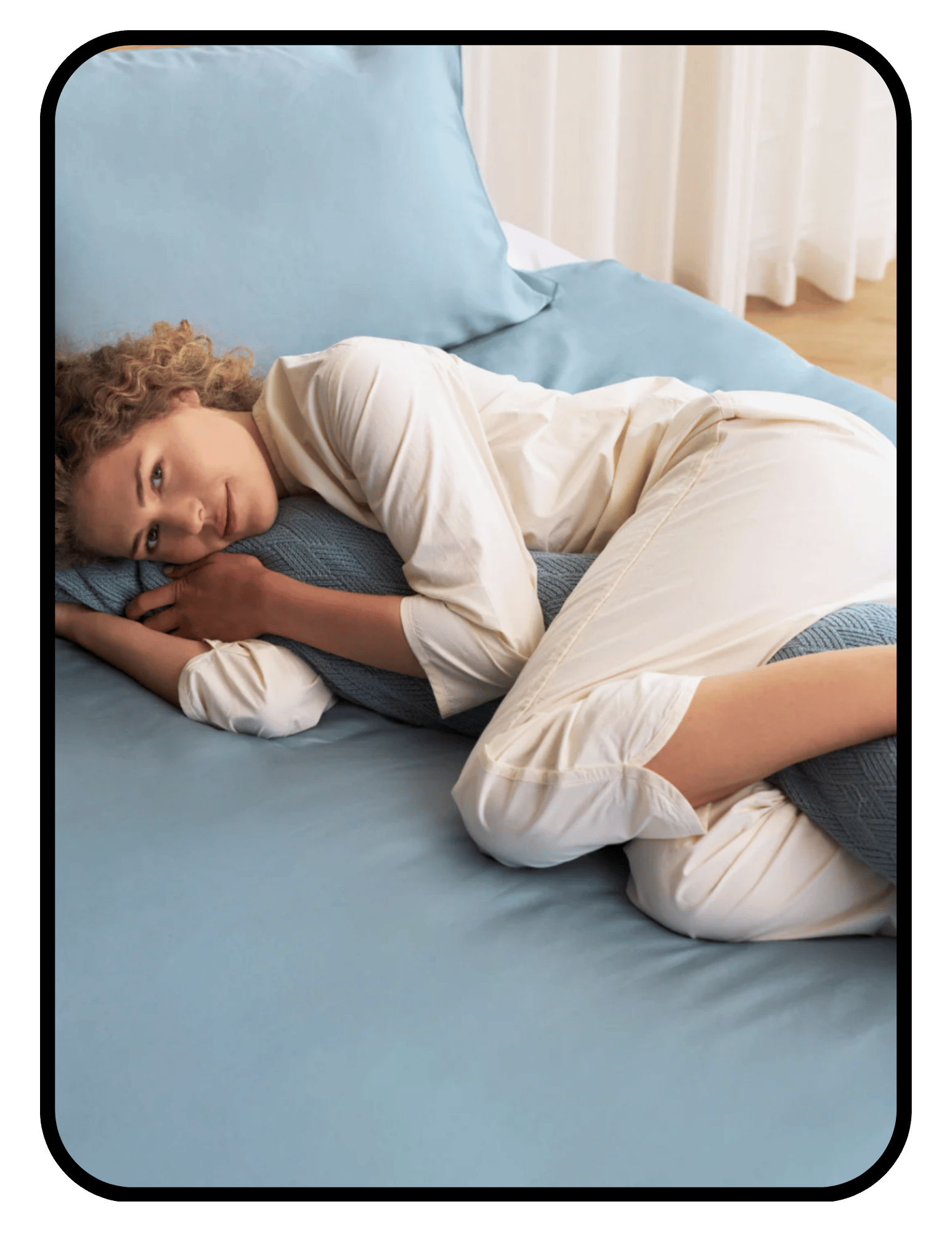

Bearaby Organic Latex Pregnancy Pillow
Bearaby uses GOLS-certified organic latex to make their super cozy, ergonomic joint supporting pregnancy pillow that get hundreds of consistently good reviews for its soft texture. The cover isn’t organic, but is natural cotton and OEKO TEX certified— still a very healthy choice. Comes in medium and large sizes and works well for both pregnancy and as a general ergonomic side sleeper body pillow.
Savvy Rest Organic Wool, Latex, Kapok and Cotton Body Pillows
Savvy Rest is awesome for offering 4 different filling options for their pregnancy and body pillows— choose between organic kapok, natural wool, certified natural latex, or a wool-latex blend. They come intentionally overstuffed so you can remove filling to your comfort level. All are cased in organic cotton, and they uniquely offer a waterproof cover.





Obasan Organic Pregnancy Pillow
Obasan makes a detachable two-sided pillow system for pregnancy that is perfect if you alternate sleeping on either side throughout the night. It’s filled with GOTS certified organic wool and is cased in organic cotton, and the two pillows can be unzipped and used as support pillows post-partum for a variety of functions.
Woolroom Organic Wool Pregnancy Pillow
Woolroom offers a V-shaped pillow made from GOTS certified organic washable wool stuffing and an unbleached 300 thread count organic cotton casing. Can be used as a pregnancy pillow, or for general knee, leg, and posture support while sleeping.
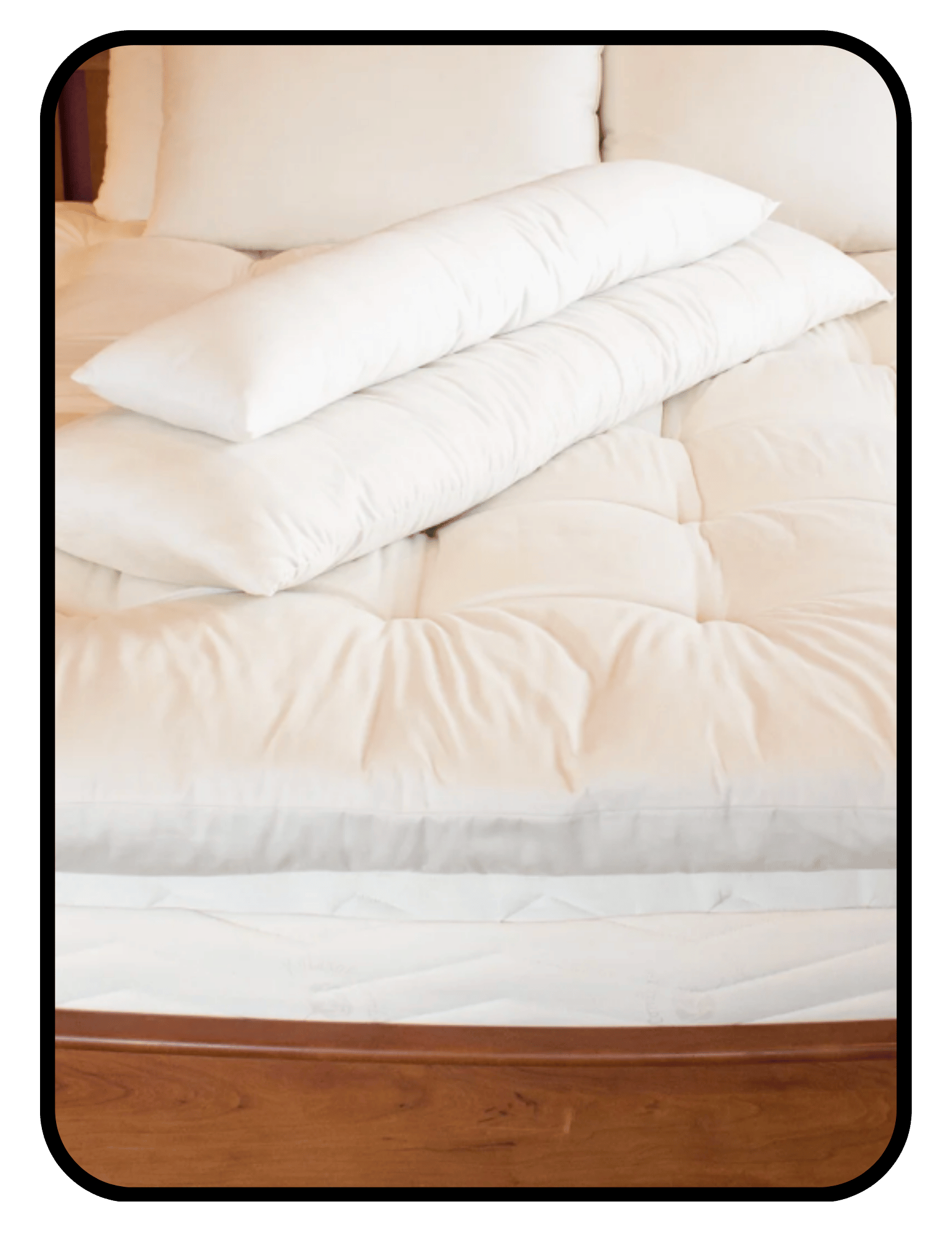


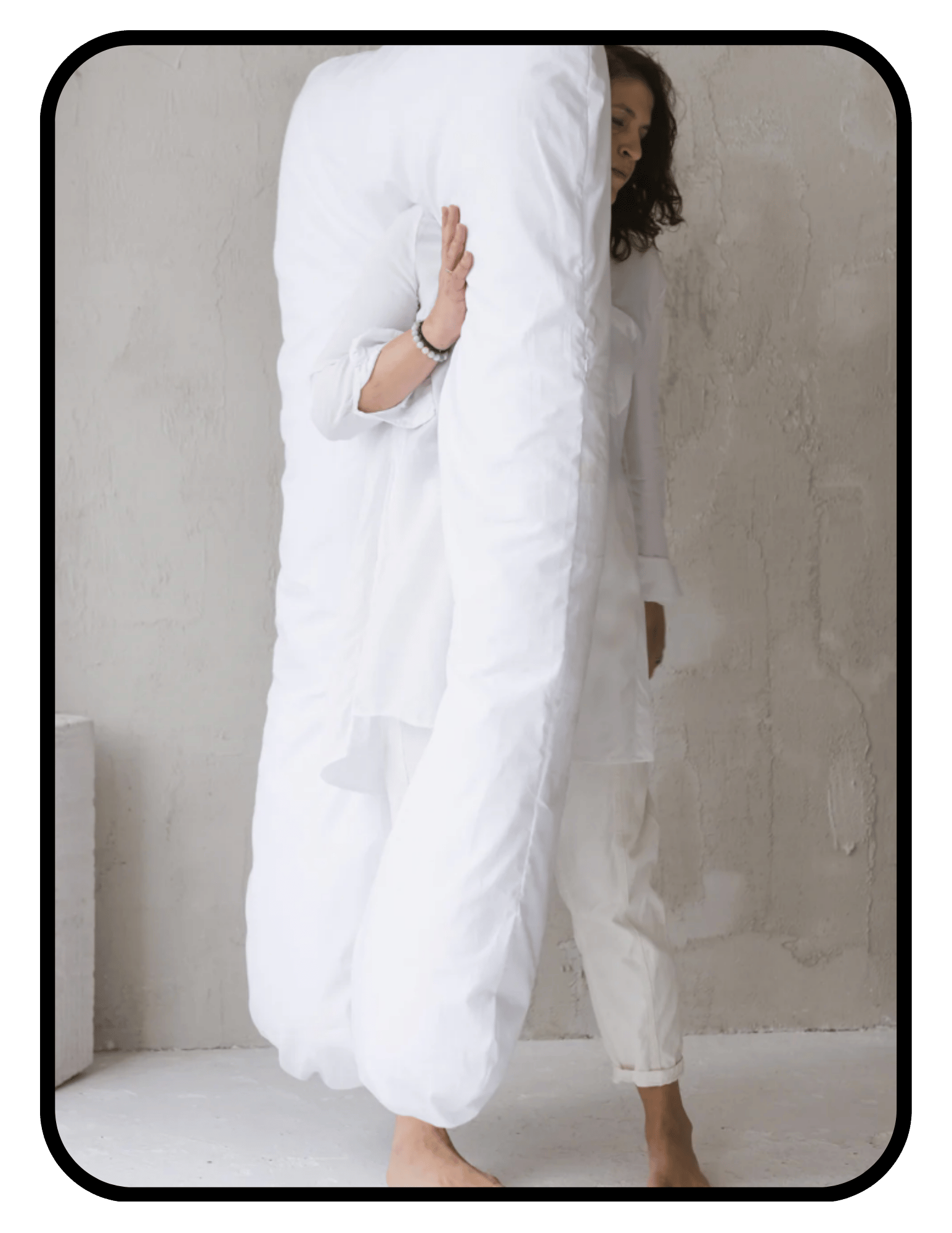

MiniCamp Non-Toxic U Shaped Body Pillow for Pregnancy and Ergonomic Sleep
MiniCamp has two options for their U shaped body pillows— fill with natural kapok fiber or with polyester for a more affordable option. Both have a GOTS certified cotton outer cover and an OEKO TEX certified cotton insert cover, AND importantly, both the kapok and polyester choices are OEKO TEX certified, meaning they’ve been tested for harmful chemicals. While imperfect, certified polyester is better than uncertified polystyrene microbeads which are bad for people and the environment (offered by similarly priced competitors.)
Tuft and Needle Affordable Non-Toxic Body Pillow
Tuft and Needle’s body pillow is stuffed with a polyester filling and encased in 100% cotton. Importantly, it is OEKO TEX certified, making it a step up from uncertified options. It’s also a more affordable body pillow than the other options listed, if you’re looking to balance health and cost. You can get one of their quilted percale cotton covers to go with it.

Naturepedic Natural Body Pillow
Naturepedic’s body and pregnancy pillow is made with an organic GOTS certified cotton outer and natural latex. The latex isn’t organic GOLS certified— they use “GOLS OR FSC” latex, but the entire thing is all MADE SAFE certified. You can read more about these materials and certification nuances in my free Fabric Guide and Foam Guide.
Holy Lamb Organics Organic Body and Pregnancy Pillows
Holy Lamb Organics makes two sizes of completely organic body pillows for side sleepers or for pregnancy support. Both are stuffed with GOTS certified organic wool, and encased in GOTS certified organic cotton sateen fabric. They also offer totally organic nursing pillows.


Avocado Organic Wedge Pillow for Reading (or Acid Reflux)
Not for pregnancy specifically, but a great ergonomic and organic wedge pillow. This one from Avocado is completely organic, made of GOLS certified organic latex and GOTS certified cotton. It comes with a washable removable cover, an option to add a waterproof encasement, and of course, wedge shaped pillowcase options. Great for reading in bed, to reduce snoring, reduce GERD or coughing while trying to sleep, or even prop up your legs. Super versatile and totally healthy.
Avocado Non-Toxic Knee Pillow for Side Sleepers and Low Back Pain
The mini pillow from Avocado is perfect to place between your knees while sleeping on your side if you just need a little support and don’t want the full pregnancy or body sized pillow. Great for sleeping alignment while healing from low back pain (I have this exact pillow and speak from personal experience!) Made with GOTS certified organic cotton and filled with molded natural latex with OEKO TEX certification, it’s a really nice memory foam alternative and just the right height.
Looking for something specific? If you don't see the product or brand you're curious about, you can request a review here, or run it through the Second Opinion Product Checker to evaluate it yourself. Want to go deeper? My free course covers how to evaluate any product's materials yourself.
Join the Newsletter
Join the Newsletter
More Healthy Design For You


Frequently Asked Questions About Non-Toxic Body Pillows
Are organic body pillows worth it?
Yes! I always recommend starting with your pillow first when creating a healthier home, and body pillows are no different.
The materials in body pillows can reach your body through three pathways: inhalation, ingestion, and dermal absorption. Since you’re in very close contact with a body pillow, as opposed to say, curtains which you might touch with a hand once daily, all three routes of exposure are significant.
Memory foam, a type of polyurethane foam, includes many undisclosed chemical ingredients that aren’t permanently bound up in the foam structure. Over time, these migrate out into dust, through your skin, or if they’re light and volatile, they off-gas into the air. I cover this in more detail in my Foam Guide. Likewise, polymer and plastic -based pillow fills and outer shells can also be a source of exposure, covered in detail in my Fabric Guide.
Since you're in extended close contact with your body pillow, choosing non-toxic materials significantly reduces your chemical exposure. If you’re pregnant, it also reduces your baby’s exposure.
What is the best fill for organic body pillows?
Organic body pillow fillings include GOTS certified organic kapok (from the kapok tree), GOTS certified organic wool, GOLS certified organic latex, or blends of organic wool and latex. Each has different benefits and drawbacks:
Kapok is lightweight and hypoallergenic, but compresses easily, so is best in a blend with another material to keep its loft.
Organic wool is naturally temperature-regulating and resistant to dust mites, but isn’t vegan, and some people may have allergies.
Organic latex is responsive, supportive, and durable, and feels the most like a memory foam alternative. It can be too firm for some sleeping styles, and isn’t a good idea if you have a latex allergy.
Organic Pregnancy Pillows
Do organic body pillows work as pregnancy pillows?
Yes, standard organic body pillows work well for pregnancy. But, several companies make pregnancy-specific body pillows in different shapes and textures depending on how you sleep, your pain points, and your material preferences.
Can I use an organic pregnancy pillow after my baby arrives?
Yes, many organic pregnancy pillows transition really well to postpartum use. C-shaped and U-shaped pillows work as nursing support, wrapping around your waist to position your baby at the right height for breastfeeding while supporting your arms and back. Some pregnancy pillow designs intentionally detach into separate parts that function as nursing pillows or for lumbar support.
Organic Body Pillows
What's the best organic knee pillow for side sleepers with back pain?
If you need support between your knees but don't want a full-length body pillow, a knee pillow maintains proper spinal alignment without being bulky. The Avocado one listed above is great: I’ve used it for this reason.
Can I use an organic wedge pillow for acid reflux?
Yes. Wedge pillows work for reading, sleeping while sick or congested, and for helping with acid reflux (GERD, heartburn) and breathing issues.
They elevate your upper body to prevent stomach acid from traveling up your esophagus while you sleep. Beyond pregnancy and acid reflux management, this wedge works for propping yourself up to read in bed, reducing snoring by opening airways, elevating legs to decrease swelling, or supporting your back while sitting up.
Organic Body Pillow Covers
What's more important for a pillow: organic filling or an organic cover?
This is such a good question, not only for body pillows, but regular non-toxic pillows and couches, too. Is it more important to have non-toxic foam, which makes up the bulk of the couch, or more important to have non-toxic upholstery or covers, which you’re in direct contact with?
While there isn’t solid research that settles the debate entirely, it’s likely better to prioritize non-toxic foam, because of the sheer size of it, and the fact that chemical additives do find their way out of it over time, and can escape through a cover. We know this because flame retardants, phthalates, and other chemicals from foam are found in house dust and people’s blood.
That said, an organic or non-toxic filling isn’t always affordable, and a healthier pillow cover usually is more attainable, and still worth pursuing. A body pillow cover with GOTS or OEKO TEX certification ensures you’re not coming into skin contact with PFAS or formaldehyde coatings, harmful dye byproducts, or other finishes. It creates a slight barrier between you and whatever filling is inside, reducing direct skin contact with synthetics. And natural fibers will be breathable instead of trapping heat further. If you already own a polyurethane or polyester-filled body pillow, adding an organic cotton cover is a good idea.
Can I find affordable non-toxic body pillows?
Yes! OEKO TEX certified options are affordable, while still being safer than uncertified polyurethane or memory foam. These pillows typically use polyester filling with 100% cotton casings, and OEKO TEX certification verifies that harmful chemical levels stay below standard. While not organic, this is still a good baby step toward harm reduction. The certification specifically prohibits chemical flame retardants, which is a significant health benefit.