Detox Your Home: 5 Simple Strategies For 133 Hazards
The five most effective non-toxic home strategies aren't based on opinion, marketing, or a randomly curated list; it's what the data actually shows: if you improve indoor air quality, use safer cleaning products, reduce indoor dust, reduce direct contact with toxic materials, and filter your tap water, you cover all of the most common household chemical hazards. That includes VOCs, phthalates, PFAS, flame retardants, heavy metals, disinfection byproducts and others we covered in Part 6. Most individual hazards are addressed by more than one strategy at once, which is what makes the combination even more effective.
By Dr. Meg Christensen | Physician-founder of Interior Medicine, a non-toxic home resource built on her background in medicine, biochemistry, epidemiology, and clinical research.

Published Dec 1, 2025 | Updated Nov 16, 2026
Welcome to What "Non-Toxic" Actually Means, a free course on how to read product claims and navigate healthier materials more clearly. Stay here, or if you'd like the full arc, the Intro is the best place to start.
Part 8 takes ~16 min to read
Using Data to Detox Your Home
A small number of strategies reduce essentially every home exposure you could possibly encounter.
I went through the full list of potential household hazards laid out in Part 6, and sorted each one by the chemical behavior it follows to get out of a product and into your home (Part 7). Refreshingly, just five strategies can reduce all of the hazards:
Even built from scratch throughout this course, the five strategies that emerged align nearly perfectly with the leading voices on indoor environmental health. Harvard's Healthy Buildings group lists ventilation, air quality, water quality, dust, and lighting among the foundations of a healthy indoor environment. WELL, the human health counterpart to LEED for buildings, organizes building health around ten concepts, including air, water, and materials.
Here are more specifics on each strategy:
1. Improve Indoor Air Quality
Ventilation reduces 86 of the 133 hazards in the database, which is more than any other strategy. Formaldehyde off-gasses from engineered wood, wrinkle-resistant fabrics, and furniture glue. Radon enters through bedrock and accumulates in closed rooms. Acetaldehyde, benzene, toluene, vinyl chloride from PVC, and combustion particles from gas cooking behave the same way.
There's a reason ventilation sits at the top of every major framework on indoor environmental health. Indoor air is typically two to five times more polluted than outdoor air, and most Americans spend more than ninety percent of their time indoors. Considering the average adult takes around 20,000 breaths a day, the case for improving indoor air rests less on the length of that hazard list than on the volume of contact itself.
Larger particles irritate the throat and lungs. Smaller particles and VOC molecules cross from the lungs into the bloodstream, which is the mechanism behind their associations with certain cancers, inflammation, and cardiovascular disease.
Ventilation as a strategy to reduce hazards in any new product should scale with three things:
The product's age. A new product is in its highest VOC-emitting window for the first few months and needs more ventilation than an older one.
Hours of contact. A mattress holds you for eight uninterrupted hours every night. A couch holds you for a few hours most evenings. Products with hazards earn more aggressive ventilation when contact is longest.
The room. A small room with no windows needs a more aggressive strategy than a large room with window cross-ventilation, and an exhaust fan or air purifier already running.
Strategies that can reduce indoor air pollution
Open windows. Ventilating drops VOC and particulate concentrations, especially when you open windows on opposite sides of a room to generate a cross-breeze.
Air purifiers. Reduce PM2.5 with a true HEPA filter, and support VOC removal when the unit contains activated carbon or other minerals.
Run the kitchen exhaust fan every time the stove is on. Cooking generates PM2.5 and VOCs. Gas combustion adds nitrogen dioxide. Induction and electric cooking still generate particulate and VOC emissions from the food itself. Exhausting that air out of the house is the only way to ensure it doesn’t linger and expose you any longer than necessary.
Minimize intentional home fragrance. Candles, incense, plug-ins, air fresheners, and other home fragrance adds VOCs to the air, and can combine with indoor ozone to generate new harmful particles. You can read more in my Fragrance Guide. Most of the time their ingredients list is not disclosed, and the science of analyzing how chemical mixtures affect health is still developing.
Test for radon. Radon is the second leading cause of lung cancer in the United States. It is odorless and invisible, it enters through bedrock under roughly seven million American homes, and many county and state health departments offer free short-term test kits.
Use an indoor air quality monitor to track progress. These are useful for the parts of indoor air you can’t detect: PM2.5 spikes during cooking, carbon dioxide buildup in closed rooms, VOC pulses from new furniture or finishes.
2. Use Safer Cleaning Products
This strategy covers 48 of the 133 hazards in the Chemical Hazard List. Strangely, most of them aren’t the cleaning agents themselves. They’re what gets added to make a cleaning product last longer, kill germs, or smell clean, plus contaminants left over from manufacturing.
Cleaning products reach you in a few ways at once: sprays put fine droplets into the air you breathe, cleaning residues stay on counters, floors, and hands, and some ingredients settle into dust.
In a study that followed more than 3,500 adults who did the cleaning in their homes, using cleaning sprays at least once a week was linked to a higher risk of developing asthma symptoms. Using them four or more days a week was linked to about twice the risk of asthma diagnosed by a doctor. The risk rose with how often people sprayed and how many different sprays they used. Glass cleaners, furniture sprays, and air fresheners showed the strongest links. A 20-year follow-up from that same survey found faster lung function decline in women who cleaned at home or worked as cleaners than in women who didn’t clean. The researchers’ leading explanation is irritation. Most cleaning chemicals irritate the lining of the airways, and small injuries repeated over years may change the airways permanently. Some ingredients may also sensitize people, so their airways start reacting to them.
Both are observational studies, so they show an association rather than proof of cause. But the lead author’s own takeaway was about the products: most of these chemicals aren’t necessary, and water and scrubbing handle most jobs just as well. Together with the first study’s finding that non-spray products weren’t linked to asthma, the evidence points to changing how we clean and what we clean with, not to cleaning less.
Cleaning product exposure scales with three things:
The format. Aerosols and trigger sprays put product into the air. Pouring, pumping, and wiping mostly keep it on the surface. Powders like borax and enzyme detergents can become airborne too.
How often you use it. Asthma risk in that study rose with how often people sprayed and how many different sprays they used. A product you use every day deserves more scrutiny than one you use twice a year.
The room and who’s in it. A small bathroom with the door closed concentrates fumes. Young children spend time on floors where residues settle. People with asthma react to irritants at lower levels.
Strategies for safer cleaning
Choose pour, pump, or wipe formats over aerosols. When researchers tested trigger cleaning sprays, between 3% and 32% of what left the bottle stayed in the air instead of landing on the surface. Most of those droplets were small enough to reach the lower airways. Pressurized spray cans tended to put even more into the air. If a spray is the only option, hold it close or spray it directly onto the cleaning cloth instead of into the air.
Choose fragrance-free over unscented. “Fragrance-free” means no fragrance or masking scents were added. “Unscented” can still contain chemicals added to cover up odors. Both are often better than scented products which can add a higher VOC burden.
Don’t assume DIY or “natural” means safer. Borax is a favorite in homemade recipes, but the EU classifies it as toxic to reproduction. Essential oil cleaners carry common skin allergens.
Never mix bleach with ammonia or acids. Bleach plus ammonia, which is common in glass cleaners, makes chloramine gas. Bleach plus an acid, including vinegar and some toilet bowl cleaners, makes chlorine gas.
Ventilate while you clean. Run the bathroom exhaust fan, and open a window when outdoor air quality allows.
Wear gloves, and follow the label’s rinse directions. Gloves keep preservatives and disinfectants off your skin. Some sanitizers need a rinse on food-contact surfaces.
Disinfect only when it matters. Soap, regular detergent, warm water, and scrubbing remove most germs on their own. The CDC recommends disinfecting at home mainly when someone is sick or has a weakened immune system. Disinfectants are designed to kill germs, not just rinse them away like soap and water do. The problem is many of them also irritate the airways. In a study of more than 73,000 US nurses, using disinfectants at work at least once a week was linked to a higher risk of developing COPD. That included bleach and quats, and even milder options like hydrogen peroxide and alcohol. Nurses use far more than most households, but it’s a good reason to save disinfectants for when they count. Quats from disinfectants also turn up in most household dust samples tested in the US.
Look for EPA Safer Choice on cleaners and the EPA Design for the Environment (DfE) logo on disinfectants. Both programs review every intentionally added ingredient. Neither covers every safer product on the market, but both are independent checks rather than marketing claims.
3. Reduce Direct Contact Transfer
This strategy reaches 47 of the 133 hazards in the database, and it covers the route the first two can't. Ventilation handles what reaches you through the air. Dust reduction handles what reaches you through settled particles. Reducing direct contact transfer handles what reaches you through the product itself: surface to skin, cookware to food.
Lead leaves ceramic glazes when coaxed into food with time, heat, and acid (like simmering a tomato sauce.) Phthalates leave vinyl and can pass through skin into the bloodstream. Azo dye breakdown products and flame retardants in fabric do the same. These transfers happen at the interface of you and a material.
Direct contact transfer, like the above, scales with three things:
The product's age. New products have the most surface chemistry to release, especially in the first weeks. Washing new textiles before use removes a measurable fraction of the dyes, finishes, and processing residues that would otherwise transfer onto skin. A new pot releases more in the first few cooking cycles than later on.
The contact conditions. Heat, acid, friction, and time are the conditions under which contact transfers accelerate. A pot at high heat with tomato sauce extracts more than a pan with water at low heat. A plastic container with hot leftovers transfers more than one with cold food. Adjusting the conditions changes what comes across.
The hours of contact. Drinking wine out of a leaded crystal glass after a few minutes means chances are low that any lead has moved from the glass into the wine. Storing wine or liquor in a leaded crystal decanter for months risks much more transfer. The longer the contact, the more weight this strategy carries.
Strategies
Wash your hands regularly. Especially before eating and after handling soft plastics, treated textiles, or heavy metal-containing surfaces. Hand-to-mouth is one of the main ways direct-contact chemistry crosses from a product into the body.
Wash new textiles before first use. Sheets, clothing, towels, curtains, and slipcovers carry dyes, finishes, and processing residues on the surface fibers. The first wash removes a meaningful fraction of what would otherwise transfer onto skin. Regular washing keeps that fraction low over time.
Use a barrier. A slipcover puts a layer of healthier fabric between you and an imperfect couch. An organic mattress topper reduces friction and heat transfer to the mattress below, slowing sVOC and foam particle release at the surface.
Be cautious with heat, acid, and time on food contact surfaces. Don't store hot or acidic food in plastic. Don't let it sit in metal or glaze that carries a Prop 65 warning or might contain lead or cadmium. Don't use scratched or degraded non-stick pans.
Keep vintage ceramics, lamps, and painted items out of food contact and out of reach. Lead doesn't jump out into the room on its own, so reducing friction, touching, and food contact reduces transfer.
Skip products marketed with built-in antimicrobial treatments. Textiles, cutting boards, mattress encasements, and other items advertised as antimicrobial often carry silver compounds, triclosan-class biocides, or quaternary ammonium compounds that transfer through skin and contribute to resistance concerns.
4. Reduce Indoor Dust
Dust reduction covers 39 of the 133 hazards in the database. That’s because household dust is not just dirt and dead skin cells. It is a mixture of outdoor soil and pollution tracked in on shoes, plus indoor pollution. That’s fibers and microplastics from textiles and carpets, residues of cleaning products, sVOCs and particles that heavier than air and settle out of it. More specifically: flame retardants from foam fall into dust. Phthalates from soft plastics fall into dust. PFAS from stain-resistant treatments fall into dust. The 1,044-chemical mixture that Harvard's healthy-buildings group documented in office dust is what a standard furnished room produces continuously over the life of the furniture.
Dust gets ingested, too. Adults ingest roughly 20 milligrams of dust per day through normal hand-to-mouth contact and through the food and surfaces dust settles on. Young children ingest closer to 100 milligrams, because their hands spend more time on the floor and in their mouths.
Dust reduction as a strategy, like ventilation, also scales with three things:
The product's age. Where VOCs spike early and fade, sVOCs release slowly over the life of a product, and breakdown particles add to the load. The longer you own a foam couch, mattress, or pillow, the more the dust strategy matters.
Hours of contact. sVOCs and breakdown particles leave a mattress onto its surface and into surrounding dust. Eight hours a night of skin contact and proximity adds up. A guest-room mattress sheds the same way, but the contact time is less, so the strategy doesn't need to be applied as aggressively.
Household members. Young children ingest several times more dust than adults and spend more time on the surfaces dust settles on. A home with young children needs the dust strategy weighted more heavily than a home without.
Strategies that reduce dust
Vacuum soft furniture weekly. Couches, mattresses, and upholstered chairs shed continuously. Vacuuming the surface keeps the what’s shed from migrating into the rest of the house.
Damp-dust weekly. A wet cloth traps particles and the sVOCs that ride on them. A dry one redistributes both.
Use a true HEPA vacuum with a sealed body. Traps fine particles inside the machine instead of releasing them through the exhaust. Standard vacuums can redistribute as they remove.
Run an air purifier with a washable pre-filter. Catches a meaningful fraction of airborne dust before it settles. The washable pre-filter is what makes the strategy sustainable.
Take your shoes off at the door. Keeps outdoor lead dust, pesticides, and city-sidewalk debris out of the indoor dust inventory.
Reduce clutter where possible. Fewer surfaces means less area for dust to accumulate and easier cleaning of what remains.
5. Reduce Contaminants in Your Tap Water
This strategy reaches 32 of the 133 hazards in the database. Water enters the body through ingestion and through skin contact during bathing, and the substances it carries bypass the air, the dust, and the contact-route mitigations above.
The 19 hazards split into a few familiar categories. Heavy metals: lead from older service lines, arsenic from groundwater, hexavalent chromium, uranium, and aluminum. Synthetic chemistry that's reached the water supply: PFAS, microplastics, pharmaceutical residues, and pesticide residues. Disinfection byproducts created when chlorine reacts with organic matter: trihalomethanes, haloacetic acids, NDMA, chlorite, and chlorate. Plus the disinfectants themselves (chlorine, chloramine) and the microbial contaminants they aim to address in the first place.
Most adults in the United States consume the equivalent of 11 to 16 cups of water per day across drinking water, food prepared with water, and beverages. The skin is a reasonable barrier to most contaminants during showering and bathing, though PFAS appears to cross dermal tissue more readily than older research assumed. This is still an underdeveloped area of research, so I'm using precaution here, since the health effects of PFAS are well-documented even if the dermal route isn't.
The scale of the contamination problem is more well-documented than many people think. The pushback against filtering tap water is usually that our systems are good enough and filtering is a vote of no confidence in them. But a 2023 USGS survey detected PFAS in roughly 45 percent of U.S. tap water samples. Lead service lines remain in use across many cities, well beyond the most-publicized cases. Municipal water standards are also set with cost and feasibility in mind alongside health, which means the regulatory limit and the health-based limit aren't the same number for several contaminants.
Water filtration scales with three things:
What's in your local water. The contaminant profile varies by region, source, and infrastructure age. A house on private well water has different concerns than one on municipal supply. A city with older lead service lines has different concerns than a city with newer infrastructure. The first move is finding out what you're actually filtering for.
What you're using the water for. Drinking and cooking water carry the highest exposure per volume. Showering and bathing carry skin contact and inhalation of volatilized chlorine, though in much lower amounts than ingestion. Prioritizing kitchen filtration is more urgent than bathroom filtration.
Who's in the household. Young children drink more water per pound of body weight than adults, take baths more often, and are more sensitive to several waterborne contaminants. A home with young children warrants more thorough filtration than a single-adult home with the same water supply.
Strategies
Look up your local water report. Municipal utilities publish annual consumer confidence reports listing detected contaminants. The EWG Tap Water Database is a useful second source that compares detected levels to health-based guidelines rather than just regulatory limits.
Check for free testing or filters from your utility. Some cities offer free testing kits and basic filters to residents. Search or call your local water facility to find out if you qualify.
Use a certified countertop or pitcher filter for drinking water. Look for NSF/ANSI certifications matching the contaminants in your local report. Certifications worth knowing: NSF 53 (lead and other health-related contaminants), NSF 401 (pharmaceuticals and emerging contaminants), NSF 58 (reverse osmosis), and NSF P473 (PFAS). Some pitchers come with only NSF 42 certification, which means chlorine and visual impurities are reduced but the more important contaminants are not. Look for the gallon rating too. A filter rated for 80 gallons won't last long, and that low volume is a surprisingly common marketing move that most people miss.
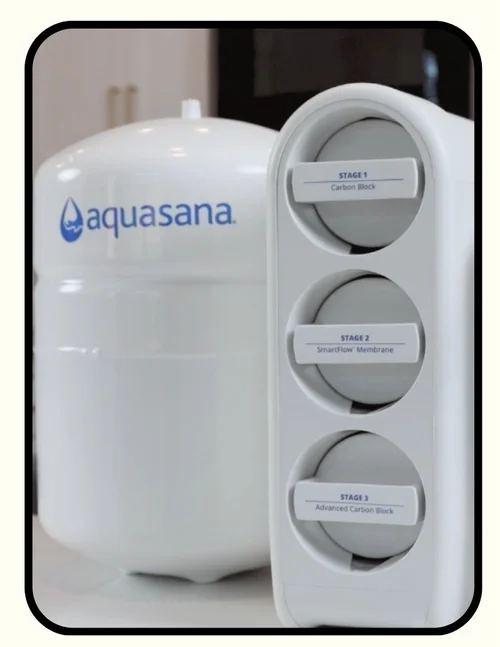
Or add an under-sink three-stage or reverse osmosis system for whole-kitchen filtration. Covers drinking and cooking water at the tap. Reverse osmosis with remineralization is the most thorough single-point option.
Use a certified shower filter for chlorinated supplies. Screws onto the existing fixture. Reduces chlorine and, in some certified models, PFAS and microplastics. Improves dry skin and dry hair as a side benefit.
Filter bathwater for young children and long soaks. A bath filter applies the same logic to bathwater. Most reduce chlorine only, but depending on your supply and whether your child has skin conditions, that can still make a meaningful difference.
Should I Open Windows for Better Indoor Air Quality or Keep Them Closed to Reduce Dust?
It’s true that improving indoor air quality and reducing dust seem to work against each other. Outdoor particles come in through open windows: pollen, soil, car pollution, and smoke. They also come in through the small gaps every home has. In studies of homes, roughly 30% to 80% of the fine particle pollution outside ended up in the indoor air, just from outdoor sources sneaking in.
But, it’s still worth opening your windows for two reasons.
First, you may have to dust more, but that’s a good thing anyway, because indoor dust contains PFAS, phthalates, flame retardants, endocrine disruptors, and other chemicals that make their way out of furniture, cleaning products, candles, and other materials over time. A group at Harvard studies indoor dust and found it hormonally active. Dusting more often to clear outdoor dust means you’re clearing indoor-generated dust more often too.
Second, dust aside, the best way to think about all this is what you get in exchange for opening the windows: cleaner air.
Most of the time, the air you let in is cleaner than the air you let out. The EPA found that indoor levels of some pollutants are often two to five times higher than outdoors, and occasionally more than 100 times higher. That’s because most indoor air pollution starts indoors. Furniture, foam, flooring, and wood finishes off-gas VOCs like formaldehyde. Cleaning and scented products add more every time you use them. With the windows shut, those emissions don’t go anywhere and build up instead.
Everyday activities push those levels higher than most people expect. In 2018, a research project called HOMEChem spent a month cooking, cleaning, and living in a test house in Austin while measuring its air. Making toast raised particle levels so much the team had to readjust their instruments. Cooking a full Thanksgiving dinner kept fine particles (PM2.5) above 10 micrograms per cubic meter for more than eight hours, with a peak above 200 that lasted nearly an hour. That’s similar to the air in a very polluted city.
Scented products also change the chemistry of the air around them. Pine, citrus, and many other scents get their smell from a molecule type called terpenes. Terpenes react with ozone, an outdoor pollutant that finds its way inside, and that reaction creates formaldehyde and ultra-fine particles that weren’t in the product to begin with. In lab studies of cleaning products and air fresheners, formaldehyde was the main byproduct. You can read more in my Fragrance Guide.
The best times to open windows are when indoor sources are creating the most indoor air pollution: while you cook, while you clean, and in the first weeks after new furniture arrives. Check AirNow or your favorite outdoor air quality app first to make sure outdoor smoke pollution and pollen levels aren’t high, especially during wildfire season.
In short, cleaner air is generally worth a little outdoor dust. But also, a bigger-picture thought: a 2018 study led by NOAA scientists found that everyday products like cleaners, perfumes, and personal care products now release about as much VOC pollution into Los Angeles air as cars and trucks do. Outside, those VOCs react in sunlight to form ozone and fine particles. Opening a window moves that pollution out of your home and into the world. That’s very good for your indoor air quality, but choosing safer products in the first place keeps the outdoor air cleaner, too.
Bonus: Match Light to Time of Day
The above strategies cover all hazards in the database but one: blue-rich light at night. It isn't a chemical, but a wavelength that comes in through the eye that suppresses melatonin production. If that happens at night instead of in the morning, when you’re supposed to be alert, it has the potential to disrupts the circadian rhythm that governs sleep depth, hormone cycling, and the repair processes your body runs overnight. The route is the optic nerve rather than the lungs, the gut, or the skin. The exposure is brief in any single moment and continuous over years, in the way evening screen use and evening overhead lighting accumulate.
The biology is well-established. Specialized cells in the retina detect blue wavelengths and send signals that suppress melatonin release from the pineal gland. Bright light at the wrong time tells your body it's still daytime, which shifts the timing of sleep, reduces sleep depth, and disrupts the hormonal cycles tied to the sleep-wake rhythm. WELL's Light concept addresses this directly, with features focused on circadian lighting design and the timing of light exposure across the day.
The strategy is simpler than the others because the levers are mostly behavioral and the equipment is inexpensive. It scales with two things:
The time of day. Bright, blue-rich light in the morning supports the circadian rhythm. The same light in the evening disrupts it. The same fixtures and devices can be useful or harmful depending on when they're used.
Your sensitivity. People vary in how much their sleep is affected by evening light. If you fall asleep easily and sleep through the night, the strategy is preventive. If you have trouble falling asleep, staying asleep, or feel groggy in the morning, the strategy is therapeutic.
Strategies
Dim overhead lights in the evening. Lower light levels signal your body that night is approaching. The single highest-impact behavior in this strategy.
Switch devices to warm-spectrum display after sunset. Phones, tablets, TVs, and computers all offer this in settings. The shift filters out the blue wavelengths that suppress melatonin most strongly.
Use bulb colors strategically. Bright, cool-spectrum bulbs in workspaces and bathrooms used in the morning. Warm-spectrum bulbs in living rooms and bedrooms used in the evening. The same room can use both with separate fixtures or 3- way bulbs that change their spectrum.
Sleep in a dark room. Blackout shades remove residual urban light that windows pass through. Even low ambient light during sleep suppresses melatonin during the hours it should be highest.
Get bright light in the morning. The other half of the strategy. Sunlight within the first hour of waking anchors the circadian rhythm and makes the evening dimming work better. Going outside is best; a light box near a winter-dark window is the next-best option.
Recap: Dose and Dose Response
With these strategies, you can meaningfully reduce the likelihood that any exposure you've identified will add to your existing dose. This isn't just theoretical. It's backed by data and by the consensus of experts in environmental health. It matters because these strategies factor into whether any single product is non-toxic for you. If you consider the size of the room, the age of a product, the way you use it, and what you're willing to do to mitigate any hazards, you add another piece of vital information to the six-step framework.
We still don't have information about your current dose of any hazard, and we don't have information about your dose-response either. But with dose, this is where you can move from just a question mark to a directionality. Applying these strategies decreases the chances that what's added accumulates. Dose-response stays open, and it's the box future research will keep working on. This is what the six-step framework looks like now.
Next: Part 9
Now we head to the penultimate section, Part 9. It's the last one that breaks down a piece of the six-step framework: susceptibility and risk. They're grouped together because ultimately, both are known best by you. We have some outside information about what generally makes someone more susceptible or more resilient, but you hold most of the unique answers, and you're the only one with your particular lens to assess a risk. Part 9 walks through the outside information we do have, and then hands the rest back to you.
Part 8 References
Indoor Air Quality and Ventilation
U.S. Environmental Protection Agency. Indoor Air Quality. EPA Report on the Environment.
U.S. Environmental Protection Agency. Volatile Organic Compounds' Impact on Indoor Air Quality.
Allen, J. G.; MacNaughton, P.; Laurent, J. G. C.; Flanigan, S. S.; Eitland, E.; Spengler, J. D. The 9 Foundations of a Healthy Building. Harvard T.H. Chan School of Public Health, Healthy Buildings Program, 2017.
International WELL Building Institute. WELL Building Standard v2.
U.S. Environmental Protection Agency. Health Risk of Radon.
Safer Cleaning Products
Zock, J. P.; Plana, E.; Jarvis, D.; Antó, J. M.; Kromhout, H.; Kennedy, S. M.; et al. The Use of Household Cleaning Sprays and Adult Asthma: An International Longitudinal Study. American Journal of Respiratory and Critical Care Medicine, 2007.
Svanes, Ø.; Bertelsen, R. J.; Lygre, S. H. L.; Carsin, A. E.; Antó, J. M.; Forsberg, B.; et al. Cleaning at Home and at Work in Relation to Lung Function Decline and Airway Obstruction. American Journal of Respiratory and Critical Care Medicine, 2018.
Lovén, K.; et al. Characterization of Airborne Particles from Cleaning Sprays and Their Corresponding Respiratory Deposition Fractions. Journal of Occupational and Environmental Hygiene, 2019.
Clausen, P. A.; Kofoed-Sørensen, V.; Jensen, S. P.; Larsen, B. X. N.; Jensen, A. C. Ø.; Frederiksen, M.; Wolkoff, P. Characterization of the Aerosol Release from Spray Cleaning and Disinfection Products: Spray Scenarios in a Climate Chamber. International Journal of Hygiene and Environmental Health, 2023.
Dumas, O.; Varraso, R.; Boggs, K. M.; Quinot, C.; Zock, J. P.; Henneberger, P. K.; Speizer, F. E.; Le Moual, N.; Camargo, C. A. Association of Occupational Exposure to Disinfectants with Incidence of Chronic Obstructive Pulmonary Disease Among US Female Nurses. JAMA Network Open, 2019.
Hu, M.; Li, L.; Lv, Z.; Sangion, A.; Zheng, G.; Cai, Z.; Salamova, A. Quaternary Ammonium Compounds in Paired Samples of Blood and Indoor Dust from the United States. Environmental Science & Technology Letters, 2024.
Centers for Disease Control and Prevention. When and How to Clean and Disinfect Your Home.
U.S. Environmental Protection Agency. Fragrance-Free vs. Unscented. Safer Choice Fact Sheet, 2016.
U.S. Environmental Protection Agency. Learn About the Safer Choice Label.
U.S. Environmental Protection Agency. Learn About Design for the Environment (DfE) Certification.
Indoor Dust
Young, A. S.; Herkert, N.; Stapleton, H. M.; Coull, B. A.; Hauser, R.; Zoeller, T.; Behnisch, P. A.; Felzel, E.; Brouwer, A.; Allen, J. G. Hormone receptor activities of complex mixtures of known and suspect chemicals in personal silicone wristband samplers worn in office buildings. Chemosphere 2023, 315, 137705. DOI: 10.1016/j.chemosphere.2022.137705.
U.S. Environmental Protection Agency. Exposure Factors Handbook Chapter 5 (Update): Soil and Dust Ingestion. EPA/600/R-17/384F, 2017.
Direct Contact Transfer
Pak, V. M.; Nailon, R. E.; McCauley, L. A. Phthalates in skin wipes: Distribution, sources, and exposure via dermal absorption. Environmental Research 2022, 204 (Part C), 112347.
Weschler, C. J.; Bekö, G.; Koch, H. M.; Salthammer, T.; Schripp, T.; Toftum, J.; Clausen, G. Transdermal Uptake of Diethyl Phthalate and Di(n-butyl) Phthalate Directly from Air: Experimental Verification. Environmental Health Perspectives 2015, 123 (10), 928–934.
Brüschweiler, B. J.; Küng, S.; Bürgi, D.; Muralt, L.; Nyfeler, E. Identification of non-regulated aromatic amines of toxicological concern which can be cleaved from azo dyes used in clothing textiles. Regulatory Toxicology and Pharmacology 2014, 69 (3), 263–272. DOI: 10.1016/j.yrtph.2014.04.011.
Abdallah, M. A.-E.; Pawar, G.; Harrad, S. Effect of Bromine Substitution on Human Dermal Absorption of Polybrominated Diphenyl Ethers. Environmental Science & Technology 2015, 49 (16), 10976–10983. DOI: 10.1021/acs.est.5b03904.
Abafe, O. A.; Harrad, S.; Abdallah, M. A.-E. Assessment of human dermal absorption of flame retardant additives in polyethylene and polypropylene microplastics using 3D human skin equivalent models. Environment International 2024, 186, 108635.
Tap Water
Smalling, K. L.; Romanok, K. M.; Bradley, P. M.; Morriss, M. C.; Gray, J. L.; Kanagy, L. K.; Gordon, S. E.; Williams, B. M.; Breitmeyer, S. E.; Jones, D. K.; DeCicco, L. A.; Eagles-Smith, C. A.; Wagner, T. Per- and polyfluoroalkyl substances (PFAS) in United States tapwater: Comparison of underserved private-well and public-supply exposures and associated health implications. Environment International 2023, 178, 108033. DOI: 10.1016/j.envint.2023.108033.
Natural Resources Defense Council. Lead Pipes Are Widespread and Used in Every State. NRDC Report, 2024.
Ventilation vs. Dust
Chen, C.; Zhao, B. Review of Relationship Between Indoor and Outdoor Particles: I/O Ratio, Infiltration Factor and Penetration Factor. Atmospheric Environment, 2011.
Young, A. S.; Zoeller, T.; Hauser, R.; James-Todd, T.; Coull, B. A.; Behnisch, P. A.; Brouwer, A.; Zhu, H.; Kannan, K.; Allen, J. G. Assessing Indoor Dust Interference with Human Nuclear Hormone Receptors in Cell-Based Luciferase Reporter Assays. Environmental Health Perspectives, 2021.
Harvard Gazette. Chemical-Laden Indoor Dust May Interfere with Sexual Development, Reproduction. 2021.
U.S. Environmental Protection Agency. Indoor Air Quality. EPA Report on the Environment.
U.S. Environmental Protection Agency, Region 1. Indoor Air Quality. (Archived page; the source for “occasionally more than 100 times.”)
Farmer, D. K.; Vance, M. E.; Abbatt, J. P. D.; et al. Overview of HOMEChem: House Observations of Microbial and Environmental Chemistry. Environmental Science: Processes & Impacts, 2019.
University of Colorado Boulder. Your Home Is a Hidden Source of Air Pollution. CU Boulder Today, 2019.
Destaillats, H.; Singer, B. C.; Coleman, B. K.; Lunden, M. M.; Hodgson, A. T.; Weschler, C. J.; Nazaroff, W. W. Secondary Pollutants from Cleaning Products and Air Fresheners in the Presence of Ozone. Proceedings of Indoor Air 2005.
Coleman, B. K.; Lunden, M. M.; Destaillats, H.; Nazaroff, W. W. Secondary Organic Aerosol from Ozone-Initiated Reactions with Terpene-Rich Household Products. Atmospheric Environment, 2008.
McDonald, B. C.; de Gouw, J. A.; Gilman, J. B.; Jathar, S. H.; Akherati, A.; Cappa, C. D.; et al. Volatile Chemical Products Emerging as Largest Petrochemical Source of Urban Organic Emissions. Science, 2018.
U.S. Environmental Protection Agency. Indoor Particulate Matter.
Light and Circadian Rhythm
Chang, A.-M.; Aeschbach, D.; Duffy, J. F.; Czeisler, C. A. Evening use of light-emitting eReaders negatively affects sleep, circadian timing, and next-morning alertness. Proceedings of the National Academy of Sciences 2015, 112 (4), 1232–1237. DOI: 10.1073/pnas.1418490112.
International WELL Building Institute. WELL Building Standard v2: Light Concept.
Don’t see what you’re looking for? Request a review, or check it yourself in seconds with the Second Opinion Product Checker. Spot something outdated? Let me know and I’ll update it. Join the spam-free newsletter for interesting info and to hear when new reviews are up.
FYI, “non-toxic” has no official definition, so I rate every product with the same method. It’s built on third-party certifications and published test data, not brand claims. For a deeper dive, my free course walks you through it.
Everything on Interior Medicine is educational information, not medical advice. Read my full disclaimer.
More Healthy Design For You