
Non Toxic Candles
The best non toxic candles list every ingredient and are made with undyed beeswax or 100% plant wax, a cotton or wood wick, and either no scent or fully disclosed essential oils and plant-derived scent. Undisclosed “fragrance” or “fragrance oil” can hide any of thousands of synthetic or natural chemicals. When a brand does share its full ingredient list, run it through Check a Fragrance. Every lit candle releases fine particles and combustion byproducts, so melting one under a candle-warmer lamp with no flame is the healthiest way to use it. Each candle here gets a Fragrance rating and a Base Formula rating, using the same rating methodology I apply to every product on Interior Medicine.
By Dr. Meg Christensen | Physician-founder of Interior Medicine, a non-toxic home resource built on her background in medicine, biochemistry, epidemiology, and clinical research.

Updated November 1, 2026
100% Non Toxic Candle Brands
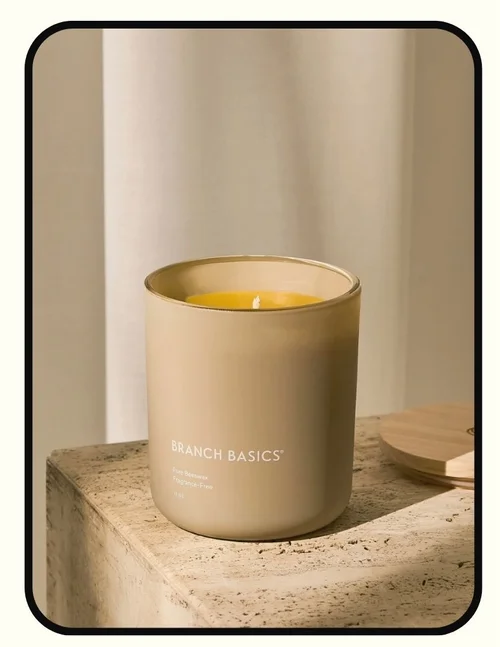 Branch Basics Beeswax and Organic Cotton Wick Candle
The Branch Basics candle is truly non toxic. They make their one candle offering with 100% pure beeswax and an organic cotton wick. Without mystery dyes, polymer wax additives, or even scents, it’s one of the most straightforwardly healthy candles available. Since even 100% pure essential oils can sometimes cause allergies and combine with particles in the air, and while burning a candle always creates some indoor air pollution (see the graphic below) this is the safest way to do it. Or, you can always let this melt under a candle warmer and make it even safer.
Product rating
See the rating scales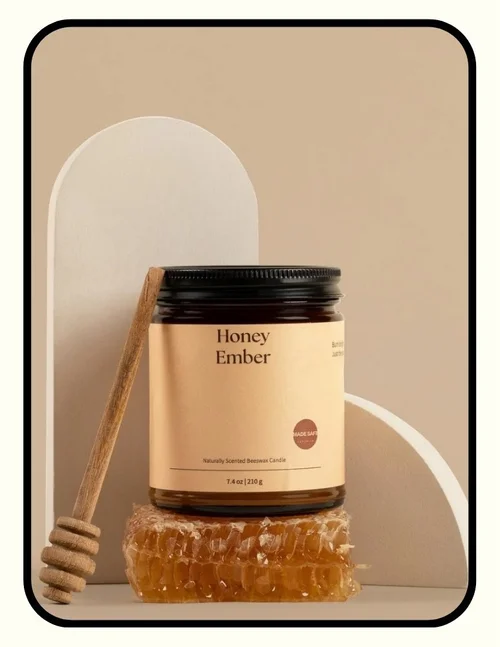 Fontana Non Toxic Beeswax Candles
Are Fontana candles actually non-toxic or is it just hype? Yes, they really are. They’re totally transparent about all of their ingredients, listing them for each candle. They use a blend of beeswax and coconut oil for their base, without dyes or wax additives, and scent them with steam-distilled essential oils, and no synthetic fragrances at all. They add an untreated wooden wick, and come in tons of scent collections and different looks for your home. These you can purchase on their site directly or through Amazon.
Product rating
See the rating scales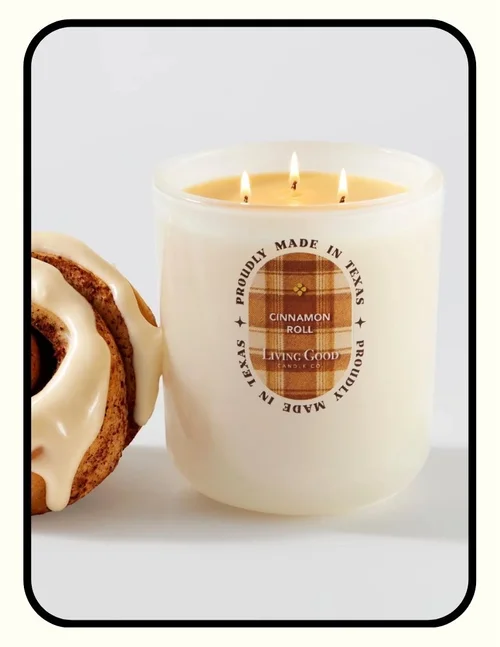 Living Good Non Toxic Candles
Are Living Good candles non toxic? Yes. They don’t add dyes, colorants or stabilizers to their waxes, and explicitly say so. Instead they’re made with just beeswax with some coconut oil. They list all of their ingredients on each candle’s product page and I love the transparency. They use plant-based scent only, and still achieve “cinnamon roll” and “coastal breeze” without synthetics, mystery-ingredient fragrance oils, and without being overpowering. Read more about scent specifics on my Fragrance Guide and check their ingredients list on my Check a Fragrance page.
Product rating
See the rating scales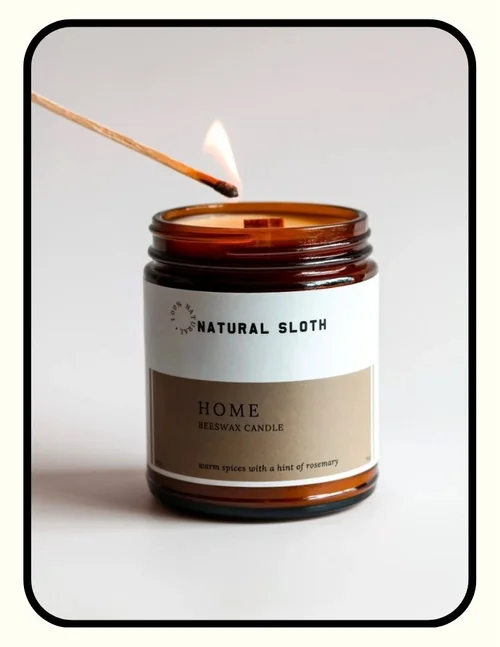 Natural Sloth Clean Burning Non Toxic Candles
With full transparency, Natural Sloth uses beeswax, coconut oil, wooden wicks, and discloses every ingredient in every non toxic candle they make. Also dye and wax additive free, their scents are made only with essential oils and they create nice aromatic blends for non toxic Christmas candles, spooky season varieties, and other holiday-themed versions, along with their classic line-up.
Product rating
See the rating scales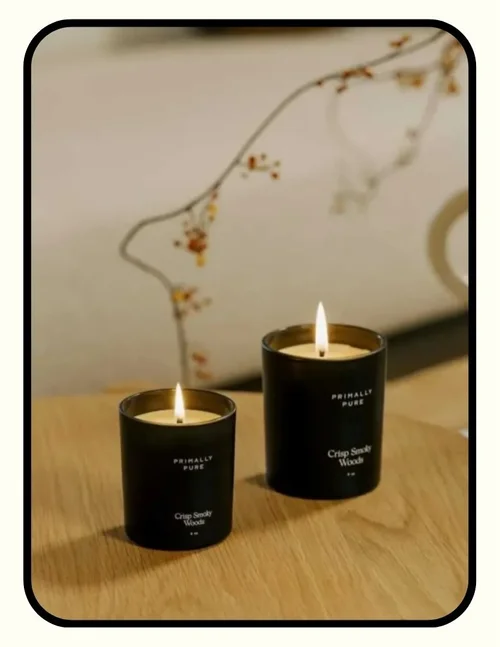 Primally Pure Scented Organic Candles
Are Primally Pure candles non toxic? They are made with truly 100% natural ingredients, including some organic ones. Their wax base is just beeswax and coconut oil, and I appreciate their full transparency about what essential oils they add, publishing every ingredient on each product page. I also like that they’re undyed so you don’t have to worry about colorants. I do not agree with their statement that these support respiratory health (nothing burning in your house, especially with scents in it, possibly could. All candles create particles and some air pollution; see my graphic below.) Overstatement aside, these are very good candles.
Product rating
See the rating scales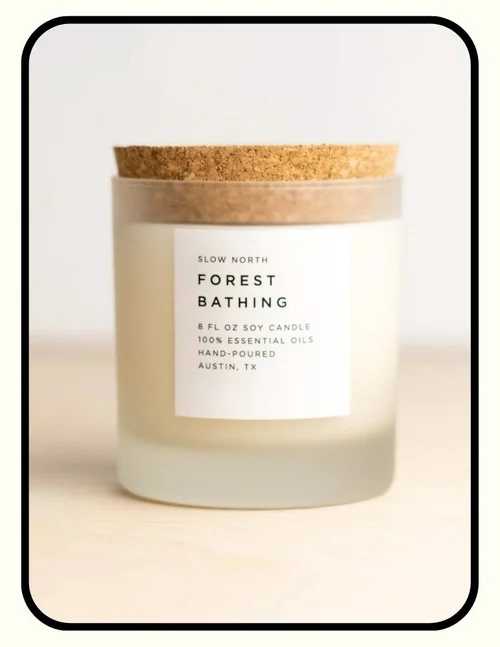 Slow North Candles
I love Slow North and have several of their candles, both Forest Bathing and Cabin Retreat. They use 100% natural essential oils for fragrance, 100% soy wax, cotton and paper wicks, glass containers, and no dyes. They have a thorough FAQ page with all of their material types listed and each candle shows what essential oils are added. These are a straightforward super healthy candle choice. Use code INTERIORMEDICINE for 10% off.
Product rating
See the rating scales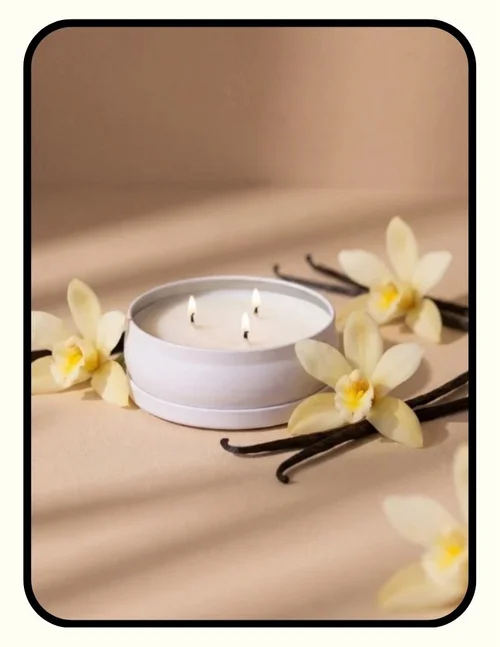 Grow Fragrance
Is Grow Fragrance non toxic? Yes, they use petroleum free soy wax, cotton wicks, and disclose every single scent ingredient in every single product. Instead of hiding behind a “non-toxic fragrance” label or using fragrance oils with a clean “vibe,” they use essential oils and plant-derived scents only and let you see all of them. They also do a nice job debunking common healthwashing techniques on their site and list SDS sheets and more for their products. You can run any of their lists through my Check a Fragrance page; I did a bunch and they are overall a safe and healthy choice.
Product rating
See the rating scales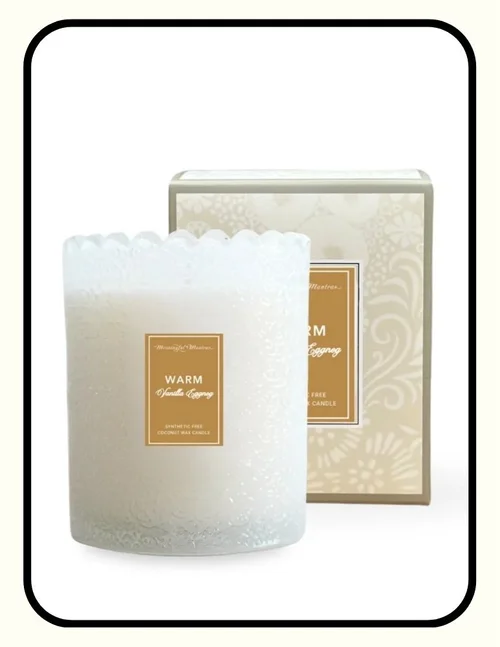 Meaningful Mantras
Are Meaningful Mantras candles non toxic? They are, and most importantly, they share their entire ingredients list for each candle. Their ingredients lists look a little different than others here because they use plant-identical isolates for some of their scents instead of just essential oils. Vanillin, for example, is one of the scent molecules in natural vanilla, and you can re-create the exact same molecule by isolating it from the plant, or in a lab using wood pulp from trees (it can also come from petroleum, but they state explicitly that theirs doesn’t.) They use undyed petrochemical-free coconut wax and castor for their base and unbleached cotton for their wicks. Overall these are healthy candles with excellent transparency. Read more about scent specifics on my Fragrance Guide and check their ingredients list on my Check a Fragrance page.
Product rating
See the rating scalesOther Candle Reviews
 Keap Candles
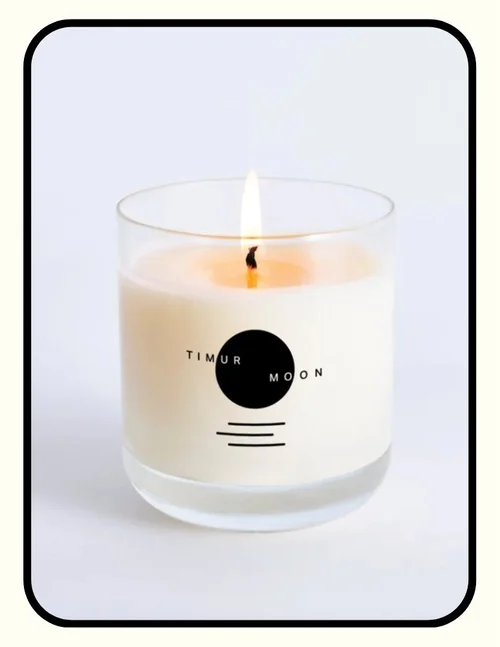
Are Keap candles non toxic? While their candles have been more eco-friendly than strictly human health-friendly in the past, since 2024 they’ve started switching to entirely natural scents instead of a mixture of synthetic and natural ones. They’re a surprisingly super transparent company! Most luxury candle makers don’t go so far to explain their materials or dive into the nuance behind what “natural” means. They get their coconut wax from a supplier who confirms there is no paraffin or petroleum ingredients involved; just vegetable oils, but won’t share the exact blend. Keap did their own analysis and it seems to be mostly coconut and part soy. They don’t list every ingredient used in every scent, but do state that there are only 7 plant-based and biodegradable ingredients in their perfumery. Overall I’m sort of delighted to see this arc and would consider these safe candles.
Product rating
See the rating scales P.F. Candle Co.
Are PF candles actually non toxic? They are OK, falling in between Keap and Salt & Stone on transparency. They use 100% soy wax, which is great, and cotton wicks. Their fragrances are phthalate free, which is also good, though they are all fragrance oils. Fragrance oils can be anything from a list of thousands, and are most often synthetic, sometimes with essential oils mixed in. Synthetic doesn’t automatically mean harmful, and sometimes they’re just synthetic versions of what you find naturally in plants. But without an ingredients list to check against the restricted, banned, and allergenic possibilities, it’s hard to know. Again, if you love these, you can always open windows, use an air purifier that captures both VOCs and PM 2.5 afterward, and use sparingly. You don’t have to be perfect or consistent. Learn more about how I think about risk and non-toxic living in my free course.
Product rating
See the rating scales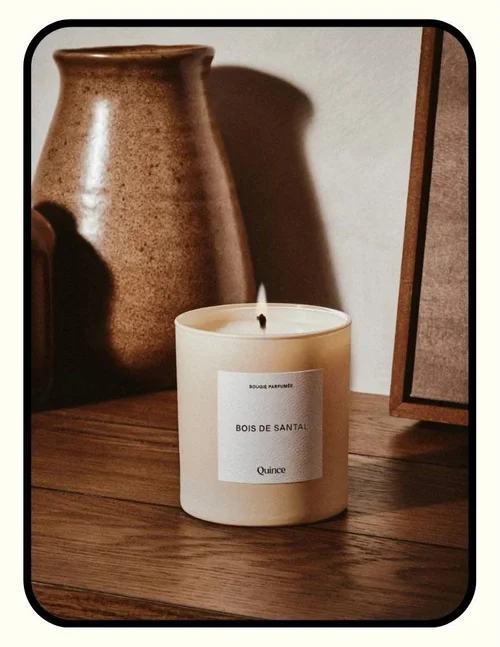 Quince
Are Quince candles non toxic? When you google “non toxic candles,” they show up right near the top, so I wanted to dive into this kind of marketing, too. Having lots of Google search power for non-toxic products can be more in line with how much a brand can afford to pay to be at the top, and doesn’t always match the truth about how non-toxic their candle truly is. Quince lands in the so-so area in terms of health. They use 100% natural wax and while we don’t know what kind, it’s not paraffin. They also state that they use a cotton wick. Their scenting is all fragrance oil. Which, if you’ve read this page entirely, you know by now that’s almost always a synthetic-natural blend from a library of 3,000+ scent chemicals. If you use these and love these, I truly believe that’s totally fine. I use a particular fragrance oil pine scented soap I just love every holiday season. There are other ways to support your health; this is just information on how I think about it.
Product rating
See the rating scales Salt & Stone
Are Salt & Stone candles non toxic? They have a very minimal aesthetic, and are described with phrases like “vegan friendly,” “made with coconut and soy,” and “cleaner fragrance.” And that’s it! The wax may have additives besides coconut and soy; the fragrance could be made of any of 3,000+ synthetic or natural compounds. This is why scent is so tricky. The vast majority of brands don’t share anything besides the “notes” their scent smells like. I list them here just to highlight how marketing and reality don’t always align. And it’s important to know that luxury candles are not necessarily any healthier than inexpensive ones. They may choose more appealing, subtler, or trendier scents, but without ingredient transparency, it’s impossible to know what their health profile is.
Product rating
See the rating scalesWays to Make Your Candles Less Toxic
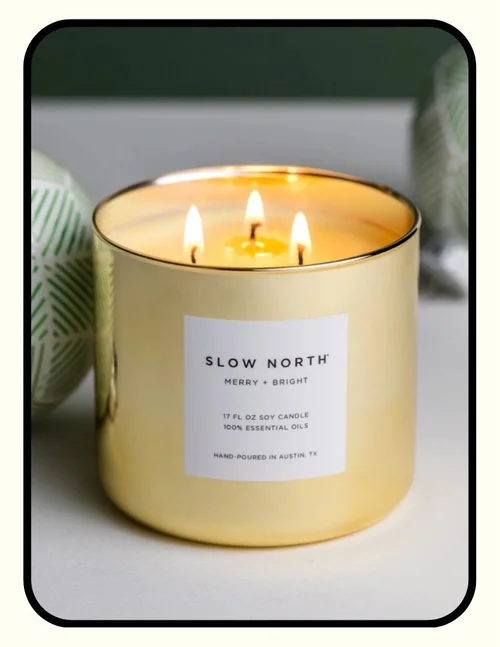 Non Toxic Christmas Candles
(Or whatever holiday you're celebrating!) Using candles, no matter how healthy or non toxic they are, infrequently or a couple times a year is a great way to lower your overall exposure. You don’t have to be perfect or consistent and if burning candles feels good to you, take care of yourself in other ways. Learn more about how I think about risk and non-toxic living in my free course.
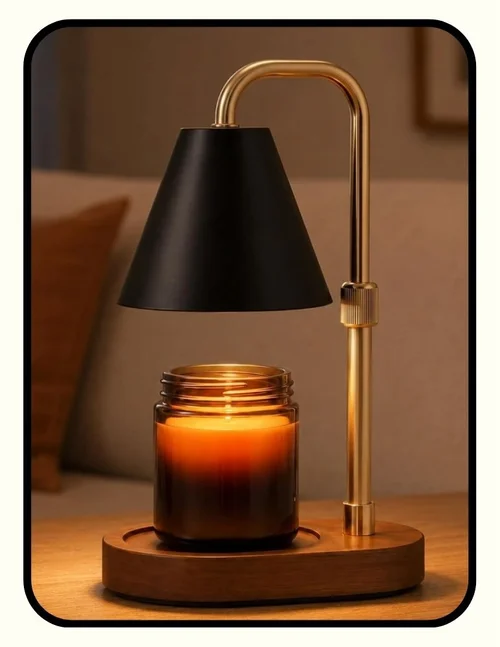 Candle Warmers
Candle warmers instantly remove one of the main health problems associated with candles: burning something indoors. By gently heating a candle with a light bulb instead, you release scent without burning, with the added benefits of no open flame to worry about, and better longevity. Amazon has a huge range of affordable candle warmers, nearly all well under $50, and since the technology is easy (lightbulb), they work well and are highly rated.
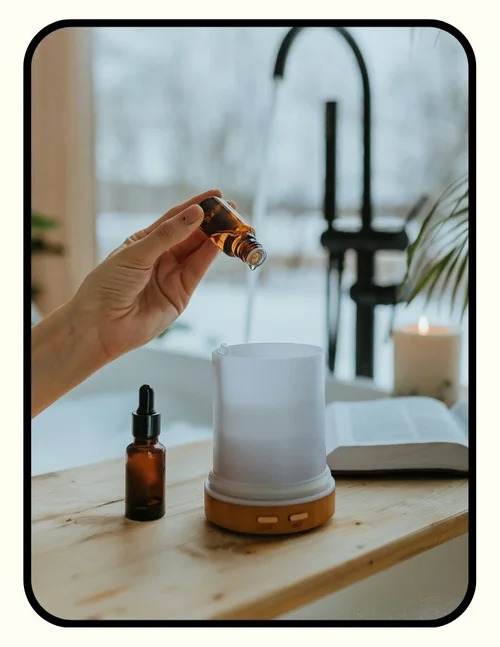 Non Toxic Candle Alternatives
See my list of home fragrances that don’t rely on a burning wick and can be a lot healthier for your home than any candle, while still adding scent.
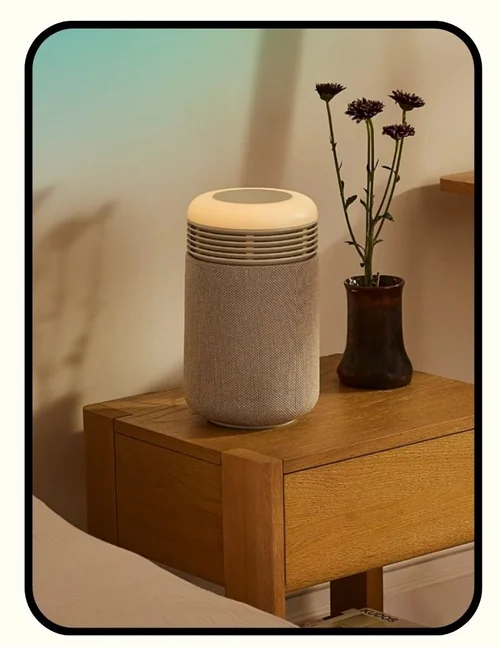 Air Purifiers for Candle Smoke
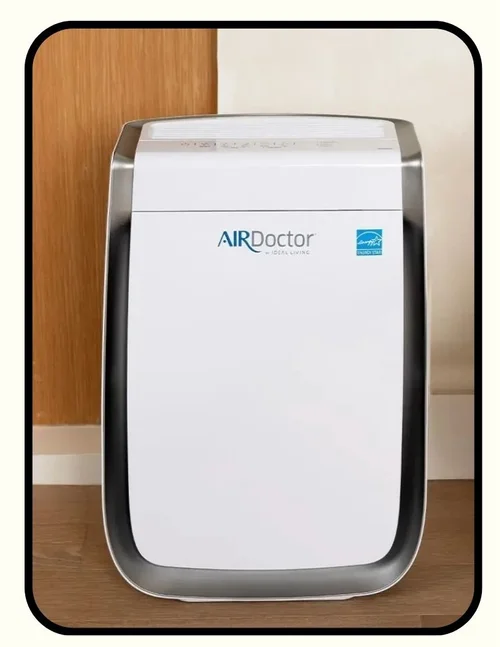
Candles release both PM 2.5 and VOCs, but not all air purifiers capture both. Using an air purifier after a night of candles is a good idea to bring your indoor air back to a healthy baseline. This is the list of ones I recommend that take care of the multiple types of indoor air pollution that candles can contribute to.
Don’t see what you’re looking for? Request a review, or check it yourself in seconds with the Second Opinion Product Checker. Spot something outdated? Let me know and I’ll update it. Join the spam-free newsletter for interesting info and to hear when new reviews are up.
FYI, “non-toxic” has no official definition, so I rate every product with the same method. It’s built on third-party certifications and published test data, not brand claims. For a deeper dive, my free course walks you through it.
Everything on Interior Medicine is educational information, not medical advice. Read my full disclaimer.
More Healthy Design For You

FAQ: More About Non Toxic Candles
Zoom in to read the labels.
What a burning candle releases into your room
Every emission traces back to one of three sources: the scent, the substrate (wick, wax, and wax additives), or the dispersal method, which for a candle is the flame. Some of the most irritating compounds form later, in the air.
FROM THE SCENT
FROM THE SUBSTRATE
FROM THE FLAME
FORMED IN THE ROOM, AFTER RELEASE
Sources: Schultz et al. 2026, Environment & Health; Mohamed et al. 2025, Frontiers in Public Health; Jeong, Wallace & Rim 2023, Environmental Pollution; Salthammer et al. 2021, Environment International; Carslaw & Weschler 2018, Environmental Science & Technology; Bekö et al. 2013, Environmental Science & Technology; Dodson et al. 2012, Environmental Health Perspectives; Pagels et al. 2009, Journal of Aerosol Science; NRDC 2007; Nazaroff & Weschler 2004, Atmospheric Environment; CPSC 16 CFR 1500.17(a)(13); Nriagu & Kim 2000, Science of the Total Environment. Phthalate data comes from air fresheners and other consumer products, not candles specifically.
What makes a candle non toxic?
Generally, a candle that calls itself non-toxic should have 100% disclosure about its ingredients. It should be made with either no scent at all, or scent that doesn’t have allergy or toxicity data showing it’s potentially harmful. It should be solvent and phthalate free. The scent should be in beeswax or 100% plant or bio based undyed wax, with a lead-free cotton or wood wick.
What are candle wax additives?
Candle wax is not just wax. It often includes additives that change hardness, glossiness, opacity, and how much scent the candle releases. They help the wax hold more fragrance oil so it doesn’t seep out, help dyes disperse evenly, and help a pillar candle keep its shape. Common wax additives are stearic acid, microcrystalline wax, and polymers sold under brand names like Vybar and Epolene. They’re rarely listed on candle ingredients lists by name, and while it’s possible they’re used more often in paraffin blends, even soy waxes are often sold pre-blended with additives.
Why do some candles contain UV absorbers?
UV stabilizers are a common type of wax additive because candle dyes fade with exposure to light over time. To keep colors stable, some candle makers add UV absorbers to the wax. Like the dye, they burn along with the wax.
Does beeswax really burn cleaner than other types of candle wax?
Maybe, but it’s more likely that the quality of the wick and fragrance are what makes a candle burn cleaner rather than the type of wax. How much draft there is also seems to make a difference: more draft = more soot. There is very little research on the topic, but here is what we know:
Beeswax and soy wax produced less soot than paraffin wax in a University lab study in 2002.
A single 2007 study funded by the candle industry found that paraffin, soy, and beeswax all created nearly equal emissions.
A publicly funded 2021 study, with candle manufacturers as project partners, burned five unscented pillar candles in drafty conditions. The worst, a paraffin candle, released about 27 times more soot than the best, a palm stearin candle, plus far more fine particles (PM2.5) and cancer-linked PAHs. A second paraffin candle with a different wick had the second-lowest soot, though, which suggests the wick may actually matter more than the type of wax. Drafts were the most important element by far, though: still air cut soot by 60 to 1,700 times.
I would love to see more studies done by completely independent groups and with a focus on beeswax. Is it safe to assume that beeswax burns cleaner than paraffin? Almost certainly, since paraffin is petroleum-derived and we do know paraffin candle burning emits VOCs including formaldehyde and compounds like toluene and benzene, as well as PAHs from incomplete combustion.
Do beeswax candles emit negative ions that purify the air?
No. All flames, including ones made by paraffin candles, release small amounts of charged particles (ions) because that is a normal part of normal combustion. However, they make both positive and negative ions, and the vast majority recombine very close to the flame. They don’t fill the room, and they aren’t overwhelmingly negative.
The idea likely comes from air ionizers, which emit a steady stream of negative ions so that airborne particles get “charged” enough to stick to walls and surfaces: this really does happen. But a candle flame doesn’t work like an ionizer. And even if it did, candles add way more particles to indoor air rather than they could theoretically charge with ions.
Are soy candles non toxic?
Soy candles can be a healthier choice, but what the wax is made of is just one part of a non toxic candle. It depends on what the soy is blended with (dyes, additives, scents) and what type of wick it has.
Why is paraffin wax in candles bad?
There are a few reasons to avoid paraffin wax candles:
Petroleum origin: paraffin is extracted from petroleum as part of the oil refining process, then treated with solvents and processed to adjust hardness or add color.
Volatile chemical release: when burned, paraffin candles emit VOCs including formaldehyde and compounds like toluene and benzene, as well as PAHs from incomplete combustion. These chemicals are detectable in candle emissions studies, though whether concentrations from typical residential use reach levels associated with health effects is not well established.
Soot release: soot is a specific type of PM 2.5, which is a size of particle. It is a carbon-rich particle made by incomplete combustion. Paraffin has a higher carbon content because of its petroleum origin, so it’s more prone to incomplete combustion than natural waxes like beeswax or soy, which have simpler fatty acid compositions that tend to burn more cleanly. That said, fragrance load and wick type also influence soot output, so paraffin without fragrance can perform better than a heavily scented natural wax candle.
A note on labeling: "coconut wax blend" or "soy wax blend" likely means blended with paraffin. If wax composition matters to you, look for a single-origin wax with no blend language.
What is a tallow candle?
Tallow is rendered animal fat, typically from beef or sheep, and is what candles were made from before petroleum-derived paraffin became the standard.
Like other natural waxes, its fatty acid composition is simpler than paraffin's, which is the basis for the assumption that it burns more cleanly. But tallow-specific emissions research is limited, so that is a guess.
What dyes are used in candles?
Most colored candles are made with synthetic dyes designed to dissolve in wax, called solvent dyes. They come as a liquid or as small chips of colored wax. Once melted in, the color spreads evenly and burns along with the wax.
The ones I’d watch for most are azo dyes, a common family of synthetic dyes behind many reds, oranges and yellows. Some azo dyes can break down into compounds called aromatic amines, and a few of those are known carcinogens. The best-known example of these amines is benzidine-based dyes, which IARC classifies as carcinogenic to humans. However, those are fabric dyes that dissolve in water, not wax, so they’re unlikely to be in your candle. No one to my knowledge has tested whether burning a dyed candle releases aromatic amines. So this is a precaution, not a proven risk.
Blues and greens usually come from a different synthetic family, anthraquinone dyes. They don’t share the azo concern, but they’re still synthetic and rarely disclosed.
Some candles, often homemade ones, get their color from pigments, mica or crayons instead. These are tiny solid particles that don’t dissolve, so they’re mostly used to color or add shimmer to the outside of a candle. Mixed into the wax, they can clog the wick and make the candle burn poorly.
Natural candle brands that add color sometimes use plants steeped in the melted wax, like paprika, turmeric, madder root, nettle or black walnut. These colors are softer, mostly yellow, orange and green, and can fade in daylight.
The simplest choice is an undyed candle. Beeswax is naturally golden, and soy and coconut wax are naturally white to cream. If you want color, look for a brand that tells you exactly what it uses.
What are candle wicks made of?
Wicks are usually cotton, paper-cored cotton, wood, or cotton with a zinc core for stiffness. Lead-core wicks have been banned in the US since 2003. Most wicks are also primed (pre-coated) with wax and attached to a metal tab at the base.
Why is burning a candle bad for you?
Burning anything indoors (candles, incense, palo santo, sage, even food on the stove) creates combustion byproducts. For candles, that includes carbon monoxide, carbon dioxide, nitrogen oxides, formaldehyde, benzene, PAHs, PM2.5, and ultrafine particles. Burning also releases the fragrance compounds themselves, whether they’re natural or synthetic.
PM2.5 is the same pollutant behind wildfire smoke advisories and outdoor air quality warnings. Chronic exposure at high levels is associated with cardiovascular disease, respiratory disease, and emerging research links it to cognitive decline. That said, occasional candle use in a ventilated room is a very different exposure from the outdoor and occupational studies behind those associations. One large chamber study found most calculated indoor levels from candles were well below guidance values. Still, the direction of the evidence is a reasonable basis for keeping indoor combustion to a minimum, especially since you likely have other daily combustion sources like cooking or gas heating.
See the visual at the top of this guide on what a candle releases into your air.
I like my unhealthy candles. What can I do to make my candles less toxic?
If you already have a candle, incense, or fragrance oil you like, and it isn't very healthy, there are a few things you can do to minimize harm:
Burn them very infrequently or on special occasions only. I know this won't work for everyone, but it is what I do: I burn my Christmas-scented incense cones once a year, and enjoy most of my fun-shaped and perfectly-colored candles just as decoration year-round.
Open the windows while you burn candles or incense to let out harmful fumes while still enjoying ambience.
Use an air purifier that removes both PM 2.5 and VOCs after you're done.
Switch to a candle warmer that heats the candle and releases scent without burning
Finally, if you must use a synthetic scent or combustion on a regular basis, just take good care of your health in other ways. Regular exercise, good nutrition, and not worrying too much are also healthy.