
Learn ➜ Material Health Guides ➜ Glass
Glass Guide
Modern glass is one of the safest materials in the home, since standard soda-lime and borosilicate glass carries no coating or leaching concern at all. The real risk sits almost entirely in vintage pieces, where lead crystal, milk glass, and colored glass like Depression or uranium glass were often made with lead, arsenic, or cadmium as part of the manufacturing process itself. How you use glass matters a lot, too: display use of a vintage piece carries little risk, but food and beverage contact, especially with acidic contents or extended storage, is where lead actually leaches out. This guide is one of the rating systems behind the Interior Medicine Method.
By Dr. Meg Christensen | Physician-founder of Interior Medicine, a non-toxic home resource built on her background in medicine, biochemistry, epidemiology, and clinical research.

Published June 1, 2025 | Updated May 20, 2026
What This Guide Covers
Table of Contents
Hazard Lists & Third-Party Certifications for Glass
FYI: How and why I use the words non-toxic, chemical-free, toxin, and toxic
Glass Rating Scale
This scale is a summary of all the information below. Scales keep me consistent and unbiased as I rate and rank products for their potential impact on your health and they’re meant to organize the information in a straightforward way for you, too. Keep reading for the full breakdown on the reasoning behind it, and how to make smart decisions about glass in your home.
Glass Rating Scale
TIER 01
Healthiest
Description
Plain modern glass with no surface coatings
- Modern soda-lime glass (drinkware, food jars, dishware, tempered cookware lids)
- Modern borosilicate glass (heat-resistant bakeware, glass cooking pots, glass kettles, glass mugs)
Look for
- "Soda-lime glass" or "borosilicate glass" listed as the material on the product page
- Uncoated, unprinted, unpainted drinkware, food storage, and bakeware
- "Tempered glass" on bakeware and lids; tempering is a heat treatment of the glass itself rather than an applied coating
Ask the brand
- Is this glass uncoated on both inside and outside surfaces?
- For colored glass: is the color from minerals melted into the glass during manufacturing, or from a coating applied to the surface? Melted-in keeps it at Tier 1; an applied colored coating moves it lower depending on the coating chemistry.
In practice
- The most common form of safe glass in the home, widely available across every price point and use category
- Borosilicate handles thermal shock better than tempered soda-lime (going freezer-to-oven, for example), at a higher price. Either works for food contact.
TIER 02
Healthy
Description
Modern glass with stable mineral additives melted into the glass matrix rather than applied as a surface coating
- Modern lead-free crystal made with barium oxide, zinc oxide, or potassium oxide substituted for lead oxide. These create the optical brilliance lead used to provide, and the substituted minerals are bound into the glass once melted.
- Modern opal or milk glass made with titanium dioxide and tin oxide opacifiers, which produce the opaque white appearance and are bound into the glass matrix rather than sitting on the surface
Look for
- "Lead-free crystal," or specific mention of barium, zinc, or potassium as the substituted mineral
- "Opal glass" or "milk glass" with current (non-vintage) production
Ask the brand
- For crystal: is this lead-free, and what mineral was substituted for lead oxide?
In practice
- Modern lead-free crystal is increasingly the default at the premium end of glassware. If the label says "crystal" without "lead-free," it may still contain lead until confirmed.
- Modern milk glass with safe opacifiers is the current production standard. The risk is buying vintage pieces (pre-1970s) without knowing the difference, which moves the same item to Tier 5.
TIER 05
Harmful
Description
Glass containing lead and heavy metals
- Vintage lead crystal
- Vintage milk glass (pre-1970s) made with bone ash, arsenic, or antimony opacifiers
- Vintage colored glass including Depression glass and uranium glass
You'll see
- Crystal without "lead-free" specified. Watch out for "crystal" by itself, which historically meant leaded glass; modern usage requires "lead-free crystal" to mean what it sounds like.
- Vintage or antique milk glass without specific production dates
- Depression glass, uranium glass, or Vaseline glass
Ask the brand
- For crystal: is this lead-free?
- For vintage milk glass: do you know the production date and the opacifier chemistry? Pre-1970s production is typically the dividing line.
In practice
- Vintage lead crystal is widely available at estate sales, antique shops, and through inherited family pieces. Display use is low-risk; food and beverage contact, especially acidic and especially stored over time, is where the lead exposure happens.
- Modern glassware sold in the US rarely lands in Tier 5 unless it carries a Prop 65 warning. The trap is almost always with inherited or thrifted pieces, where you have to identify the production era yourself.
HAZARD
Decoder
AB 1200
AB 1200 is a California right-to-know law for cookware and food-contact items, including glass bakeware, mixing bowls, food storage, cooking pots, and drinkware. It requires brands to disclose, both on the product label and on their website, whether any chemicals on California's designated list were intentionally added to the food-contact surface or handle. It isn't about exposure limits or whether a chemical migrates into food. It's about transparency on what the manufacturer put in.
Prop 65
A Prop 65 warning on a glass product means the brand either knows a listed substance is present above a regulatory limit, or is labeling as a legal precaution. It measures whether your potential exposure meets a certain limit.
Because AB 1200 draws in part from Prop 65, the chemicals flagged by each tend to overlap on any given glass product. Each chemical can look alarming on first glance, but there's more nuance to whether you need to worry. Read below to see what each chemical actually means and what to do about it.
The most common possibilities for an AB 1200 disclosure or Prop 65 warning on glass products are:
- Lead: found in leaded crystal, used as a flux for sparkle and clarity. Still made by some Eastern European, Czech, and Italian producers.
- Cadmium: the pigment source for red, orange, and yellow colored glass, and used in some exterior paint on decorated drinkware.
- Hexavalent chromium: used in some green glass colorants and outside decorations.
- Cobalt (II) oxide: the pigment source of cobalt blue glass, used in some imported decorative and art glass.
- Arsenic: a fining agent (substance added during manufacturing to clear out tiny air bubbles for better clarity) in some imported hand-blown and specialty glass.
- Antimony trioxide: another fining agent used for the same bubble-clearing purpose, and a historical opacifier in some vintage milk glass.
- Titanium dioxide: an opacifier used in modern milk glass and opal glass. Listed only for inhaling fine airborne particles during industrial powder handling, not for eating or drinking from a finished glass piece.
Prop 65 & AB 1200 Glass
What should I do about an AB 1200 disclosure or Prop 65 warning on glass?
Chemicals sort into groups based on how much they actually deserve your attention. For glass, the warnings split sharply: some chemicals are melted into the glass and have no way of reaching you in normal use, while others are real exposure concerns worth avoiding in drinkware, food storage, and cookware. How you use them matters here too: any of the "worth your attention" chemicals below are worth avoiding in pieces that hold food or drink, where wear, acid, and time can pull the chemistry into what you consume. The same chemicals in a display-only piece are much less of a concern.
Not worth your worry: This one is on the DTSC designated list but for a reason that doesn't apply to a finished glass product:
Titanium dioxide: Added to modern milk glass and opal glass to create the opaque white look. Prop 65 and the International Agency for Research on Cancer flag it as a possible carcinogen, but only for breathing in fine airborne particles, the kind of exposure that happens when workers handle the raw powder in factories. Once titanium dioxide is melted into glass, it stays locked in. The Prop 65 listing itself spells out "airborne, unbound particles of respirable size," meaning the concern is breathing the powder, not eating or drinking from a finished glass piece.
Worth your attention: These chemicals can move out of glass and into food or drink, sped up by heat, acid, abrasion, and time. Avoid acidic and hot contact (wine, citrus, juice, vinegar, coffee, tea) in pieces where any of these are listed, don't use drinkware with worn or chipped rims or faded outside decoration, and use decorative pieces for display only. For children and during pregnancy, avoid eating or drinking out of glassware containing these completely.
Lead: A potent neurotoxin with no safe exposure level in children. Causes learning problems, behavioral issues, and developmental delays, with effects measurable at blood levels once considered acceptable. In glass, lead is used in leaded crystal for sparkle and clarity, still made by some Eastern European, Czech, and Italian makers. The most leaching happens with acidic drinks and long contact time (decanting wine overnight is the worst case). Worth avoiding outright for daily use, especially for children and during pregnancy.
Cadmium: A kidney toxin and human carcinogen that builds up in the body over decades. In glass, found in red, orange, and yellow colors, less common in modern glass than in modern ceramic but still triggers warnings on some imported colored decorative glassware and on the outside paint of some decorated drinkware. More gets into food and drink as paint wears down, after dishwashing, and with acidic contact.
Hexavalent chromium (chromium VI): A confirmed human carcinogen, mostly through inhalation, and toxic by ingestion at much lower levels than the form of chromium found in food. Used in some green glass colors and outside decorations.
Cobalt (II) oxide: The source of cobalt blue glass, used in some imported decorative and art glass. Linked to heart muscle damage at long-term moderate doses, and a possible carcinogen by inhalation. Of particular concern for people with cobalt allergy or thyroid conditions.
Arsenic: A known human carcinogen and developmental toxicant. Still used in some imported decorative and specialty glass as a fining agent (a substance added during manufacturing to clear out tiny air bubbles for better clarity), especially in hand-blown art glass from traditions that haven't switched to modern substitutes.
Antimony trioxide: A possible human carcinogen by inhalation, linked to heart and developmental effects at higher exposures. Used as a fining agent in some current specialty glass production, doing the same bubble-clearing job as arsenic, and was used historically to create the opaque look in some vintage milk glass. The Prop 65 listing is based on inhalation studies, but ingestion concerns rise when antimony is in a food-contact piece that wears with use.
In short: take steps to reduce exposure where it makes sense, avoid where it doesn't, and move on with your life when the warning is about a mineral melted into the glass that won't reach your food.
What does a Prop 65 warning on glass mean?
A Prop 65 warning means the product contains, or might contain, a substance on California's list of chemicals known to cause cancer or reproductive harm. It does not necessarily mean the product is dangerous to use. That's because Prop 65 is a right-to-know law, not a product safety law. It requires warnings starting at levels 1,000 times below the level that could cause harm.
There are three reasons a brand might put a Prop 65 sticker on a glass product:
The product contains a listed chemical at levels that exceed Prop 65's daily exposure limit.
The product contains a listed chemical below the exposure limit, but the brand labels as a legal precaution because the cost of a lawsuit is much higher than the cost of a sticker.
The product is part of a category where Prop 65 listings apply broadly, and the brand labels the entire line the same way rather than testing each piece.
The sticker doesn't tell you which specific chemical it's for, whether it's in the glass itself or in painted decoration on the exterior, and brands often won't disclose the answer even when asked. Knowing the most likely candidates for the product category is the best way to interpret what you're seeing.
What does an AB 1200 disclosure on glass mean?
AB 1200 is a California right-to-know law that’s specifically for cookware and food-contact items, including glass bakeware, mixing bowls, food storage, cooking pots, and drinkware. It requires brands to disclose whether any chemicals on California's Department of Toxic Substances Control (DTSC) list were intentionally added to the food-contact surface or the handle. Brands also can't claim a product is "free of" a chemical if any chemical in the same family was intentionally added.
The DTSC list contains around 3,300 chemicals, pulled from about 22 regulatory lists worldwide. Because the list is so broad, most AB 1200 disclosures on glass list the ingredients added during manufacturing for color, clarity, or opacity. Each chemical comes with a link to a toxicity database that often looks alarming, even when the actual risk from finished glass is very low. Read on for specific examples.
What's the difference between Prop 65 and AB 1200 for glass?
Both can appear on glass cookware and drinkware, and a piece can comply with one and not the other.
Prop 65 asks: how much of a listed chemical does a person actually get from normal use of this product? The trigger is whether daily exposure goes above a set limit (for lead, 0.5 micrograms per day). The chemical can be added on purpose, can come from trace contamination, or can leach from natural sources in the raw materials. Prop 65 doesn't care which. It cares about your exposure.
AB 1200 asks: did the manufacturer deliberately put a listed chemical into this product? The trigger is whether a chemical from the DTSC list was added on purpose to a food-contact surface or handle, regardless of how much actually gets into food. AB 1200 doesn't care about migration. It cares about what the manufacturer chose to use and your right to know.
Is lead crystal still legal to buy and sell in the US?
Yes. Lead crystal is still in production, particularly in some Eastern European, Czech, Italian, and traditional Irish glass lines, and it's legal to import and sell. The legal requirement is that products shipped into California must carry a Prop 65 warning if they contain lead above the safe-harbor threshold, which lead crystal does by design (lead oxide is typically 24% or more by weight of the glass composition, with the EU defining "crystal" as containing at least 24% PbO and "full lead crystal" as at least 30%). "Crystal" by itself on a label, without "lead-free" specified, historically meant leaded crystal and often still does. Modern lead-free alternatives (made with barium, zinc, or potassium oxide instead of lead) are required to be labeled as such.
Why do most vintage glass products not carry Prop 65 warnings even though they contain lead?
Because Prop 65 applies to new products entering commerce, not to resale of secondhand items. Vintage glass found at estate sales, antique shops, thrift stores, and through inherited family pieces moves through resale channels where no manufacturer or first-seller is putting it into California commerce, so no Prop 65 sticker is applied. The lead, cadmium, arsenic, or antimony in the piece is still there. The label is tied to the point of first sale, not to ongoing ownership or resale of the item.
Should I trust a glass brand whose AB 1200 disclosure lists cobalt, cadmium, or lead?
It depends on whether the chemical is bound into the glass matrix or sitting on the surface. AB 1200 only tells you that the chemical was intentionally added. It doesn't tell you where it is on the piece or whether it migrates into food and beverages during normal use. Well-fused glass can lock pigment chemicals like cobalt and cadmium into the glass matrix tightly enough that leach testing shows migration below Prop 65 limits, even when those chemicals were intentionally added to color the glass. Lead in leaded crystal, by contrast, does migrate measurably into acidic beverages over time, especially when liquid is stored in a leaded crystal decanter for hours or days. Painted decorations on the exterior of drinking glasses are a separate concern, since paint that chalks and wears can transfer cadmium or lead to hands and then to mouths.
The questions to ask the brand: Is the chemical part of the glass matrix itself (melted in during manufacturing), or applied as a paint, enamel, or coating? For drinking glasses with painted designs, has the rim been tested for lead and cadmium migration, since that's the part your mouth touches? For leaded crystal, is there any food-contact use intended, or is the piece for display? Migration into stored acidic beverages is the documented exposure path for crystal, so use context matters more than the disclosure itself.
Does LFGB apply to glass products?
Yes. LFGB is the German law that regulates all food-contact materials sold in Germany, including ceramic, glass, and enamel. It's known for being one of the strictest food-contact frameworks in the world, with tighter leach limits than the FDA or the EU baseline.
For glass, LFGB requires testing that measures whether lead or cadmium come out of the piece into food and drink. For cups and drinking glasses with painted patterns or decoration near the rim, LFGB includes an additional test of the rim itself (where your mouth contacts the glass).
Glass and glassware that has passed LFGB testing can carry a small "knife and fork" symbol on the packaging or label. The symbol means the piece has been independently tested for lead and cadmium release and cleared German standards.
For decorated drinking glasses (the kind with painted designs, colored bands, or printed patterns), LFGB compliance is the most useful piece of evidence available, because the test is designed specifically for the exposure point that matters: the rim. A US Prop 65 warning on a decorated drinking glass only tells you that total exposure to something exceeded a threshold somewhere in the product. LFGB testing directly answers whether the rim itself leaches lead or cadmium into your mouth when you drink from it.
For undecorated glass (plain soda-lime, borosilicate, modern lead-free crystal), LFGB compliance is still useful but less critical, since there's no painted layer to leach from in the first place.
What is a rim release test?
A rim release test is a laboratory test that measures whether lead or cadmium can come off the rim of a glass or cup into your mouth.
The reason this test exists: on a drinking vessel like a cup, the rim is where the painted decoration (if any) actually touches your lips when you drink. The inside of the glass holds the liquid. The outside has no food contact. The rim is the actual exposure point.
This matters because decorated drinking glasses can have significant amounts of lead and cadmium in their painted decoration. A 2018 study found lead in the painted decoration of most decorated drinking glasses tested, sometimes at very high concentrations, with both lead and cadmium present on some rims. The clear glass underneath is generally non-detect for lead and cadmium, but the painted layer can chalk and wear over time, and the rim is where that wear meets a person's mouth.
How the test works: the rim of the glass is soaked in vinegar (4% acetic acid, the same kind used in salad dressing but more concentrated) for a set time. The vinegar is then checked in a lab to see if any lead or cadmium came off the rim into the liquid. If the levels are below the limit, the rim passes.
Practical takeaway: a decorated drinking glass that has passed rim release testing is significantly better evidence of safety than a glass that simply doesn't carry a Prop 65 warning. Look for LFGB testing or the LFGB "knife and fork" symbol on packaging. European-made decorated drinking glasses are more likely to have this testing than US-made ones, because the test is required by European law. For undecorated drinking glasses (plain glass, no painted designs near the rim), rim release testing isn't really relevant since there's nothing on the rim to leach from.
Glass Ingredients
What is glass made of?
About 90% of the modern glass you encounter in daily life, like drinking glasses, food jars, windows, and bottles, is soda-lime glass. Its full name soda-lime-silica glass names the three ingredients it's made from: silica, sodium carbonate (soda), and calcium oxide (lime).
Silicon dioxide (silica) is found in nature as quartz and is the main ingredient in sand. It makes up around 70% of the final glass. It gives glass its shape and strength.
Sodium carbonate (soda ash) comes from mineral deposits today, but historically it was extracted from sodium-rich plant ashes (that’s why it's also called soda ash.) It makes up around 15% of the glass, and lowers the temperature at which the silica melts, making the whole process possible.
Calcium oxide (lime) comes from limestone or seashells. It makes up around 9-10% of the glass and acts as a stabilizer, preventing the soda-silica mixture from being water-soluble. Without lime, soda-silica glass would slowly dissolve.
These ingredients are melted together at around 2,500 to 2,750°F, typically with small amounts of additional mineral oxides like magnesium oxide and aluminum oxide that improve durability and hardness. The molten mixture is then cooled into solid glass. Plain modern soda-lime glass is chemically stable and doesn't react with food or beverages in normal use.
The other modern glass is borosilicate glass, which substitutes boron oxide for part of the soda and lime. Borosilicate handles heat and rapid temperature changes much better than soda-lime, which is why it's used for bakeware, scientific glassware, and lab equipment.
How is borosilicate glass different than regular glass?
"Regular" soda-lime glass is inexpensive to make and chemically stable, but it doesn't handle thermal shock well. If you take a soda-lime glass baking dish from the freezer and put it straight into a hot oven, or pull a hot dish out and set it on a cold counter, it can shatter.
Borosilicate glass is a mixture of silica, boric oxide, aluminum oxide, and sodium oxide, melted together at around 2,900 to 3,100°F. Like soda-lime glass, the result is chemically stable once cooled. The difference is that boric oxide reduces how much the glass expands and contracts when heated or cooled. Borosilicate can handle thermal expansion three times more than soda-lime glass, which is why it handles rapid temperature changes much better without cracking. Because of this, borosilicate is used for French PYREX bakeware, some glass mugs, and glass cooking pots.
For storing food, drinking, and everyday tableware where temperature extremes aren't a concern, either works well. For bakeware and cookware that regularly moves between very different temperatures, borosilicate is the more resilient choice but costs more.
What's the difference between pyrex and PYREX?
Lowercase pyrex is tempered soda-lime glass made by Corelle Brands (formerly World Kitchen) for the US market, and uppercase PYREX is borosilicate glass made by International Cookware in France for European and many international markets. Both are still in production, both are sold under the same trademark licensed from Corning, and both are safe for food contact.
The split happened because Corning sold its consumer cookware business in 1998 while keeping the borosilicate formula for its lab glassware (which Corning still manufactures as PYREX labware). The two companies that bought its cookware licensing took the brand in two different directions: the US continued with tempered soda-lime glass, while the Europeans continued with the original borosilicate formula.
So, "Made in France" labels point to borosilicate glass, and "Made in USA" labels on current production point to tempered soda-lime glass.
Practical differences:
Borosilicate (uppercase PYREX, French-made) handles extreme temperature changes better (freezer to oven, oven to counter)
Tempered soda-lime (lowercase pyrex, US-made) handles impact and drops better, costs less, and is what most current US kitchens have
Both are non-toxic glass formulations and place at Tier 1 of the rating scale above when uncoated and unpainted
What makes glass the healthiest material for dishes and cookware?
Glass is chemically stable. It doesn't react with food, doesn't leach into beverages, and doesn't harbor bacteria in microscopic pores because the surface is completely non-porous.
Food-safe glass has no coatings or glazes applied to the food-contact surface. (FYI, coatings exist for other glass applications, like mirrors and bathroom glass, but that’s beside the point right now.) Unlike ceramic, plain glass has no glaze where heavy metals can hide.
The glass formulation itself contains no plasticizers, bisphenols, or hormone-disrupting additives, the kinds of chemicals that show up in plastic food storage. So unlike metal cookware, glass doesn't slowly release ions into acidic or hot foods. Glass is made from natural minerals (sand, soda ash, lime), fused at high heat, and cooled into a stable matrix. Once cooled, there's nothing in the structure that needs to migrate out under normal use.
A couple of caveats about safety:
This applies to plain, undecorated glass. Painted or printed glassware can carry lead or cadmium pigments in the exterior decoration (see the Prop 65 Decoder above and the rim release test FAQ below).
It applies to modern glass. Vintage leaded crystal and pre-1970s milk glass can contain lead, cadmium, arsenic, or antimony that do migrate (see Tier 5 of the rating scale above).
Can chemicals leach from glass into food?
No, not from modern food-safe glass. Glass is one of the most chemically inert food-contact materials available.
Glass is made of silica, sodium carbonate (soda), and calcium oxide (lime), sometimes with small amounts of additional mineral oxides like aluminum or magnesium oxide for durability. These ingredients are heated together at around 2,500 to 2,750°F and cooled into a stable matrix that holds.
It takes laboratory or industrial conditions with highly aggressive chemicals like hydrofluoric acid to dissolve glass. Extremely strong alkalis like drain cleaner can cause some dissolution over time. Normal kitchen acids (tomato sauce, citrus, vinegar, wine), even at high heat for hours, don't budge it.
The exceptions are older and specialty glass. Lead crystal contains lead intentionally added to the glass matrix, and acidic contact slowly pulls it out (decanted wine, citrus drinks, vinaigrettes stored in a leaded carafe). Vintage milk glass made before the 1970s sometimes used arsenic or antimony as opacifiers, which migrate the same way. And decorated glassware with painted designs can release lead or cadmium from the painted layer, especially from the rim. These cases are covered in the rating scale and Prop 65 Decoder above.
Does decorated glass contain lead?
Yes, and even modern painted glass can. Decorated drinking glasses, vintage Pyrex with patterns, painted measuring lines on bakeware, and brightly colored exterior coatings have all tested positive for lead or cadmium in the past, sometimes at very high levels. A 2018 study analyzed 72 new and second-hand decorated drinking glass products and found lead in 139 of 197 them (40-400,000 µg/g. Cadmium was found in 134 tests (300-70,000 µg/g). Both metals were present on the surface of the glasses and in some cases on the rims where you’d come into contact with drinking them. The clear, unpainted glass underneath the decoration was generally non-detect for lead and cadmium. The exposure concern with painted glassware is that decoration wears off over time through washing, handling, and stacking, and that lead-bearing or cadmium-bearing paint can migrate onto hands.
When did manufacturers stop using lead in glass?
The answer depends on the type of glass.
Everyday glass (drinking glasses, food jars, windows, bottles): standard soda-lime glass has never contained lead in its core formulation. The ingredient that lowers the melting point is sodium carbonate, not lead. Everyday glassware has been lead-free at the structural level for as long as soda-lime has been the standard, which is essentially all of modern glassmaking. Easy!
Decorated glassware (painted patterns, printed designs, colored exteriors): lead and cadmium pigments were widely used in decoration well into the late 20th century, and have been documented in current production too. The painted layer is a separate question from the glass underneath, even on otherwise lead-free pieces.
Lead crystal: this still hasn’t stopped! Lead crystal is still produced and sold today, particularly from Eastern European, Czech, and Italian production line. It’s manufactured for traditional reasons and exported worldwide, including to the US. The EU defines "crystal" as containing at least 24% lead oxide and "full lead crystal" as at least 30%. Modern lead-free crystal (made with barium, zinc, or potassium oxide instead of lead) exists as an alternative, but the label "crystal" by itself often still means leaded unless "lead-free" is specified.
Vintage colored and decorative glass: lead was used in vintage milk glass, Depression glass, uranium glass, and various decorative formulations. The shift to lead-free production happened gradually from the mid-20th century onward, with regulatory pressure increasing through the 1970s. Pieces produced before the 1970s should be assumed to potentially contain lead, cadmium, arsenic, or antimony until tested.
What is milk glass made of?
Milk glass is regular soda-lime glass with opacifying ingredients added to give it the signature milky, opaque appearance. The opacifiers form microscopic crystals suspended in the glass that scatter light, producing the characteristic white color.
Vintage milk glass (pre-1970s) was made with a mix of opacifiers. The historically problematic ones were arsenic compounds and antimony compounds. The historically safer ones, also in use during the same period, were tin oxide and bone ash (calcium phosphate from animal bones). Without testing, you can't tell which opacifier was used in a specific vintage piece, which is why vintage milk glass should be assumed potentially unsafe for food contact unless documented. In a lampshade that you don’t touch, it’s much less of a risk.
Modern milk glass (also called opal glass) uses titanium dioxide (the same compound used in mineral sunscreens) and tin oxide as the primary opacifiers. Both are stable inorganic mineral oxides, bound into the glass matrix rather than sitting on the surface, and rated as low concern, even in EWG's Skin Deep database.
Is milk glass safe? Are milk glass cups and plates safe?
Modern milk glass, also called opal glass, is safe. It's regular soda-lime glass with opacifiers (minerals that turn clear glass milky white by forming microscopic crystals that scatter light) added during manufacturing. Modern production uses titanium dioxide (the same compound used in mineral sunscreens) and tin oxide as the primary opacifiers. Both are stable mineral compounds, bound into the glass matrix rather than sitting on the surface, and rated as low concern, even in EWG's Skin Deep database. Modern milk glass from known manufacturers with food-safe labels is fine for everyday use, including food storage and cooking.
Vintage milk glass (pre-1970s) is a different story. Vintage production used a mix of opacifiers. The historically problematic ones were arsenic compounds and antimony compounds. The historically safer ones, in use during the same period, were tin oxide (also called tin dioxide; same compound) and bone ash (calcium phosphate from animal bones). Without testing, you can't tell which opacifier was used in a specific vintage piece, so vintage milk glass should be assumed potentially unsafe until proven otherwise.
What that means practically:
Vintage milk glass used decoratively (lamps, vases, picture frames, figurines): generally safe to keep and display. If you have a vintage milk glass lamp on a bookcase (like I do), the heavy metals stay bound in the glass matrix during normal handling and don't migrate out without friction, acid, or heat.
Vintage milk glass with frequent surface contact (pieces that get handled often, especially by children or pets that might mouth them): wash hands after touching, and keep out of reach of small children and animals.
Vintage milk glass for food or beverage contact: avoid. Acidic or hot food and drink can slowly pull metals out of the glass over time. A vintage milk glass mug used daily for coffee is the situation that warrants caution.
If you're not sure whether your piece is vintage or modern, treat it as decorative only.
What is crystal glass?
Crystal, also known as lead glass, lead crystal, or leaded crystal, was made historically with lead, sodium, and silica, instead of calcium, sodium, and silica (like 90% of glass is made of today.) This was done because lead made the glass sparkle.
Modern crystal glass uses other minerals, like zinc or potassium, instead of lead or calcium to achieve a similar effect.
Is vintage crystal glassware safe for drinking?
No, definitely not on a regular basis, if you’re pregnant, a child, or have stored acidic drinks in it.
Vintage crystal contains lead oxide, which will eventually leach into beverages, especially acidic ones like wine, citrus cocktails, or fruit juice. The amount of leaching increases with contact time and acidity. Storing liquids in a crystal decanter for days or weeks will definitely cause lead leaching. Pregnant women and young children should avoid crystal entirely, even for occasional use—there's no safe level of lead exposure during development.
Using crystal occasionally for a dinner party, like pouring wine and drinking it within an hour or two—creates minimal lead exposure, possibly none. It probably isn’t worth doing, but you can read more about why lead is so common in products still and how to think about exposure in the Lead section of my Metal Guide.
Modern lead-free crystal alternatives exist if you want the aesthetic without the risk. These use barium oxide, zinc oxide, or potassium oxide instead of lead to achieve similar optical properties.
Decorative and Display Glass
Are hobnail and hurricane lamps safe?
Generally yes, when used as decorative lighting. Both terms describe a style rather than a glass formulation, so the safety depends on which type of glass each specific lamp is actually made of.
Hobnail lamps: Hobnail refers to the raised-bump surface pattern, not the glass type. The same pattern was made in several different glass formulations over the decades, each with its own safety background.
Milk glass hobnail (opaque white): the most common form, especially in Fenton production from the 1930s onward. The opacifier chemistry (whether the safer historical opacifiers like tin oxide and bone ash, or the more concerning ones like arsenic and antimony) stays bound in the glass during normal handling. Safe for decorative display. Use caution if you don’t know it’s age or composition and it’s frequently handled, or you have children, or pets that touch it: wash hands after touching, and keep out of reach of small children and animals.
Clear or modern colored hobnail (cranberry, amber, blue, green): typically soda-lime glass with mineral colorants (gold for cranberry, iron for amber, cobalt for blue, chromium for green). The colorants are bound in the glass matrix. Safe for decorative display.
Lead crystal hobnail: less common but exists, particularly from Czech, Italian, and Eastern European producers. Safe for decorative display, unless frequent handling, children, or pets: wash hands after touching, and keep out of reach of small children and animals.
Uranium glass or Vaseline glass hobnail (glows yellow-green under UV light): some vintage hobnail pieces from the 1920s through 1940s contain uranium oxide as a colorant. The radiation is primarily alpha particles that don't penetrate skin, so display use is safe. Read more about this below!
Depression glass hobnail (Depression-era pieces, roughly 1929-1939): some used cheaper or contaminated glass formulations including lead, cadmium, arsenic, or uranium. Safe for decorative display, unless frequent handling, children, or pets: wash hands after touching, and keep out of reach of small children and animals.
Hurricane lamps
Hurricane refers to function (a glass chimney protecting an oil or candle flame from drafts), not material. A hurricane lamp has up to three glass components, each potentially in a different formulation.
The chimney (the tall cylinder or globe surrounding the flame) is almost always clear glass, often borosilicate because it has to handle direct flame heat without cracking from thermal shock. Clear borosilicate and modern clear soda-lime are both chemically inert and safe.
The shade (the larger decorative piece around or above the chimney, if present) is where most safety questions live:
Milk glass shade: same logic as decorative milk glass; safe for display
Painted or printed glass shade: lead or cadmium pigments in the decoration can wear over time (same concern as decorated drinking glasses; see the rim release test FAQ above)
Cut or leaded crystal shade: may contain intentionally added lead. Safe for display if out of reach.
Stained glass shade (Tiffany-style or similar): the leaded came (the metal channels between glass pieces) contains lead. Wash hands after handling, and dust gently rather than scrubbing
Colored glass shade (transparent or opalescent): typically safe, since the colorants are bound in the glass matrix
Uranium or Vaseline glass shade: see the hobnail uranium glass note above; safe for display
The base can be glass (any of the above formulations), ceramic, brass with glass inserts, or metal. Ceramic bases follow the ceramic rating scale; metal bases follow the metal guide.
For most hurricane lamps used decoratively, the chimney is the safest component (clear glass), while the shade and base safety depends on their formulation.
Practical guidance for vintage lamps
Display as decoration: generally fine for hobnail and hurricane lamps of all glass types
Surface contact (dusting, handling): wash hands after, keep away from small children and pets
Painted, decorated, or leaded-came glass: the decoration or metal can wear over time, so handle gently and wipe with a damp cloth rather than scrubbing
Food or beverage contact: not the use case for either lamp type, but as a general rule, vintage decorative glass should not be repurposed for food or drink without testing
Is it safe to have Depression glass in my home?
Yes, if you're just displaying it, and probably even if you're using it very infrequently, aren't pregnant, and aren't storing or drinking acidic beverages out of it.
Depression glass is colored glassware made in the 1920s through 1940s, named for the era during which it was mass-produced and given away cheaply (sometimes free with the purchase of household goods or in cereal boxes). The color comes from various metal compounds added to the glass: gold or copper for cranberry and ruby reds, cobalt for blue, iron oxide for amber and some greens, manganese for purple, and selenium for some pinks and reds.
The varieties worth knowing about specifically are the yellow and green Depression glass that contain uranium oxide as a colorant. These pieces, also called uranium glass or Vaseline glass (because of their yellowish color), glow bright green under a UV blacklight. They are mildly radioactive.
The radioactivity sounds alarming but is genuinely low for display purposes. The maximum dose per year for a person in constant close proximity to uranium glass, like a driver transporting it, would be about 4 millirem. For context, the average American gets around 620 millirem per year from background radiation, about half of which comes from cosmic rays and the Earth itself. Here is a graph showing annual radiation exposure from cosmic rays, other people's bodies, chest x-rays, and airplane flights. The radiation from a uranium glass collection on a shelf is a small fraction of what you're already exposed to from being alive on Earth.
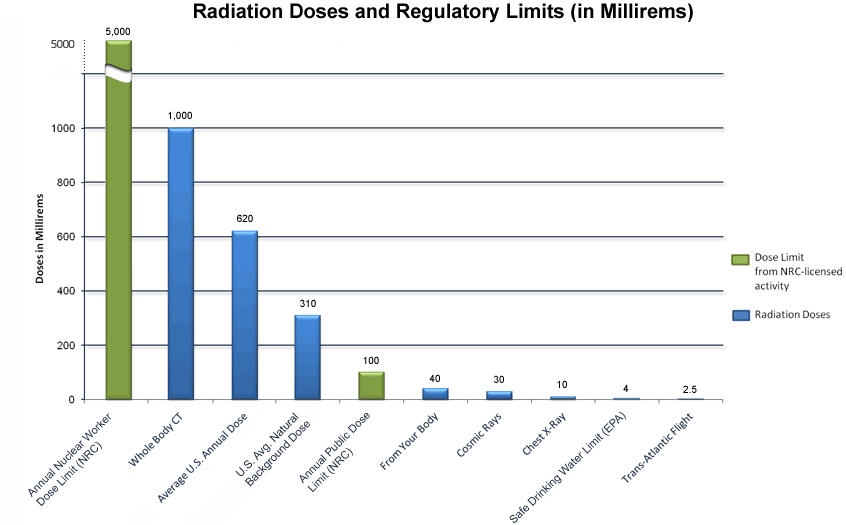
The more meaningful concern with Depression glass, including the uranium varieties, is heavy metal leaching, not radiation. Uranium itself is a heavy metal, and acidic or hot contact can pull uranium ions out of the glass into food and drink, where the chemical toxicity (uranium is nephrotoxic, meaning it damages kidneys) matters more than the radiation. Non-uranium Depression glass can leach lead, cadmium, or other colorant metals under the same conditions.
The safest approach: keep Depression glass and other colored vintage glassware for display or very occasional use with non-acidic, non-alcoholic beverages. Don't store food in it, microwave it, or put hot liquids in it. The combination of heat, acid, and time increases the likelihood that metal compounds will migrate from the glass into food or drink.
If you use vintage colored glass regularly, lab analysis can test for lead and other metals (consumer test kits are unreliable for glass). Or switch to modern colored glassware, which uses safer pigments bound into the glass matrix.
How are glass and ceramic related and what makes them different?
Glass and ceramic are surprisingly similar in makeup. Both are made with naturally-occurring sands, minerals, and sometimes metals, that are heated to extreme temperatures.
The main difference between glass and ceramic is their microscopic structure. Glass has a random, disordered molecular arrangement, whereas ceramic molecules are organized into a crystalline structure.
The health concerns with both materials come from the inclusion of heavy metals (like lead and cadmium).
For ceramics, lead occurs naturally in soil and sometimes ends up in the clay that makes ceramic.
For glass, lead was intentionally added to vintage glass to create clarity and brilliance. Now that this doesn’t happen as often anymore, glass is almost always safe. Glass also doesn’t have any coatings or glazes like ceramics might.
Understanding when these materials contain heavy metals, how the heavy metals stay locked up inside the crystalline structures or not, and how you use them, can help you make choices about safe daily use.
FYI: How and why I use the words non-toxic, chemical-free, toxin, and toxic
I use the words non-toxic, chemical, toxin and toxic, even though there is no agreed-upon definition of the term non-toxic, and that everything, even water, is made of chemicals, so nothing is truly chemical-free. Likewise, toxin refers to a natural substance like a plant poison or venom, whereas toxicant is a more accurate term for the chemicals in products that have a negative health impact. I recognize that something that is toxic does not automatically make it a health risk.
I choose to use these scientifically inaccurate words anyway purely for practical purposes, for now. This is because these words are currently the most culturally agreed-upon, descriptive, and accessible terms that allow people to find the information they’re looking for.
In short, “non-toxic” is shorthand for a complicated problem. I’ll update my terminology if this changes!
Explore More Interior Medicine

All Product Reviews
Non-Toxic Glass Dinnerware
Safe Glass Bakeware
Clinical
Learn ➜ Material Health Guides ➜ Glass