
Non Toxic Baking Pans
The healthiest bakeware is uncoated glass, stainless steel, or cast iron, since none of them need a coating to resist sticking or corrosion. Enameled cast iron and true ceramic come next, when the maker has done third-party leach testing confirming lead and cadmium stay below Prop 65 thresholds. "Ceramic" non-stick bakeware is really a silicon-based sol-gel coating rather than actual ceramic, and it's a reasonable middle option only when the brand has independently tested for PFAS and heavy metal migration, since that testing varies a lot brand to brand. PFAS-based non-stick coatings are the one category worth avoiding outright. How lead, nickel allergy, and Prop 65 warnings specifically apply to cookware is all explained in my Metal Guide, Ceramic Guide, and full methodology.
By Dr. Meg Christensen | Physician-founder of Interior Medicine, a non-toxic home resource built on her background in medicine, biochemistry, epidemiology, and clinical research.

Updated September 3, 2026
Non-Toxic Glass Baking Dishes
Stainless Steel Baking Pans
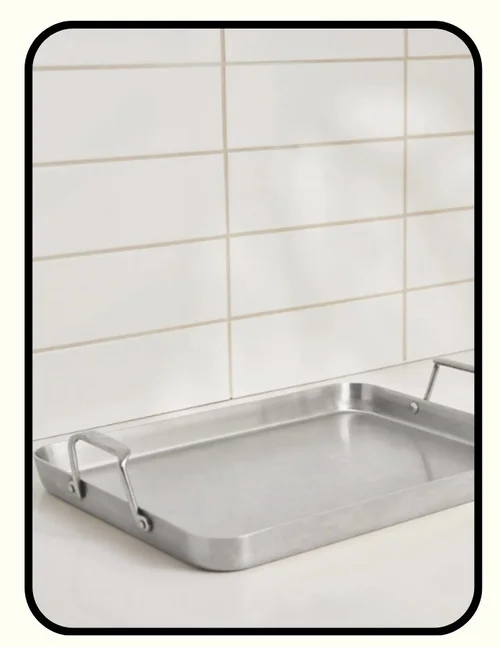 Misen: Safe Stainless Steel Bakeware
Stainless steel is a great non-toxic option for baking, healthy enough that you'll get less exposure from cooking in it than from eating food or taking a multivitamin. Misen's 100% stainless steel roasting pan has edges and handles, and doubles as a sheet pan, roasting pan, or griddle. It doesn't warp and is an internet favorite, with no coatings.
Product rating
See the rating scales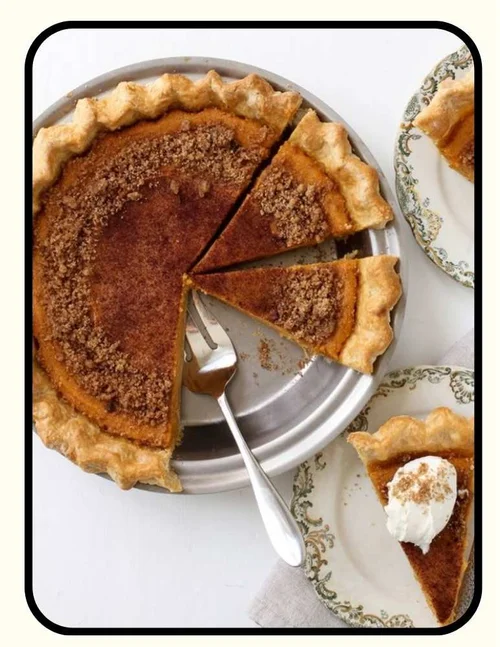 360 Cookware: Non-Toxic Stainless Steel Bakeware
360 Cookware has an entire bakeware line, too. You'll find classic cookie sheets, cake pans, loaf pans, and even cookie cutters. These are made with 316 stainless steel, which isn't necessarily healthier than regular stainless, but is more durable and corrosion resistant which is good for long term sustainability.
Product rating
See the rating scales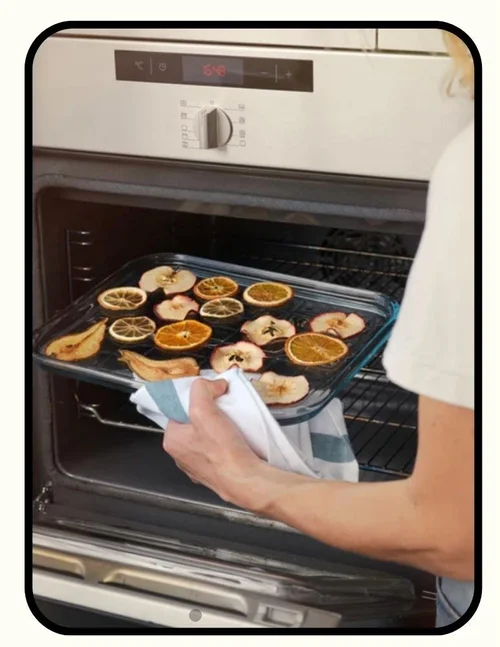 French PYREX: Safest Glass Bakeware
French PYREX (uppercase!) is made from 100% borosilicate, a combination of boron and silica. Boron is in many nutritional supplements, and silica is the main mineral glass is made of. It's more resistant to heat changes than American Pyrex, making it ideal if you want to stick with glass for thinner bakeware like cookie sheets. It's imported into the US from France by a woman dedicated to safer glass bakeware.
Product rating
See the rating scales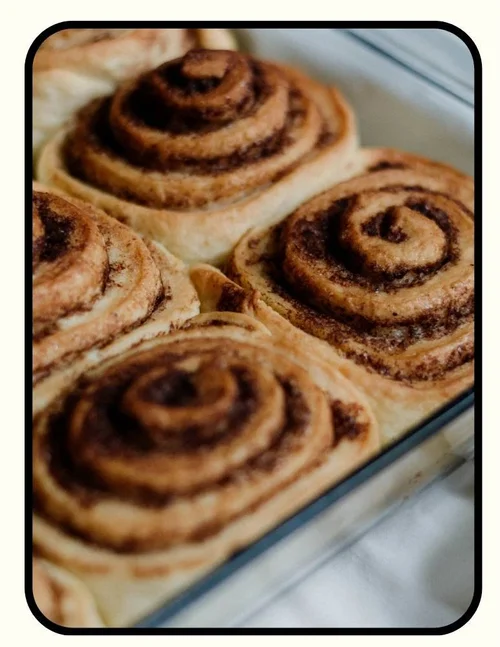 Pyrex: Healthiest Glass Bakeware
Glass is the healthiest material for baking and cooking. As long as you don't subject it to wild temperature changes, like freezer to oven or sudden hot water, standard Pyrex is as non-toxic as you can get in the kitchen. It's boring, but coating-free, and made with simple minerals that are heated into a liquid and formed into bakeware shapes.
“Ceramic” Non-Stick Bakeware
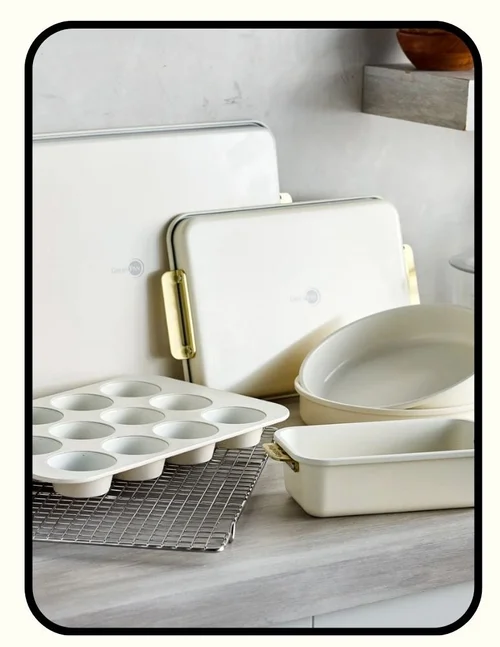 GreenPan: Best Non-Toxic Non-Stick Bakeware
If you want bakeware with a non-stick coating, GreenPan is the best option because they're the most transparent, thoroughly tested, and best from a material standpoint. While no company fully discloses their "ceramic" non-stick coating ingredients, and they're all imperfect, GreenPan is definitely free of nanomaterials including nano-titanium, and has always been free of all PFAS. Their coating brand name is Thermolon, and it meets Prop 65 standards for lead and cadmium. They've also done testing to confirm that even at 850° the pans don't release toxic fumes. It's still better to bake on completely known surfaces, but this is a pretty good option if you require non-stick, a step above the rest in this category.
Product rating
See the rating scales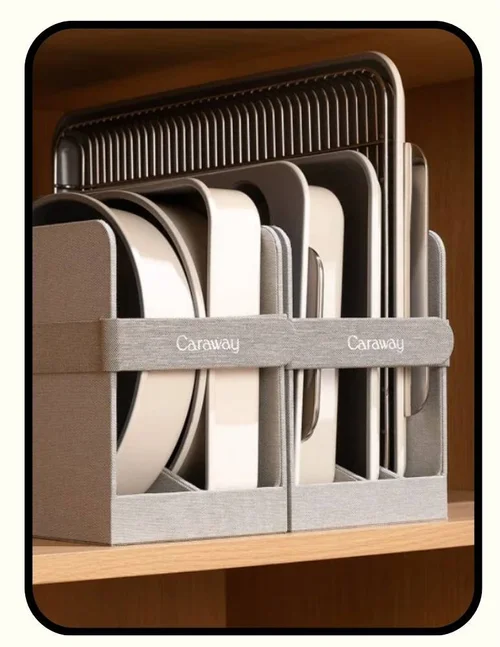 Caraway: Safer "Ceramic" Non-Stick Bakeware
Caraway's "ceramic" non-stick line is an OK option from a material health point of view. They've confirmed via email that the coating is nano-based, likely nano-titanium dioxide. But they've also done leach testing to prove no heavy metals, titanium, or PFAS escape into food per US and German safety limits. They're entirely PFAS free, which is better than most non-stick lines. They're also very aesthetic, and gloriously organizable.
Product rating
See the rating scales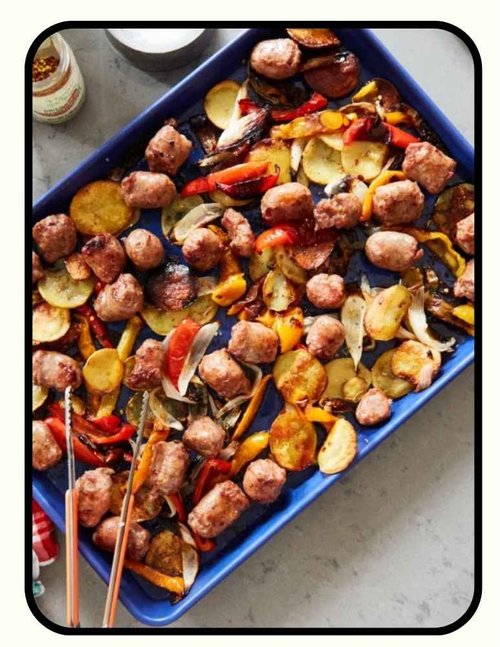 Great Jones: Not-So Non-Toxic Bakeware
Listed here to thoroughly round out the popular brands of "ceramic" non-stick bakeware, and because it comes up in questions often, Great Jones is the least healthy of the bunch. Its statement that pieces are "PTFE and PFOA free" makes it sound like the line is free of forever chemicals, but PTFE and PFOA are just two of thousands of types of PFAS. Great Jones confirmed via email that its bakeware is PFOA-free but not entirely free of PTFE or PFOS. The pieces have passed industry standard lead tests and are free of cadmium, and the brand was kind, honest, and prompt in email responses.
Product rating
See the rating scales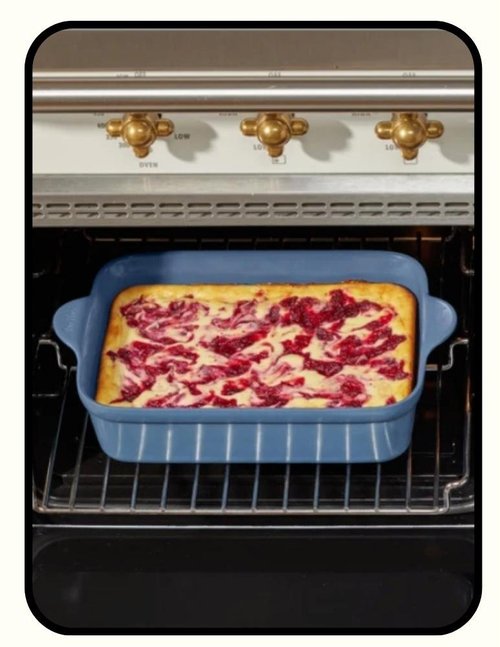 Our Place: Safe "Ceramic" Non-Stick Bakeware Set
In terms of material health, transparency, and testing, Our Place's "ceramic" non-stick is very similar to Caraway's, and choosing between them comes down to aesthetic, reviews, and features. They also use nanomaterials in their coating, are PFAS free, and are tested to Prop 65 standards to ensure no lead or cadmium leach. Like Caraway, not perfect, but still definitely better than untested or PFAS-containing non-stick bakeware.
Product rating
See the rating scalesCast Iron Baking Dishes
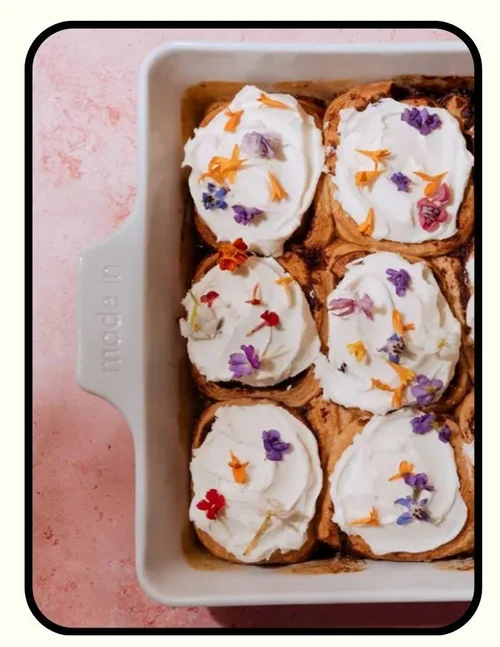 Made In: Healthiest Ceramic Bakeware
Made In's porcelain (a type of ceramic) bakeware line is made from a 200-year-old French ceramic recipe. The clay, sourced from Burgundy, isn't glazed or coated with anything, and is inherently non-stick. It's lead, cadmium, and aluminum free, with ingredients posted publicly, all naturally occurring minerals common in ceramic clay. Third-party testing of the clay confirms it meets Prop 65 requirements. Ceramic is super heat resistant, so you can take these straight from the freezer to the oven or vice versa, and they look nice for serving too.
Product rating
See the rating scales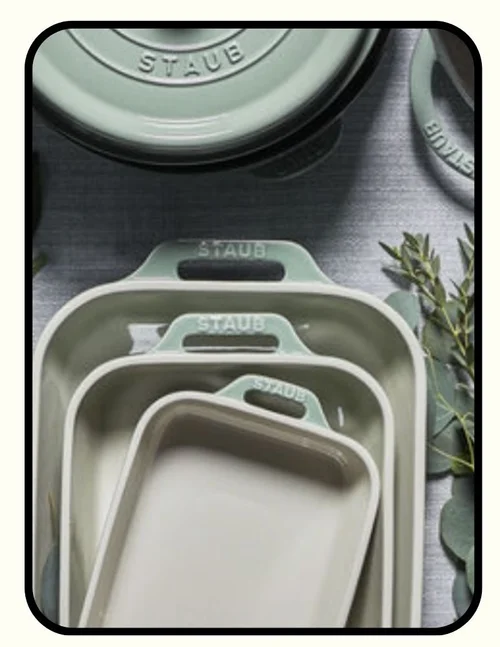 Staub: Safer Enameled Cast Iron Bakeware
If you're looking for enameled cast iron bakeware, Staub is a healthy choice. Leach-tested enamel is made from sand and mineral pigments, and testing confirms heavy metal leaching is non-existent or minuscule, making it a pretty safe bet, unlike "ceramic" non-stick coatings, which are actually polymer-based and proprietary. Staub has done third-party testing and confirmed via email that they meet EU and Prop 65 standards, using traditional sand and pigment-based enamel with no PFAS, nanomaterials, lead, or cadmium.
Product rating
See the rating scales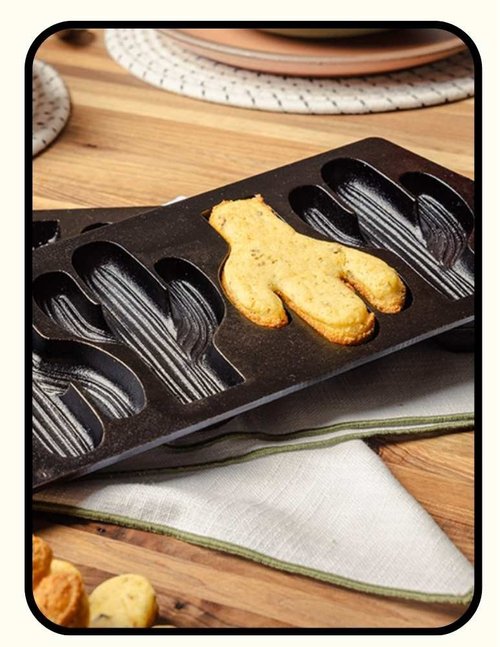 Lodge: Healthiest Cast Iron Bakeware
Lodge has an entire line of cast iron bakeware, including muffin tins, bundt pans, and other specialty shapes, along with standard casserole dishes, baking sheets, and loaf pans. Cast iron is super healthy and gets better with time as you season it. It arrives pre-seasoned with vegetable oil so it's immediately non-stick, and you can start using your own favorite cooking fat with it right away.
Porcelain Baking Pans
Looking for something specific? If you don't see the product or brand you're curious about, you can request a review here, or run it through the Second Opinion Product Checker to evaluate it yourself. Want to go deeper? My free course covers how to evaluate any product's materials yourself.
Join the Newsletter
Join the Newsletter
More Healthy Design For You
Pots and Pans
The Healthiest Cutting Boards


Organic Pillows
The Best Air Purifiers

