
Non Toxic Pots and Pans
The safest cookware is made with uncoated stainless, carbon steel, titanium, ceramic, glass, or cast iron. “Ceramic” non-stick cookware has its place, as long as it has third party testing showing it doesn’t leach. I explain why Prop 65 causes unnecessary fear with cookware, and evaluate each brand based on material science and data, using consistent material health scales, all explained in my full methodology.
By Dr. Meg Christensen | Physician-founder of Interior Medicine, a non-toxic home resource built on her background in medicine, biochemistry, epidemiology, and clinical research.

Updated June 1, 2026
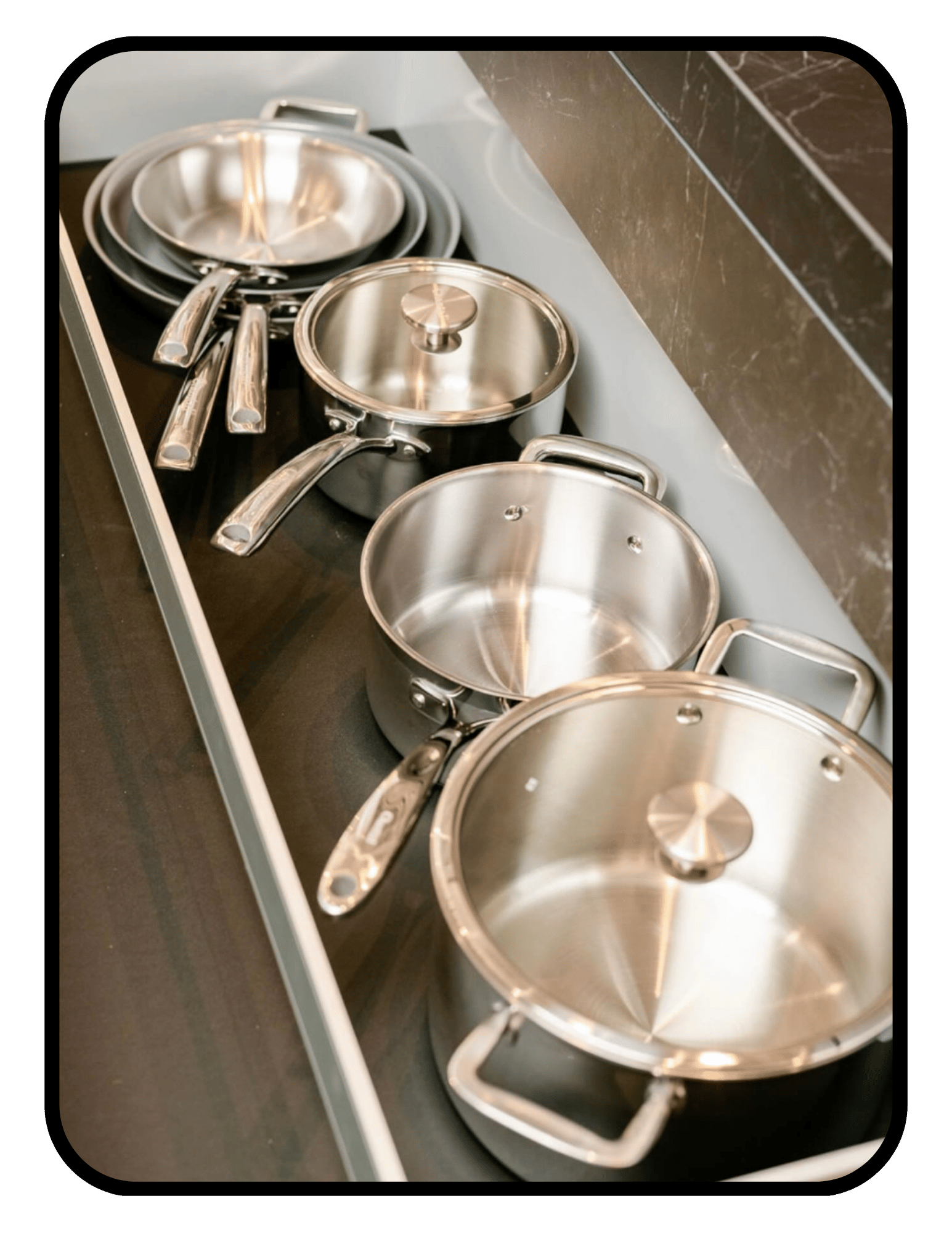
Nickel-Free Stainless Steel
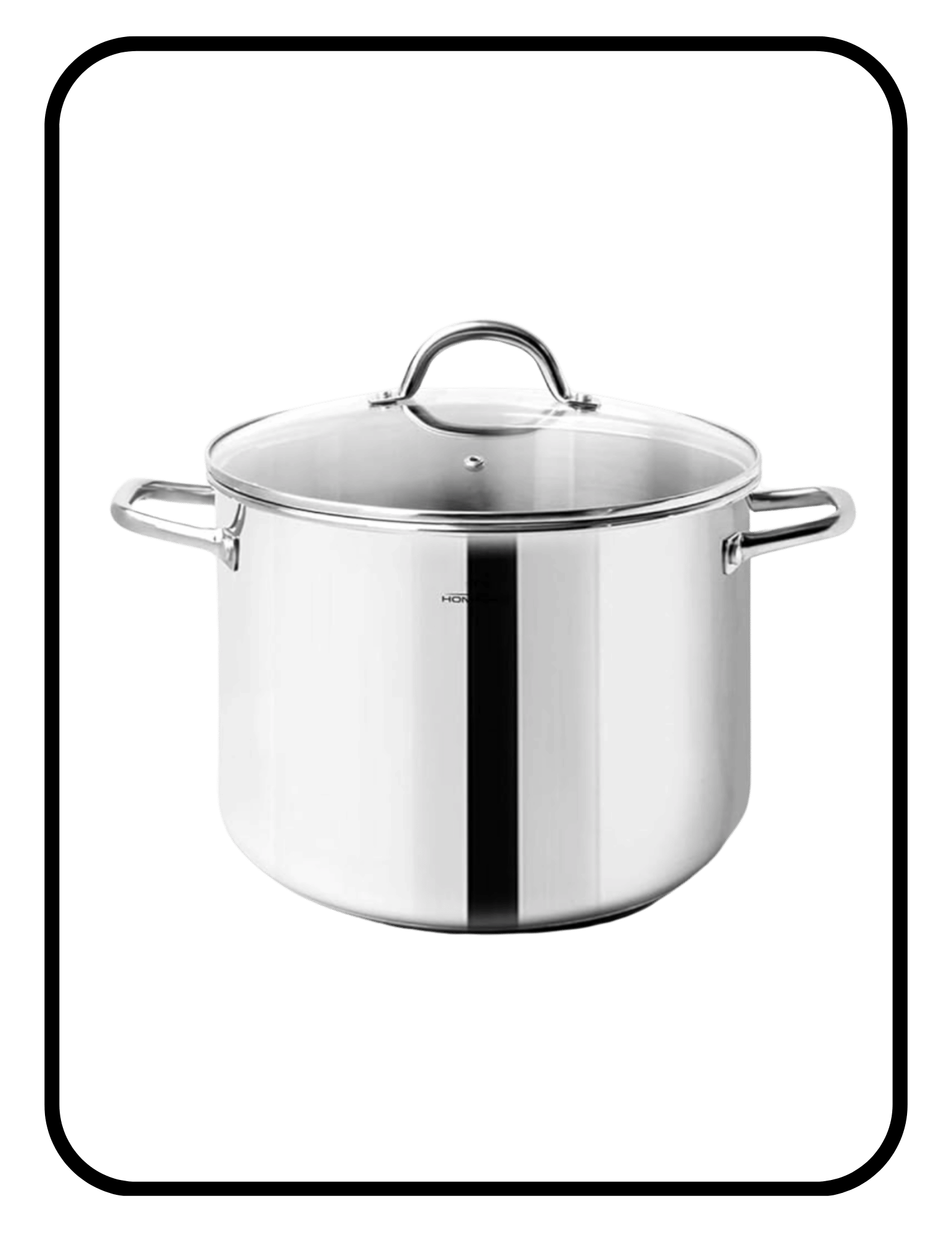
Chantal Induction 21 Nickel-Free Stainless Steel Cookware
Chantal’s Induction 21 line is nickel free and what I use for all of my saucepans and small pots at home. Stainless steel pots are very safe, and you ingest less chromium and nickel from cooking in one than you do from eating food or taking a multivitamin, but I go with nickel free because I have a nickel allergy. These are made of Japanese steel, with a copper center for even heat distribution, and strengthened with titanium. They’re also coating-free— no PFAS or nanoparticles, just steel, as confirmed by email. They strike a nice balance of affordability and quality, and work well on any type of stovetop (including induction.) Read more about nickel, chromium, and stainless steel steel safety in my Metals Guide.


Homichef Nickel-Free Affordable Stainless Steel Pots and Pans
This affordable nickel-free brand of pots and pans are less durable than the Chantal ones because they don’t contain strengthening titanium. However, they are truly nickel-free stainless steel, and can be a great choice if you’re prioritizing affordability with a nickel allergy. Their cookware sets are super affordable, even compared to regular stainless steel brands. They’re also coating free— no PFAS or nanoparticles, just steel, as confirmed by email. They’ve done extractable heavy metal testing, which is nice assurance. The only reason you’d need to avoid these is if you had a chromium allergy, which is quite rare.

Stainless Steel
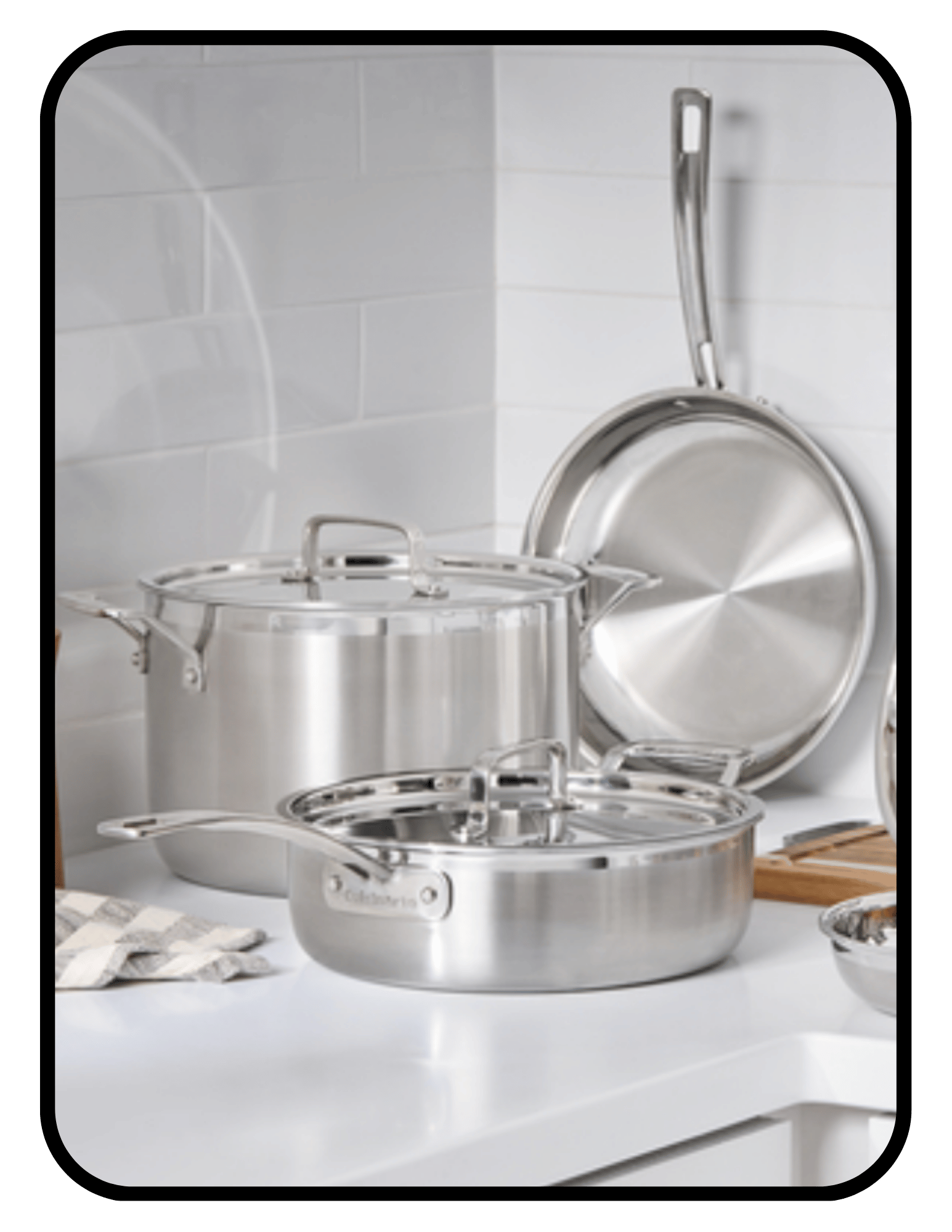
Cuisinart Stainless Steel Cookware
Cuisinart’s classic stainless steel cookware, along with other affordable brands like Quince, IKEA, T-Fal, and others, are truly safe options as they are all uncoated and disclose their stainless steel ingredients. The amount of nickel and chromium that potentially leaches from them is less than what is in a multivitamin, nickel and chromium are only dangerous if you inhale their dust everyday and it irritates your lungs (like wood dust does, which also requires a Prop 65), and because the company is legally protecting itself rather than considering routes of exposure. This is not a dismissive “levels are so low they won’t affect you” argument (which drives me crazy). Read my Metal Guide for all the details!
Caraway Stainless Steel Cookware
Caraway’s regular stainless steel line is actually pretty great— they’re coating free— no PFAS or nanomaterials— just steel, as confirmed by email. They’ve also done extractable heavy metal testing for 16 metals and all were non-detectable. Since they also make non-stick pans with coatings, I appreciated their very fast and thorough email response confirming these have no coatings, and that they do this extra testing step to assure us their stainless line is totally safe. I include Caraway here because they’re one of the brands that advertise being non-toxic, and I get a lot of questions about. Read more about what I think of their “ceramic” non-stick pans in that section, below.
Lodge offers cast iron pots and pans at a very affordable price. I use these all the time and they’ve developed a great seasoning on them, so they’re totally non-stick now. These now come pre-seasoned with vegetable oil; you can always add your fat of choice and season it yourself in the oven upon arrival. One of the most classic, super-healthy cooking surfaces, that come in lots of shapes and sizes, as long as you can tolerate their weight (a bit heavy!) and seasoning maintenance.
If you want a higher-end look than Lodge, but with the same level of material health, Smithey makes polished cast iron and carbon steel pots and pans with optional glass lids. It comes pre-seasoned with their blend of grapeseed oil, sunflower oil, and beeswax — you can buy some for future seasoning separately. You can even use soap to clean these, unlike standard cast iron.
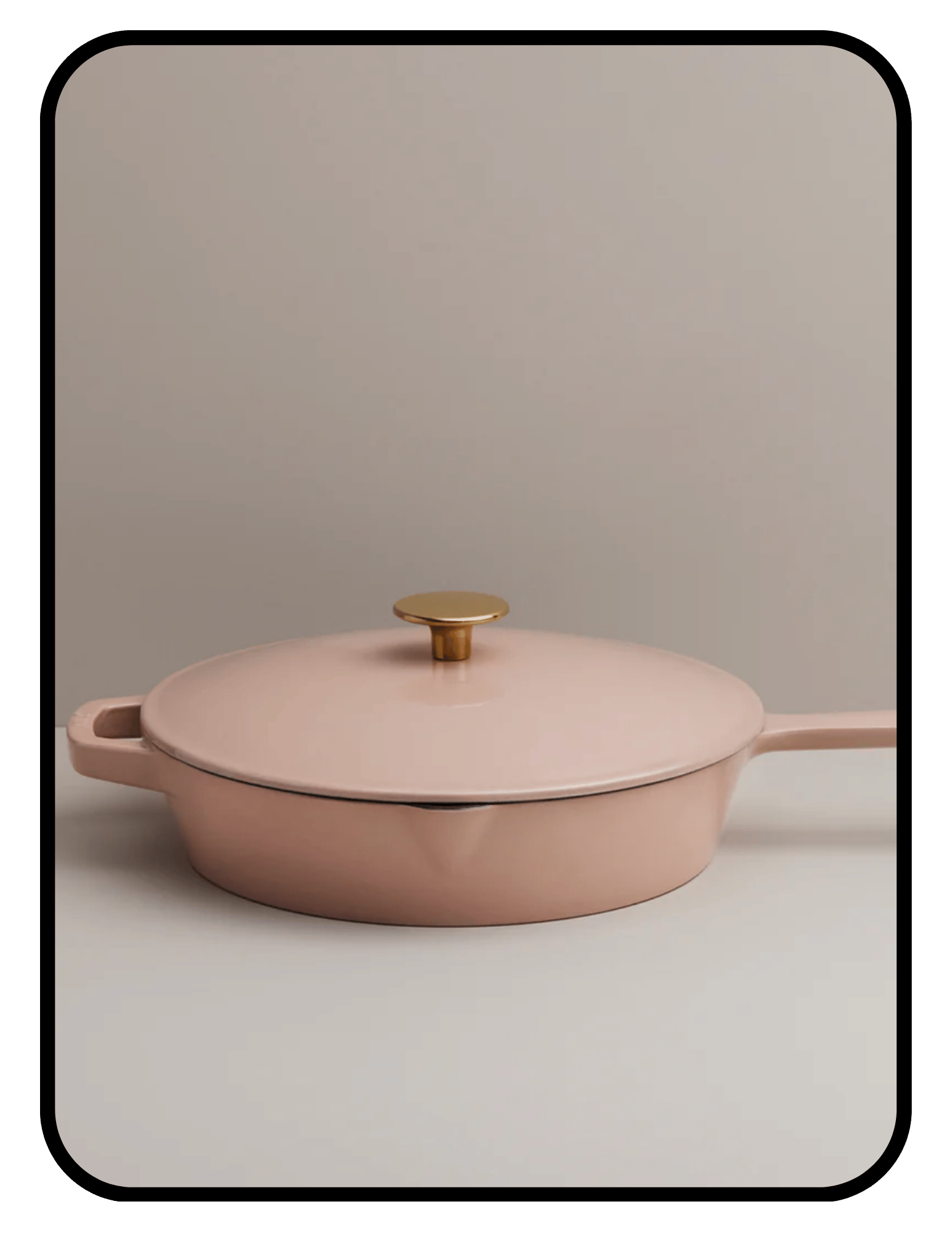
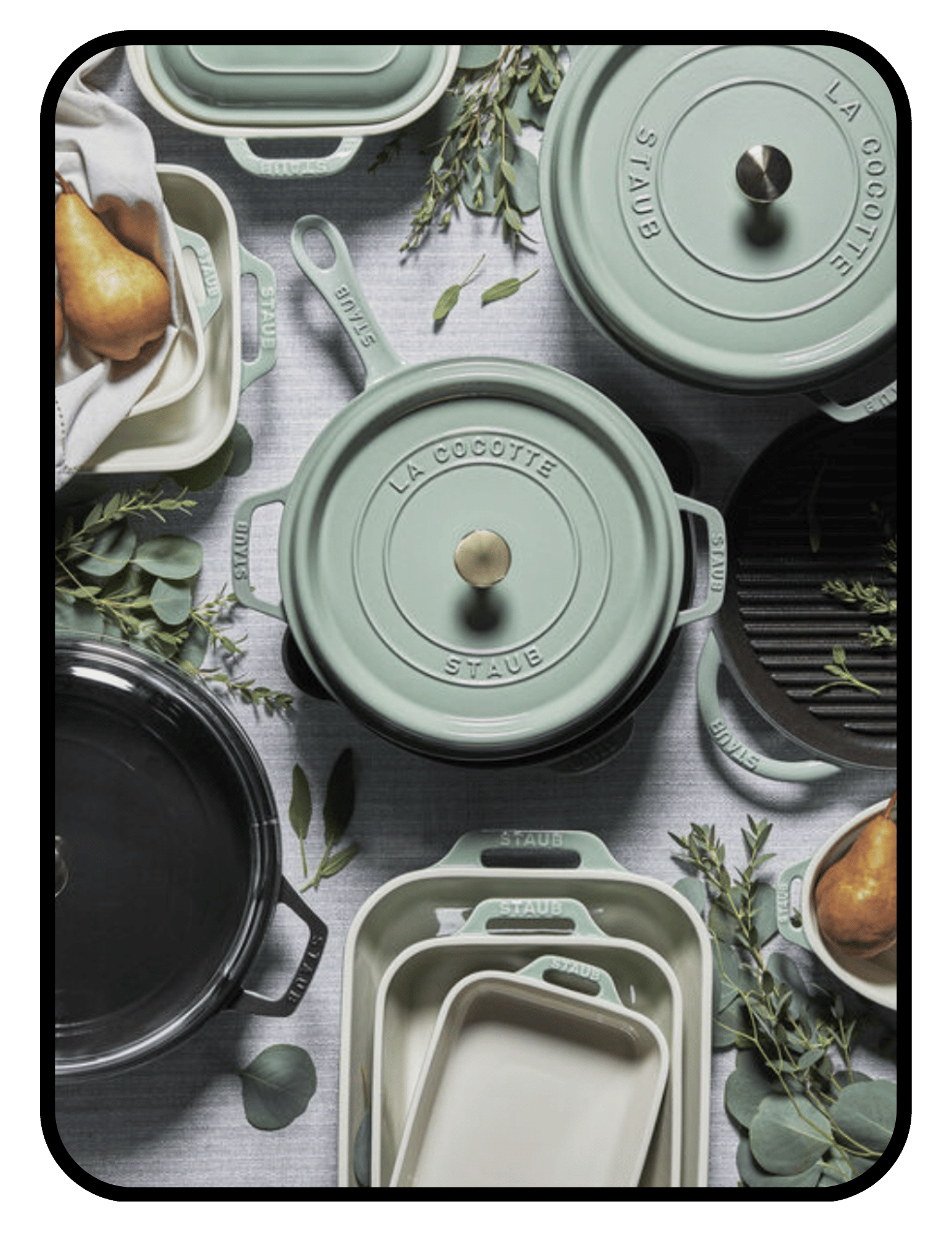
If you prefer enameled cast iron for a more non-stick finish, Kana is a healthy choice. They do third party leach testing to confirm no heavy metal leaching, making their enamel a safe bet. Kana uses 40% recycled iron for their base, and Tomatec enamel, which means its been tested and meets Prop 65 requirements.
Staub is another healthy choice for enameled cast iron cookware. Staub has done third party testing and confirmed via email they meet EU and Prop 65 standards— and reassured me that they use traditional sand and pigment -based enamel (no PFAS, nanomaterials, lead, or cadmium.)
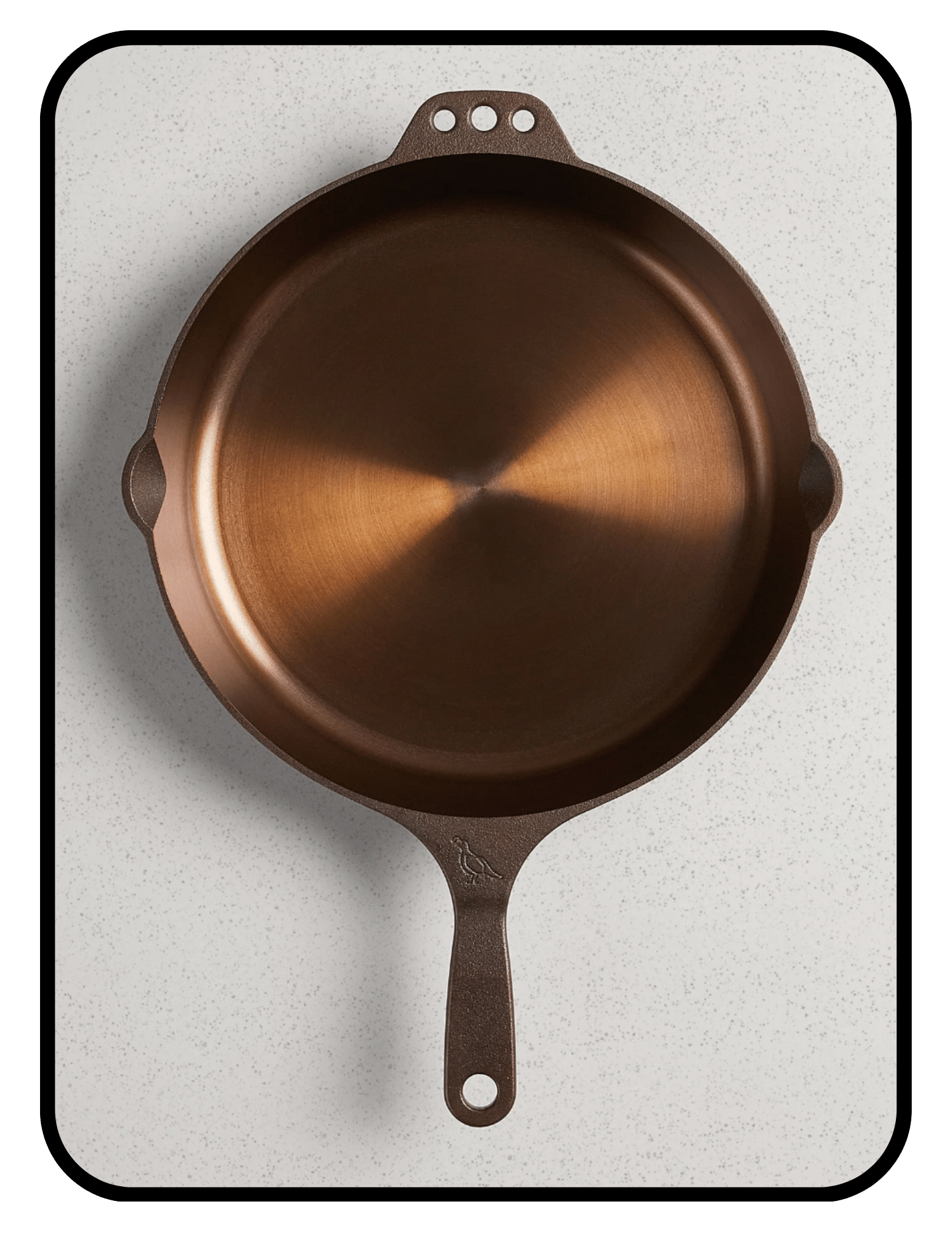
Cast Iron: Oiled, Polished, and Enameled
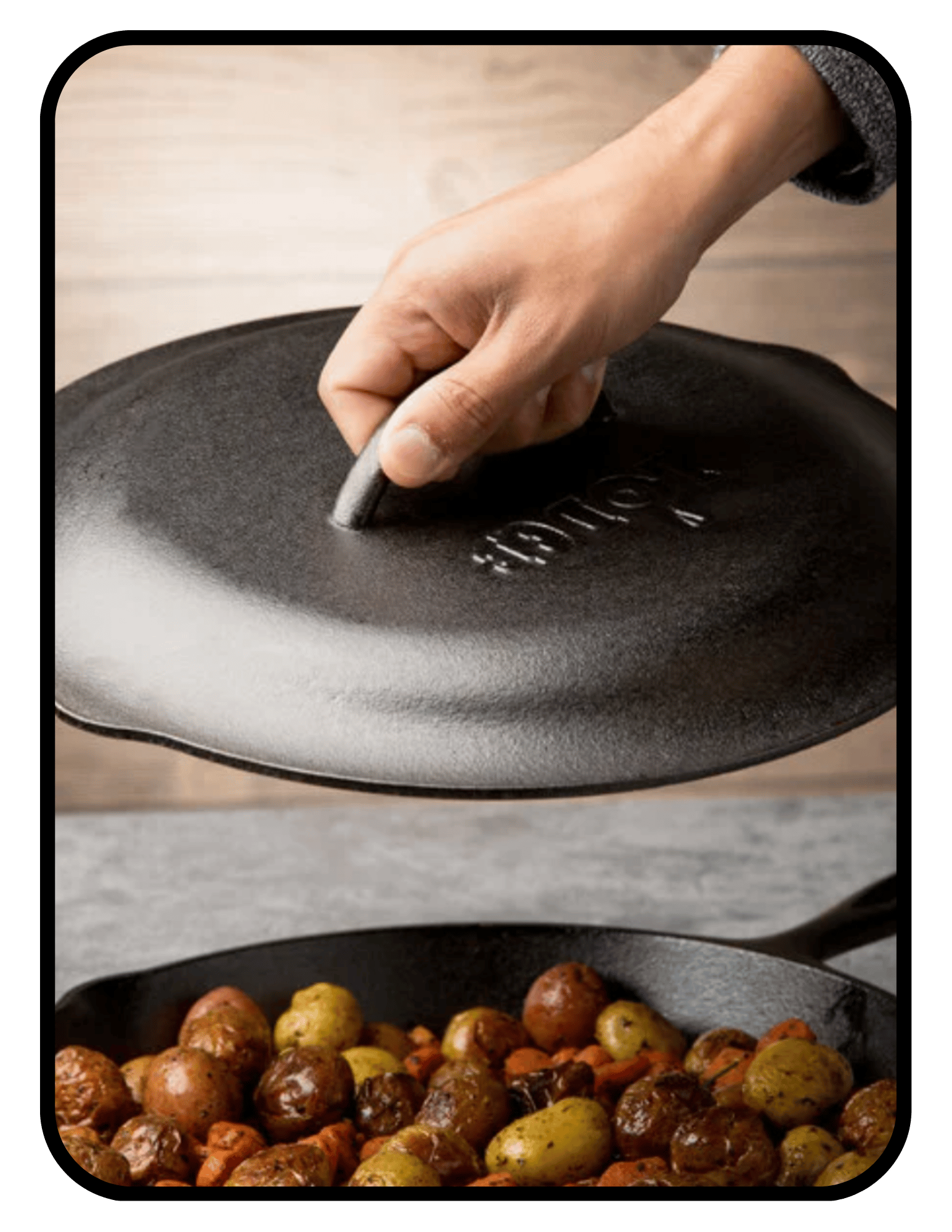

Made In Seasoned Carbon Steel Cookware
Made In, like Lodge, offers seasoned carbon steel cookware, but it has a more polished look. Their pieces are not nitrided like Misen, so require some maintenance to remain non-stick, but they have a very wide array of options, shapes, and sizes of carbon steel cookware, including woks, roasting pans, and griddles. I appreciate that they go above and beyond with third party testing to prove that no PFAS are added (FYI, the results mean that the third party testing lab has the ability to detect down to 0.02 parts per billion, and the result is below that, meaning it’s zero — not that it contains 0.02 ppb. A super healthy choice with a nice look.
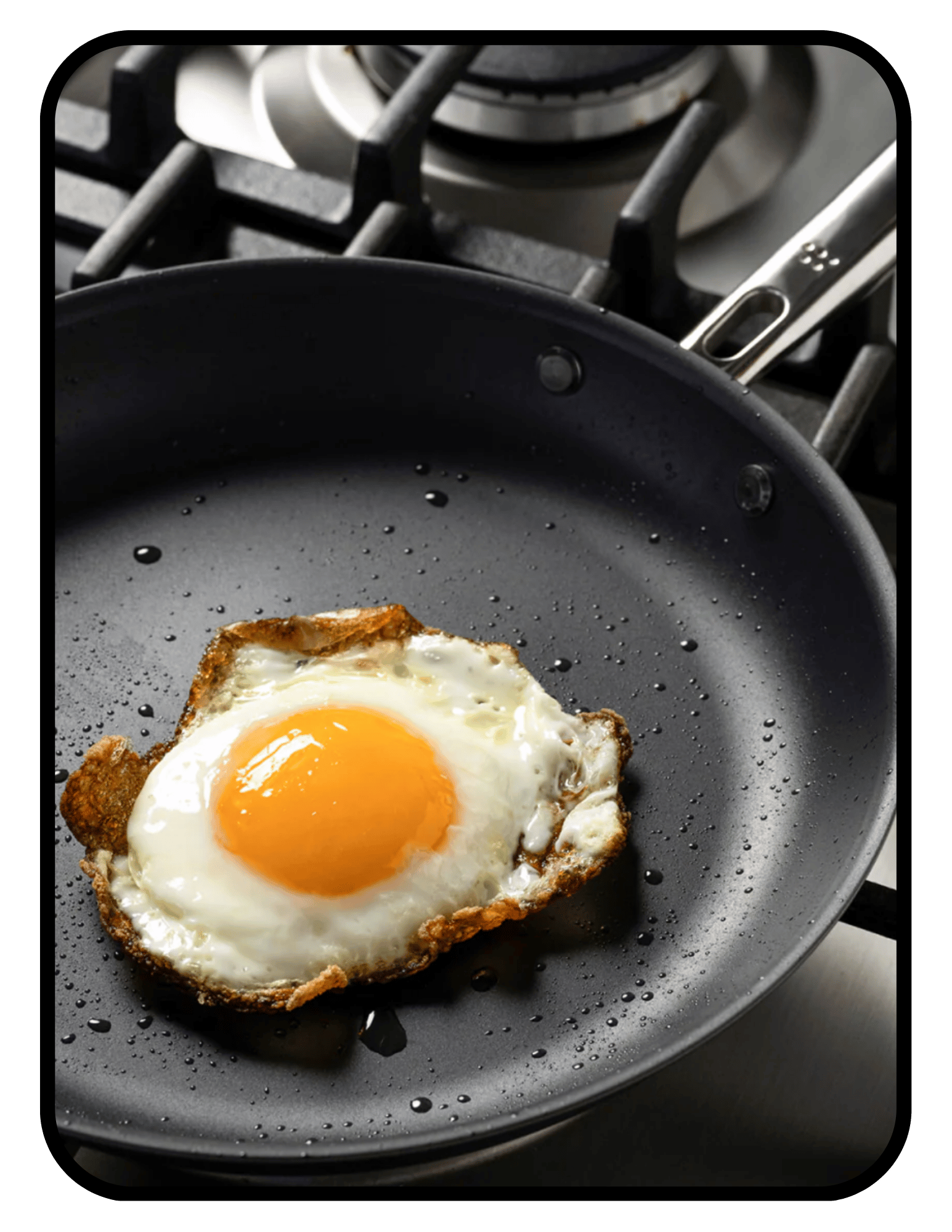
Carbon Steel
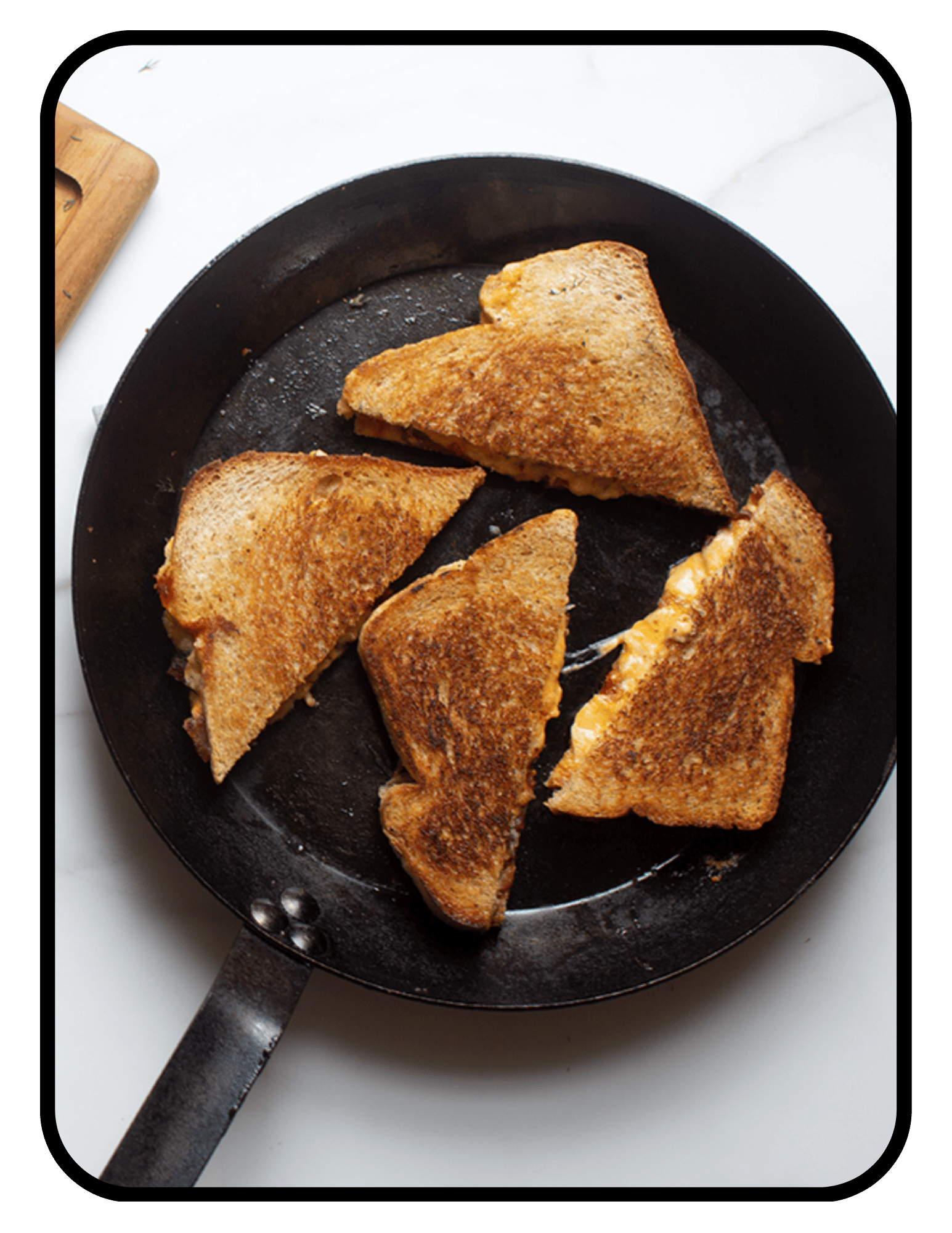
Misen Nitrided Non-Stick Carbon Steel Pan
This is the safest non-toxic pan, and the first one I’ve actually used in a decade. It’s made of carbon steel, but the top layer has been hardened by nitrogen. You can see a video of the nitriding process here. I always avoided “non-toxic ceramic non-stick” pans, which are coated, not with ceramic, but with a secret sol-gel (read more below.) They’re safer than Teflon but I prefer knowing ingredients than just trusting they’re safe. Nitrided carbon steel is not actually a coating, and is instead a physical change in the top layer of steel when it’s exposed to nitrogen. Nitrogen makes up 78% of air, and when it’s forced into steel at high pressure, it makes the carbon steel very hard and truly non-stick. Performs just like a non-stick pan, and is truly healthy. My current favorite.
Lodge Seasoned Carbon Steel Cookware
Lodge offers carbon steel pots and pans at a very affordable price. They aren’t nitrided like Misen, so do require some seasoning and maintenance over time, but come pre-seasoned with vegetable oil; you can always add your fat of choice and season it yourself in the oven upon arrival. Carbon steel is simply lighter weight than cast iron, with very similar make-ups, and both are super-healthy cooking surfaces. Fun fact: these pans become non-stick when you apply oil at high heat —the high heat causes a change in the chemical structure of the oil, and it bonds to the surface of the pan. It’s called polymerization, or seasoning— here’s a guide on how to do it.
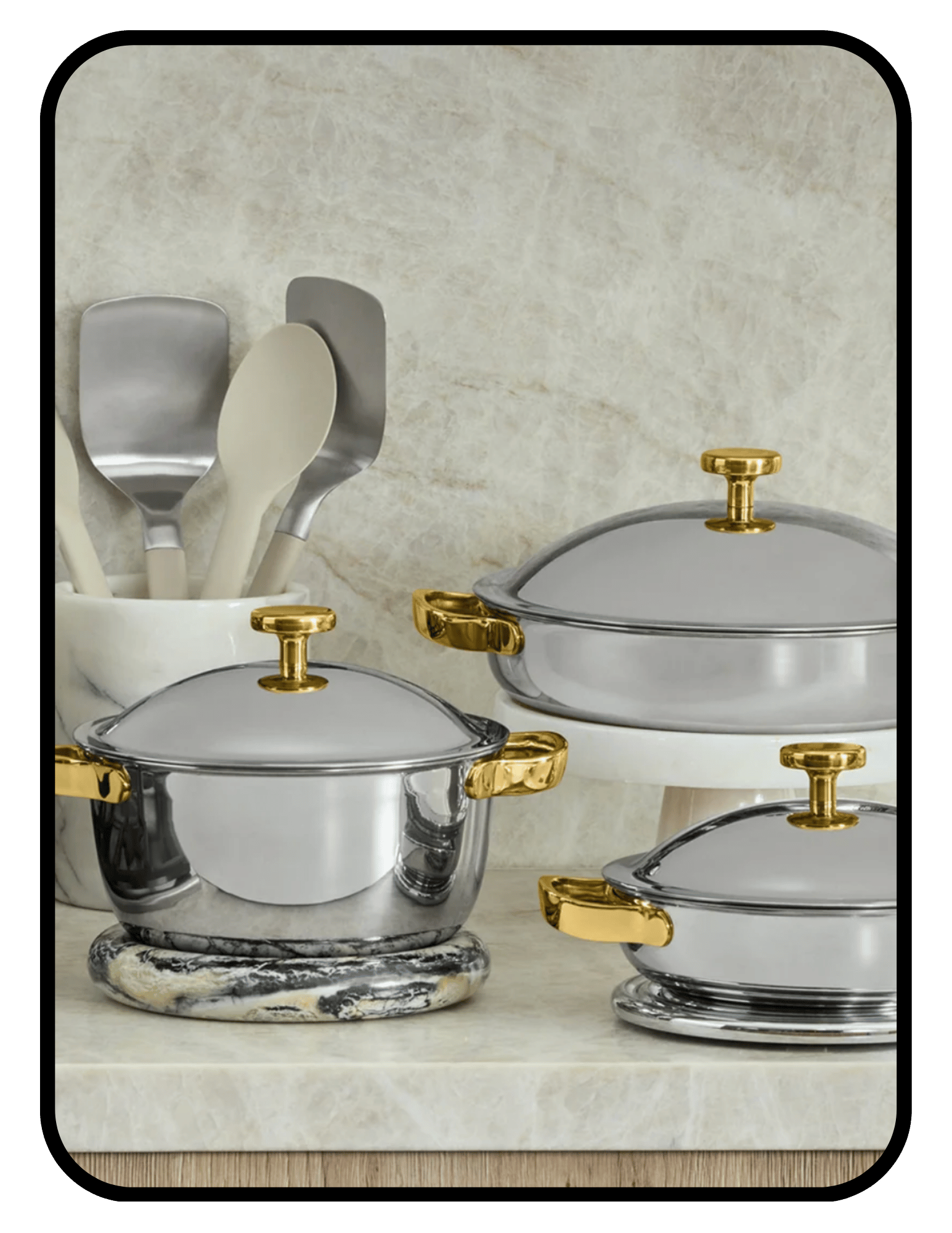
Titanium is a very healthy, non-toxic, and non-reactive metal to cook with, and because titanium allergy is ultra-rare, I consider it even safer than stainless steel, since nickel and chromium allergies are slightly more common. This is why it’s often used in medical devices— it’s totally inert to our bodies. Taima’s titanium pots and pans are made without any coatings whatsoever, including no nano-titanium, as confirmed by email. Their pans have a slip-scale design etched into them for natural non-stick purposes. Inside are layers of steel and aluminum for durability and heat distribution; all food surfaces are 100% pure titanium.

Our Place has great coating-free titanium cookware sets and singles. Like Taima, inside are layers of steel and aluminum for durability and heat distribution; all food surfaces are 100% pure titanium and they confirmed they don’t use nano-titanium coatings in this line. The surface is etched— the pattern is pressed into ultra-hardened titanium to make the interior naturally hydrophobic, which creates a nonstick effect. Healthy, induction compatible, and really pretty.
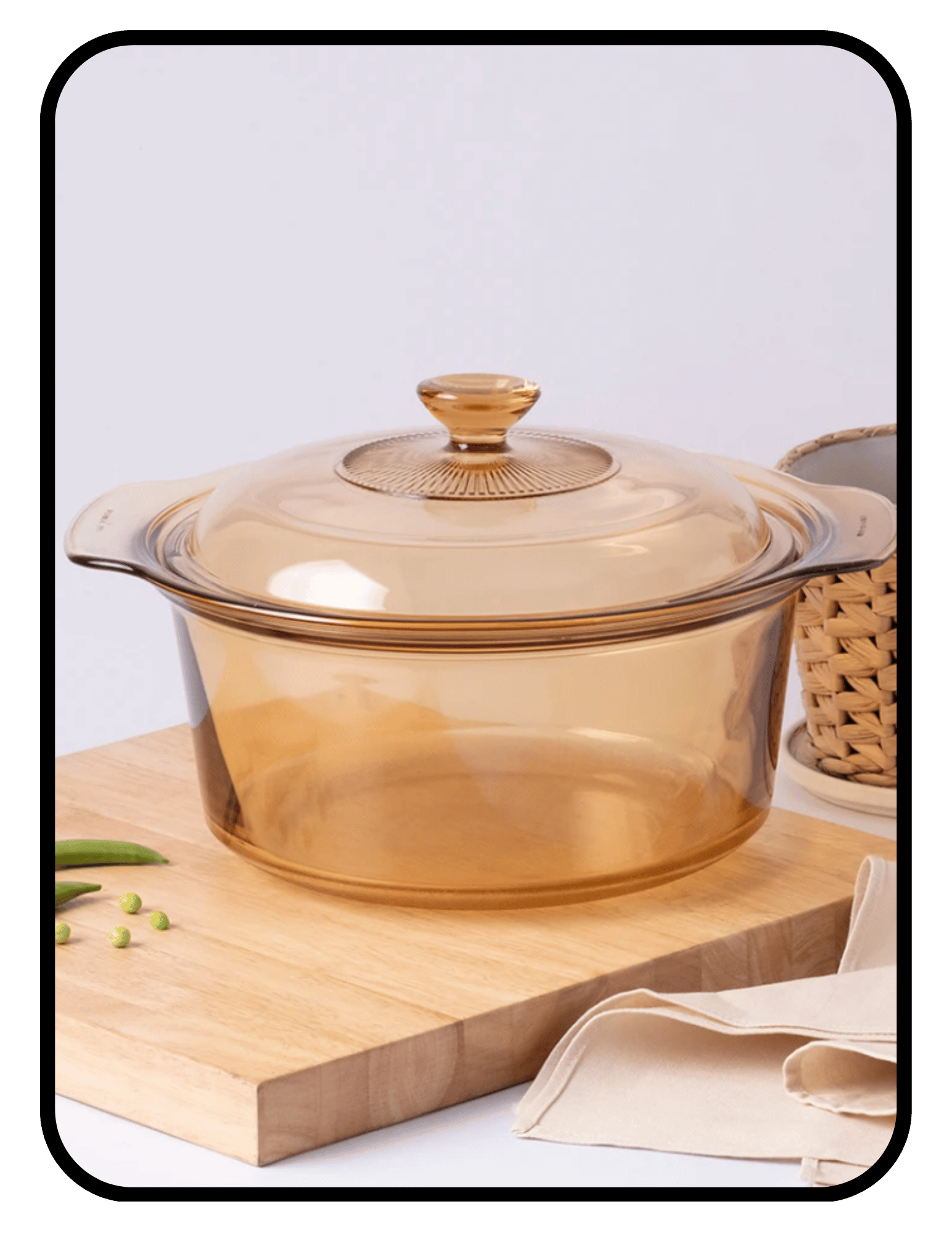
Glass
While most glass pots and pans have poor reviews, the Visions brand has great ones. These were popular abroad decades ago, and are making a comeback in the US now. Glass and ceramic are actually very similar materials, and these are made of a glass-ceramic mineral blend called beta-quartz. It’s totally non toxic, lead free, non-reactive to even acidic foods, and super heat resistant, meaning you can take them from the stovetop to the freezer if you wanted. The products look vintage, but the entire line is still in production. Meets Prop 65 requirements. A solid choice for healthy cooking if you like the look and the concept of glass.

Titanium
Non Toxic Ceramic Non-Stick
(FYI, “ceramic” non stick is not actually ceramic—it’s a mixture of silicon, oxygen, and proprietary ingredients.)
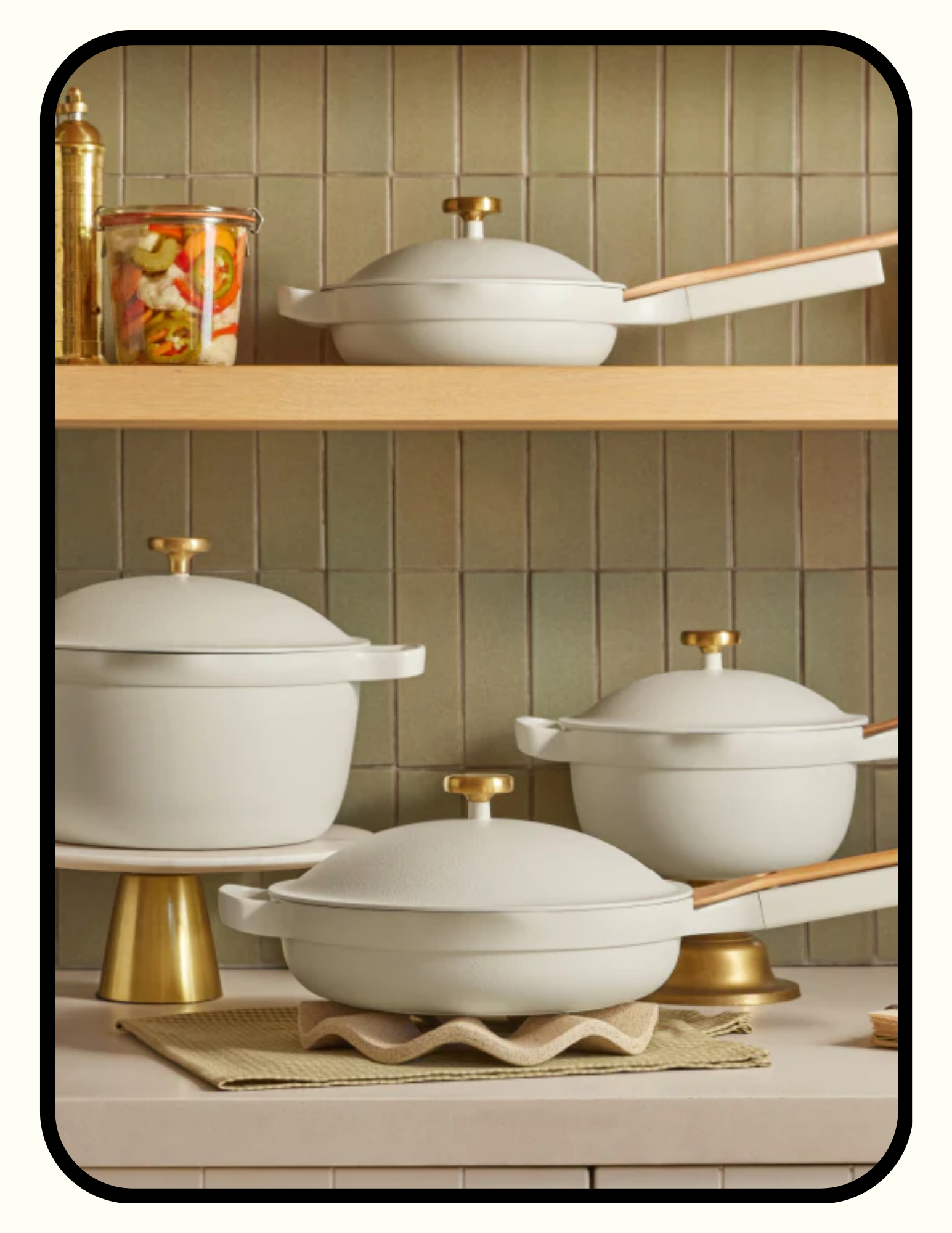
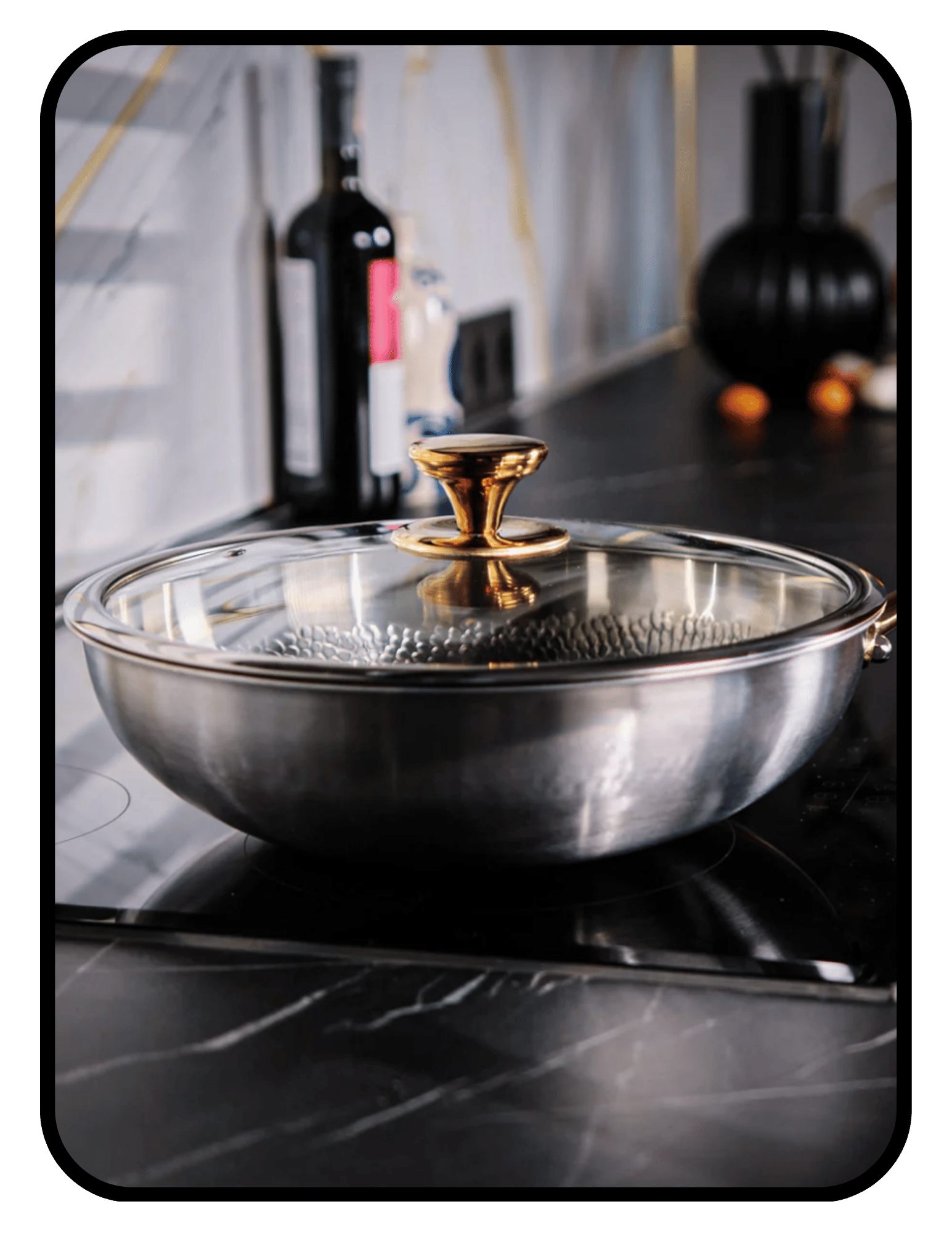
In terms of material health, transparency, and testing, Our Place’s “ceramic” non stick is very similar to Caraway’s, and choosing between them would just come down to your aesthetic style, their reviews, and what kinds of features you’re looking for. They also use nanomaterials in their coating, are also PFAS free, and are tested to Prop 65 standards to ensure no lead or cadmium leach. They were very patient, kind, and thorough with my many emails. Like Caraway, not perfect, but still better than untested or other PFAS non-stick varieties in the same price range and aesthetic (like Great Jones, which does use PFAS still.)
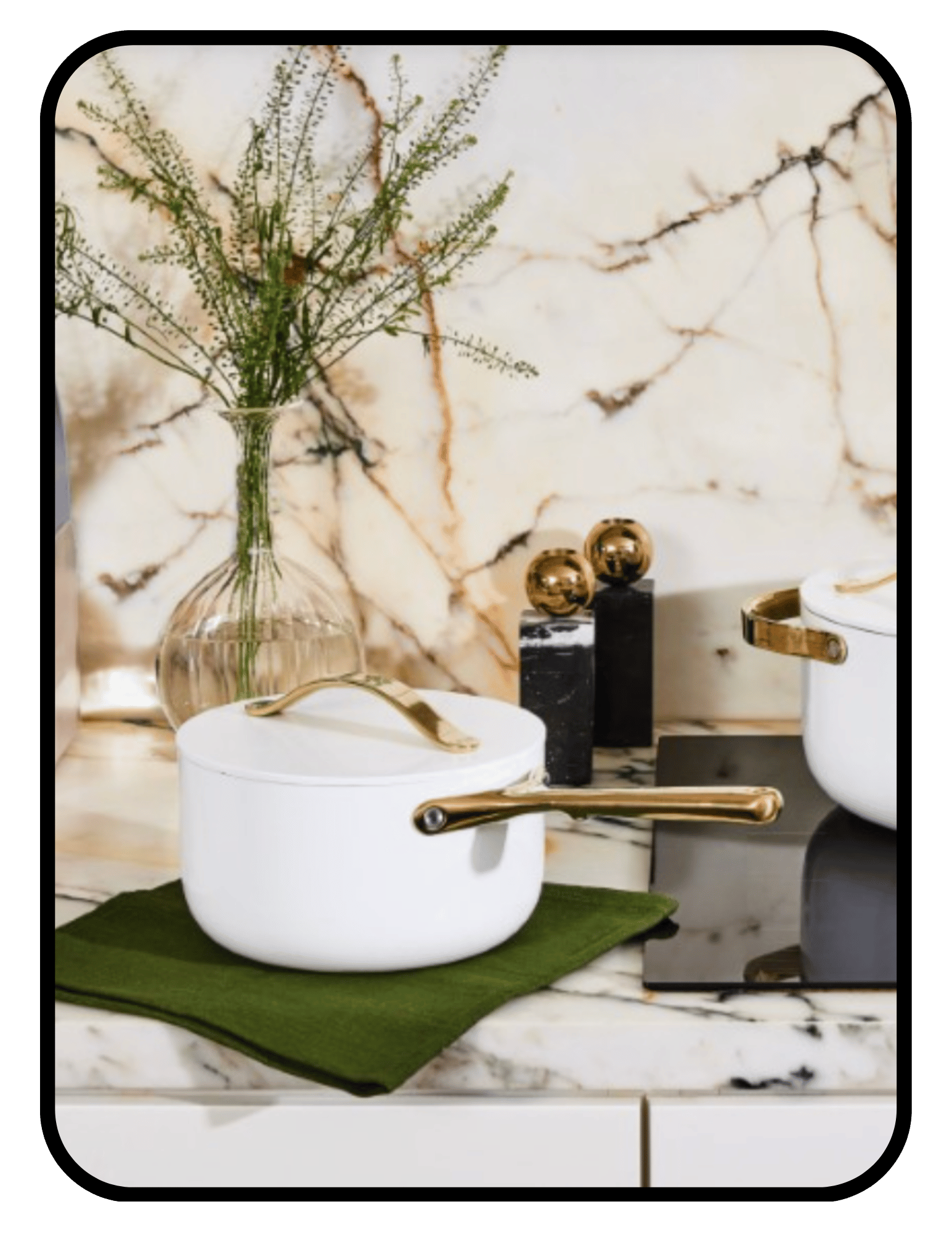
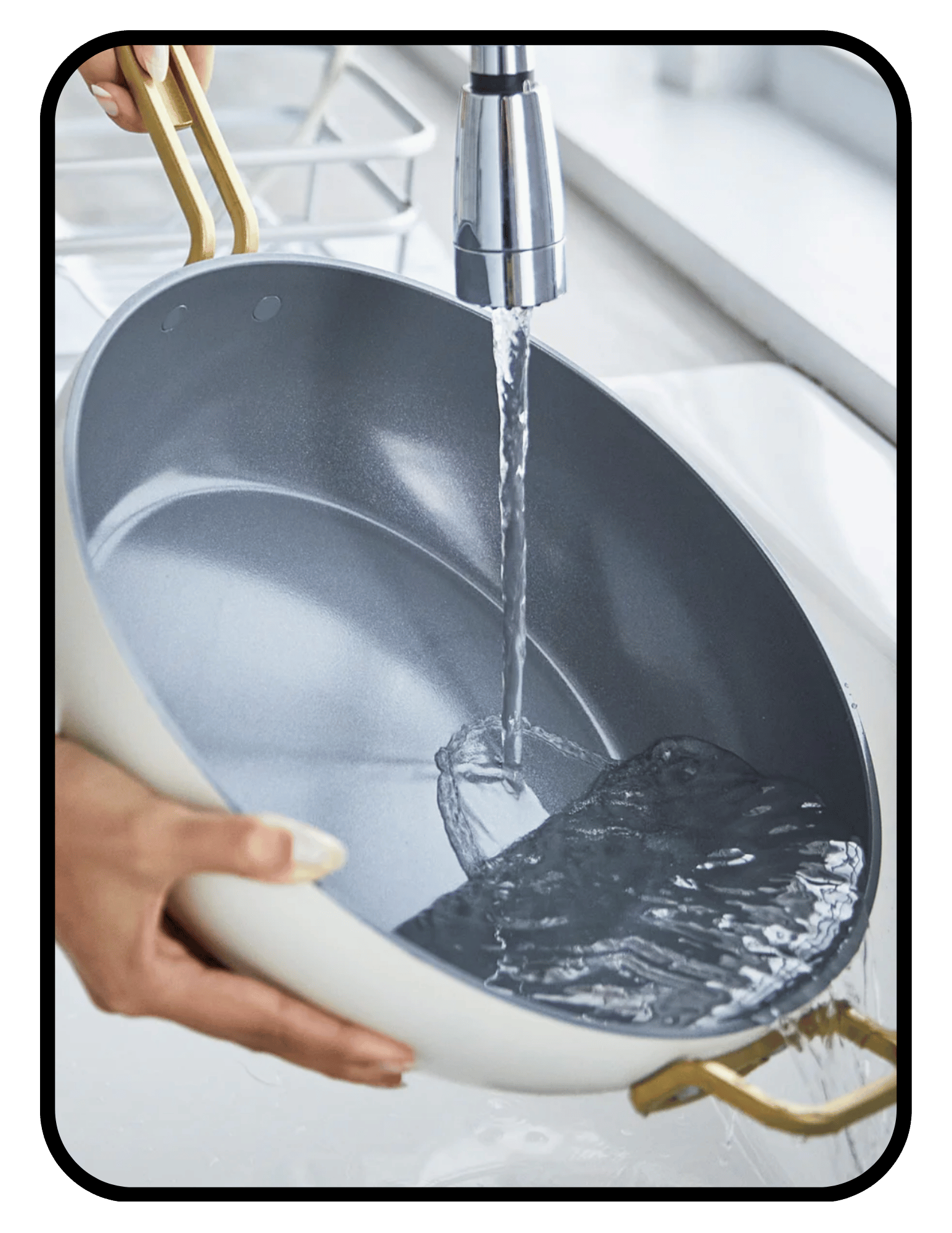
I have Caraway’s “ceramic” non-stick line listed because I get a lot of questions about it, and because it’s an OK-ish option from a material health point of view. I think they do overstate the healthiness of their non-stick ceramic coating, and they did confirm via email that there are nanoparticles in it (likely nano-titanium dioxide.) However, they have done leach testing to prove that no heavy metals, titanium, or PFAS escape into your food per US and German limits for safety. They’re also PFAS free, which is definitely better than average. So, they’re imperfect, and there is possibly some risk until we learn more about nanomaterials and whether or not they’re an issue for cooking with. But, they’re very aesthetic and I like how they stack.
If you want cookware with a non-stick coating, GreenPan is the best option from a material health standpoint because they are the most transparent and thoroughly-tested. While no company fully discloses their ceramic non stick coating ingredients, and they’re all imperfect, GreenPan is definitely free of nanomaterials including nanotitanium, and have always been free of all PFAS. Their coating brand name is Thermolon, and it meets Prop 65 standards for lead and cadmium. They’ve also done testing to confirm that even at 850° the pans don’t release toxic fumes. While I think it’s better to bake on completely known surfaces, this is a pretty good option if you require non stick, and they’re a step above the rest in this category.
Looking for something specific? If you don't see the product or brand you're curious about, you can request a review here, or run it through the Second Opinion Product Checker to evaluate it yourself. Want to go deeper? My free course covers how to evaluate any product's materials yourself.
Join the Newsletter
Join the Newsletter
More Healthy Design For You
The Best Alarm Clocks for Your Health
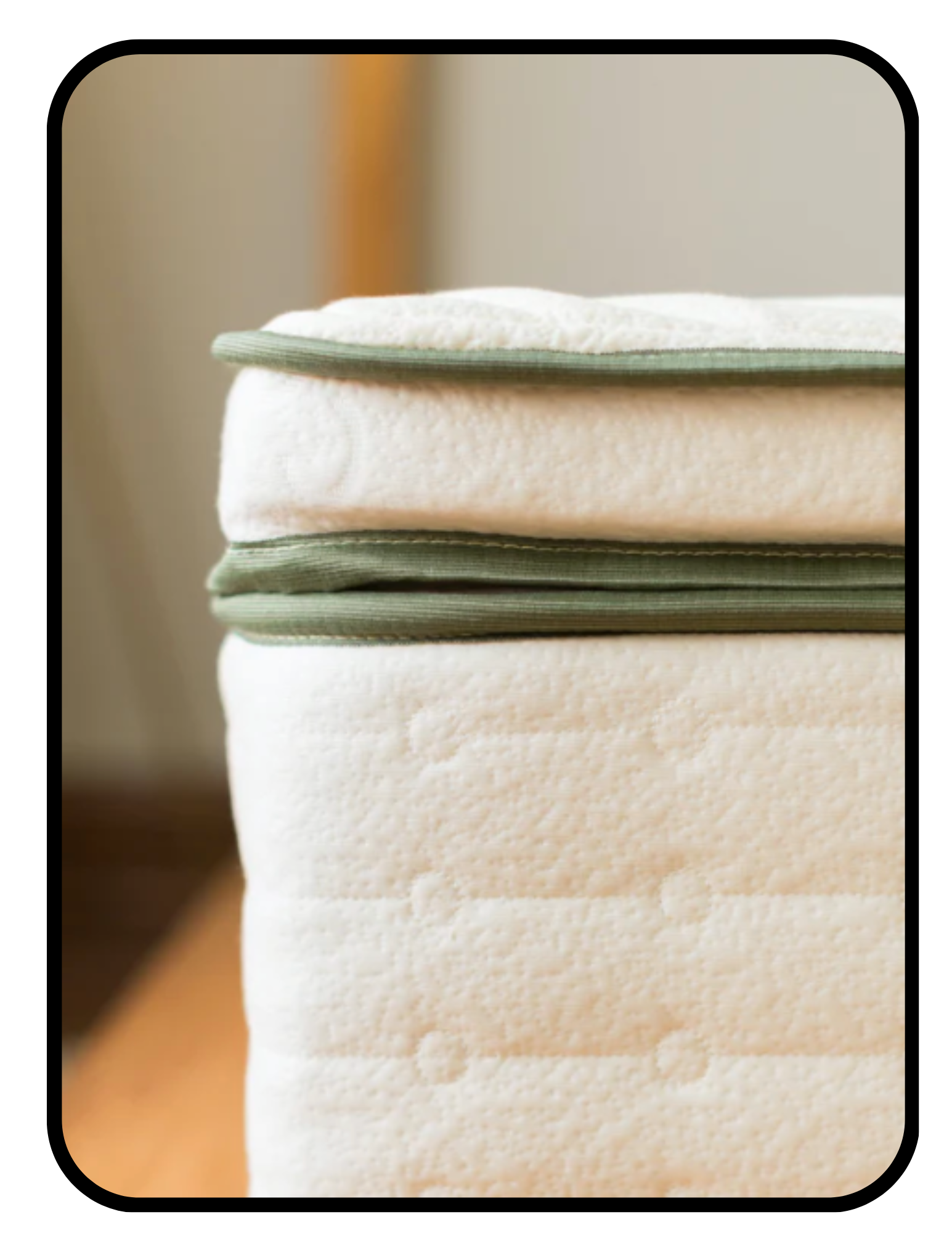

Organic Mattresses, Rated and Ranked

Non-Toxic Pots and Pans FAQ
Is Xtrema non-toxic?
Xtrema makes ceramic pots, pans, and baking dishes out of ceramic clay. They publish third-party SGS test reports showing total lead content of approximately 25 to 27 mg/kg (parts per million) and non-detect cadmium (meaning definitely below 5 mg/kg) on tested ceramic cookware samples. The reports pass the limits the lab applied, which were 100 mg/kg lead and 300 mg/kg cadmium, derived from specific California Prop 65 settlement cases. That is reassuring, and meaningfully better than what FDA enforcement actions on imported ceramics have found (often 10,000 to 100,000 mg/kg total lead in the worst cases).
The testing also has limits that are worth understanding because this is a tricky topic.
The test method Xtrema uses is CPSC-CH-E1002-08.3, which is listed on their reports. This is a total content test, not a leach migration test. The standard leach test, by comparison, is ASTM C738. For the CPSC one they use,the procedure grinds the sample and dissolves the entire ceramic matrix in nitric and hydrofluoric acid, then measures total lead and cadmium in the resulting solution. This tells you what's in the material altogether. It does not tell you what migrates into food during cooking and eating. The SGS report itself states this directly: "The testing in this report does not reflect a user's actual exposure to the tested chemical."
The 100 mg/kg lead limit in those reports comes from the CPSIA (Consumer Product Safety Improvement Act) total lead limit for children's products. It’s not a Prop 65 ceramic dinnerware migration limit. The specific Prop 65 settlements the lab references (County of San Mateo Case CIV 512114 for lead, County of Alameda Case RG-10-514803 for cadmium) were settlements about content in jewelry and small consumer goods, not about ceramic dinnerware migration. The lab is making a best-effort match between the test it ran and a Prop 65 framework, but the framework being applied is not the one historically used for ceramic dinnerware compliance.
The worst-case math is mostly reassuring. Most of their product tests measure around 26 ppm total lead in a sauce pot. That means the absolute maximum that could ever migrate is 26ppm (which would never happen in real life). In practice, well-fired modern ceramic typically releases between approximately 1% and 5% of its total content under standardized acetic acid leach challenge, so 26 ppm total content would most likely produce something in the range of 0.25 to 1.3 µg/mL leachate. That range would clear FDA Pottery Action Levels for most ceramic categories and stricter Prop 65 settlement limits. The probability is high that Xtrema would pass an ASTM C738 leach test, too.
They are doing more than most brands. I do not know why they chose this CPSC test instead of an ASTM one. I emailed them with questions about their testing in April 2025 but didn’t hear back and I haven’t pursued emailing them again.
In short, I think Xtrema is not nearly as bad as some people think it is, and I think that doing testing at all and sharing reports is a fantastic move. I’d still love for the process and results to be more clear; they’re really hard for most people to interpret. I think their products are probably fine if you are looking for a non-stick alternative that doesn’t rely on PFAS, ceramic sol-gel, or seasoning, and you aren’t worried about tiny tiny potential amounts of lead exposure that are under Prop 65 limits like other ceramics are. I think if your precaution level is higher, are pregnant, or have kids, and another option is just convenient, go with that instead. Risk tolerance varies so much person to person, and I go into depth about it in my free course if you’re interested in a deep dive.