
Learn App Product Reviews About
Non Toxic Cooking Utensils & Tools
The safest cooking utensils are made with unfinished solid wood, stainless steel, or titanium. Silicone can also be safe, but only in formulations with third party testing confirming no leaching of additives or heavy metals, since not every silicone utensil on the market meets that bar. Every material on this page is scored using the my full methodology, which evaluates products on consistent rating scales and certifications rather than brand marketing claims.
By Dr. Meg Christensen | Physician-founder of Interior Medicine, a non-toxic home resource built on her background in medicine, biochemistry, epidemiology, and clinical research.

Updated September 4, 2026
Non-Toxic Cooking Utensil Sets
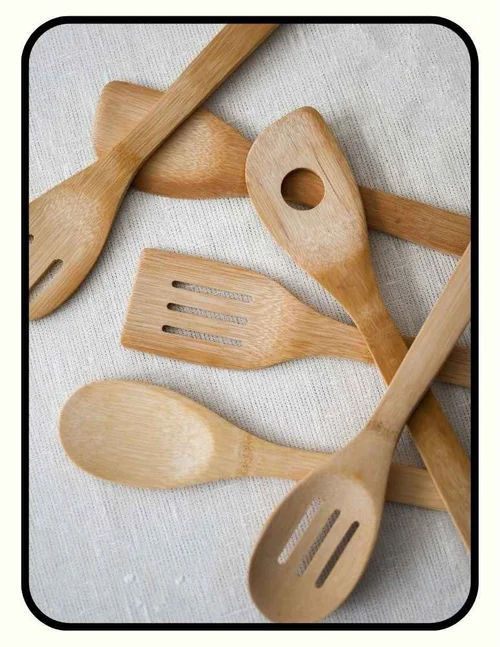 Best Non-Toxic Cooking Utensil Set: Ecosall Solid Unfinished Wood
Unfinished wood is the healthiest material for cooking, which may surprise you. Wood is naturally antimicrobial and when it’s not coated with a finish, it both kills bacteria better and means you’re not adding any mystery stains or varnishes into your food. And, it’s ultra-affordable.
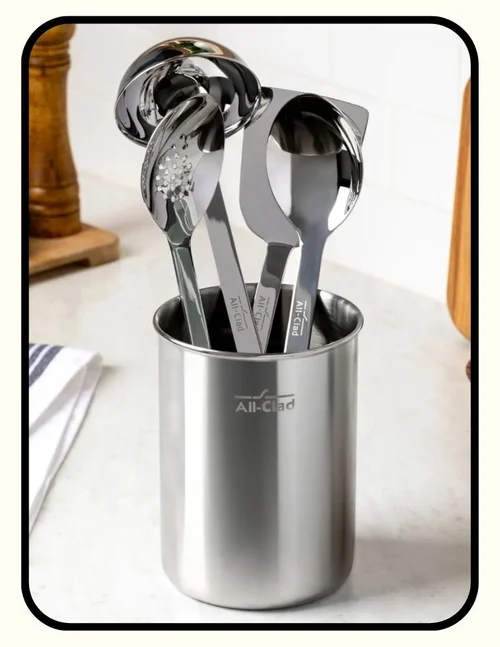 Best Dishwasher-Safe Non-Toxic Cooking Utensil Set: All-Clad Stainless Steel
Stainless steel is dishwasher-friendly and offers the thinner lip needed for flipping, giving it some advantages over wood. Stainless steel is a very safe choice. The All-Clad set is made of 100% polished stainless steel, and strikes a nice balance between affordability and quality. Less expensive versions may not be as durable or comfortable but are equally healthy if they’re also made with uncoated stainless steel, see my Metal Guide for a deep dive.
Product rating
See the rating scales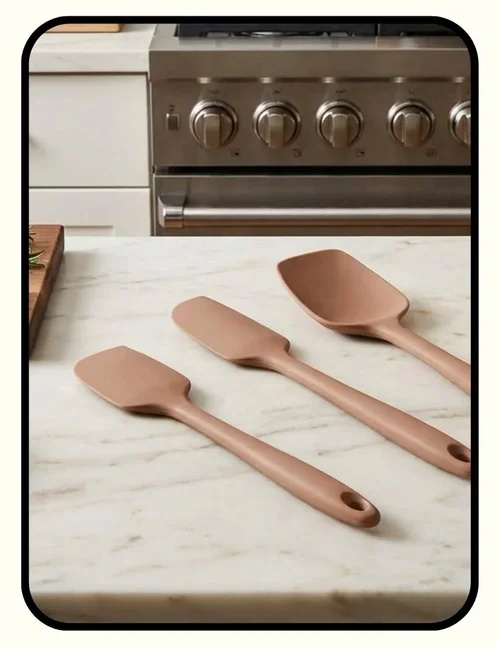 Safest Silicone Cooking Utensil Brand: Di Oro
The safest silicone has third party testing showing it doesn’t leach additives or heavy metals. LFGB certification, a European standard, proves this, and is more meaningful than whether the silicone is platinum or peroxide cured. Di Oro is one of the few brands that has this for their silicone spatula sets.
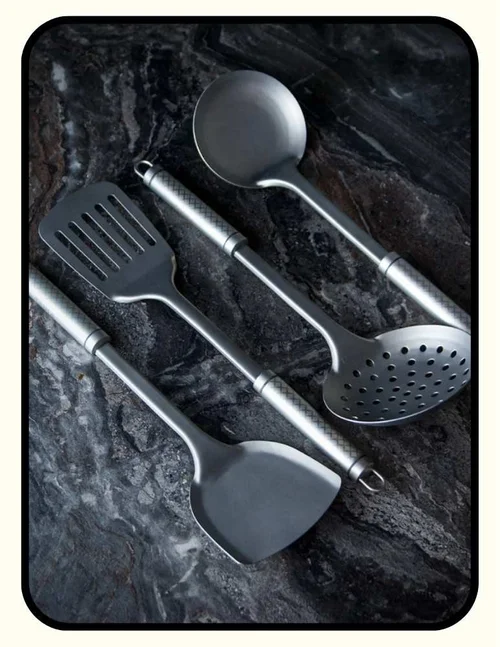 Most Durable Non-Toxic Cooking Utensil Set: Taima Titanium
Titanium is more of an investment than stainless steel, but it’s more heat resistant, which can be comfortable for hands, is very durable, and is a good metal alternative to stainless if you have a nickel allergy. Taima uses 100% titanium without coatings or nanoparticles, making these a very healthy choice. Also dishwasher safe, they’re gentle on cookware, heat resistant, and totally non-toxic.
Product rating
See the rating scalesSpecialized Non-Toxic Cooking Tools
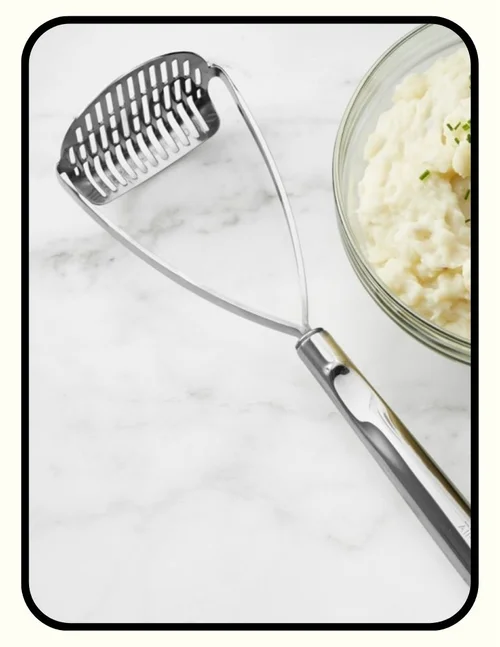 All Clad Non-Toxic Curved Stainless Steel Potato Masher
All-Clad makes the smartest potato masher because its curved edge lets you get all the way to the edges of the pot or bowl you’re working in. Made of 100% stainless steel, it’s healthy, and is consistently rated the best potato masher from a functionality standpoint.
Product rating
See the rating scales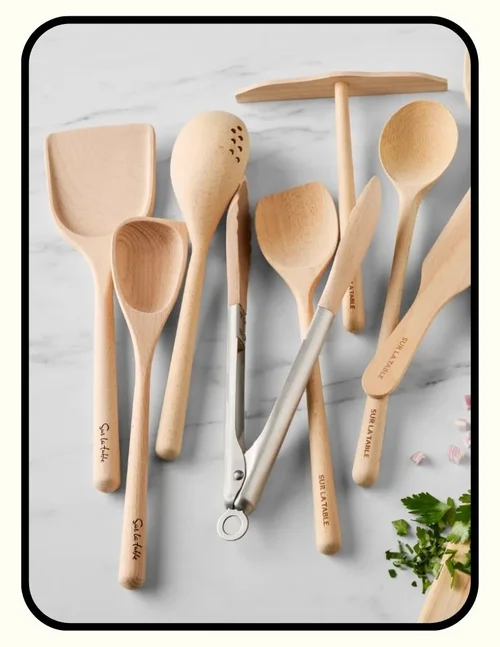 Sur La Table Non-Toxic Wooden Tongs
These tongs are made with stainless steel and a beechwood tip, which offers a nice smooth grip on your food and since the unfinished wood kills bacteria faster than plastic, it can be a nice choice for cooking meat and staying clean overall. Ultra healthy, you can also get them with a matching utensil set.
Product rating
See the rating scalesLooking for something specific? If you don't see the product or brand you're curious about, you can request a review here, or run it through the Second Opinion Product Checker to evaluate it yourself. Want to go deeper? My free course covers how to evaluate any product's materials yourself.
Join the Newsletter
Join the Newsletter
More Healthy Design For You

Toilet Paper
One-Pot Cookers

Pots and Pans
Cutting Boards
More About Non-Toxic Cooking Tools
Are unfinished wood spatulas safe?
Yes, and they are safer than plastic! Read all about why wood is safer than plastic on the cutting boards page.
What is the safest type of finish for a wooden spatula?
None! Raw wood is best for reducing bacteria. But, if you do like the look of a finish, a single layer of plant-based oil will still allow bacteria to be captured and killed by the natural properties of wood. Avoid many, many layers, which will make the wood act more like plastic, as well as waxes, shellac, and varnishes, which do so even more. And, if you already own a wooden cutting board with some kind of finish on it, it is still much better than a plastic cutting board. It will still reduce the bacterial load somewhat, and it is not introducing any microplastics into your food. If you sand it to make it smooth, don’t make it too smooth: anything finer than 400 grit may slow the killing of bacteria.
Why does a Prop 65 warning come with my unfinished raw wood cooking utensils?
Prop 65 takes into account possible exposures that not just you, but the workers, too. Since breathing in wood dust repeatedly over years with protection can contribute to nasal cancer, this is why it’s listed. Read my Prop 65 Guide for a deeper dive.
Are bamboo cooking utensils non-toxic?
Bamboo itself is non-toxic, but it requires many, many strips of it, glued together, to create one piece. Bamboo cooking tools are often finished in a shellac or varnish, adding another layer of potential concern. There aren’t advantages to bamboo above solid wood from a health standpoint.