
Non Toxic Crock Pots & Dutch Ovens
The best non-toxic Dutch ovens and slow cookers are made from unglazed clay, uncoated stainless steel, or leach-tested enamel, with no PFAS, nanomaterials, lead, or cadmium. But the "non-stick ceramic" market is full of healthwashing: brands say "PTFE and PFOA free" without disclosing whether other PFAS chemicals are present, or use vague claims like "safe" and "non-toxic" without third-party lead and cadmium testing. So I evaluate every material in each cooker, clay, metal, and coating, using consistent scales explained in my full methodology.
By Dr. Meg Christensen | Physician-founder of Interior Medicine, a non-toxic home resource built on her background in medicine, biochemistry, epidemiology, and clinical research.

Updated August 22, 2026
Non-Toxic Slow Cookers
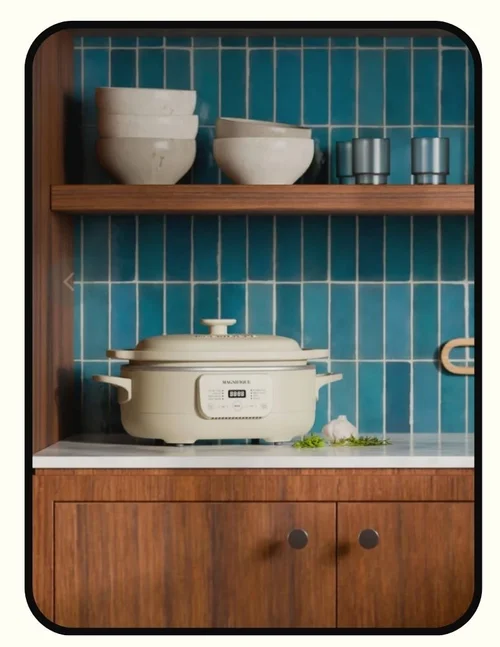 Magnifique: Non-Toxic Kaolin Clay Slow Cooker
Made of 100% kaolin clay, and glazed with the same 100% kaolin clay so it's smooth and shiny, Magnifique makes a really cute slow cooker. They've done lead, cadmium, and PFAS testing through a third party, and pass on all counts, which they promptly emailed me certificates for. A great non-toxic option if you have a nickel allergy and need to avoid stainless steel, and if you're being cautious about enamel or "ceramic" non stick coatings.
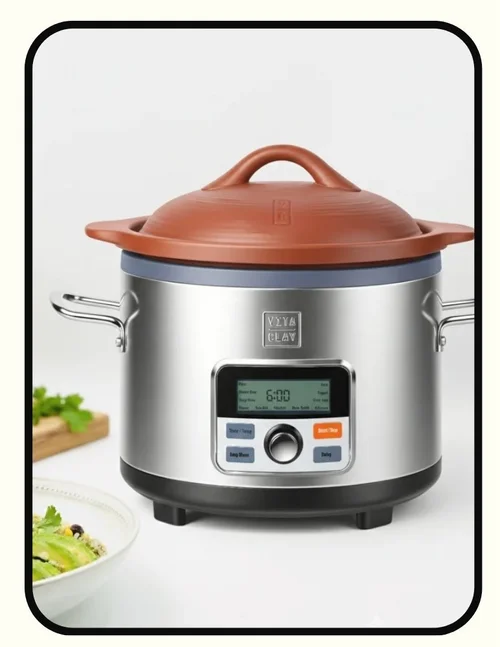 VitaClay: Non-Toxic Zisha Clay Rice & Slow Cooker
Made from pure Zisha clay, which comes from China and is commonly used as a non-toxic ceramic material in teapots, VitaClay has gone the extra distance and had third party testing done to ensure there is no lead or cadmium leaching from their products. The surface of their rice cookers, slow cookers, soup and bone broth cookers are all unglazed, but because Zisha is not porous, it still works very well. You can use code INTMED10 for 10% off.
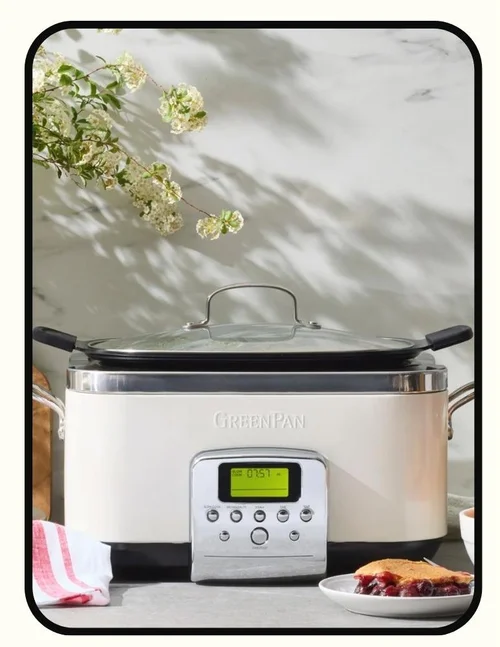 GreenPan: Safer Ceramic Non-Stick Slow Cooker
Is GreenPan non-toxic? Yes, as far as non-stick goes. They've done additional testing since I rated them last. Of the non-stick "ceramic" slow cookers available, GreenPan is the best option from a material health standpoint because they are the most transparent and thoroughly-tested. While no company fully discloses their ceramic non stick coating ingredients, GreenPan meets strict European LFGB standards, Prop 65 standards, and does third party testing to show they're free of nanomaterials, PFAS, siloxanes, lead, cadmium, and other substances of concern. The pot itself is made of cast aluminum (read more on why aluminum is safe in my Metal Guide).
Product rating
See the rating scales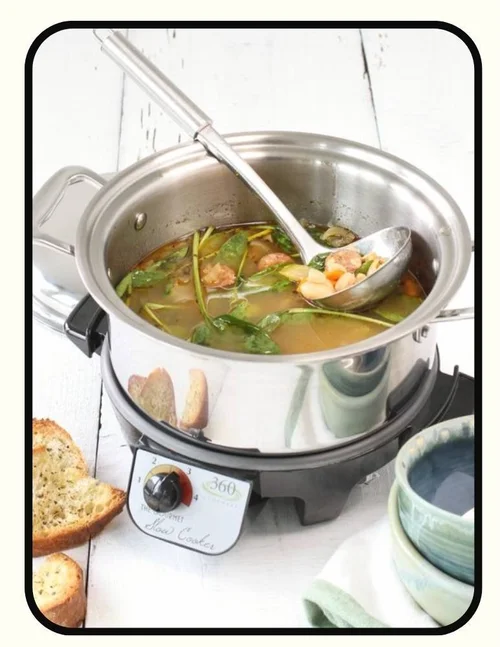 360 Cookware: Non-Toxic Stainless Steel Slow Cooker
360 Cookware uses 316 surgical grade stainless steel for their slow cooker, without any coatings. While it's not necessarily healthier than other stainless steel, which is almost always safe, 316 is the most durable and corrosion-resistant type available. A cool design, this comes as a pot and separate slow cooker base. This is a great choice for most people, unless you have a nickel allergy.
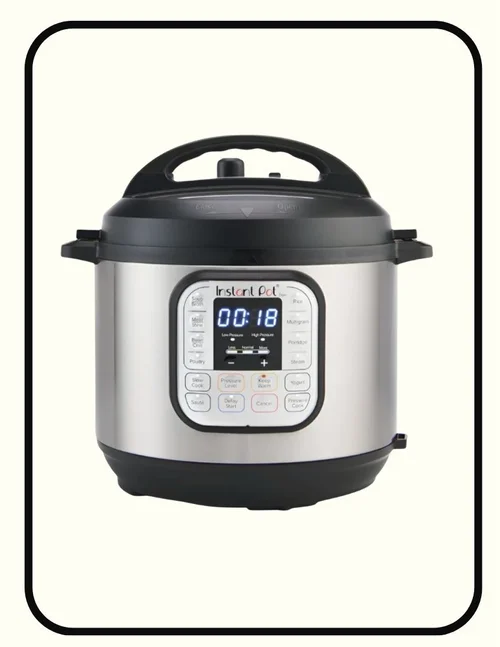 Instant Pot: Non-Toxic Stainless Steel Pressure Cooker
The Instant Pot really is as healthy an option for slow cooking and pressure cooking as its rumored to be, as long as you don't have a nickel allergy. For what it's worth, I am sensitive to nickel, and cooking in the Instant Pot hasn't bothered me at all. Made of stainless steel, without coatings. FYI: I would avoid buying their separate PTFE and PFOA free ceramic non-stick insert. These are 2 of thousands of PFAS and this wording is usually a slick way of sounding healthy. They do not declare that it is entirely PFAS free, which would cover all the kinds of PFAS. If you do have a nickel allergy, I recommend one of the options above for slow cooking and will continue to keep my eye out for nickel-free pressure cookers.
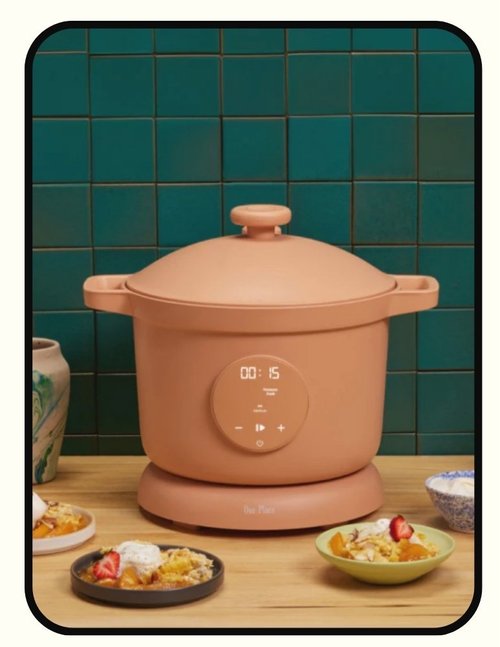 Our Place: Safer Ceramic Non-Stick Slow Cooker
Definitely cute, Our Place's slow cooker is also cast aluminum coated in ceramic non-stick. It's PFAS free, and tested to Prop 65 standards to ensure no lead or cadmium leach. Their coating does contain nanomaterials, so there is some inherent risk until we learn more about nanomaterials and whether or not they're an issue for cooking with. Not as well tested as GreenPan, but better than average, compact, and relatively affordable. Comes in several colors.
Product rating
See the rating scalesNon-Toxic Dutch Ovens
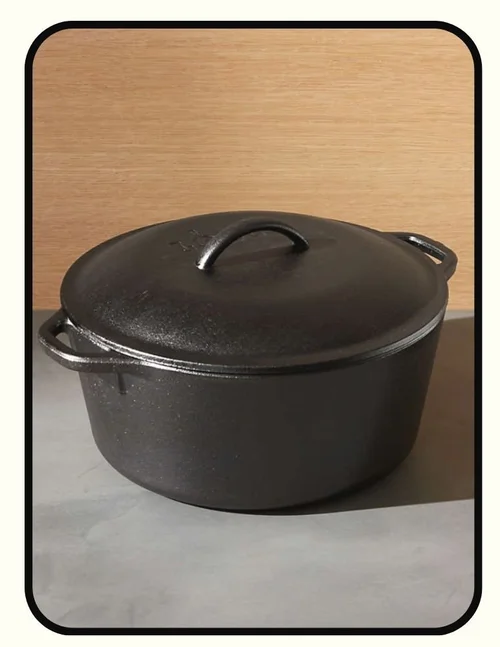 Lodge: Non-Toxic Cast Iron Dutch Oven
Perhaps the most boring thing about me is that I use this unenameled cast iron dutch oven from Lodge all the time. I even have the campfire version of it for when I go on camping trips. It's just plain old cast iron, without coatings, and I've seasoned it so thoroughly, I'll even use it to make chili and spaghetti sauce, and re-season afterwards if needed. It's heavy! It's not cute! But it's healthy, it's affordable, and it will last forever. Fun fact: heating oil on cast iron actually causes a reaction that turns it into a polymer, or a chain, of molecules, which is what makes the surface "seasoned," or naturally non-stick! If slow cooking in a dutch oven is also your style, see more brands I recommend on the Pots and Pans page.
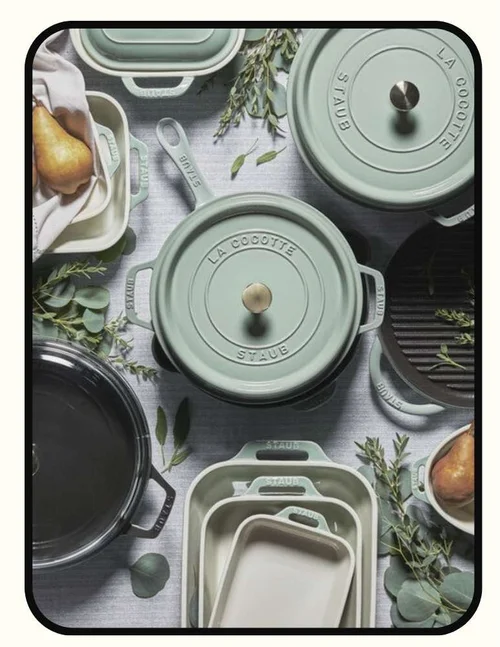 Staub: Non-Toxic Enameled Cast Iron Dutch Oven
Enameled cast iron offers a more classic non-stick finish than regular cast iron and you can easily cook tomatoes and acidic food in it without worrying about re-seasoning. Staub's enamel dutch ovens are a healthy choice because they meet both EU and Prop 65 standards. They confirmed by email that they use traditional sand and pigment-based enamel with no PFAS, nanomaterials, lead, or cadmium. Enamel is a more straightforward healthy choice as opposed to say, "ceramic" non stick coatings, which are actually polymer-based and proprietary.
Looking for something specific? If you don't see the product or brand you're curious about, you can request a review here, or run it through the Second Opinion Product Checker to evaluate it yourself. Want to go deeper? My free course covers how to evaluate any product's materials yourself.
Join the Newsletter
Join the Newsletter
More Healthy Design For You
Organic Sheets
Healthy Pots and Pans
Organic Mattresses, Rated and Ranked
Non-Toxic Laundry
How I Rate Non Toxic Slowcookers and Dutch Ovens
I rate slow cookers and dutch ovens using the same material health scales I apply across every category on Interior Medicine, explained in full on my methodology page.
For cookware, that means looking closely at whatever surface actually touches your food: the ceramic glaze, the bare metal, or the non-stick coating.
True ceramic cookware: I look for third-party leach testing confirming lead and cadmium are not present. If leach testing isn’t done, I look for products that meet LFGB or Prop 65. You can read more details about what makes ceramic truly non-toxic on my Ceramic Guide.
Metal cookware: this is evaluated based on whether the bare metal touches your food or if it has a coating.
Uncoated stainless steel and cast iron sit at the top since there's no coating chemistry to evaluate at all.
Enameled metal cookware: gets scored based on whether the coating has been independently tested for migration of heavy metals into food, and whether the brand meets AB1200, LFGB, and other advanced food safety requirements set by Europe and California. You can read more about what makes metal truly non-toxic on my Metal Guide.
“Ceramic” non-stick cookware: gets scored based on whether the coating has been independently tested for migration of heavy metals, PFAS, siloxanes, or nanotitanium nanoparticles into food, and whether the brand meets AB1200, LFGB, and other advanced food safety requirements set by Europe and California. You can read more about what makes metal truly non-toxic on my Metal Guide.