
Product Reviews ➜ Kitchen ➜ Dishware
Non Toxic Dishes, Plates, and Dinnerware Sets
The safest dishes, plates, bowls, and dinnerware sets are made of tempered glass, stainless steel, ceramic that’s been third party tested for safety, and less toxic plastic alternatives without coatings. Since dishware is a daily exposure in direct contact with your food, it’s worth prioritizing when making a healthier home. I evaluate each brand using consistent material health scales, all explained in my full methodology.
By Dr. Meg Christensen | Physician-founder of Interior Medicine, a non-toxic home resource built on her background in medicine, biochemistry, epidemiology, and clinical research.

Updated September 16, 2026
Non-Toxic Ceramic Dishes
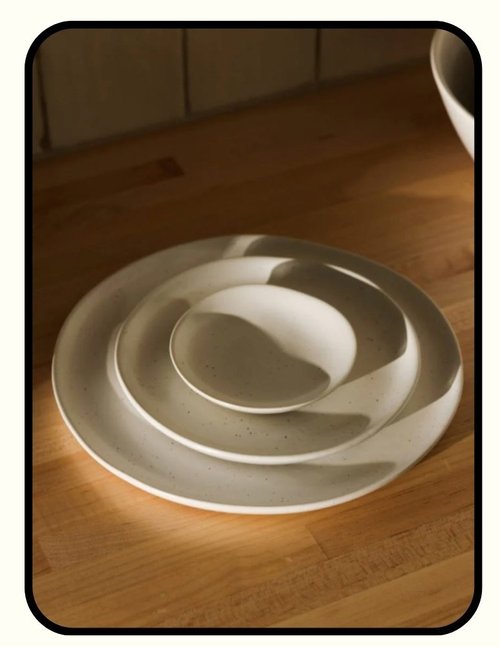 Fable Non Toxic Dish Sets & Plates
Fable offers non-toxic ceramic plates, bowls, and more dinnerware in ceramic, porcelain, and stoneware. They’re also refreshingly transparent about their materials and go beyond FDA “lead free” standards and Prop 65 standards by doing a separate lead and cadmium leach test. They use a third-party lab and it’s the gold standard for leaching (C738-94). A technical detail many brands skip, earning Fable the healthiest rating.
Product rating
See the rating scales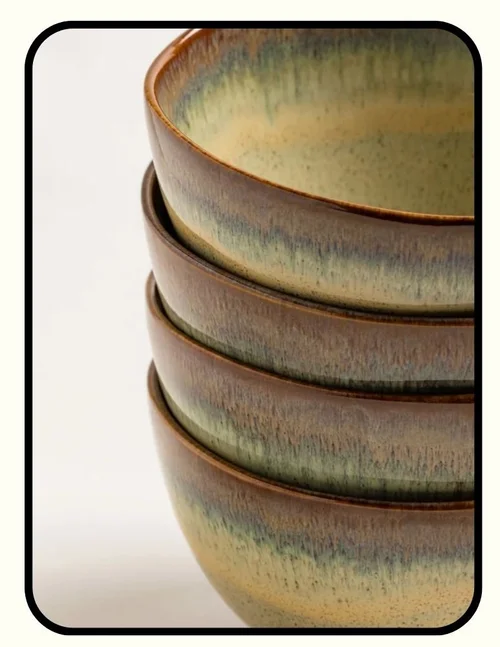 Sojourn Pottery Non-Toxic Ceramic Dishware
Sojourn Pottery is the spendiest of the non-toxic ceramic dish options on this page, but they’re very beautiful and importantly, like Fable, they have third-party leach testing done in addition to being Prop 65 compliant. Their test results are easy to find in their FAQs, showing they’re lead and cadmium free. And, they do the gold standard of testing, too (C738) instead of their own method or a strange one (I’ve seen it! It happens!)
Product rating
See the rating scales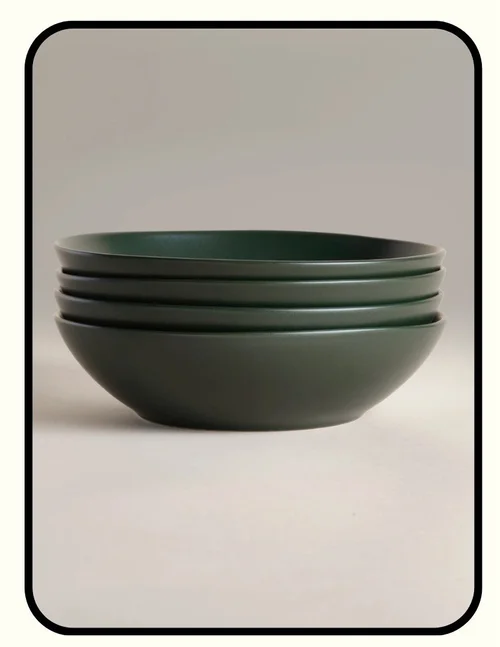 Year & Day Non Toxic Dishware
Year & Day makes non-toxic ceramic dishware and happily they are Prop 65 compliant and none of them require a warning. While they don’t do the additional leach testing that Fable does, their dishes and sets are a bit more affordable and come in more colorways. I use their Balsam colored Big Bowls, pictured above, in my kitchen, and they’re a satisfying size, durable, and dishwasher safe.
Product rating
See the rating scales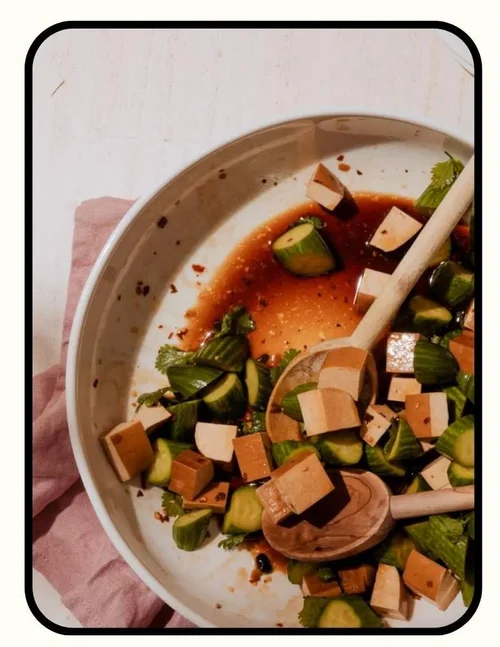 Made In Non Toxic Dishes
These ceramic plates are made with lead- and cadmium-free clay and glaze, are Prop 65 compliant, and don’t require a warning, as stated on their website and re-confirmed via email. FYI, Prop 65 for ceramics means that even if there were detectable lead in something, it would have to be 1,000 times below the daily exposure limit of 0.5 micrograms per day. You can read more about it on my Ceramics Guide.
Product rating
See the rating scales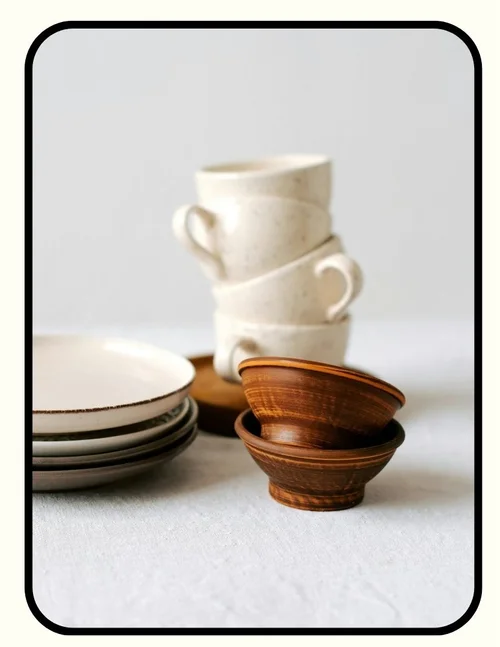 Etsy Ceramic Non Toxic Dinner Plates
Are ceramic dishes from Etsy safe? It depends entirely on the seller. Etsy doesn’t enforce any food-safety standards on pottery listings, and small sellers don’t have to comply with Prop 65 rules the way mid-size or big companies have to. There are so many options, so just ask the seller details about their clay and glaze: ask where their clay is from, and if their glazes are certified food safe. Ask if they have any lead or cadmium leach testing for their products, or at least on the glaze brands that they use (unlikely, but doesn’t hurt to ask!) If they answer specifically and confidently they’re more likely treating food safety as part of their practice. Read more about ceramic food safety in my Ceramic Guide.
Product rating
See the rating scales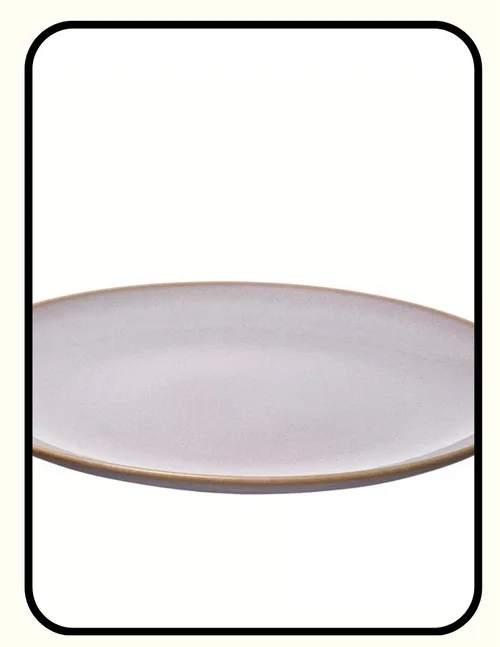 IKEA Non Toxic Plates
Long lead- and cadmium-free, all of IKEA’s ceramic and stoneware plates meet Prop 65 requirements, and are a very affordable non-toxic ceramic dinnerware choice. I prefer IKEA over other big box stores because of their long-term commitment to higher health standards and tighter control over their supply chain (as opposed to say, Target or Amazon, which carries many brands of dishes made in many different places).
Product rating
See the rating scalesNon-Toxic Glass Dishware
 Corelle Non-Toxic Dinnerware
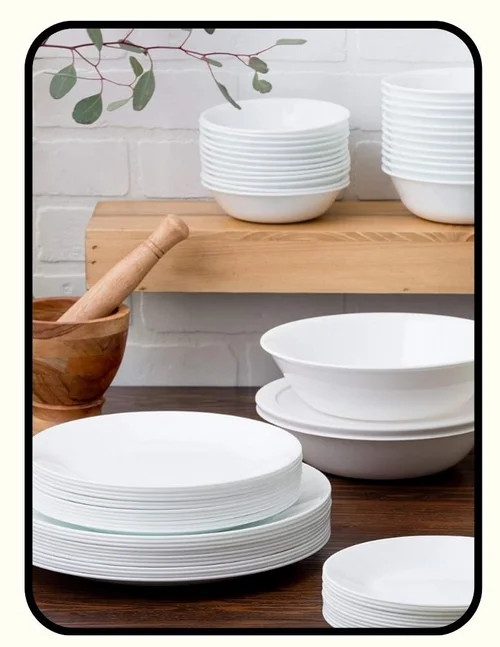
Corelle’s affordable glass dinnerware is made of three layers of glass for durability. If you’re not used to the idea of glass for dinnerware, these are tempered, so they’re durable enough to resist cracking, chipping, and temperature changes. They’re also microwave, freezer, and dishwasher safe. Since 2000, they are completely lead-free, including any decorative patterns. There is a chance there is a small amount of cadmium in the current decorations, as explained on their AB1200 website page, but these are required to meet FDA standards. Their undecorated ones are basic, affordable, and a very healthy choice.
 Duralex Non-Toxic French Glass Dinnerware
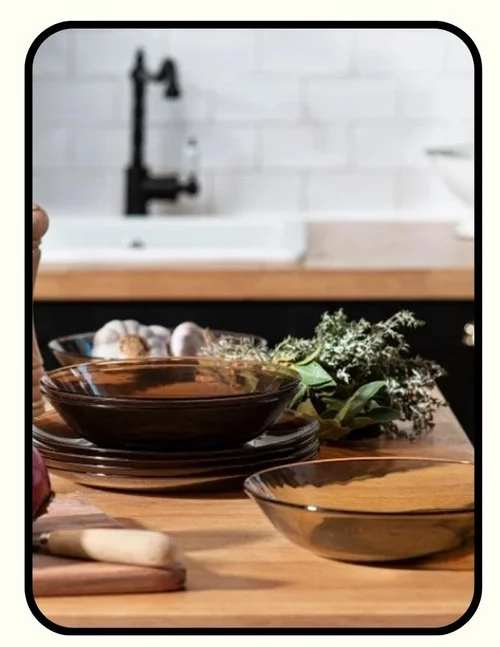
Duralex glass dinnerware is durable and the healthiest non-toxic plate option. Without glaze, it’s just glass, and since it’s tempered it’s 2.5x stronger than regular glass. These are colored with minerals, which are melted and become completely integrated into the glass matrix. Though essentially all modern glass is lead free, they confirmed with me that they don’t require a Prop 65 warning, comply with strict EU standards, and are free of lead and cadmium.
Other Materials
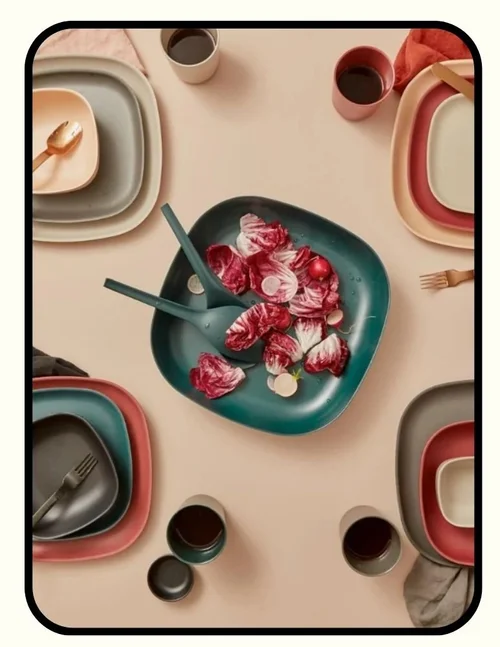 Ekobo Bamboo Fiber Plates
These are the best bamboo fiber plates because you actually know what they’re made of! Most brands aren’t straightforward at all about what is in their mixture, but Ekobo clearly states they use 50% bamboo and 50% melamine binder to hold it together. Melamine is a pre-plastic and is generally considered OK in terms of safety as long as it’s not heated up in the microwave with food or storing acidic leftovers. So, not perfectly healthy, but a good non-toxic kids’ choice compared to many other materials, and I really appreciate their transparency.
Product rating
See the rating scales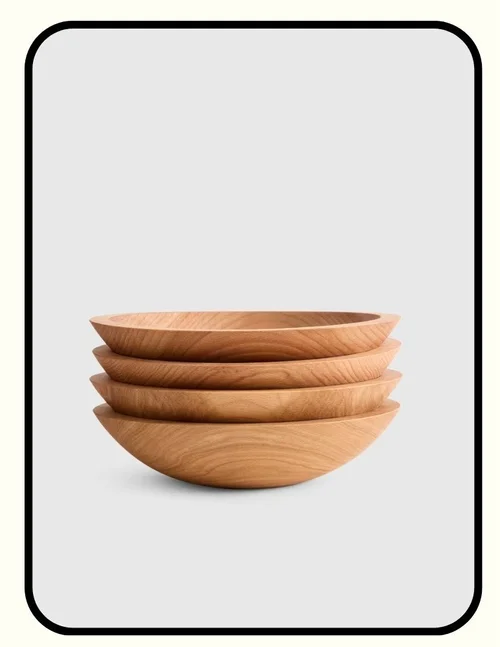 Quince Solid Wood Bowls
These wooden bowls are each made from a single piece of beech wood that comes from Michigan, so no glues are present whatsoever. They’re finished with Bee’s Oil, a blend of beeswax and food-safe mineral oil — a safer choice than other synthetics. I will continue my hunt for plant-based finished bowls, though they don’t seem to exist unless you make them yourself at this point. You can read more about what mineral oil is and if it’s truly food safe below. Another imperfect but unbreakable and better-than-plastic alternative!
Product rating
See the rating scales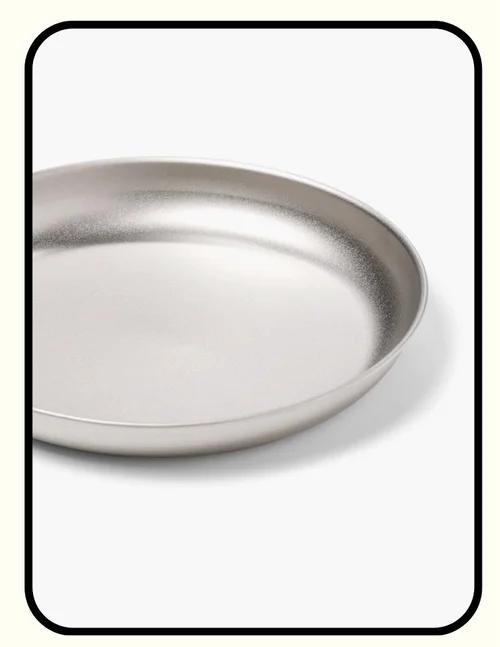 Snow Peak Titanium Dinnerware
Snow Peak makes dinner sets out of pure titanium. Obviously not everyone’s kitchen aesthetic, titanium is still a nice option if you have kids that might break ceramic or glass, and these also have a more adult-like look than other kid-friendly options. Also great for outdoor dining. And from a material health standpoint, they’re super safe. Titanium is one of the most inert, safe materials that won’t leach, even when in contact with hot, acidic foods. Read more in my Metal Guide if you’d like.
Looking for something specific? If you don't see the product or brand you're curious about, you can request a review here, or run it through the Second Opinion Product Checker to evaluate it yourself. Want to go deeper? My free course covers how to evaluate any product's materials yourself.
Join the Newsletter
Join the Newsletter
More Healthy Design For You
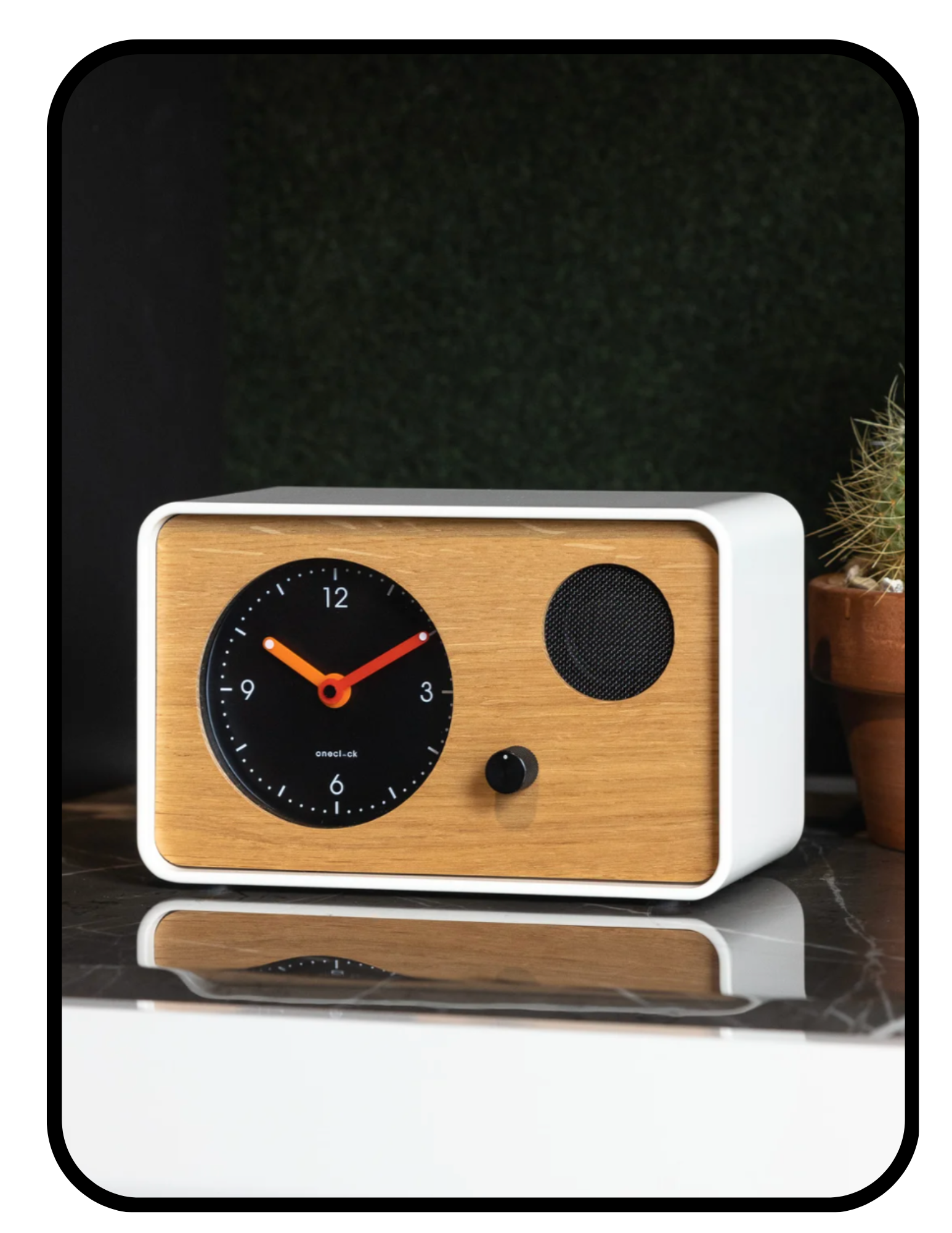
The Best Alarm Clocks for Your Health
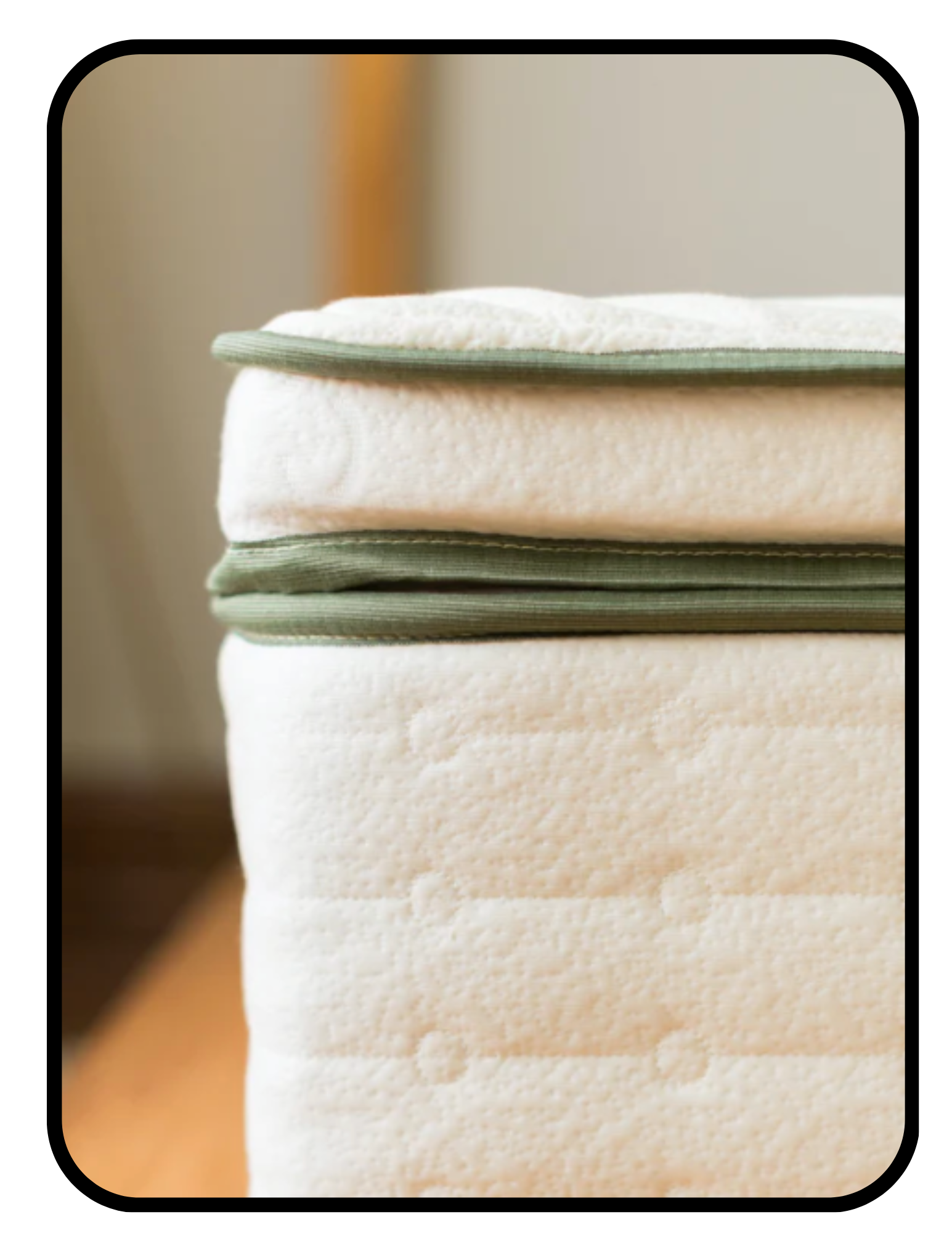

Organic Mattresses, Rated and Ranked

More About Non-Toxic Dishes
Are colorful stainless steel dishes safe?
Non toxic stainless steel kids plates are sometimes coated with colors, sometimes using a process called Physical Vapor Deposition (PVD) which applies a very hard layer of titanium to the plate. While I love titanium for how chemically inert it is, PVD is used to vaporize titanium and make it nano-sized. That’s probably fine, but the issue is that with friction, abrasive cleaning, and utensil use, it’s possible that the nano-titanium particles are released into food. We don’t know yet. I don’t trust nano-titanium (or any nano-material) yet because we still don’t know if they are safe, and when they’re used on dinnerware, I am extra cautious.
Even if a nano-titanium plate is MADE SAFE certified, as I explain here, MADE SAFE is still a pretty opaque certification, and we don’t know exactly what they allow and at what limits.
Other testing would be nice but it will need to be more rigorous than MADE SAFE or self-testing. The statement “We go above and beyond FDA standards and have created our own standard based on more stringent standards from Europe” is not as reassuring as stating the actual testing done with results displayed.
For now, I prefer regular, uncoated or polished stainless steel, and non-nano titanium plates for adults and kids.
Is mineral oil safe?
Now it is relatively safe, as long as it is highly refined and purified. Mineral oil comes from petroleum, and in the past, it wasn’t refined as well, so it contained carcinogenic polycyclic aromatic hydrocarbons (PAHs) and other impurities. Now, the refining process is better, and highly refined and purified mineral oil is generally considered safe for use in cosmetics and food. It is not known to be carcinogenic to you in this version of itself and is an ingredient in candies like Swedish Fish, and is applied to many cutting boards and wooden utensils and serving dishes because of its water resistance. I consider it so-so. It is not directly carcinogenic to you, but it depends on petroleum extraction, solvents, and refineries, which is not good for people or planet long term, and I don’t consider it as safe as a plant-based finish. Still, I understand it’s convenience, and I think it’s a better choice than 100% shellac or polyurethane finishes.
Product Reviews ➜ Kitchen ➜ Dishware