
Best Drinking Water Filters for Home
The best drinking water filter has third-party test data showing which contaminants it removes, by what percentage, and for how many gallons. Very few brands publish all three, and some filters certified for only one contaminant, like chlorine, are marketed as removing dozens more. I pulled every NSF, WQA, and IAPMO certification listing for the brands below, compared them to independent lab reports and brand data sheets, then ranked each filter by how many contaminants it's actually proven to remove. Test results with NSF certifications count most, independent lab results a little less, brand-done testing less, and brand claims without any proof least, as explained in my methodology.
By Dr. Meg Christensen | Physician-founder of Interior Medicine, a non-toxic home resource built on her background in medicine, biochemistry, epidemiology, and clinical research.

Updated November 8, 2026
| Rank | Filter | Evidence strength | Score | Verified to remove | Capacity |
|---|---|---|---|---|---|
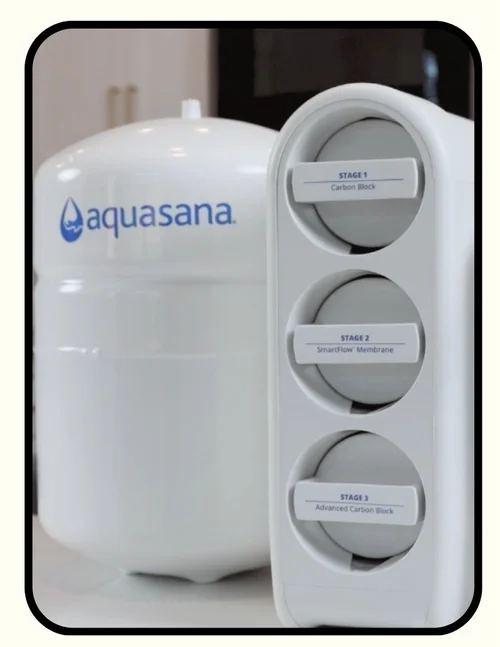
| 1 | AquasanaSmartFlow Under-Sink RO | StrongestFully certified | 16.29 / 19See how I got this score | 17 of 19 groups Chlorine: certifiedChloramine: certifiedLead: certifiedMercury: certifiedCadmium: certifiedBarium: certifiedArsenic: certified Hexavalent chromium: certifiedFluoride: certifiedNitrate: certifiedPerchlorate: not verifiedRadium: certifiedUranium: not verifiedPFAS 2/7: certified VOCs: certifiedRx & chemicals 15/15: certifiedCysts: certifiedMicroplastics: certifiedTDS: certified |
250 galCheck prices (affiliate link)See the full review →Compare under-sink filters → |
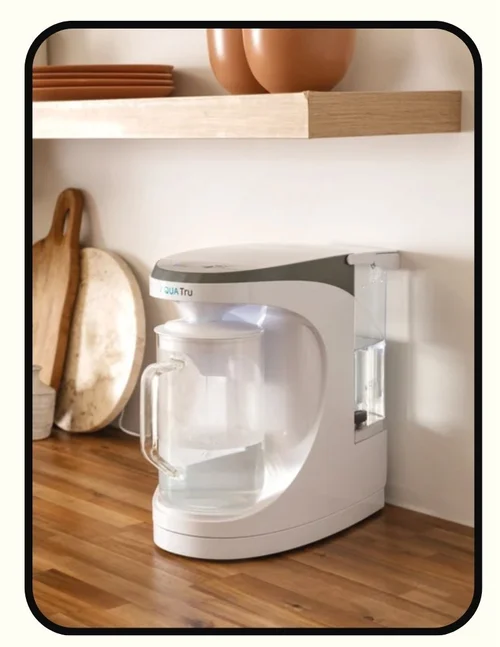
| 2 | AquaTruCountertop RO Carafe | StrongestFully certified | 15.29 / 19See how I got this score | 16 of 19 groups Chlorine: certifiedChloramine: certifiedLead: certifiedMercury: not verifiedCadmium: not verifiedBarium: certifiedArsenic: certified Hexavalent chromium: certifiedFluoride: certifiedNitrate: certifiedPerchlorate: certifiedRadium: certifiedUranium: not verifiedPFAS 2/7: certified VOCs: certifiedRx & chemicals 15/15: certifiedCysts: certifiedMicroplastics: certifiedTDS: certified |
300 galCheck prices (affiliate link)See the full review →Compare countertop filters → |
This is the only AquaTru model whose certification names hexavalent chromium. AquaTru publishes pass or fail results only, with no removal percentages.See the full review for this filter → | |||||
| 3 | AquaTruClassic Countertop RO | StrongestFully certified | 14.29 / 19See how I got this score | 15 of 19 groups Chlorine: certifiedChloramine: certifiedLead: certifiedMercury: not verifiedCadmium: not verifiedBarium: certifiedArsenic: certified Hexavalent chromium: not verifiedFluoride: certifiedNitrate: certifiedPerchlorate: certifiedRadium: certifiedUranium: not verifiedPFAS 2/7: certified VOCs: certifiedRx & chemicals 15/15: certifiedCysts: certifiedMicroplastics: certifiedTDS: certified |
600 galCheck prices (affiliate link)See the full review →Compare countertop filters → |
The certification lists "chromium" without saying which type. Since it doesn't name hexavalent chromium, I didn't count hexavalent chromium as removed here.See the full review for this filter → | |||||
| 4 | AquaTruUnder-Sink RO | StrongestFully certified | 13.29 / 19See how I got this score | 14 of 19 groups Chlorine: certifiedChloramine: certifiedLead: certifiedMercury: not verifiedCadmium: not verifiedBarium: certifiedArsenic: certified Hexavalent chromium: not verifiedFluoride: certifiedNitrate: certifiedPerchlorate: certifiedRadium: certifiedUranium: not verifiedPFAS 2/7: certified VOCs: certifiedRx & chemicals 15/15: certifiedCysts: not verifiedMicroplastics: certifiedTDS: certified |
360 galCheck prices (affiliate link)See the full review →Compare under-sink filters → |
The certification lists "chromium" without saying which type, so I didn't count hexavalent chromium as removed here. Cysts aren't on its certification either, even though the Classic's RO filter is certified for them. The ATU200 model carries the same certifications.See the full review for this filter → | |||||
| 5 | Clearly FilteredCountertop Pitcher | MixedPartly certified, partly independent lab tested | 12.2 / 19See how I got this score | 16 of 19 groups Chlorine: certifiedChloramine: independent lab testedLead: independent lab testedMercury: independent lab testedCadmium: independent lab testedBarium: independent lab testedArsenic: independent lab tested Hexavalent chromium: independent lab testedFluoride: independent lab testedNitrate: independent lab testedPerchlorate: independent lab testedRadium: not verifiedUranium: independent lab testedPFAS 7/7: independent lab tested VOCs: independent lab testedRx & chemicals 14/15: independent lab testedCysts: not verifiedMicroplastics: independent lab testedTDS: not verified |
100 galCheck prices (affiliate link)See the full review →Compare countertop filters → |
Only chlorine is NSF-certified. Everything else comes from IAPMO's one-time lab testing, which reports the best removal result rather than an average. Some tests also used lower contaminant levels than the NSF test does (for example, about one-sixth the chloroform), which may make removal look easier than it would under NSF conditions. Clearly Filtered lists 35 PFAS, but I cap PFAS credit at the 7 compounds in NSF's Total PFAS test. It's the most complete PFAS certification test available for home filters so far, and it uses set test conditions, so results can be compared fairly across brands. This pitcher covers all 7.See the full review for this filter → | |||||
| 6 | Aqua-Pure (Solventum)3MRO501 Under-Sink RO | StrongestFully certified | 11 / 19See how I got this score | 11 of 19 groups Chlorine: certifiedChloramine: not verifiedLead: certifiedMercury: not verifiedCadmium: certifiedBarium: certifiedArsenic: certified Hexavalent chromium: certifiedFluoride: certifiedNitrate: certifiedPerchlorate: not verifiedRadium: certifiedUranium: not verifiedPFAS 0/7: not verified VOCs: not verifiedRx & chemicals 0/15: not verifiedCysts: certifiedMicroplastics: not verifiedTDS: certified |
1,500 galCheck prices (no affiliate relationship)See the full review →Compare under-sink filters → |
The 3MRO301 and 3MRO401 have the same certifications except nitrate. Also certified for copper, selenium, trivalent chromium and turbidity.See the full review for this filter → | |||||
| 7 | GEFridge FiltersThese ratings apply to GE's best fridge filter, the ZWFE. Search your exact filter number to see how yours compares to their best option. | StrongestFully certified | 9 / 19See how I got this score | 9 of 19 groups Chlorine: certifiedChloramine: certifiedLead: certifiedMercury: certifiedCadmium: not verifiedBarium: not verifiedArsenic: not verified Hexavalent chromium: not verifiedFluoride: not verifiedNitrate: not verifiedPerchlorate: not verifiedRadium: not verifiedUranium: not verifiedPFAS 7/7: certified VOCs: certifiedRx & chemicals 15/15: certifiedCysts: certifiedMicroplastics: certifiedTDS: not verified |
170 galCheck prices (affiliate link)See the full review →Compare fridge filters → |
Scored on the ZWFE, the only fridge filter I've found certified for Total PFAS. XWF, XWFE and RPWFE score 7, MWF scores 6.15, and MSWF and GSWF are certified for much less. The MWF's VOC certification only covers filters marked as made in Taiwan.See the full review for this filter → | |||||
| 8 | CulliganZeroWater Countertop Pitcher/ |
StrongestFully certified | 8.87 / 19See how I got this score | 9 of 19 groups Chlorine: certifiedChloramine: not verifiedLead: certifiedMercury: certifiedCadmium: certifiedBarium: not verifiedArsenic: not verified Hexavalent chromium: certifiedFluoride: certifiedNitrate: certifiedPerchlorate: not verifiedRadium: not verifiedUranium: not verifiedPFAS 7/7: certified VOCs: not verifiedRx & chemicals 13/15: certifiedCysts: not verifiedMicroplastics: not verifiedTDS: not verified |
20 galCheck prices (affiliate link)See the full review →Compare countertop filters → |
The filter is rated for only 20 gallons, so it needs replacing much more often than most filters.See the full review for this filter → | |||||
| 9 | CloudUnder-Sink RO | MixedPartly certified, partly independent lab tested | 8.71 / 19See how I got this score | 12 of 19 groups Chlorine: independent lab testedChloramine: independent lab testedLead: independent lab testedMercury: independent lab testedCadmium: independent lab testedBarium: independent lab testedArsenic: independent lab tested Hexavalent chromium: independent lab testedFluoride: independent lab testedNitrate: independent lab testedPerchlorate: not verifiedRadium: not verifiedUranium: not verifiedPFAS 2/7: independent lab tested VOCs: not verifiedRx & chemicals 0/15: not verifiedCysts: not verifiedMicroplastics: not verifiedTDS: certified |
Time-based (standard for RO)Reverse osmosis systems are certified by how many gallons they make per day, not total gallons over the filter's life. You replace the filters on a schedule instead.Check prices (affiliate link)See the full review →Compare under-sink filters → |
Only TDS (total dissolved solids) is NSF-certified. The data sheet mentions that certification, then moves straight into lab results from SGS, which could make it seem like everything is certified. A few things on the data sheet look off: the VOC results repeat the numbers from a different test (possibly a sheet error), so I didn't count VOCs; the fluoride result works out to 99.5%, not the 100% shown; and the lead tests used lower lead levels than the NSF test requires.See the full review for this filter → | |||||
| 10 | Clearly Filtered3-Stage Under-Sink | ModerateOne-time independent lab tested, not certified | 8.65 / 19See how I got this score | 12 of 19 groups Chlorine: independent lab testedChloramine: independent lab testedLead: independent lab testedMercury: independent lab testedCadmium: independent lab testedBarium: independent lab testedArsenic: independent lab tested Hexavalent chromium: independent lab testedFluoride: independent lab testedNitrate: not verifiedPerchlorate: not verifiedRadium: not verifiedUranium: not verifiedPFAS 7/7: independent lab tested VOCs: independent lab testedRx & chemicals 8/15: independent lab testedCysts: not verifiedMicroplastics: not verifiedTDS: not verified |
2,000 galCheck prices (affiliate link)See the full review →Compare under-sink filters → |
A replacement filter set costs $409.50. Results come from lab testing that reports the best removal result rather than an average, and the pharmaceutical tests used very low contaminant levels, which may make removal look easier. The PFAS list also includes PTFE (Teflon). It's good to keep out of drinking water, but it's a solid plastic rather than a dissolved PFAS chemical, so I didn't count it toward PFAS. The list is missing PFHpA from NSF's 7 but includes PFHxA, a similar short-chain PFAS, so I gave it full PFAS credit.See the full review for this filter → | |||||
| 11 | Clearly FilteredUniversal Inline Fridge Filter | ModerateOne-time independent lab tested, not certified | 8.65 / 19See how I got this score | 12 of 19 groups Chlorine: independent lab testedChloramine: independent lab testedLead: independent lab testedMercury: independent lab testedCadmium: independent lab testedBarium: independent lab testedArsenic: independent lab tested Hexavalent chromium: independent lab testedFluoride: independent lab testedNitrate: not verifiedPerchlorate: not verifiedRadium: not verifiedUranium: not verifiedPFAS 7/7: independent lab tested VOCs: independent lab testedRx & chemicals 8/15: independent lab testedCysts: not verifiedMicroplastics: not verifiedTDS: not verified |
365 galCheck prices (affiliate link)See the full review →Compare fridge filters → |
The lab results for this filter are almost identical to the under-sink system's, with the same test date, even though the two filters have very different capacities (365 vs 2,000 gallons). It's possible one test was used for both products. Results report the best removal result rather than an average. The PFAS list also includes PTFE (Teflon). It's good to keep out of drinking water, but it's a solid plastic rather than a dissolved PFAS chemical, so I didn't count it toward PFAS. The list is missing PFHpA from NSF's 7 but includes PFHxA, a similar short-chain PFAS, so I gave it full PFAS credit.See the full review for this filter → | |||||
| 12 | BorouxLegacy Countertop Gravity System | MixedPartly certified, partly independent lab tested | 8.35 / 19See how I got this score | 11 of 19 groups Chlorine: independent lab testedChloramine: independent lab testedLead: independent lab testedMercury: independent lab testedCadmium: independent lab testedBarium: not verifiedArsenic: not verified Hexavalent chromiumtested to 250 gal: independent lab testedFluoride: not verifiedNitrate: not verifiedPerchlorate: not verifiedRadium: not verifiedUranium: independent lab testedPFAS 7/7tested to 400 gal: independent lab tested VOCs: independent lab testedRx & chemicals 12/15: independent lab testedCysts: not verifiedMicroplastics: certifiedTDS: not verified |
Not ratedCheck prices (affiliate link)See the full review →Compare countertop filters → |
Only particulate and microplastics are certified. Everything else is lab tested, and several contaminants were tested through only part of the filter's life (for example, hexavalent chromium to 250 gallons and PFAS to 400). The nonylphenol results match the chloroform results exactly, possibly a copy error, so I didn't count nonylphenol. Arsenic, fluoride, nitrate, barium and cysts weren't tested.See the full review for this filter → | |||||
| 13 | AquasanaClaryum 3-Stage Max Flow Under-Sink | StrongestFully certified | 8.29 / 19See how I got this score | 9 of 19 groups Chlorine: certifiedChloramine: certifiedLead: certifiedMercury: certifiedCadmium: not verifiedBarium: not verifiedArsenic: not verified Hexavalent chromium: not verifiedFluoride: not verifiedNitrate: not verifiedPerchlorate: not verifiedRadium: not verifiedUranium: not verifiedPFAS 2/7: certified VOCs: certifiedRx & chemicals 15/15: certifiedCysts: certifiedMicroplastics: certifiedTDS: not verified |
800 galCheck prices (affiliate link)See the full review →Compare under-sink filters → |
Aquasana's Claryum data sheets are nearly identical to each other, even though these systems have different capacities and flow rates. That could mean the results come from shared testing rather than a separate test of each system. The only differences are small ones for MTBE and nonylphenol.See the full review for this filter → | |||||
| 14 | AquasanaClaryum Direct Connect Under-Sink | StrongestFully certified | 8.29 / 19See how I got this score | 9 of 19 groups Chlorine: certifiedChloramine: certifiedLead: certifiedMercury: certifiedCadmium: not verifiedBarium: not verifiedArsenic: not verified Hexavalent chromium: not verifiedFluoride: not verifiedNitrate: not verifiedPerchlorate: not verifiedRadium: not verifiedUranium: not verifiedPFAS 2/7: certified VOCs: certifiedRx & chemicals 15/15: certifiedCysts: certifiedMicroplastics: certifiedTDS: not verified |
784 galCheck prices (affiliate link)See the full review →Compare under-sink filters → |
| 15 | AquasanaClaryum 3-Stage Under-Sink | StrongestFully certified | 8.29 / 19See how I got this score | 9 of 19 groups Chlorine: certifiedChloramine: certifiedLead: certifiedMercury: certifiedCadmium: not verifiedBarium: not verifiedArsenic: not verified Hexavalent chromium: not verifiedFluoride: not verifiedNitrate: not verifiedPerchlorate: not verifiedRadium: not verifiedUranium: not verifiedPFAS 2/7: certified VOCs: certifiedRx & chemicals 15/15: certifiedCysts: certifiedMicroplastics: certifiedTDS: not verified |
600 galCheck prices (affiliate link)See the full review →Compare under-sink filters → |
Aquasana's Claryum data sheets are nearly identical to each other, even though these systems have different capacities and flow rates. That could mean the results come from shared testing rather than a separate test of each system. The only differences are small ones for MTBE and nonylphenol.See the full review for this filter → | |||||
| 16 | AquasanaClaryum 2-Stage Under-Sink | StrongestFully certified | 8.29 / 19See how I got this score | 9 of 19 groups Chlorine: certifiedChloramine: certifiedLead: certifiedMercury: certifiedCadmium: not verifiedBarium: not verifiedArsenic: not verified Hexavalent chromium: not verifiedFluoride: not verifiedNitrate: not verifiedPerchlorate: not verifiedRadium: not verifiedUranium: not verifiedPFAS 2/7: certified VOCs: certifiedRx & chemicals 15/15: certifiedCysts: certifiedMicroplastics: certifiedTDS: not verified |
500 galCheck prices (affiliate link)See the full review →Compare under-sink filters → |
Aquasana's Claryum data sheets are nearly identical to each other, even though these systems have different capacities and flow rates. That could mean the results come from shared testing rather than a separate test of each system. The only differences are small ones for MTBE and nonylphenol.See the full review for this filter → | |||||
| 17 | AquasanaClean Water Machine Countertop Filter | StrongestFully certified | 8.29 / 19See how I got this score | 9 of 19 groups Chlorine: certifiedChloramine: certifiedLead: certifiedMercury: certifiedCadmium: not verifiedBarium: not verifiedArsenic: not verified Hexavalent chromium: not verifiedFluoride: not verifiedNitrate: not verifiedPerchlorate: not verifiedRadium: not verifiedUranium: not verifiedPFAS 2/7: certified VOCs: certifiedRx & chemicals 15/15: certifiedCysts: certifiedMicroplastics: certifiedTDS: not verified |
300 galCheck prices (affiliate link)See the full review →Compare countertop filters → |
| 18 | APECUltimate Series Under-Sink RO | StrongestFully certified | 8 / 19See how I got this score | 8 of 19 groups Chlorine: not verifiedChloramine: not verifiedLead: certifiedMercury: not verifiedCadmium: certifiedBarium: certifiedArsenic: certified Hexavalent chromium: certifiedFluoride: certifiedNitrate: not verifiedPerchlorate: not verifiedRadium: certifiedUranium: not verifiedPFAS 0/7: not verified VOCs: not verifiedRx & chemicals 0/15: not verifiedCysts: not verifiedMicroplastics: not verifiedTDS: certified |
Time-based (standard for RO)Reverse osmosis systems are certified by how many gallons they make per day, not total gallons over the filter's life. You replace the filters on a schedule instead.Check prices (no affiliate relationship)See the full review →Compare under-sink filters → |
APEC's pages say these systems remove nitrates and microorganisms, and the RO-90 page lists two types of arsenic. The certification covers one type (arsenic V) and doesn't include nitrates or microorganisms. Also certified for copper, selenium, trivalent chromium and turbidity.See the full review for this filter → | |||||
| 19 | HydrovivUnder-Sink Drinking Water System | StrongestFully certified | 7.93 / 19See how I got this score | 8 of 19 groups Chlorine: certifiedChloramine: certifiedLead: certifiedMercury: not verifiedCadmium: not verifiedBarium: not verifiedArsenic: not verified Hexavalent chromium: not verifiedFluoride: not verifiedNitrate: not verifiedPerchlorate: not verifiedRadium: not verifiedUranium: not verifiedPFAS 7/7: certified VOCs: certifiedRx & chemicals 14/15: certifiedCysts: certifiedMicroplastics: certifiedTDS: not verified |
500 galCheck prices (no affiliate relationship)See the full review →Compare under-sink filters → |
| 20 | LifeStrawHome Countertop Pitcher/ |
MixedPartly certified, partly independent lab tested | 7.56 / 19See how I got this score | 9 of 19 groups Chlorine: certifiedChloramine: not verifiedLead: certifiedMercury: certifiedCadmium: certifiedBarium: independent lab testedArsenic: not verified Hexavalent chromium: not verifiedFluoride: not verifiedNitrate: not verifiedPerchlorate: not verifiedRadium: not verifiedUranium: not verifiedPFAS 2/7: independent lab tested VOCs: not verifiedRx & chemicals 9/15: certifiedCyststested to 1,000 gal: certifiedMicroplasticstested to 1,000 gal: certifiedTDS: not verified |
40 galCheck prices (affiliate link)See the full review →Compare countertop filters → |
WQA's certification names only the Home Glass 7-Cup pitcher, but every LifeStraw Home product uses the same filters. The barium and PFOA/PFOS results are LifeStraw's own reported lab results and aren't part of the certification. The carbon filter is rated for 40 gallons; the membrane filter is rated for 1,000.See the full review for this filter → | |||||
| 21 | WaterdropG3P600 and G3P800 Under-Sink ROSame certifications: G3P600, G3P800 | StrongestFully certified | 7.29 / 19See how I got this score | 8 of 19 groups Chlorine: certifiedChloramine: not verifiedLead: certifiedMercury: not verifiedCadmium: certifiedBarium: certifiedArsenic: not verified Hexavalent chromium: not verifiedFluoride: certifiedNitrate: not verifiedPerchlorate: not verifiedRadium: certifiedUranium: not verifiedPFAS 2/7: certified VOCs: not verifiedRx & chemicals 0/15: not verifiedCysts: not verifiedMicroplastics: not verifiedTDS: certified |
1,100 galCheck prices (no affiliate relationship)See the full review →Compare under-sink filters → |
Page 2 of the spec sheet shows extra results that aren't certified and don't name a lab.See the full review for this filter → | |||||
| 22 | HDXFridge FiltersThese ratings apply to HDX's best fridge filter, the EQW-3. Search your exact filter number to see how yours compares to their best option. | StrongestFully certified | 7.29 / 19See how I got this score | 8 of 19 groups Chlorine: certifiedChloramine: not verifiedLead: certifiedMercury: certifiedCadmium: not verifiedBarium: not verifiedArsenic: not verified Hexavalent chromium: not verifiedFluoride: not verifiedNitrate: not verifiedPerchlorate: not verifiedRadium: not verifiedUranium: not verifiedPFAS 2/7: certified VOCs: certifiedRx & chemicals 15/15: certifiedCysts: certifiedMicroplastics: certifiedTDS: not verified |
300 galCheck prices (affiliate link)See the full review →Compare fridge filters → |
Scored on its best filter (EQW-3). HDX is Home Depot's brand, made by the same factory as Waterdrop. HDX uses its own filter codes (like FML-4 or FMS-2) instead of fridge filter numbers, so search for those. Some HDX cartridges are certified for less.See the full review for this filter → | |||||
| 23 | Whirlpool EveryDropFridge FiltersThese ratings apply to Whirlpool EveryDrop's best fridge filter, the Filter 3 (EDR3RXD1). Search your exact filter number to see how yours compares to their best option. | StrongestFully certified | 7.29 / 19See how I got this score | 8 of 19 groups Chlorine: certifiedChloramine: not verifiedLead: certifiedMercury: certifiedCadmium: not verifiedBarium: not verifiedArsenic: not verified Hexavalent chromium: not verifiedFluoride: not verifiedNitrate: not verifiedPerchlorate: not verifiedRadium: not verifiedUranium: not verifiedPFAS 2/7: certified VOCs: certifiedRx & chemicals 15/15: certifiedCysts: certifiedMicroplastics: certifiedTDS: not verified |
200 galCheck prices (affiliate link)See the full review →Compare fridge filters → |
Scored on Filter 3 (EDR3RXD1), which covers the most. Filter 4 drops VOCs and PFAS, and some Filter 1 and 2 versions drop mercury and part of the Rx & chemicals list. KitchenAid, Maytag and Kenmore 9084 versions are on the same Whirlpool listing.See the full review for this filter → | |||||
| 24 | BritaHub Countertop Dispenser | StrongestFully certified | 7 / 19See how I got this score | 7 of 19 groups Chlorine: certifiedChloramine: certifiedLead: certifiedMercury: certifiedCadmium: not verifiedBarium: not verifiedArsenic: not verified Hexavalent chromium: not verifiedFluoride: not verifiedNitrate: not verifiedPerchlorate: not verifiedRadium: not verifiedUranium: not verifiedPFAS 0/7: not verified VOCs: certifiedRx & chemicals 15/15: certifiedCysts: not verifiedMicroplastics: certifiedTDS: not verified |
120 galCheck prices (affiliate link)See the full review →Compare countertop filters → |
Certified by two organizations: IAPMO for VOCs and WQA for everything else.See the full review for this filter → | |||||
| 25 | FrigidaireFridge FiltersThese ratings apply to Frigidaire's best fridge filter, the PureSource Ultra II (EPTWFU01). Search your exact filter number to see how yours compares to their best option. | StrongestFully certified | 6.82 / 19See how I got this score | 8 of 19 groups Chlorine: certifiedChloramine: not verifiedLead: certifiedMercury: certifiedCadmium: not verifiedBarium: not verifiedArsenic: not verified Hexavalent chromium: not verifiedFluoride: not verifiedNitrate: not verifiedPerchlorate: not verifiedRadium: not verifiedUranium: not verifiedPFAS 2/7: certified VOCs: certifiedRx & chemicals 8/15: certifiedCysts: certifiedMicroplastics: certifiedTDS: not verified |
125 galCheck prices (affiliate link)See the full review →Compare fridge filters → |
Scored on PureSource Ultra II (EPTWFU01) and the PurePour filters. IAPMO lists these under plumbed-in filters rather than fridge filters, but they're Frigidaire's fridge filters. PureSource Ultra (ULTRAWF) scores 6.2, PureSource3 and PureSource2 score 5.2, and Smart Choice filters are certified for chlorine only.See the full review for this filter → | |||||
| 26 | NinjaHydraSense WF100X Countertop Filter | ModerateOne-time independent lab tested, not certified | 6.65 / 19See how I got this score | 9 of 19 groups Chlorine: independent lab testedChloramine: independent lab testedLead: independent lab testedMercury: independent lab testedCadmium: independent lab testedBarium: not verifiedArsenic: not verified Hexavalent chromium: not verifiedFluoride: not verifiedNitrate: not verifiedPerchlorate: not verifiedRadium: not verifiedUranium: not verifiedPFAS 7/7: independent lab tested VOCs: independent lab testedRx & chemicals 13/15: independent lab testedCysts: not verifiedMicroplastics: independent lab testedTDS: not verified |
120 galCheck prices (affiliate link)See the full review →Compare countertop filters → |
SharkNinja says it doesn't share raw data and won't point to its IAPMO certification listing. It only provides a performance data sheet saying the filter was tested to NSF standards. Until a listing turns up, I'm treating it like lab testing rather than certification.See the full review for this filter → | |||||
| 27 | Express WaterRO5DX and RO10DX Under-Sink ROSame certifications: RO5DX, RO10DX | MixedPartly certified, partly lab tested with no model named | 6.27 / 19See how I got this score | 12 of 19 groups Chlorine: lab tested, no model namedChloramine: lab tested, no model namedLead: lab tested, no model namedMercury: lab tested, no model namedCadmium: lab tested, no model namedBarium: not verifiedArsenic: lab tested, no model named Hexavalent chromium: not verifiedFluoride: lab tested, no model namedNitrate: lab tested, no model namedPerchlorate: not verifiedRadium: not verifiedUranium: lab tested, no model namedPFAS 0/7: not verified VOCs: lab tested, no model namedRx & chemicals 8/15: lab tested, no model namedCysts: not verifiedMicroplastics: not verifiedTDS: certified |
Time-based (standard for RO)Reverse osmosis systems are certified by how many gallons they make per day, not total gallons over the filter's life. You replace the filters on a schedule instead.Check prices (no affiliate relationship)See the full review →Compare under-sink filters → |
Only TDS is certified (NSF 58). Express Water's lab results come from QFT Laboratory, an IAPMO-recognized lab, tested in August 2021 after a 24-hour flush. The report doesn't name which system was tested or for how many gallons, so I can't tie the results to a model and weight them like brand testing. Many test levels were lower than NSF's (chloroform at about one-sixth), and several values repeat, which may be copy errors. “Chromium” doesn't name a form, so hexavalent chromium isn't counted.See the full review for this filter → | |||||
| 28 | WaterdropFridge FiltersThese ratings apply to Waterdrop's best fridge filter, the WDP-F08. Search your exact filter number to see how yours compares to their best option. | StrongestFully certified | 6 / 19See how I got this score | 6 of 19 groups Chlorine: certifiedChloramine: not verifiedLead: certifiedMercury: certifiedCadmium: not verifiedBarium: not verifiedArsenic: not verified Hexavalent chromium: not verifiedFluoride: not verifiedNitrate: not verifiedPerchlorate: not verifiedRadium: not verifiedUranium: not verifiedPFAS 0/7: not verified VOCs: not verifiedRx & chemicals 15/15: certifiedCysts: certifiedMicroplastics: certifiedTDS: not verified |
300 galCheck prices (affiliate link)See the full review →Compare fridge filters → |
Scored on the WDP-F08, one of several Plus filters that tie for best. Certifications vary a lot by cartridge, even between versions with the same filter number (WDP vs WDS), and some Plus filters aren’t certified for chlorine. EFF-6008A and EFF-6038A are also certified for VOCs, but I couldn’t confirm where they’re sold. AquaCrest, Maxblue and Filterlogic versions come from the same factory and are certified for less.See the full review for this filter → | |||||
| 29 | BritaElite Filter for Countertop Pitchers/ |
StrongestFully certified | 6 / 19See how I got this score | 6 of 19 groups Chlorine: certifiedChloramine: not verifiedLead: certifiedMercury: certifiedCadmium: certifiedBarium: not verifiedArsenic: not verified Hexavalent chromium: not verifiedFluoride: not verifiedNitrate: not verifiedPerchlorate: not verifiedRadium: not verifiedUranium: not verifiedPFAS 0/7: not verified VOCs: not verifiedRx & chemicals 15/15: certifiedCysts: not verifiedMicroplastics: certifiedTDS: not verified |
120 galCheck prices (affiliate link)See the full review →Compare countertop filters → |
What it's certified for depends on the pitcher it's used in. In the Classic OB01, Everyday OB46, Lake, Oceania and Stainless Steel pitchers, the pharmaceutical certification drops off (microplastics stays). In the Classic and Everyday OB46, cadmium and a few chemicals drop off too. No PFAS certification. WQA notes the filter was tested and doesn't remove fluoride.See the full review for this filter → | |||||
| 30 | CulliganMaxClear Countertop Gravity System | StrongestFully certified | 5.47 / 19See how I got this score | 6 of 19 groups Chlorine: certifiedChloramine: certifiedLead: certifiedMercury: not verifiedCadmium: not verifiedBarium: not verifiedArsenic: not verified Hexavalent chromium: not verifiedFluoride: not verifiedNitrate: not verifiedPerchlorate: not verifiedRadium: not verifiedUranium: not verifiedPFAS 7/7: certified VOCs: not verifiedRx & chemicals 7/15: certifiedCysts: not verifiedMicroplastics: certifiedTDS: not verified |
50 galCheck prices (affiliate link)See the full review →Compare countertop filters → |
| 31 | WaterdropG3 Under-Sink RO | StrongestFully certified | 5.29 / 19See how I got this score | 6 of 19 groups Chlorine: certifiedChloramine: not verifiedLead: not verifiedMercury: not verifiedCadmium: certifiedBarium: not verifiedArsenic: not verified Hexavalent chromium: certifiedFluoride: certifiedNitrate: not verifiedPerchlorate: not verifiedRadium: not verifiedUranium: not verifiedPFAS 2/7: certified VOCs: not verifiedRx & chemicals 0/15: not verifiedCysts: not verifiedMicroplastics: not verifiedTDS: certified |
1,100 galCheck prices (no affiliate relationship)See the full review →Compare under-sink filters → |
| 32 | Express WaterOther Under-Sink RO Systems | WeakLab tested, no model named | 5.27 / 19See how I got this score | 11 of 19 groups Chlorine: lab tested, no model namedChloramine: lab tested, no model namedLead: lab tested, no model namedMercury: lab tested, no model namedCadmium: lab tested, no model namedBarium: not verifiedArsenic: lab tested, no model named Hexavalent chromium: not verifiedFluoride: lab tested, no model namedNitrate: lab tested, no model namedPerchlorate: not verifiedRadium: not verifiedUranium: lab tested, no model namedPFAS 0/7: not verified VOCs: lab tested, no model namedRx & chemicals 8/15: lab tested, no model namedCysts: not verifiedMicroplastics: not verifiedTDS: not verified |
Time-based (standard for RO)Reverse osmosis systems are certified by how many gallons they make per day, not total gallons over the filter's life. You replace the filters on a schedule instead.Check prices (no affiliate relationship)See the full review →Compare under-sink filters → |
Express Water's lab results come from QFT Laboratory, an IAPMO-recognized lab, tested in August 2021 after a 24-hour flush. The report doesn't name which system was tested or for how many gallons, so I can't tie the results to a model and weight them like brand testing. Many test levels were lower than NSF's (chloroform at about one-sixth), and several values repeat, which may be copy errors. “Chromium” doesn't name a form, so hexavalent chromium isn't counted.See the full review for this filter → | |||||
| 33 | SamsungFridge FiltersThese ratings apply to Samsung's best fridge filter, the HAF-QIN/EXP (DA97-17376B). Search your exact filter number to see how yours compares to their best option. | StrongestFully certified | 5 / 19See how I got this score | 5 of 19 groups Chlorine: certifiedChloramine: not verifiedLead: certifiedMercury: certifiedCadmium: not verifiedBarium: not verifiedArsenic: not verified Hexavalent chromium: not verifiedFluoride: not verifiedNitrate: not verifiedPerchlorate: not verifiedRadium: not verifiedUranium: not verifiedPFAS 0/7: not verified VOCs: not verifiedRx & chemicals 15/15: certifiedCysts: certifiedMicroplastics: not verifiedTDS: not verified |
316 galCheck prices (affiliate link)See the full review →Compare fridge filters → |
Scored on the HAF-QIN/EXP (DA97-17376B). Check for the /EXP version. The /XME versions of HAF-QIN and HAF-CIN, and HAFIN1, are certified for chlorine only. HAF-CIN (DA29-00020B) and HAFIN2 (DA29-00003G) score 4.93. Samsung's listing also includes a two-cartridge filter certified for VOCs and PFOA/PFOS (RWP50020BWW), but I couldn't find it sold in the US.See the full review for this filter → | |||||
| 34 | WaterdropED01 Countertop On Demand Dispenser | StrongestFully certified | 5 / 19See how I got this score | 5 of 19 groups Chlorine: certifiedChloramine: not verifiedLead: certifiedMercury: certifiedCadmium: not verifiedBarium: not verifiedArsenic: not verified Hexavalent chromium: not verifiedFluoride: not verifiedNitrate: not verifiedPerchlorate: not verifiedRadium: not verifiedUranium: not verifiedPFAS 0/7: not verified VOCs: not verifiedRx & chemicals 15/15: certifiedCysts: not verifiedMicroplastics: certifiedTDS: not verified |
200 galCheck prices (no affiliate relationship)See the full review →Compare countertop filters → |
Only the ED01 has these certifications. The ED02 to ED04 drop microplastics and particulate, and ED01A versions are certified only for chlorine taste and odor. No PFAS certification.See the full review for this filter → | |||||
| 35 | Best Buy EssentialsFridge FiltersThese ratings apply to Best Buy Essentials' best fridge filter, the BE-LGLT1000P531. Search your exact filter number to see how yours compares to their best option. | StrongestFully certified | 5 / 19See how I got this score | 5 of 19 groups Chlorine: certifiedChloramine: not verifiedLead: certifiedMercury: certifiedCadmium: not verifiedBarium: not verifiedArsenic: not verified Hexavalent chromium: not verifiedFluoride: not verifiedNitrate: not verifiedPerchlorate: not verifiedRadium: not verifiedUranium: not verifiedPFAS 0/7: not verified VOCs: not verifiedRx & chemicals 15/15: certifiedCysts: certifiedMicroplastics: not verifiedTDS: not verified |
200 galCheck prices (affiliate link)See the full review →Compare fridge filters → |
Scored on its best filter (BE-LGLT1000P531). Made by the same factory as Waterdrop. Listed as “BBY Essential” on the certification. Certifications vary by cartridge, so search your filter number.See the full review for this filter → | |||||
| 36 | ProOneCountertop Gravity System (G3.0 filter)Same certifications: 5.75", 7" and 9" G3.0 filters | StrongestFully certified | 5 / 19See how I got this score | 5 of 19 groups Chlorine: certifiedChloramine: certifiedLead: certifiedMercury: not verifiedCadmium: not verifiedBarium: not verifiedArsenic: not verified Hexavalent chromium: not verifiedFluoride: not verifiedNitrate: not verifiedPerchlorate: not verifiedRadium: not verifiedUranium: not verifiedPFAS 7/7: certified VOCs: not verifiedRx & chemicals 0/15: not verifiedCysts: not verifiedMicroplastics: certifiedTDS: not verified |
50 galCheck prices (affiliate link)See the full review →Compare countertop filters → |
The G3.0 filter (5.75", 7" or 9") is the only ProOne filter on the IAPMO listings. 50 gal per filter (100 with two, 150 with three in the Big+). These are likely the same model as Culligan's MaxClear (Culligan states ProOne is part of its family), with nearly the same look and specs.See the full review for this filter → | |||||
| 37 | iSpringRCC7 Under-Sink RO (letter-suffix models)Same certifications: RCC7-BLK, RCC7-BN, RCC7UV, RCC7AK-BLK, RCC7AK-BN, RCC7AK-UVBLK, RCC7AK-UVBN | StrongestFully certified | 5 / 19See how I got this score | 5 of 19 groups Chlorine: not verifiedChloramine: not verifiedLead: certifiedMercury: not verifiedCadmium: certifiedBarium: certifiedArsenic: not verified Hexavalent chromium: not verifiedFluoride: certifiedNitrate: not verifiedPerchlorate: not verifiedRadium: not verifiedUranium: not verifiedPFAS 0/7: not verified VOCs: not verifiedRx & chemicals 0/15: not verifiedCysts: not verifiedMicroplastics: not verifiedTDS: certified |
Time-based (standard for RO)Reverse osmosis systems are certified by how many gallons they make per day, not total gallons over the filter's life. You replace the filters on a schedule instead.Check prices (no affiliate relationship)See the full review →Compare under-sink filters → |
Check the exact model number before you buy. The plain RCC7, RCC7AK and RCC7AK-UV (nothing after the model number) come from a different factory and are certified for TDS only, and I couldn't find every certified model for sale. It's certified as an RO system only, so chlorine, PFAS, VOCs and pharmaceuticals aren't certified.See the full review for this filter → | |||||
| 38 | DurynGlass Countertop Pitcher | ModerateOne-time independent lab tested, not certified | 4.5 / 19See how I got this score | 6 of 19 groups Chlorine: independent lab testedChloramine: not verifiedLead: independent lab testedMercury: independent lab testedCadmium: independent lab testedBarium: not verifiedArsenic: not verified Hexavalent chromium: not verifiedFluoride: not verifiedNitrate: not verifiedPerchlorate: not verifiedRadium: not verifiedUranium: not verifiedPFAS 7/7tested to about 9 gal: independent lab tested VOCs: not verifiedRx & chemicals 0/15: not verifiedCysts: independent lab testedMicroplastics: not verifiedTDS: not verified |
Not ratedCheck prices (no affiliate relationship)See the full review →Compare countertop filters → |
The reports don't back up the claims or the rated capacity. The PFAS report says 300 liters were tested, but the data stops at 35 liters (about 9 gallons), after the water flow slowed dramatically. The metals report has only two sample points, and its text and table don't agree. The chlorine report is labeled with a different brand name (EuroGuard). No rated capacity is established.See the full review for this filter → | |||||
| 39 | BritaFaucet Mount | StrongestFully certified | 4.4 / 19See how I got this score | 5 of 19 groups Chlorine: certifiedChloramine: not verifiedLead: certifiedMercury: not verifiedCadmium: not verifiedBarium: not verifiedArsenic: not verified Hexavalent chromium: not verifiedFluoride: not verifiedNitrate: not verifiedPerchlorate: not verifiedRadium: not verifiedUranium: not verifiedPFAS 0/7: not verified VOCs: certifiedRx & chemicals 6/15: certifiedCysts: not verifiedMicroplastics: certifiedTDS: not verified |
100 galCheck prices (affiliate link)See the full review →Compare faucet filters → |
Also certified for asbestos and two pesticides (chlordane and toxaphene).See the full review for this filter → | |||||
| 40 | LGFridge FiltersThese ratings apply to LG's best fridge filters, the LT600P and LT800P. Search your exact filter number to see how yours compares to their best option. | StrongestFully certified | 4 / 19See how I got this score | 4 of 19 groups Chlorine: certifiedChloramine: not verifiedLead: certifiedMercury: certifiedCadmium: not verifiedBarium: not verifiedArsenic: not verified Hexavalent chromium: not verifiedFluoride: not verifiedNitrate: not verifiedPerchlorate: not verifiedRadium: not verifiedUranium: not verifiedPFAS 0/7: not verified VOCs: not verifiedRx & chemicals 0/15: not verifiedCysts: certifiedMicroplastics: not verifiedTDS: not verified |
300 galCheck prices (affiliate link)See the full review →Compare fridge filters → |
Scored on the LT600P and LT800P. I couldn't find a certification for LG's own LT700P or LT1000P, only for replacement versions from other brands. The LT500P is certified for chlorine only.See the full review for this filter → | |||||
| 41 | Amazon BasicsFridge FiltersThese ratings apply to Amazon Basics' best fridge filter, the AMZN-LT600P-P. Search your exact filter number to see how yours compares to their best option. | StrongestFully certified | 4 / 19See how I got this score | 4 of 19 groups Chlorine: not verifiedChloramine: not verifiedLead: certifiedMercury: certifiedCadmium: not verifiedBarium: not verifiedArsenic: not verified Hexavalent chromium: not verifiedFluoride: not verifiedNitrate: not verifiedPerchlorate: not verifiedRadium: not verifiedUranium: not verifiedPFAS 0/7: not verified VOCs: not verifiedRx & chemicals 15/15: certifiedCysts: certifiedMicroplastics: not verifiedTDS: not verified |
300 galCheck prices (affiliate link)See the full review →Compare fridge filters → |
Scored on its best filter (AMZN-LT600P-P). Made by the same factory as Waterdrop. Certifications vary by cartridge, so search your filter number.See the full review for this filter → | |||||
| 42 | BerkeyPhoenix Filter (PGF9-2) for Countertop Gravity Systems | WeakNon-standard labs, no tested capacity for most contaminants | 3.51 / 19See how I got this score | 8 of 19 groups Chlorine: non-standard lab testedChloramine: not verifiedLead: non-standard lab testedMercury: not verifiedCadmium: non-standard lab testedBarium: not verifiedArsenic: non-standard lab tested Hexavalent chromium: not verifiedFluoride: not verifiedNitrate: not verifiedPerchlorate: not verifiedRadium: not verifiedUranium: non-standard lab testedPFAS 2/7tested to about 396 gal: non-standard lab tested VOCs: non-standard lab testedRx & chemicals 11/15: non-standard lab testedCysts: not verifiedMicroplastics: not verifiedTDS: not verified |
2,750 gal per elementCheck prices (no affiliate relationship)See the full review →Compare countertop filters → |
The "NSF certified" label covers one claim: chlorine taste and odor, for the cartridge as a component, with no certified gallons capacity. Every other claim on the product page comes from a lab but some of the numbers are misleading. Only PFOA and PFOS were run through any volume, about 396 gallons of a 2,750-gallon rating, and that report says testing is still in progress. Many listed contaminants, including mercury, fluoride and nitrate, don't appear in any published report. The PF-2 fluoride claim has no test data for the filter itself and no verified capacity. The arsenic claim has nothing behind it: no data, no arsenic type, no capacity. I rate the evidence as weak because the tests were run by non-standard labs on filters Berkey submitted itself, and most results are a single test on a new filter with no tested capacity.See the full review for this filter → | |||||
| 43 | BritaPlus Filter for Countertop Pitchers/ |
StrongestFully certified | 3 / 19See how I got this score | 3 of 19 groups Chlorine: certifiedChloramine: not verifiedLead: not verifiedMercury: certifiedCadmium: certifiedBarium: not verifiedArsenic: not verified Hexavalent chromium: not verifiedFluoride: not verifiedNitrate: not verifiedPerchlorate: not verifiedRadium: not verifiedUranium: not verifiedPFAS 0/7: not verified VOCs: not verifiedRx & chemicals 0/15: not verifiedCysts: not verifiedMicroplastics: not verifiedTDS: not verified |
40 galCheck prices (affiliate link)See the full review →Compare countertop filters → |
Also certified for copper, zinc and 5 specific chemicals (like benzene and toluene). That isn't the same as a VOC certification, so VOCs aren't counted here.See the full review for this filter → | |||||
| 44 | BritaRefillable Filter for Countertop Pitchers/ |
StrongestFully certified | 3 / 19See how I got this score | 3 of 19 groups Chlorine: certifiedChloramine: not verifiedLead: not verifiedMercury: certifiedCadmium: certifiedBarium: not verifiedArsenic: not verified Hexavalent chromium: not verifiedFluoride: not verifiedNitrate: not verifiedPerchlorate: not verifiedRadium: not verifiedUranium: not verifiedPFAS 0/7: not verified VOCs: not verifiedRx & chemicals 0/15: not verifiedCysts: not verifiedMicroplastics: not verifiedTDS: not verified |
40 galCheck prices (affiliate link)See the full review →Compare countertop filters → |
Also certified for copper and zinc.See the full review for this filter → | |||||
| 45 | BritaStandard Filter for Countertop Pitchers/ |
StrongestFully certified | 3 / 19See how I got this score | 3 of 19 groups Chlorine: certifiedChloramine: not verifiedLead: not verifiedMercury: certifiedCadmium: certifiedBarium: not verifiedArsenic: not verified Hexavalent chromium: not verifiedFluoride: not verifiedNitrate: not verifiedPerchlorate: not verifiedRadium: not verifiedUranium: not verifiedPFAS 0/7: not verified VOCs: not verifiedRx & chemicals 0/15: not verifiedCysts: not verifiedMicroplastics: not verifiedTDS: not verified |
40 galCheck prices (affiliate link)See the full review →Compare countertop filters → |
Also certified for copper and zinc. Not certified for lead.See the full review for this filter → | |||||
| 46 | AquasanaHealthShield Whole House | MixedPartly certified, partly brand tested | 2.85 / 19See how I got this score | 5 of 19 groups Chlorine: brand testedChloramine: brand testedLead: not verifiedMercury: not verifiedCadmium: not verifiedBarium: not verifiedArsenic: not verified Hexavalent chromium: not verifiedFluoride: not verifiedNitrate: not verifiedPerchlorate: not verifiedRadium: not verifiedUranium: not verifiedPFAS 5/7: certified VOCs: certifiedRx & chemicals 2/15: certifiedCysts: not verifiedMicroplastics: not verifiedTDS: not verified |
165,000 galCheck prices (affiliate link)See the full review →Compare whole-house filters → |
Certified for 5 specific PFAS chemicals, not the broader Total PFAS certification. Chlorine and chloramine results come from Aquasana's own lab; the data sheet says WQA didn't evaluate them.See the full review for this filter → | |||||
| 47 | RorraCountertop Gravity System and Pitcher | ModerateOne-time independent lab tested, not certified | 2.55 / 19See how I got this score | 4 of 19 groups Chlorine: independent lab testedChloramine: not verifiedLead: independent lab testedMercury: not verifiedCadmium: not verifiedBarium: not verifiedArsenic: not verified Hexavalent chromium: not verifiedFluoride: not verifiedNitrate: not verifiedPerchlorate: not verifiedRadium: not verifiedUranium: not verifiedPFAS 7/7: independent lab tested VOCs: not verifiedRx & chemicals 6/15: independent lab testedCysts: not verifiedMicroplastics: not verifiedTDS: not verified |
200 galCheck prices (affiliate link)See the full review →Compare countertop filters → |
These are one-time tests run by NSF's lab, not certification; each report says so. The lead data may not show a true pass: the lab's detection limit was higher than the passing limit, so the results can't confirm lead was low enough, even though NSF marked it as passing. The pharmaceutical testing covered only 6 compounds. Rorra's site shows a microplastics result, but the linked report is a different test (fine particles), so I didn't count microplastics.See the full review for this filter → | |||||
| 48 | CulliganFaucet Mount | StrongestFully certified | 2.29 / 19See how I got this score | 3 of 19 groups Chlorine: certifiedChloramine: not verifiedLead: not verifiedMercury: not verifiedCadmium: not verifiedBarium: not verifiedArsenic: not verified Hexavalent chromium: not verifiedFluoride: not verifiedNitrate: not verifiedPerchlorate: not verifiedRadium: not verifiedUranium: not verifiedPFAS 2/7: certified VOCs: not verifiedRx & chemicals 0/15: not verifiedCysts: not verifiedMicroplastics: certifiedTDS: not verified |
400 galCheck prices (affiliate link)See the full review →Compare faucet filters → |
Certified for PFOA/PFOS and microplastics but not lead, unlike most faucet filters.See the full review for this filter → | |||||
| 49 | WaterdropX-Series Under-Sink RO | StrongestFully certified | 2 / 19See how I got this score | 2 of 19 groups Chlorine: certifiedChloramine: not verifiedLead: not verifiedMercury: not verifiedCadmium: not verifiedBarium: not verifiedArsenic: not verified Hexavalent chromium: not verifiedFluoride: not verifiedNitrate: not verifiedPerchlorate: not verifiedRadium: not verifiedUranium: not verifiedPFAS 0/7: not verified VOCs: not verifiedRx & chemicals 0/15: not verifiedCysts: not verifiedMicroplastics: not verifiedTDS: certified |
1,200 galCheck prices (no affiliate relationship)See the full review →Compare under-sink filters → |
| 50 | British BerkefeldCountertop Gravity SystemSame certifications: Ultra Sterasyl and SS2 Ultra Fluoride filters | StrongestFully certified | 2 / 19See how I got this score | 2 of 19 groups Chlorine: not verifiedChloramine: not verifiedLead: not verifiedMercury: not verifiedCadmium: not verifiedBarium: not verifiedArsenic: not verified Hexavalent chromium: not verifiedFluoride: not verifiedNitrate: not verifiedPerchlorate: not verifiedRadium: not verifiedUranium: not verifiedPFAS 0/7: not verified VOCs: not verifiedRx & chemicals 0/15: not verifiedCysts: certifiedMicroplastics: certifiedTDS: not verified |
Not ratedCheck prices (affiliate link)See the full review →Compare countertop filters → |
Certified only for particles, cysts, cloudiness (turbidity) and microplastics. The SS2 Ultra Fluoride filter has the same four certifications and isn't certified for fluoride or any chemical. Fluoride removal can be certified (ZeroWater's filter is), so this is a gap in Berkefeld's certification, not in the testing standards.See the full review for this filter → | |||||
| 51 | APECTankless Under-Sink RO | StrongestFully certified | 1.29 / 19See how I got this score | 2 of 19 groups Chlorine: not verifiedChloramine: not verifiedLead: not verifiedMercury: not verifiedCadmium: not verifiedBarium: not verifiedArsenic: not verified Hexavalent chromium: not verifiedFluoride: not verifiedNitrate: not verifiedPerchlorate: not verifiedRadium: not verifiedUranium: not verifiedPFAS 2/7: certified VOCs: not verifiedRx & chemicals 0/15: not verifiedCysts: not verifiedMicroplastics: not verifiedTDS: certified |
Time-based (standard for RO)Reverse osmosis systems are certified by how many gallons they make per day, not total gallons over the filter's life. You replace the filters on a schedule instead.Check prices (no affiliate relationship)See the full review →Compare under-sink filters → |
They overstate their abilities a bit; the product page claims over 1,000 impurities "from lead to PFAS," but the IAPMO certification covers TDS, PFOA and PFOS only. It also shows 780 gallons per day, not the advertised 1,000.See the full review for this filter → | |||||
| 52 | CulliganAquasential Whole Home PFAS Filter | StrongestFully certified | 1 / 19See how I got this score | 1 of 19 groups Chlorine: not verifiedChloramine: not verifiedLead: not verifiedMercury: not verifiedCadmium: not verifiedBarium: not verifiedArsenic: not verified Hexavalent chromium: not verifiedFluoride: not verifiedNitrate: not verifiedPerchlorate: not verifiedRadium: not verifiedUranium: not verifiedPFAS 7/7: certified VOCs: not verifiedRx & chemicals 0/15: not verifiedCysts: not verifiedMicroplastics: not verifiedTDS: not verified |
158,000 galFind a dealer (no affiliate relationship)See the full review →Compare whole-house filters → |
Certified for total PFAS, the only whole house filter I’ve found with that certification so far. Sold and installed only through local Culligan dealers, so you can’t buy it online or install it yourself.See the full review for this filter → | |||||
| 53 | Aqua-Pure (Solventum)AP903 Whole House | StrongestFully certified | 1 / 19See how I got this score | 1 of 19 groups Chlorine: certifiedChloramine: not verifiedLead: not verifiedMercury: not verifiedCadmium: not verifiedBarium: not verifiedArsenic: not verified Hexavalent chromium: not verifiedFluoride: not verifiedNitrate: not verifiedPerchlorate: not verifiedRadium: not verifiedUranium: not verifiedPFAS 0/7: not verified VOCs: not verifiedRx & chemicals 0/15: not verifiedCysts: not verifiedMicroplastics: not verifiedTDS: not verified |
100,000 galCheck prices (no affiliate relationship)See the full review →Compare whole-house filters → |
Also certified for particulates. This is the only Aqua-Pure whole house system with a contaminant-removal certification.See the full review for this filter → | |||||
| 54 | CuZn (APEC)UC Series Under-Sink (UC-200) | StrongestFully certified | 1 / 19See how I got this score | 1 of 19 groups Chlorine: certifiedChloramine: not verifiedLead: not verifiedMercury: not verifiedCadmium: not verifiedBarium: not verifiedArsenic: not verified Hexavalent chromium: not verifiedFluoride: not verifiedNitrate: not verifiedPerchlorate: not verifiedRadium: not verifiedUranium: not verifiedPFAS 0/7: not verified VOCs: not verifiedRx & chemicals 0/15: not verifiedCysts: not verifiedMicroplastics: not verifiedTDS: not verified |
50,000 galCheck prices (no affiliate relationship)See the full review →Compare under-sink filters → |
APEC's page lists lead, mercury, herbicides and pesticides, but only chlorine is certified. The 5-year life is an estimate; APEC says to replace the filter when chlorine test strips show chlorine getting through. The smaller UC-100 is rated for 10,000 gallons.See the full review for this filter → | |||||
| 55 | CuZn (APEC)IL-200 Inline Fridge Filter | StrongestFully certified | 1 / 19See how I got this score | 1 of 19 groups Chlorine: certifiedChloramine: not verifiedLead: not verifiedMercury: not verifiedCadmium: not verifiedBarium: not verifiedArsenic: not verified Hexavalent chromium: not verifiedFluoride: not verifiedNitrate: not verifiedPerchlorate: not verifiedRadium: not verifiedUranium: not verifiedPFAS 0/7: not verified VOCs: not verifiedRx & chemicals 0/15: not verifiedCysts: not verifiedMicroplastics: not verifiedTDS: not verified |
12,000 galCheck prices (no affiliate relationship)See the full review →Compare fridge filters → |
| 56 | WaterdropUnder-Sink FiltersSame certifications: 10U, 15U, 17U | StrongestFully certified | 1 / 19See how I got this score | 1 of 19 groups Chlorine: certifiedChloramine: not verifiedLead: not verifiedMercury: not verifiedCadmium: not verifiedBarium: not verifiedArsenic: not verified Hexavalent chromium: not verifiedFluoride: not verifiedNitrate: not verifiedPerchlorate: not verifiedRadium: not verifiedUranium: not verifiedPFAS 0/7: not verified VOCs: not verifiedRx & chemicals 0/15: not verifiedCysts: not verifiedMicroplastics: not verifiedTDS: not verified |
11,000 galCheck prices (no affiliate relationship)See the full review →Compare under-sink filters → |
Certified only for chlorine taste and odor, even though their rated capacities are very large (950 to 37,070 gallons depending on the model).See the full review for this filter → | |||||
| 57 | WaterdropCTF Countertop Filter (faucet-connected) | StrongestFully certified | 1 / 19See how I got this score | 1 of 19 groups Chlorine: certifiedChloramine: not verifiedLead: not verifiedMercury: not verifiedCadmium: not verifiedBarium: not verifiedArsenic: not verified Hexavalent chromium: not verifiedFluoride: not verifiedNitrate: not verifiedPerchlorate: not verifiedRadium: not verifiedUranium: not verifiedPFAS 0/7: not verified VOCs: not verifiedRx & chemicals 0/15: not verifiedCysts: not verifiedMicroplastics: not verifiedTDS: not verified |
8,000 galCheck prices (no affiliate relationship)See the full review →Compare countertop filters → |
| 58 | BritaStream Filter for Countertop Pitchers | StrongestFully certified | 1 / 19See how I got this score | 1 of 19 groups Chlorine: certifiedChloramine: not verifiedLead: not verifiedMercury: not verifiedCadmium: not verifiedBarium: not verifiedArsenic: not verified Hexavalent chromium: not verifiedFluoride: not verifiedNitrate: not verifiedPerchlorate: not verifiedRadium: not verifiedUranium: not verifiedPFAS 0/7: not verified VOCs: not verifiedRx & chemicals 0/15: not verifiedCysts: not verifiedMicroplastics: not verifiedTDS: not verified |
40 galCheck prices (affiliate link)See the full review →Compare countertop filters → |
Its only health-related certification is for one chemical (1,2,4-trichlorobenzene). The data sheet lists that result in ppm, which is likely a typo for ppb.See the full review for this filter → | |||||
| 59 | iSpringRCC7 Under-Sink RO (no letter suffix)Same certifications: RCC7, RCC7AK, RCC7AK-UV | StrongestFully certified | 1 / 19See how I got this score | 1 of 19 groups Chlorine: not verifiedChloramine: not verifiedLead: not verifiedMercury: not verifiedCadmium: not verifiedBarium: not verifiedArsenic: not verified Hexavalent chromium: not verifiedFluoride: not verifiedNitrate: not verifiedPerchlorate: not verifiedRadium: not verifiedUranium: not verifiedPFAS 0/7: not verified VOCs: not verifiedRx & chemicals 0/15: not verifiedCysts: not verifiedMicroplastics: not verifiedTDS: certified |
Time-based (standard for RO)Reverse osmosis systems are certified by how many gallons they make per day, not total gallons over the filter's life. You replace the filters on a schedule instead.Check prices (no affiliate relationship)See the full review →Compare under-sink filters → |
Only these exact model numbers, with nothing after them. Certified only for TDS, yet iSpring's pages for these models advertise a much longer list. Versions with letters after the model number (like RCC7-BLK or RCC7AK-BN) are certified for more.See the full review for this filter → | |||||
| 60 | iSpringRO500 Tankless Under-Sink ROSame certifications: RO500-BN, RO500-ORB, RO500AK-BN, RO500AK-ORB | StrongestFully certified | 1 / 19See how I got this score | 1 of 19 groups Chlorine: not verifiedChloramine: not verifiedLead: not verifiedMercury: not verifiedCadmium: not verifiedBarium: not verifiedArsenic: not verified Hexavalent chromium: not verifiedFluoride: not verifiedNitrate: not verifiedPerchlorate: not verifiedRadium: not verifiedUranium: not verifiedPFAS 0/7: not verified VOCs: not verifiedRx & chemicals 0/15: not verifiedCysts: not verifiedMicroplastics: not verifiedTDS: certified |
Time-based (standard for RO)Reverse osmosis systems are certified by how many gallons they make per day, not total gallons over the filter's life. You replace the filters on a schedule instead.Check prices (no affiliate relationship)See the full review →Compare under-sink filters → |
| 61 | WaterdropUnder-Sink ROSame certifications: G5, RG, HQ, SQ | StrongestFully certified | 1 / 19See how I got this score | 1 of 19 groups Chlorine: not verifiedChloramine: not verifiedLead: not verifiedMercury: not verifiedCadmium: not verifiedBarium: not verifiedArsenic: not verified Hexavalent chromium: not verifiedFluoride: not verifiedNitrate: not verifiedPerchlorate: not verifiedRadium: not verifiedUranium: not verifiedPFAS 0/7: not verified VOCs: not verifiedRx & chemicals 0/15: not verifiedCysts: not verifiedMicroplastics: not verifiedTDS: certified |
Time-based (standard for RO)Reverse osmosis systems are certified by how many gallons they make per day, not total gallons over the filter's life. You replace the filters on a schedule instead.Check prices (no affiliate relationship)See the full review →Compare under-sink filters → |
| 62 | WaterdropCountertop ROSame certifications: K19, M6, B1 | StrongestFully certified | 1 / 19See how I got this score | 1 of 19 groups Chlorine: not verifiedChloramine: not verifiedLead: not verifiedMercury: not verifiedCadmium: not verifiedBarium: not verifiedArsenic: not verified Hexavalent chromium: not verifiedFluoride: not verifiedNitrate: not verifiedPerchlorate: not verifiedRadium: not verifiedUranium: not verifiedPFAS 0/7: not verified VOCs: not verifiedRx & chemicals 0/15: not verifiedCysts: not verifiedMicroplastics: not verifiedTDS: certified |
Time-based (standard for RO)Reverse osmosis systems are certified by how many gallons they make per day, not total gallons over the filter's life. You replace the filters on a schedule instead.Check prices (no affiliate relationship)See the full review →Compare countertop filters → |
Certified for TDS (total dissolved solids) only. No certification for lead, PFAS, chlorine, fluoride or any other specific contaminant. Nothing in the A series, Core series, N series, or any other Waterdrop countertop RO has certifications listed.See the full review for this filter → | |||||
| 63 | APECEssence Series Under-Sink RO | StrongestFully certified | 1 / 19See how I got this score | 1 of 19 groups Chlorine: not verifiedChloramine: not verifiedLead: not verifiedMercury: not verifiedCadmium: not verifiedBarium: not verifiedArsenic: not verified Hexavalent chromium: not verifiedFluoride: not verifiedNitrate: not verifiedPerchlorate: not verifiedRadium: not verifiedUranium: not verifiedPFAS 0/7: not verified VOCs: not verifiedRx & chemicals 0/15: not verifiedCysts: not verifiedMicroplastics: not verifiedTDS: certified |
Time-based (standard for RO)Reverse osmosis systems are certified by how many gallons they make per day, not total gallons over the filter's life. You replace the filters on a schedule instead.Check prices (no affiliate relationship)See the full review →Compare under-sink filters → |
Sold as "WQA Certified," but the certification covers TDS only.See the full review for this filter → | |||||
| 64 | ViquaPRO Series UV Whole HouseSame certifications: PRO10, PRO20, PRO30 (and S versions) | StrongestFully certified | 1 / 19See how I got this score | 1 of 19 groups Chlorine: not verifiedChloramine: not verifiedLead: not verifiedMercury: not verifiedCadmium: not verifiedBarium: not verifiedArsenic: not verified Hexavalent chromium: not verifiedFluoride: not verifiedNitrate: not verifiedPerchlorate: not verifiedRadium: not verifiedUranium: not verifiedPFAS 0/7: not verified VOCs: not verifiedRx & chemicals 0/15: not verifiedCysts: certifiedMicroplastics: not verifiedTDS: not verified |
Flow-rated (10 to 30 gpm)UV systems are certified by how many gallons per minute they can treat, not total gallons over the system’s life. The UV lamp is replaced on a schedule instead.Check prices (no affiliate relationship)See the full review →Compare whole-house filters → |
Certified to NSF 55 Class A, which verifies disinfection of contaminated water, including bacteria, viruses and cysts like Giardia and Cryptosporidium. Bacteria and viruses aren’t among the 19 groups I score, so only cysts count here, and the low score doesn’t mean it’s the wrong choice for a well. The PRO10, PRO20 and PRO30 (and their S versions) differ only in flow rate. Viqua’s other UV systems are Class B, which only treats water that’s already safe.See the full review for this filter → | |||||
| 65 | CulliganAquasential Whole House Systems (Cullar carbon filter) | StrongestFully certified | 1 / 19See how I got this score | 1 of 19 groups Chlorine: certifiedChloramine: not verifiedLead: not verifiedMercury: not verifiedCadmium: not verifiedBarium: not verifiedArsenic: not verified Hexavalent chromium: not verifiedFluoride: not verifiedNitrate: not verifiedPerchlorate: not verifiedRadium: not verifiedUranium: not verifiedPFAS 0/7: not verified VOCs: not verifiedRx & chemicals 0/15: not verifiedCysts: not verifiedMicroplastics: not verifiedTDS: not verified |
Not listedFind a dealer (no affiliate relationship)See the full review →Compare whole-house filters → |
Only the Aquasential systems that use the Cullar carbon filter carry this certification. Sold and installed only through local Culligan dealers.See the full review for this filter → | |||||
| 66 | AquasanaRhino Max Flow Whole House | WeakBrand tested, not certified | 0.5 / 19See how I got this score | 1 of 19 groups Chlorine: brand testedChloramine: not verifiedLead: not verifiedMercury: not verifiedCadmium: not verifiedBarium: not verifiedArsenic: not verified Hexavalent chromium: not verifiedFluoride: not verifiedNitrate: not verifiedPerchlorate: not verifiedRadium: not verifiedUranium: not verifiedPFAS 0/7: not verified VOCs: not verifiedRx & chemicals 0/15: not verifiedCysts: not verifiedMicroplastics: not verifiedTDS: not verified |
1,000,000 galCheck prices (affiliate link)See the full review →Compare whole-house filters → |
Tested for chlorine using the NSF method, but not certified, and no lab is named. Results drop to about 92% near the end of the filter's life. The Rhino and Rhino Max Flow share one data table, with the same values and the same errors, even though they have different flow rates. That suggests one test may have been used for both.See the full review for this filter → | |||||
| 67 | AquasanaRhino Whole House | WeakBrand tested, not certified | 0.5 / 19See how I got this score | 1 of 19 groups Chlorine: brand testedChloramine: not verifiedLead: not verifiedMercury: not verifiedCadmium: not verifiedBarium: not verifiedArsenic: not verified Hexavalent chromium: not verifiedFluoride: not verifiedNitrate: not verifiedPerchlorate: not verifiedRadium: not verifiedUranium: not verifiedPFAS 0/7: not verified VOCs: not verifiedRx & chemicals 0/15: not verifiedCysts: not verifiedMicroplastics: not verifiedTDS: not verified |
1,000,000 galCheck prices (affiliate link)See the full review →Compare whole-house filters → |
Tested for chlorine using the NSF method, but not certified, and no lab is named. Results drop to about 92% near the end of the filter's life. The Rhino and Rhino Max Flow share one data table, with the same values and the same errors, even though they have different flow rates. That suggests one test may have been used for both.See the full review for this filter → | |||||
| 68 | AarkePurifier Countertop Pitcher | WeakestStandard claimed, no results shown | 0.5 / 19See how I got this score | 2 of 19 groups Chlorine: claimed, no test reportChloramine: not verifiedLead: claimed, no test reportMercury: not verifiedCadmium: not verifiedBarium: not verifiedArsenic: not verified Hexavalent chromium: not verifiedFluoride: not verifiedNitrate: not verifiedPerchlorate: not verifiedRadium: not verifiedUranium: not verifiedPFAS 0/7: not verified VOCs: not verifiedRx & chemicals 0/15: not verifiedCysts: not verifiedMicroplastics: not verifiedTDS: not verified |
31.7 gal per bag (8 weeks)Check prices (affiliate link)See the full review →Compare countertop filters → |
Aarke cites EN 17093:2018, the European jug-filter standard, with reduction ranges. It names no lab, certificate or test results so this is on par with a brand using an NSF certified component that doesn't have actual removal values.See the full review for this filter → | |||||
| 69 | iSpringWRO4000 Whole-House RO | NoneNo evidence | 0 / 19See how I got this score | 0 of 19 groups Chlorine: not verifiedChloramine: not verifiedLead: not verifiedMercury: not verifiedCadmium: not verifiedBarium: not verifiedArsenic: not verified Hexavalent chromium: not verifiedFluoride: not verifiedNitrate: not verifiedPerchlorate: not verifiedRadium: not verifiedUranium: not verifiedPFAS 0/7: not verified VOCs: not verifiedRx & chemicals 0/15: not verifiedCysts: not verifiedMicroplastics: not verifiedTDS: not verified |
Time-based (standard for RO)Reverse osmosis systems are certified by how many gallons they make per day, not total gallons over the filter's life. You replace the filters on a schedule instead.Check prices (no affiliate relationship)See the full review →Compare whole-house filters → |
| 70 | WaterdropWhole-House Systems | NoneNo evidence | 0 / 19See how I got this score | 0 of 19 groups Chlorine: not verifiedChloramine: not verifiedLead: not verifiedMercury: not verifiedCadmium: not verifiedBarium: not verifiedArsenic: not verified Hexavalent chromium: not verifiedFluoride: not verifiedNitrate: not verifiedPerchlorate: not verifiedRadium: not verifiedUranium: not verifiedPFAS 0/7: not verified VOCs: not verifiedRx & chemicals 0/15: not verifiedCysts: not verifiedMicroplastics: not verifiedTDS: not verified |
Not ratedCheck prices (no affiliate relationship)See the full review →Compare whole-house filters → |
| 71 | SpringWellWhole-House Systems | NoneNo evidence | 0 / 19See how I got this score | 0 of 19 groups Chlorine: not verifiedChloramine: not verifiedLead: not verifiedMercury: not verifiedCadmium: not verifiedBarium: not verifiedArsenic: not verified Hexavalent chromium: not verifiedFluoride: not verifiedNitrate: not verifiedPerchlorate: not verifiedRadium: not verifiedUranium: not verifiedPFAS 0/7: not verified VOCs: not verifiedRx & chemicals 0/15: not verifiedCysts: not verifiedMicroplastics: not verifiedTDS: not verified |
Not ratedCheck prices (no affiliate relationship)See the full review →Compare whole-house filters → |
Some parts carry materials-safety certifications, which don't cover contaminant removal. A SpringWell rep couldn't provide a certificate. No contaminant certification or lab report.See the full review for this filter → | |||||
| 72 | iSpringOther Under-Sink RO Systems | NoneNo evidence | 0 / 19See how I got this score | 0 of 19 groups Chlorine: not verifiedChloramine: not verifiedLead: not verifiedMercury: not verifiedCadmium: not verifiedBarium: not verifiedArsenic: not verified Hexavalent chromium: not verifiedFluoride: not verifiedNitrate: not verifiedPerchlorate: not verifiedRadium: not verifiedUranium: not verifiedPFAS 0/7: not verified VOCs: not verifiedRx & chemicals 0/15: not verifiedCysts: not verifiedMicroplastics: not verifiedTDS: not verified |
Time-based (standard for RO)Reverse osmosis systems are certified by how many gallons they make per day, not total gallons over the filter's life. You replace the filters on a schedule instead.Check prices (no affiliate relationship)See the full review →Compare under-sink filters → |
Not certified, but the product pages claim the same broad removal as iSpring's certified models.See the full review for this filter → | |||||
| 73 | APECOther RO Systems (under-sink and countertop) | NoneNo evidence | 0 / 19See how I got this score | 0 of 19 groups Chlorine: not verifiedChloramine: not verifiedLead: not verifiedMercury: not verifiedCadmium: not verifiedBarium: not verifiedArsenic: not verified Hexavalent chromium: not verifiedFluoride: not verifiedNitrate: not verifiedPerchlorate: not verifiedRadium: not verifiedUranium: not verifiedPFAS 0/7: not verified VOCs: not verifiedRx & chemicals 0/15: not verifiedCysts: not verifiedMicroplastics: not verifiedTDS: not verified |
Time-based (standard for RO)Reverse osmosis systems are certified by how many gallons they make per day, not total gallons over the filter's life. You replace the filters on a schedule instead.Check prices (no affiliate relationship)See the full review →Compare under-sink filters → |
Not on any NSF, IAPMO or WQA listing. Some of these product pages claim removal of PFAS, pharmaceuticals, viruses and more with no certification behind it.See the full review for this filter → | |||||
| 74 | APECWhole-House Systems | NoneNo evidence | 0 / 19See how I got this score | 0 of 19 groups Chlorine: not verifiedChloramine: not verifiedLead: not verifiedMercury: not verifiedCadmium: not verifiedBarium: not verifiedArsenic: not verified Hexavalent chromium: not verifiedFluoride: not verifiedNitrate: not verifiedPerchlorate: not verifiedRadium: not verifiedUranium: not verifiedPFAS 0/7: not verified VOCs: not verifiedRx & chemicals 0/15: not verifiedCysts: not verifiedMicroplastics: not verifiedTDS: not verified |
Not ratedCheck prices (no affiliate relationship)See the full review →Compare whole-house filters → |
No contaminant certification for any APEC whole-house system.See the full review for this filter → | |||||
| 75 | Aqua-Pure (Solventum)Stainless Steel Whole House Systems | NoneNo evidence | 0 / 19See how I got this score | 0 of 19 groups Chlorine: not verifiedChloramine: not verifiedLead: not verifiedMercury: not verifiedCadmium: not verifiedBarium: not verifiedArsenic: not verified Hexavalent chromium: not verifiedFluoride: not verifiedNitrate: not verifiedPerchlorate: not verifiedRadium: not verifiedUranium: not verifiedPFAS 0/7: not verified VOCs: not verifiedRx & chemicals 0/15: not verifiedCysts: not verifiedMicroplastics: not verifiedTDS: not verified |
Not ratedCheck prices (no affiliate relationship)See the full review →Compare whole-house filters → |
The housings and replacement cartridges have component-level NSF certification, which only means their materials are safe in contact with drinking water. It doesn’t show they remove any contaminants.See the full review for this filter → | |||||
| 76 | Express WaterWhole-House Systems | NoneNo evidence | 0 / 19See how I got this score | 0 of 19 groups Chlorine: not verifiedChloramine: not verifiedLead: not verifiedMercury: not verifiedCadmium: not verifiedBarium: not verifiedArsenic: not verified Hexavalent chromium: not verifiedFluoride: not verifiedNitrate: not verifiedPerchlorate: not verifiedRadium: not verifiedUranium: not verifiedPFAS 0/7: not verified VOCs: not verifiedRx & chemicals 0/15: not verifiedCysts: not verifiedMicroplastics: not verifiedTDS: not verified |
Not ratedCheck prices (no affiliate relationship)See the full review →Compare whole-house filters → |
| 77 | SorsoDrinking, RO and Whole-Home Systems | NoneNo evidence | 0 / 19See how I got this score | 0 of 19 groups Chlorine: not verifiedChloramine: not verifiedLead: not verifiedMercury: not verifiedCadmium: not verifiedBarium: not verifiedArsenic: not verified Hexavalent chromium: not verifiedFluoride: not verifiedNitrate: not verifiedPerchlorate: not verifiedRadium: not verifiedUranium: not verifiedPFAS 0/7: not verified VOCs: not verifiedRx & chemicals 0/15: not verifiedCysts: not verifiedMicroplastics: not verifiedTDS: not verified |
Not ratedCheck prices (no affiliate relationship) |
No certification and no published lab report. The hydrogen and antioxidant claims rest on an ORP reading (-400 mV), which doesn't show how much hydrogen is actually in the water. | |||||
No filters in this category yet.
Don’t see what you’re looking for? Request a review, or check it yourself in seconds with the Second Opinion Product Checker. Spot something outdated? Let me know and I’ll update it. Join the spam-free newsletter for interesting info and to hear when new reviews are up.
FYI, “non-toxic” has no official definition, so I rate every product with the same method. It’s built on third-party certifications and published test data, not brand claims. For a deeper dive, my free course walks you through it.
Everything on Interior Medicine is educational information, not medical advice. Read my full disclaimer.
More Healthy Design For You

How Interior Medicine Rates Home Water Filtration Systems
I rank each water filter by two things: how many contaminants it's verified to reduce, and how strong the evidence is for each one. I multiply those together for each contaminant, then add them up to get a final score.
Contaminant
1 point per contaminant or group
Evidence strength
From 0 to 1
Final Score
Highest possible score is 19
1. How Each Contaminant, or Group of Contaminants, Is Counted
Most contaminants each count as one point:
- Chlorine
- Chloramine
- Lead
- Mercury
- Cadmium
- Barium
- Fluoride
- Nitrate
- Perchlorate
- Radium
- Uranium
- Cysts
- Microplastics
- Arsenic
- Hexavalent chromium
- TDS (total dissolved solids)
FYI: Arsenic
Arsenic is counted as one point, but it's important to know that arsenic comes in two types: arsenic III and arsenic V. Every filter in this table that's certified for arsenic is certified for arsenic V only. These filters don't remove arsenic III well. Chlorine in city tap water turns arsenic III into arsenic V, which the filter can then remove. If you have well water, or your city uses chloramine instead of chlorine, test your water to find out which type you have.
FYI: Hexavalent chromium
Hexavalent chromium counts as one point only when it's specifically named as hexavalent. A claim for "chromium" with no type doesn't count. Trivalent chromium is a nutrient found in multivitamins. Hexavalent chromium is the toxic one. Certifications test them separately, so a claim that just says "chromium" doesn't tell you whether hexavalent chromium was tested.
VOCs, PFAS, and Meds & Chemicals are counted by group, not by individual chemical
1 group
VOCs
The NSF 53 test for VOC removal uses chloroform as a stand-in for a longer list of VOCs. This is because chloroform is hardest to catch, so if a filter can remove it, it can remove the others. A filter passes or fails the list together.
A handful of brands self-test individual VOCs, which is fine, but doesn't score a full 1 on the VOC claim.
Out of 7
PFAS
NSF/ANSI 53's Total PFAS test covers 7 compounds: PFOA, PFOS, PFNA, PFDA, PFHxS, PFHpA and PFBS. A filter certified for PFOA and PFOS only gets 2/7 of the group. Credit is capped at 7, however many PFAS a brand lists.
Out of 15
Meds & Chemicals
Pharmaceuticals and emerging contaminants are scored out of 15. NSF/ANSI 401 covers 15 compounds. Each compound is tested separately, so a filter gets credit for the share it covers. 6/15 counts as 0.4 of the group. I use the term "Meds & Chemicals" in the table above instead of "Pharmaceuticals and Emerging Compounds" because it's shorter, fits better, and gets the point across.
- 8 drugs and hormones (atenolol, carbamazepine, estrone, ibuprofen, meprobamate, naproxen, phenytoin, trimethoprim)
- Bisphenol A (BPA) and nonylphenol
- Two flame retardants (TCEP, TCPP)
- The insect repellent DEET
- Two herbicides (linuron, metolachlor)
Not counted: nominal particulates
Particulate removal may be part of an NSF 42 test report. But particle reduction is more of an aesthetic preference than a health benefit. Class 1 particulates are around the same size as microplastics, but they are different shapes and interact with filters differently. For the NSF 42 particulate removal test, they use mineral dust, not plastic.
A filter certified for particulate reduction will likely catch some microplastics, but only the microplastics certification verifies it. Look for a certificate that specifically names microplastics: it will be on an NSF 401 test report.
2. Evidence Strength
× 1.0
Strongest
Full third-party certification. This means certification from an accredited certification lab, not a single test of one system. Certification is ongoing, requires factory audits, testing of products pulled from stock or the market, periodic retesting, and a public listing that can be revoked. This is the most solid way to ensure a water filter can do what the brand claims it can do.
- NSF: NSF writes the standards and also tests and certifies.
- WQA and IAPMO: these are both accredited to certify to the same NSF/ANSI standards. A WQA or IAPMO certification is equivalent to an NSF certification.
× 0.75
Moderate
A one-time independent lab test. These results are legit, but just lack the ongoing audits and retesting that true full certification requires. Brands often choose this route because it's faster and costs less. Sometimes a brand might choose this route because standards aren't as strict as NSF's, but I can't prove any brand's intent, so I consider all independent lab tests equal to each other, but lower than certification.
- NSF and IAPMO can both run one-time tests without certifying the product. If NSF does this, the report will specifically say it doesn't represent certification. You'll see this note at the bottom of the report.
- SGS is a major worldwide testing lab that can use NSF standards (or other standards requested by the brand. Again, often legit, but has the potential to be misused.)
× 0.5
Weak
Brand testing. These are results from the brand's own lab, or from a lab it won't name. No independent party checked the method, the contaminant levels used, or whether the filter held up for its full rated gallons. That said, a brand's performance data sheet can still be useful if they followed NSF methods.
× 0.25
Weakest
Certified components or unsupported standard claims. In the first case, one part of a filter, such as a carbon block, might be NSF certified to reduce a contaminant, but the finished filter was never tested. This is an important distinction because one part can underperform once it's inside the brand's water filter housing, or at a particular flow rate. Water may escape around the edges, for example.
This tier also covers brands that cite a non-US standard (like a European one) but name no lab and show no test results.
× 0
None
Lead-free certifications, media name-dropping, or only marketing claims.
- Lead-free certifications don't show what a filter removes. NSF/ANSI 372 means the parts that touch your water meet a low-lead limit. It doesn't mean the filter removes lead from your water. Brands often present these as if they were filtration certifications.
- Named filtration media. Water filtration media like KDF can be legitimate. But you can't tell how much is in the filter, how densely it's packed, or whether water flows through it or around it. Only testing shows that the filter works and is built correctly.
- Lists of claims about contaminant removal. Brands may list contaminants they assume the media removes. My question is always, how do they know their water filter works? If they tested it, why don't they share the results?
3. Final Score
Once I have a contaminant list and evidence level for each, I multiply them together. There are 19 possible contaminants or contaminant groups that a water filter can remove. Each one a filter removes gets a score from 0 to 1, based on the strength of the evidence behind it. Then I add up the groups. The highest possible score is 19.
Mixed evidence
Many filters are a mix. Chlorine might be certified by NSF while everything else is lab tested. In that case, each group is scored on its own evidence.
Ties
When two filters tie, the one with more gallons of rated capacity ranks higher. Capacity on its own doesn't determine how good a filter is; as long as their claims match the capacity, the decision on how frequently you want to change the filter is up to you.
More About Home Water Filters
Table of Contents
Water Filter Certification
What is NSF?
It’s so boring: it stands for the National Sanitation Foundation. But it’s good that it’s boring! It is an independent, third party testing company that protects you, making sure that the claims a water filter company makes are true. NSF Certification means that NSF has tested the product, verified that the claims match the results, and can pop by anytime for a surprise inspection to make sure the quality stays high.
For water quality, the NSF has strict criteria for certification. This is really important because it doesn’t just test whether the filter can remove a contaminant, it makes sure that it removes the contaminant at a high flow rate for a certain number of gallons. Testing done outside of NSF standards can be OK, but sometimes it means that it just doesn’t work as well.
What does “tested to NSF standards” mean?
NSF standards are national testing standards for water filters. NSF writes them, but NSF isn’t the only organization allowed to certify that a water filter meets them. IAPMO and WQA are accredited to certify filters to the exact same standards. For example, a filter certified by IAPMO to NSF 58 meets the exact same standard as one certified by NSF.
So the real difference isn’t who tested the filter. It’s whether the filter was certified or only tested.
Certified means the accredited certifier (NSF, IAPMO, or WQA) ran the full standard NSF protocol. That includes contaminant reduction over the filter’s entire rated life, material safety, and structural testing. Certified products are listed in the certifier’s public database and are re-audited regularly to make sure the product hasn’t changed.
Tested to NSF standards usually means the company paid a lab to run some or all of a standard’s test methods, one time. That can be done at NSF, IAPMO, WQA, or other labs like SGS or independent water testing labs. This can be completely legitimate or a little misleading, depending on the situation. Here are two:
Some brands may be truly high quality, but skip full certification because of cost. Full certification is expensive to get and maintain. A company may send its filter to an independent, accredited lab and publish the results. That can be good data. Ask if they share the full lab report, not just a summary, because you can look at the numbers and see quickly if they match what the NSF does.
Some brands use the phrase to look better than they are. “Tested to NSF standards” sounds like certification, and some brands count on you not knowing the difference. Testing also lets a company control what gets measured. They might:
Test a brand-new filter instead of one near the end of its life, when it works less well
Use lower contaminant levels in the test water than the standard requires, which makes removal easier
Run water through the filter more slowly than real-life use, giving the filter more time to work
Test for a few contaminants and leave out the ones the filter didn’t remove well
Skip material safety testing, which certification requires
Say “meets NSF standards” without naming which standard
A full lab report shows the test conditions, so you can spot these shortcuts. If a brand won’t share it, treat the claim with caution.
What is WQA?
WQA stands for the Water Quality Association. Their “Gold Seal” certification is actually the oldest third-party testing and certification program in the water treatment industry.
What is IAPMO?
IAPMO stands for the International Association of Plumbing & Mechanical Officials. Like NSF or WQA, they are an accredited third party lab that have long been a national standard in legitimate testing for water quality and protecting consumers.
What is the point of a plastic water filter?
Water filters that contain plastic still remove a lot from water, including pharmaceuticals, heavy metals, chlorine, and microplastics. As of 2026, the water filters that are best at contaminant removal all contain some plastic, though a few low- and no-plastic water filters do a decent job. See my Plastic Free Water Filters page for more.
Contaminants That Water Filters Remove
Why a long list of contaminants removed isn’t necessarily impressive
Longer lists do not mean better removal. Scoring every chemical separately would mostly reward how a brand chose to test, not how much protection the filter gives. A brand self-testing a long list of compounds that others can’t meet through the gold standard NSF doesn't earn extra credit. Counting every name would favor whoever lists the most compounds, not whoever has the most trustworthy results.
Longer lists do not mean the most important things are removed. The VOC claim covers 30 VOCs, and the pharmaceutical & emerging contaminants 401 standard covers 15 different compounds. A filter certified for just those two would outscore one certified for lead, arsenic, fluoride, nitrate, radium and hexavalent chromium. Each of those is a major health concern on its own.
How do I check what a water filter is certified to remove?
A water filter certification covers specific contaminants, not everything a filter does. A filter can be certified under NSF/ANSI 53 for one contaminant and not others, so "NSF 53 certified" on its own doesn't tell you much. Look up the filter's listing on the certifier's website (NSF, IAPMO or WQA) and check three things: the exact model number, each contaminant named in the reduction claims, and the certified capacity in gallons. If a contaminant isn't named on the listing, the filter isn't certified for it, even if the product page says it removes it.
Where to look up water filter certifications
NSF, WQA, and IAPMO have searchable databases that pull up a brand’s test results:
IAPMO: https://pld.iapmo.org/
What water filter removes PFAS?
PFAS are removed by activated carbon (a carbon block works better than loose granules), or by ion exchange resin, or by reverse osmosis. Certifications for PFAS removal by a water filter come in two main types: PFOA/PFOS, which covers the two best-known PFAS, and Total PFAS, which covers a broader group of PFAS. Lab reports sometimes list individual PFAS compounds instead. Look for PFAS on an NSF/ANSI 53 certificate (or NSF/ANSI 58 for reverse osmosis).
Aquasana: HealthShield Whole House (165,000 gallons, 5 specific PFAS), Claryum Under-Sink, all four models (500 to 800 gallons), Clean Water Machine Countertop (300 gallons), SmartFlow Under-Sink RO (250 gallons), PFOA/PFOS certified unless noted
Waterdrop: G3P600 / G3P800 Under-Sink RO (1,100 gallons), G3 Under-Sink RO (1,100 gallons), PFOA/PFOS certified
AquaTru: Classic Countertop RO (600 gallons), Under-Sink RO (360 gallons), Countertop RO Carafe (300 gallons), PFOA/PFOS certified
Hydroviv: Under-Sink Drinking Water System (500 gallons), Total PFAS certified
Culligan: Faucet Mount (400 gallons), PFOA/PFOS certified; MaxClear Countertop Gravity System (50 gallons) and ZeroWater Countertop Pitcher/Dispenser (20 gallons), Total PFAS certified
ProOne: Countertop Gravity System with G3.0 filter (50 gallons per filter), Total PFAS certified
APEC: Tankless Under-Sink RO (time-based replacement), PFOA/PFOS certified
Clearly Filtered: 3-Stage Under-Sink (2,000 gallons) and Universal Inline Fridge Filter (365 gallons), 9 PFAS; Countertop Pitcher (100 gallons), 35 PFAS; all lab tested, not certified
Boroux: Legacy Countertop Gravity System (tested to 400 gallons), Total PFAS lab tested, not certified
Berkey: Phoenix Filter PGF9-2 (tested to about 396 of 2,750 rated gallons), PFOA/PFOS lab tested, not certified
Rorra: Countertop Gravity System and Pitcher (200 gallons), Total PFAS lab tested, not certified
Ninja: HydraSense WF100X Countertop (120 gallons), Total PFAS lab tested, not certified
Cloud: Under-Sink RO (time-based replacement), PFOA/PFOS lab tested, not certified
Duryn: Glass Countertop Pitcher (data stops at about 9 gallons), Total PFAS lab tested, not certified
LifeStraw: Home Countertop Pitcher/Dispenser, PFOA/PFOS from the brand's own lab results, not certified
Compare filters in the table at the top of the page.
What water filter removes VOCs?
Volatile organic compounds (VOCs) are reduced by activated carbon. To confirm a water filter removes VOCs, look for the NSF/ANSI 53 VOC certification. That certification uses chloroform as a stand-in for a large group of VOCs, because chloroform is one of the hardest for carbon to remove. A filter that passes the chloroform test is certified for the full VOC list. A filter certified for only a handful of individual chemicals, like benzene, doesn't have the full VOC certification.
Aquasana: HealthShield Whole House (165,000 gallons), Claryum Under-Sink, all four models (500 to 800 gallons), Clean Water Machine Countertop (300 gallons), SmartFlow Under-Sink RO (250 gallons), all certified
AquaTru: Classic Countertop RO (600 gallons), Under-Sink RO (360 gallons), Countertop RO Carafe (300 gallons), all certified
Hydroviv: Under-Sink Drinking Water System (500 gallons), certified
Brita: Hub Countertop Dispenser (120 gallons), Faucet Mount (100 gallons), both certified
Clearly Filtered: 3-Stage Under-Sink (2,000 gallons), Universal Inline Fridge Filter (365 gallons), Countertop Pitcher (100 gallons, tested at lower levels than the NSF test), all lab tested, not certified
Ninja: HydraSense WF100X Countertop (120 gallons), lab tested, not certified
Boroux: Legacy Countertop Gravity System (no rated capacity), lab tested, not certified
Berkey: Phoenix Filter PGF9-2 (no tested volume), one-time lab test, not certified
Compare filters in the table at the top of the page.
What water filter removes pharmaceuticals?
Pharmaceuticals are removed by activated carbon and reverse osmosis. NSF/ANSI 401 covers 15 “emerging contaminants,” which is a mix of pharmaceuticals and other chemicals including: atenolol (blood pressure medication), bisphenol A (BPA, a plastics chemical), carbamazepine (anti-seizure and mood medication), DEET (insect repellent), estrone (estrogen hormone), ibuprofen (pain reliever), linuron (herbicide), meprobamate (anti-anxiety medication), metolachlor (herbicide), naproxen (pain reliever), nonylphenol (detergent breakdown product), phenytoin (anti-seizure medication), TCEP (flame retardant), TCPP (flame retardant) and trimethoprim (antibiotic).
Aquasana: HealthShield Whole House (165,000 gallons, 2 compounds), Claryum Under-Sink, all four models (500 to 800 gallons, 15), Clean Water Machine Countertop (300 gallons, 15), SmartFlow Under-Sink RO (250 gallons, 15), all certified
AquaTru: Classic Countertop RO (600 gallons), Under-Sink RO (360 gallons), Countertop RO Carafe (300 gallons), all 15 certified
Hydroviv: Under-Sink Drinking Water System (500 gallons, 14), certified
Waterdrop: Plus Fridge Filters (300 gallons, 15), ED01 On Demand Dispenser (200 gallons, 15), OEM-Numbered Fridge Filters (200 gallons, 6), all certified
Brita: Hub Countertop Dispenser (120 gallons, 15), Elite Filter (120 gallons, 15, not in the Classic OB01, Everyday OB46, Lake, Oceania or Stainless Steel pitchers), Faucet Mount (100 gallons, 6), all certified
Culligan: MaxClear Countertop Gravity System (50 gallons, 7), ZeroWater Countertop Pitcher/Dispenser (20 gallons, 13), both certified
LifeStraw: Home Countertop Pitcher/Dispenser (40 gallons, 9), certified
Clearly Filtered: 3-Stage Under-Sink (2,000 gallons, 8, tested at very low levels), Universal Inline Fridge Filter (365 gallons, 8), Countertop Pitcher (100 gallons, 14), all lab tested, not certified
Rorra: Countertop Gravity System and Pitcher (200 gallons, 6), lab tested, not certified
Ninja: HydraSense WF100X Countertop (120 gallons, 13), lab tested, not certified
Boroux: Legacy Countertop Gravity System (no rated capacity, 12), lab tested, not certified
Berkey: Phoenix Filter PGF9-2 (no tested volume, 11), one-time lab test, not certified
Compare filters in the table at the top of the page.
What water filter removes microplastics?
Microplastics are removed physically by fine filtration. This can be done with tight carbon blocks, membranes, and reverse osmosis. The microplastics certification tests plastic particles in the 0.5 to 1 micron size range. FYI, the NSF 42 certification includes the ability to remove particles in a similar size range, but it uses mineral dust instead of plastic. It is an aesthetic claim about cloudiness and sediment. A filter certified for particulate reduction will likely catch some microplastics, but only the microplastics certification verifies it. Look for a certificate that specifically names microplastics, not just particulate: it will be on an NSF 401 sheet.
LifeStraw: Home Countertop Pitcher/Dispenser (membrane filter rated for 1,000 gallons), certified
Aquasana: Claryum Under-Sink, all four models (500 to 800 gallons), Clean Water Machine Countertop (300 gallons), SmartFlow Under-Sink RO (250 gallons), all certified
AquaTru: Classic Countertop RO (600 gallons), Under-Sink RO (360 gallons), Countertop RO Carafe (300 gallons), all certified
Hydroviv: Under-Sink Drinking Water System (500 gallons), certified
Culligan: Faucet Mount (400 gallons), MaxClear Countertop Gravity System (50 gallons), both certified
Waterdrop: Plus Fridge Filters (300 gallons), ED01 On Demand Dispenser (200 gallons), both certified
Brita: Hub Countertop Dispenser (120 gallons), Elite Filter (120 gallons), Faucet Mount (100 gallons), all certified
ProOne: Countertop Gravity System with G3.0 filter (50 gallons per filter), certified
Boroux: Legacy Countertop Gravity System (no rated capacity), certified
British Berkefeld: Countertop Gravity System (no rated capacity), certified
Ninja: HydraSense WF100X Countertop (120 gallons), lab tested, not certified
Clearly Filtered: Countertop Pitcher (100 gallons), lab tested, not certified
Compare filters in the table at the top of the page.
What water filter removes chlorine?
Almost any water filter with activated carbon can reduce chlorine, which is why it's the most common water filter certification (NSF 42). Pitcher cartridges, faucet mounts, fridge filters, carbon blocks as part of a multi-stage under-sink system, gravity filters, and whole-house carbon tanks can all be certified for removing chlorine under NSF/ANSI 42. Reverse osmosis systems actually rely on their carbon pre-filters to remove it, since chlorine damages RO membranes.
CuZn (APEC): UC-200 Under-Sink (50,000 gallons), IL-200 Inline Fridge Filter (12,000 gallons), both certified
Waterdrop: 10U / 15U / 17U Under-Sink (11,000 gallons), CTF Countertop Filter (8,000 gallons), X-Series Under-Sink RO (1,200 gallons), G3P600 / G3P800 Under-Sink RO (1,100 gallons), G3 Under-Sink RO (1,100 gallons), ED01 On Demand Dispenser (200 gallons), OEM-Numbered Fridge Filters (200 gallons), all certified
Aquasana: Claryum Under-Sink, all four models (500 to 800 gallons depending on model), Clean Water Machine Countertop (300 gallons), SmartFlow Under-Sink RO (250 gallons), all certified; Rhino and Rhino Max Flow Whole House (1,000,000 gallons) and HealthShield Whole House (165,000 gallons), brand tested, not certified
AquaTru: Classic Countertop RO (600 gallons), Under-Sink RO (360 gallons), Countertop RO Carafe (300 gallons), all certified
Hydroviv: Under-Sink Drinking Water System (500 gallons), certified
Culligan: Faucet Mount (400 gallons), MaxClear Countertop Gravity System (50 gallons), ZeroWater Countertop Pitcher/Dispenser (20 gallons), all certified
Brita: Hub Countertop Dispenser (120 gallons), Elite Filter (120 gallons), Faucet Mount (100 gallons), Standard, Plus and Refillable Filters (40 gallons), Stream Filter (40 gallons), all certified
Clearly Filtered: Countertop Pitcher (100 gallons), certified; 3-Stage Under-Sink (2,000 gallons) and Universal Inline Fridge Filter (365 gallons), lab tested, not certified
ProOne: Countertop Gravity System with G3.0 filter (50 gallons per filter), certified
LifeStraw: Home Countertop Pitcher/Dispenser (40 gallons), certified
Rorra: Countertop Gravity System and Pitcher (200 gallons), lab tested, not certified
Ninja: HydraSense WF100X Countertop (120 gallons), lab tested, not certified
Cloud: Under-Sink RO (time-based replacement calculated with app/real-time monitoring), lab tested, not certified
Boroux: Legacy Countertop Gravity System (no rated gallon capacity), lab tested, not certified (their NSF 42 only covers particle removal)
Compare filters in the table at the top of the page.
What water filter removes chloramine?
Chloramine is harder to remove than chlorine. It takes catalytic carbon or a dense carbon block, and requires more contact time, so a slower flow. Many cities now disinfect with chloramine instead of chlorine, and plenty of basic carbon filters aren't certified for it. Look for an NSF/ANSI 42 certification that specifically lists chloramine reduction. Chlorine reduction is on the same standard, but it's a separate claim and doesn't cover chloramine.
Aquasana: Claryum Under-Sink, all four models (500 to 800 gallons), Clean Water Machine Countertop (300 gallons), SmartFlow Under-Sink RO (250 gallons), all certified; HealthShield Whole House (165,000 gallons), brand tested, not certified
AquaTru: Classic Countertop RO (600 gallons), Under-Sink RO (360 gallons), Countertop RO Carafe (300 gallons), all certified
Hydroviv: Under-Sink Drinking Water System (500 gallons, REP-49oZIP cartridge only), certified
Brita: Hub Countertop Dispenser (120 gallons), certified
Culligan: MaxClear Countertop Gravity System (50 gallons), certified
ProOne: Countertop Gravity System with G3.0 filter (50 gallons per filter), certified
Clearly Filtered: 3-Stage Under-Sink (2,000 gallons), Universal Inline Fridge Filter (365 gallons), Countertop Pitcher (100 gallons), all lab tested, not certified
Ninja: HydraSense WF100X Countertop (120 gallons), lab tested, not certified
Cloud: Under-Sink RO (time-based replacement), lab tested, not certified
Boroux: Legacy Countertop Gravity System (no rated capacity), lab tested, not certified
Compare filters in the table at the top of the page.
What water filter removes lead?
Lead removal needs lead-specific ion exchange media, often built into a carbon block, or reverse osmosis. Lead removal is certified under NSF/ANSI 53 (or 58 for RO). As always, a general NSF 53 certification isn't enough: look at the actual certificate to see if it specifically includes lead. Basic pitcher cartridges often aren't certified for lead.
Waterdrop: G3P600 / G3P800 Under-Sink RO (1,100 gallons), Plus Fridge Filters (300 gallons), ED01 On Demand Dispenser (200 gallons), OEM-Numbered Fridge Filters (200 gallons), all certified
Aquasana: Claryum Under-Sink, all four models (500 to 800 gallons), Clean Water Machine Countertop (300 gallons), SmartFlow Under-Sink RO (250 gallons), all certified
AquaTru: Classic Countertop RO (600 gallons), Under-Sink RO (360 gallons), Countertop RO Carafe (300 gallons), all certified
Hydroviv: Under-Sink Drinking Water System (500 gallons), certified
Brita: Hub Countertop Dispenser (120 gallons), Elite Filter (120 gallons), Faucet Mount (100 gallons), all certified
Culligan: MaxClear Countertop Gravity System (50 gallons), ZeroWater Countertop Pitcher/Dispenser (20 gallons), both certified
ProOne: Countertop Gravity System with G3.0 filter (50 gallons per filter), certified
LifeStraw: Home Countertop Pitcher/Dispenser (40 gallons), certified
APEC: Ultimate Series Under-Sink RO (time-based replacement), certified
iSpring: RCC7 Under-Sink RO, Nanjing listings (time-based replacement), certified
Clearly Filtered: 3-Stage Under-Sink (2,000 gallons), Universal Inline Fridge Filter (365 gallons), Countertop Pitcher (100 gallons), all lab tested, not certified
Rorra: Countertop Gravity System and Pitcher (200 gallons), lab tested, not certified (the lab's detection limit was above the passing limit)
Ninja: HydraSense WF100X Countertop (120 gallons), lab tested, not certified
Cloud: Under-Sink RO (time-based replacement), lab tested at lower lead levels than the NSF test, not certified
Boroux: Legacy Countertop Gravity System (no rated capacity), lab tested, not certified
Duryn: Glass Countertop Pitcher (no rated capacity), lab tested, not certified
Berkey: Phoenix Filter PGF9-2 (no tested volume), one-time lab test, not certified
Aarke: Purifier Countertop Pitcher (31.7 gallons per bag), European standard claimed, no results shown
Compare filters in the table at the top of the page.
What water filter removes mercury?
Mercury is removed by carbon blocks that include ion exchange media, or by reverse osmosis. Certification falls under NSF/ANSI 53.
Aquasana: Claryum Under-Sink, all four models (500 to 800 gallons), Clean Water Machine Countertop (300 gallons), SmartFlow Under-Sink RO (250 gallons), all certified
Waterdrop: Plus Fridge Filters (300 gallons), ED01 On Demand Dispenser (200 gallons), OEM-Numbered Fridge Filters (200 gallons), all certified
Brita: Hub Countertop Dispenser (120 gallons), Elite Filter (120 gallons), Standard, Plus and Refillable Filters (40 gallons), all certified
LifeStraw: Home Countertop Pitcher/Dispenser (40 gallons), certified
Culligan: ZeroWater Countertop Pitcher/Dispenser (20 gallons), certified
Clearly Filtered: 3-Stage Under-Sink (2,000 gallons), Universal Inline Fridge Filter (365 gallons), Countertop Pitcher (100 gallons), all lab tested, not certified
Ninja: HydraSense WF100X Countertop (120 gallons), lab tested, not certified
Cloud: Under-Sink RO (time-based replacement), lab tested, not certified
Boroux: Legacy Countertop Gravity System (no rated capacity), lab tested, not certified
Duryn: Glass Countertop Pitcher (no rated capacity), lab tested, not certified
Compare filters in the table at the top of the page.
What water filter removes cadmium?
Cadmium is removed by ion exchange media (common in pitcher cartridges and carbon blocks) and by reverse osmosis. Look for cadmium on an NSF/ANSI 53 certificate (or NSF/ANSI 58 for reverse osmosis).
Waterdrop: G3P600 / G3P800 Under-Sink RO (1,100 gallons), G3 Under-Sink RO (1,100 gallons), both certified
Aquasana: SmartFlow Under-Sink RO (250 gallons), certified
Brita: Elite Filter (120 gallons, not in the Classic or Everyday OB46 pitchers), Standard, Plus and Refillable Filters (40 gallons), all certified
LifeStraw: Home Countertop Pitcher/Dispenser (40 gallons), certified
Culligan: ZeroWater Countertop Pitcher/Dispenser (20 gallons), certified
APEC: Ultimate Series Under-Sink RO (time-based replacement), certified
iSpring: RCC7 Under-Sink RO, Nanjing listings (time-based replacement), certified
Clearly Filtered: 3-Stage Under-Sink (2,000 gallons), Universal Inline Fridge Filter (365 gallons), Countertop Pitcher (100 gallons), all lab tested, not certified
Ninja: HydraSense WF100X Countertop (120 gallons), lab tested, not certified
Cloud: Under-Sink RO (time-based replacement), lab tested, not certified
Boroux: Legacy Countertop Gravity System (no rated capacity), lab tested, not certified
Duryn: Glass Countertop Pitcher (no rated capacity), lab tested, not certified
Berkey: Phoenix Filter PGF9-2 (no tested volume), one-time lab test, not certified
Compare filters in the table at the top of the page.
What water filter removes arsenic?
Arsenic is removed by reverse osmosis, activated alumina, and iron-based adsorption media. It comes in two forms. Arsenic V is easier to remove and is what most certifications cover. Arsenic III usually has to be converted to arsenic V first, which chlorinated city water does on its own. Look for arsenic on an NSF/ANSI 58 certificate for reverse osmosis, or NSF/ANSI 53 for other filter types, and check which form of arsenic is named.
AquaTru: Classic Countertop RO (600 gallons), Under-Sink RO (360 gallons), Countertop RO Carafe (300 gallons), all certified
Aquasana: SmartFlow Under-Sink RO (250 gallons), certified
APEC: Ultimate Series Under-Sink RO (time-based replacement), certified for arsenic V only
Clearly Filtered: 3-Stage Under-Sink (2,000 gallons), Universal Inline Fridge Filter (365 gallons), Countertop Pitcher (100 gallons), all lab tested, not certified
Cloud: Under-Sink RO (time-based replacement), lab tested, not certified
Berkey: Phoenix Filter PGF9-2 (no tested volume), one-time lab test, not certified
Compare filters in the table at the top of the page.
What water filter removes hexavalent chromium?
Hexavalent chromium (chromium-6) is removed by reverse osmosis and some specialized ion exchange media. Some certifications list "chromium" without naming the type. I only counted filters whose certification or lab report names hexavalent chromium. Look for it by name on an NSF/ANSI 58 certificate for reverse osmosis, or NSF/ANSI 53 for other filter types.
Waterdrop: G3 Under-Sink RO (1,100 gallons), certified
AquaTru: Countertop RO Carafe (300 gallons), certified
Aquasana: SmartFlow Under-Sink RO (250 gallons), certified
Culligan: ZeroWater Countertop Pitcher/Dispenser (20 gallons), certified
APEC: Ultimate Series Under-Sink RO (time-based replacement), certified
Clearly Filtered: 3-Stage Under-Sink (2,000 gallons), Universal Inline Fridge Filter (365 gallons), Countertop Pitcher (100 gallons), all lab tested, not certified
Boroux: Legacy Countertop Gravity System (tested to 250 gallons), lab tested, not certified
Cloud: Under-Sink RO (time-based replacement), lab tested, not certified
Compare filters in the table at the top of the page.
What water filter removes fluoride?
Fluoride is removed by reverse osmosis, activated alumina, bone char and some deionization resins. Standard carbon filters don't remove it. Brita's Elite filter was tested and doesn't, and British Berkefeld's SS2 Ultra Fluoride filter isn't certified for fluoride. Look for fluoride on an NSF/ANSI 58 certificate for reverse osmosis, or NSF/ANSI 53 for other filter types.
Waterdrop: G3P600 / G3P800 Under-Sink RO (1,100 gallons), G3 Under-Sink RO (1,100 gallons), both certified
AquaTru: Classic Countertop RO (600 gallons), Under-Sink RO (360 gallons), Countertop RO Carafe (300 gallons), all certified
Aquasana: SmartFlow Under-Sink RO (250 gallons), certified
Culligan: ZeroWater Countertop Pitcher/Dispenser (20 gallons), certified
APEC: Ultimate Series Under-Sink RO (time-based replacement), certified
iSpring: RCC7 Under-Sink RO, Nanjing listings (time-based replacement), certified
Clearly Filtered: 3-Stage Under-Sink (2,000 gallons), Universal Inline Fridge Filter (365 gallons), Countertop Pitcher (100 gallons), all lab tested, not certified
Cloud: Under-Sink RO (time-based replacement), lab tested, not certified
Compare filters in the table at the top of the page.
What water filter removes nitrate?
Nitrate is removed by reverse osmosis and anion exchange resin. Carbon filters don't remove it. Nitrate is more common in well water near farmland. Look for nitrate (usually listed as nitrate/nitrite) on an NSF/ANSI 58 certificate for reverse osmosis, or NSF/ANSI 53 for other filter types.
AquaTru: Classic Countertop RO (600 gallons), Under-Sink RO (360 gallons), Countertop RO Carafe (300 gallons), all certified
Aquasana: SmartFlow Under-Sink RO (250 gallons), certified
Culligan: ZeroWater Countertop Pitcher/Dispenser (20 gallons), certified
Clearly Filtered: Countertop Pitcher (100 gallons), lab tested, not certified
Cloud: Under-Sink RO (time-based replacement), lab tested, not certified
Compare filters in the table at the top of the page.
What water filter removes perchlorate?
Perchlorate is removed by reverse osmosis and anion exchange resin. Few filters are certified for it. Perchlorate certification is part of NSF/ANSI 58, the reverse osmosis standard.
AquaTru: Classic Countertop RO (600 gallons), Under-Sink RO (360 gallons), Countertop RO Carafe (300 gallons), all certified
Clearly Filtered: Countertop Pitcher (100 gallons), lab tested, not certified
All About Reverse Osmosis Water Filters
What is the most effective water filter?
Reverse osmosis is the most effective type of water filter. It captures the greatest number of water contaminants. It’s not necessarily the best choice for everyone in every living situation at every price point, but very broadly speaking, it offers the most thorough technology that we have to purify water.
What is reverse osmosis (RO)?
Reverse osmosis (RO) is a water purification technique that uses pressure to push water through a semi-permeable membrane. The membrane’s pores are small enough to let water molecules (H2O) pass while holding back most dissolved contaminants, like heavy metals, minerals, salts, fluoride, nitrates, and PFAS. The rejected contaminants are flushed down the drain.
RO membranes are less effective at blocking dissolved gases and some small, uncharged molecules, like certain volatile organic compounds (VOCs). This is why RO systems are paired with activated carbon filters which remove VOCs and chlorine.
What is TDS?
TDS stands for Total Dissolved Solids. It’s the combination of everything dissolved in water that isn’t water itself, so mostly salts, metals, minerals, and contaminants. Most of TDS in tap water is harmless like calcium, magnesium, sodium, bicarbonate, chloride, and sulfate.
TDS is a useful way to check that an RO membrane is working, because it means the membrane can stop tiny dissolved solid from coming through. RO membranes typically reduce TDS by 90% or more, but they don’t remove all of it, and dissolved gases and some small molecules pass through and need a separate carbon filter to capture them.
What is NSF 58?
NSF 58 is the certification for reverse osmosis (RO) water filters. Every certified system must be able to reduce total dissolved solids (TDS) by at least 75% under standardized conditions. Certification also means the system’s materials don’t leach harmful substances into your water, that it holds up structurally under pressure, and that the machines can be randomly audited and tested any time.
Other contaminant removal on top of TDS is optional. A brand can choose to add lead, arsenic, fluoride, nitrate, chromium-6, radium, cysts, PFOA/PFOS, or total PFAS testing to their NSF 58 certificate, but it’s not required. And, each of these claims has to be tested separately. Having an NSF 58 certificate showing you pass TDS alone doesn’t mean you’re certified for all of those things as well.
Chlorine, taste and odor, and VOCs are usually certified under other standards (NSF 42 and 53) because the carbon stages handle them.
To see what a specific system is certified for, check its listing in the certifier’s database (NSF, IAPMO, or WQA) or its performance data sheet. The actual reduction percentages are interesting to see, too: a system that removes 98% of TDS passes, but so does one that removes 75% of TDS.
What are the disadvantages of Reverse Osmosis?
Water waste: depending on the brand, for every 1 gallon of pure water created, RO wastes 1-5 gallons of water. In general, whole-house RO wastes more than under-sink RO.
Demineralization: RO is so effective at removing everything from water, it also removes trace minerals like sodium, potassium, and magnesium. Most people can get these from their diet, but water usually tastes better if they’re included, and drinking them can be an easy way to meet your daily mineral requirements.
Expense and maintenance: RO systems are generally more expensive to install and maintain. This is more true for whole-house RO than under-sink RO, as under-sink RO is getting better and more convenient quickly.
How should I choose between a reverse osmosis and non-RO water filter?
If you are comfortable with the disadvantages of RO, listed above, or have ways to counteract them, like saving water in other ways, then RO may be the best fit, as it will remove the most contaminants.
If not, a non-RO filter will still do a lot of good!
If you’re on the fence, you should check your city’s water data (or even better, test your own tap water with a kit so the results include what’s going on in your house’s pipes) so you know what water contaminants you’re dealing with and can make a more informed decision. For example, if you find out your water has a high level of fluoride that you want to remove, RO will be the best option. If you’re more concerned with removing chlorine, a non-RO activated carbon system will do just fine.
What can reverse osmosis remove that carbon and ion exchange can’t?
RO removes dissolved minerals and salts, like fluoride, nitrate and nitrite, arsenic, perchlorate, radium, barium, selenium, and sodium. Carbon doesn’t remove these. Ion exchange can remove some of them, but each resin targets specific contaminants, so it has to be certified for each one to prove it works. RO removes the whole group with one membrane.
What does a multi-stage filter do that reverse osmosis can’t?
RO can't remove chlorine or VOCs on its own. Those slip through the membrane, which is why every RO system also includes carbon filters.
What does GPD mean for reverse osmosis filters?
GPD means gallons per day. It's a measure of speed: how much filtered water the system can produce in a day, not how many gallons the filter is effective for over its life.
An RO system's defining feature is its semipermeable membrane, which works differently from the filtration media in multi-stage carbon units. The RO membrane is replaced on a different schedule from the carbon pre- and post-filters around it: the membrane might last 2-3 years, while the sediment and carbon stages get changed every 6-12 months. They're separate parts with separate part numbers and separate intervals, so there's often no single "replace the whole thing at gallon X" moment. That's why the RO portion tends to get expressed as a production rate (GPD) plus per-stage intervals rather than one capacity number.
A gallon-capacity figure is only meaningful when the brand tests the filter as a unit to that volume. When a system replaces parts on separate schedules, a single gallon number either doesn't exist or hides the fact that one stage gives out long before another.
Multi-Stage Non-RO Water Filters
What is a non-RO water filter made of?
Most non-RO under-sink filters use a few filters, because each kind of filter is best at capturing certain contaminants.
Sediment filter: This is usually made of polypropylene, a type of plastic. It acts as a pre-filter, catching sand and grit first so the other filters don’t get clogged.
Activated carbon. This is usually the most important filter in a non-RO set up. It’s most often made from coconut shells, though some brands use coal or wood. Carbon traps chlorine, VOCs, pesticides, and many PFAS (and it also helps improves taste and smell.) A solid carbon block works better than loose carbon granules because water can’t find shortcuts around it. Carbon blocks are held together with a small amount of plastic binder.
Ceramic. A ceramic shell has tiny pores that physically block bacteria, cysts like Giardia, and fine sediment. Ceramic filters often have a carbon core inside, and some can be scrubbed clean and reused. Some contain silver to keep bacteria from growing on the filter but because silver is antimicrobial, EPA regulates these filters as pesticides, and they have to be registered before they’re sold. This is what Berkey got in trouble for: unregistered silver in their filters.
Fiber membrane (ultrafiltration). These are bundles of plastic fibers with microscopic pores. These block bacteria and particles but let minerals through.
Ion exchange resin. These are small plastic beads that work by taking lead and other heavy metals out of the water and swapping them for harmless minerals.
Specialty / other media. Some filters add a material for a specific problem, like activated alumina for fluoride, iron-based media for arsenic, or KDF (copper and zinc granules) to reduce chlorine and slow bacterial growth.
What is activated block carbon?
Activated carbon attracts and removes water impurities. How well the carbon removes them depends on how long the impurities are in contact with the carbon. If water wooshes by too quickly, or there’s not much carbon surface area to come in contact with, it won’t remove much. Block carbon is carbon formed into a block under high pressure. It has a high surface area, so is able to remove many more contaminants than looser, granulated carbon.
What is ion exchange?
Ion exchange is a type of filter with a material that attracts harmful negatively or positively -charged contaminants, and exchanges them for harmless negatively or positively -charged minerals, like sodium or chloride (basically, salt molecules). It’s very effective at removing some of the things that carbon filters can’t capture.
Ion exchange technology that is certified can remove arsenic, hexavalent chromium, cyanide, nitrate, perchlorate, PFAS, sulfate, barium, radium, strontium, and uranium. Each resin is designed for specific contaminants, though, so no single ion exchange filter removes everything on this list. The beads also wear out once they’re full, which is why cartridges need regular replacement. Always check a product’s certification listing to see which contaminants it has actually been tested for.
Minerals, Hydrogen, and Alkalinity Added to Water
Is remineralization for reverse osmosis filters necessary?
It’s not necessary, but for most people, it makes the water taste better, and can be an additional source of healthy minerals. Most people get enough minerals through their diet, and a small German study found that there aren’t any long-term health effects from drinking low-mineral water. That said, if you are pregnant and have a higher requirement for minerals, lose a lot of electrolytes and minerals through frequent or intense exercise, or have a restrictive diet, remineralizing your RO water so you get more exposure to essential nutrients like sodium, calcium, and magnesium may be useful.
Is remineralizing your reverse osmosis water good for you?
It’s either neutral or good. In 2011, the World Health Organization found fewer cardiovascular disease -related deaths as water magnesium increased, with significant benefits at 10 milligrams of magnesium per liter of water and above. But, the overall study’s conclusions was that it didn’t prove causality. Meaning, maybe there is something else happening in the places with high magnesium content that is the real cause of lower heart related deaths. If that sounds surprising, this is because a separate, well-designed, very large study in the Netherlands of 4,114 people followed for 10 years found no association between calcium and magnesium in drinking water and mortality from ischemic heart disease or stroke.
Is reverse osmosis water dangerous? Does the WHO say demineralized water is dangerous?
No, but in 2005, someone published a report through the WHO called “Health Risks from Drinking Demineralised Water.” The author believed that the lack of minerals in the water consumed was associated with a number of health disorders and that water low in minerals cannot always be compensated for by other components of the diet. But, his paper was based on old Russian data from the 1980s that was partly based on animal research. Since then, the WHO has come out with several more reports stating that stance is outdated. Like above, it’s possible that something else was causing health disorders: a lack of nutrients coming from something else, not water, for example. This statement is still circulating online though, maybe because there is a kernel of truth to it: we need nutrients and water is a good way to get them. But it certainly doesn’t mean RO water without remineralization is dangerous.
What is hydrogen enriched water?
Hydrogen enriched water is regular water with added molecular hydrogen gas dissolved in it. It’s similar to how carbon dioxide is added to regular water to make it bubbly. Water is H2O, and hydrogen enriched water basically just has more H2 than normal in it.
Is hydrogen water legit?
Maybe. So far it seems to be safe, but the health benefits are not as exciting as the hype suggests.
The interest in it comes from animal research and some small human trials. These studies have looked at a few different health outcomes related to molecular hydrogen, like oxidative stress, inflammation, cholesterol, blood sugar, liver enzymes, and exercise fatigue. Some studies show it has a small positive effect. The best outcome was from a 2024 meta-analysis showing a modest drop in cholesterol and triglycerides.
However, most studies are small, and some have involved researchers or companies connected to hydrogen water products. And, water holds only a small amount of H₂. The gas starts escaping as soon as the container is opened. In an open glass, around half can evaporate quickly.
If you enjoy it and the cost doesn’t matter to you, it will probably not hurt you and is generally considered safe. But if you’re buying it for a specific health benefit, the evidence isn’t there yet. There are so many other free ways to improve inflammation and cholesterol.
Is alkaline water legit?
No. Your stomach acid neutralizes it before it reaches your bloodstream. Your body keeps blood pH in a very tight range, around 7.4, mainly through how your lungs and kidneys work. That pH stability is what lets your enzymes work, and drinking alkaline water can’t change it.
One of the biggest promoters of the “alkaline is healthier” idea was Robert O. Young, author of the pH Miracle books. He became widely known through Kim Tinkham, a woman with breast cancer who appeared on Oprah and chose his alkaline program instead of conventional treatment. Both Kim and Robert claimed he had cured her, but she died of her cancer afterward. Young has been convicted multiple times of practicing medicine without a license and was sentenced to prison again in 2025.
Other alkaline water promoters also point to the fact that tumors are surrounded by an acidic environment, which is real: cancer cells burn glucose in a way that produces lactic acid (this is called the Warburg effect), and the acid builds up around the tumor. But it’s a result of how the tumor grows, not something your diet causes or water can fix. Alkaline foods and water are neutralized in your digestive tract, and your blood arrives at every tissue, including cancer tissue, at pH 7.4.
There’s one condition where alkaline water might help: acid reflux. Pepsin, a digestive enzyme, is one of the main causes of reflux damage in the throat and esophagus. In a 2012 test tube study, alkaline water at pH 8.8 inactivated pepsin. Because the throat and esophagus are above the stomach, the water could reach them before it’s neutralized.
Alkaline water machines can cost thousands of dollars, and bottled alkaline water is expensive, too. There’s a strong financial incentive to keep the claims circulating.