
Whole House Water Filter
The best whole house water filter is certified to remove contaminants for a specific number of gallons. But, very few are. Most popular brands have no certification or public test data at all. Even the best one I’ve found is verified to remove 5 of 19 contaminant groups, while the top-ranked under-sink and countertop filters are verified for 15 or more. That said, whole house systems are convenient, take care of your shower and bath water, too, and you might prefer them to dealing with separate filters. FYI, if you have well water, look for NSF 55 Class A certification, which verifies disinfection of bacteria, viruses and parasites like Giardia (Class B doesn’t). Instead of brand marketing claims, I pulled every NSF, WQA, and IAPMO listing for the brands below and ranked each system by how many contaminants it’s actually proven to remove, as explained in my methodology.
By Dr. Meg Christensen | Physician-founder of Interior Medicine, a non-toxic home resource built on her background in medicine, biochemistry, epidemiology, and clinical research.

Updated October 16, 2026
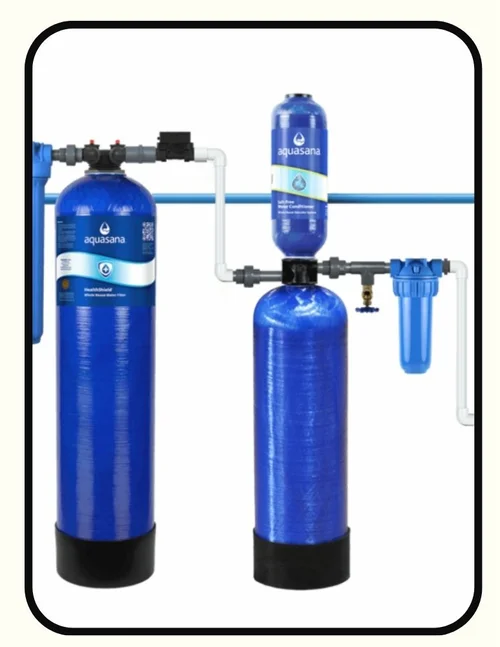 Best Whole House Water Filter: Aquasana HealthShield
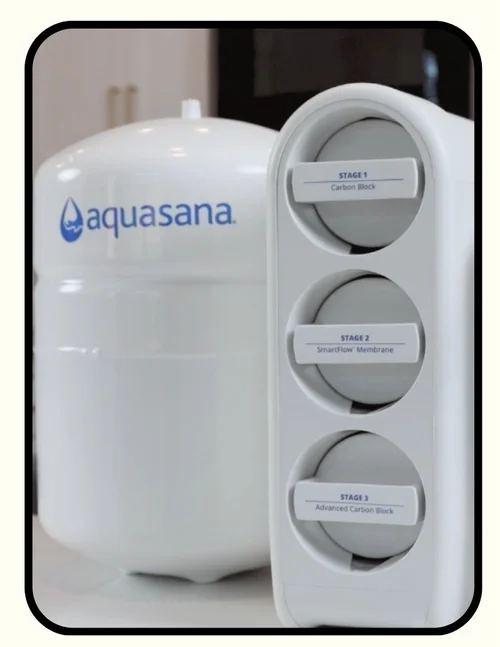
This is the best whole house water filter, and others don’t come close. Most whole house systems have no testing or certifications at all, but Aquasana’s HealthShield is certified (NSF 53) to reduce 30 VOCs, 5 specific PFAS chemicals, BPA and Ibuprofen for 165,000 gallons. Aquasana also tested it themselves for chlorine and chloramine. That part isn’t certified, but it’s backed by a published performance data sheet, which is still more than most brands share. Aquasana’s Rhino is the brand’s more basic whole house filter. It’s tested in-house for chlorine only, and it isn’t certified. HealthShield is the one I’d choose. As always, Aquasana is great for transparency and for systems that actually do what they say.
Product rating
Compare all water filters ↗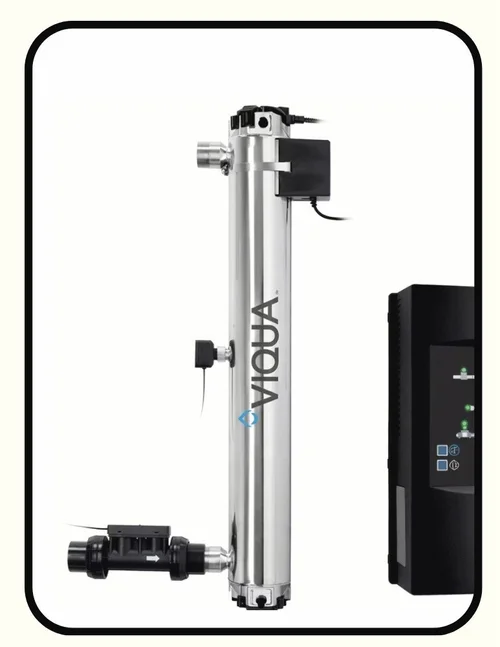 Best Whole House Filter for Well Water: Viqua PRO Series
For wells, look for NSF 55 Class A certification. It verifies that the water filter is actually capable of disinfecting contaminated water, including for Cryptosporidium, Giardia, bacteria and viruses. That’s important for well water, where human-made chemicals are typically much less of an issue than microbes. Viqua’s PRO line is one of the only whole house water filters that has this specific certificate; many other brands (and Viqua’s non-PRO series) have NSF 55 Class B, which only removes non-pathogenic microbes in already-safe water systems. So a Class A makes Viqua the best well water filter. The PRO 10, 20, and 30 models are just different flow rates. Aside from that NSF 55 certification, the rest of their system is not verified to remove anything else; they do have NSF certifications for their components, but that’s not the same (read the Drinking Water Filters FAQ for more). Again, that’s possibly just fine for your well water anyway. Always test yearly!
Product rating
Compare all water filters ↗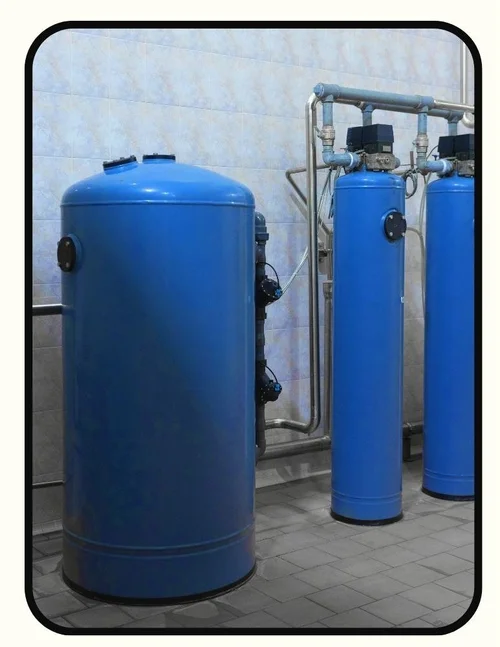
I’d love to separate these out into their own brand or product reviews, but they’d all say the same thing: maybe they work. None are certified to remove any contaminants. Some of these brands say they are, or have long lists of contaminants, but nothing to back those statements up. My question is always, how do they know it works? And if they know, why don’t they share the test results? Getting tested and certified does take a long time and is expensive, especially for a whole house filter, and it’s not required. So some companies trust that you’ll trust them. And, there’s really no downside for many: these untested brands are commonly listed on Best Whole House Water Filter blogs. My question again is, how do the people writing these round ups know they work? These systems are expensive and some offer generous commissions for selling them. But testing and certification can be done, and until I see the data, I can’t recommend any of these for such an expensive, health-focused purchase.
Product rating
Compare all water filters ↗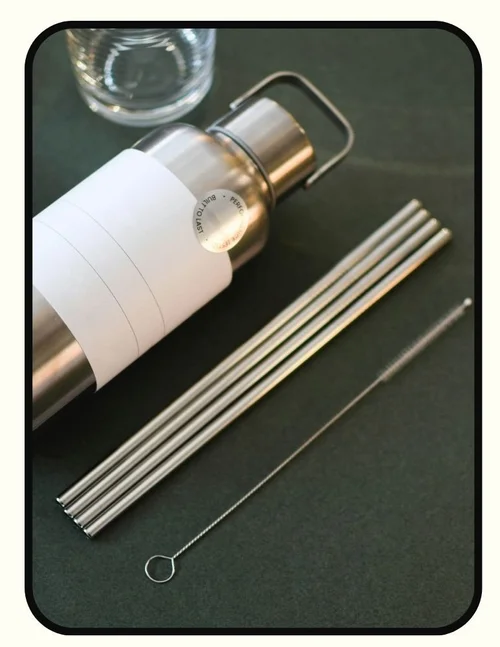 Aqua-Pure Stainless Steel Whole House Water Filters
3M, famous for making PFAS, is also where Aqua-Pure stainless steel whole house water filters come from. Aqua-Pure is now owned by Solventum, a company 3M spun off in 2024. I review these not to be snarky but because, despite the irony, I was hopeful these stainless steel systems would be a low-plastic whole house filter that works well. Unfortunately, like the other brands without public test data or certifications, they don’t have any contaminant-removal certification. The housing and the Aqua-Pure replacement cartridges that fit inside have component-level NSF certification. That only means their materials are safe in contact with drinking water. It doesn’t show the filter removes anything once it’s installed, which is what contaminant-removal testing would reveal. That said, one of Aqua-Pure’s non-stainless whole house systems, the AP903, is NSF 42 certified to reduce chlorine and particulates for 100,000 gallons. None of their other whole house systems have any certifications.
Product rating
Compare all water filters ↗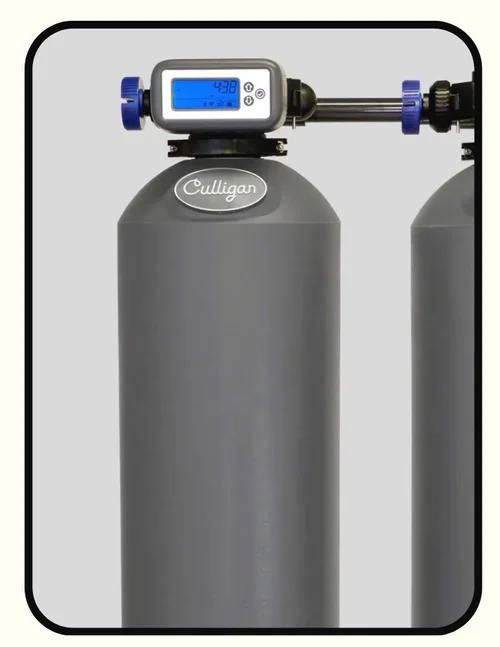 Culligan White Glove Service
Culligan’s whole house water filter systems are sold through local Culligan dealers. You can’t buy them online or install them yourself, and I can’t confirm pricing or installation details, since those go through the dealer. But I’m including them because two of their Aquasential systems carry legit third-party certifications, which is more than most whole house filters. The Aquasential Whole Home PFAS Water Filter is NSF 53 certified for total PFAS reduction, the only whole house filter I’ve found certified for that so far. For chlorine, their Aquasential whole house systems with the Cullar carbon filter have NSF 42 certification for chlorine reduction, which is just one contaminant, but again, better than most. If you’re going to have someone come install your whole house water filter, I’d go with Culligan over the other ones that don’t have any testing or certifications at all.
Product rating
Compare all water filters ↗ Separate Filters
A whole house filter is great if you want to cover every tap, including having purified water for brushing your teeth, showering, and doing your laundry. But much of the water coming into your house goes to toilets, dishwasher, and even the garden, not into your body. If your main goals are cleaner drinking water and better shower and bath water, separate filters can do more for less money. An under-sink filter treats the water you drink and cook with, and that’s where certifications are strongest. The best under-sink filters are verified to remove far more contaminants than any whole house system, and some countertop models are too. A shower filter handles chlorine where you breathe in steam and wash your skin and hair, and while bath filters still have a ways to go, some can reduce chlorine and chloramine. All together they cover the most important exposures, usually for a much lower cost than a whole house system.
Don’t see what you’re looking for? Request a review, or check it yourself in seconds with the Second Opinion Product Checker. Spot something outdated? Let me know and I’ll update it. Join the spam-free newsletter for interesting info and to hear when new reviews are up.
FYI, “non-toxic” has no official definition, so I rate every product with the same method. It’s built on third-party certifications and published test data, not brand claims. For a deeper dive, my free course walks you through it.
Everything on Interior Medicine is educational information, not medical advice. Read my full disclaimer.
More Healthy Design For You

Methodology: How I Evaluate the Best Whole House Water Filters
My Methodology page explains how I evaluate every product on Interior Medicine, including the Health Function Scale I use for each product category. For water filters, those scale requirements come straight from my Drinking Water Filters page.
There, I score every filter on how many contaminant groups it's verified to remove and how strong the evidence is for each one. Each group counts as 1 point when certified by NSF, IAPMO, or WQA, 0.75 when backed by a one-time independent lab test, 0.5 when brand tested, and 0.25 when claimed with no test report. That page has the full scoring method and each filter's complete contaminant list. The Health Function Scale listed below each product on this page is a shorthand for those scores, written out in brief here:
TIER 01
Highest
Water Purification
What qualifies
Verified to remove most of the 19 contaminant groups I track, with nearly every claim certified by NSF, IAPMO, or WQA.Score of 13 or more
Evidence / Info
Certification isn't a one-time test. It includes regular inspections of the manufacturing facility and periodic retesting of the product, which a one-time independent lab test doesn't (NSF).
TIER 02
High
Water Purification
What qualifies
Verified to remove a broad set of contaminant groups, or a longer list backed by a mix of certification and one-time independent lab testing.Score of 7 to 12.99
TIER 03
Moderate
Water Purification
What qualifies
Verified to remove a handful of contaminant groups, or a slightly longer list backed by independent lab testing.Score of 4 to 6.99
TIER 04
Low
Water Purification
What qualifies
Verified to remove two or three contaminant groups, or a few more with weaker evidence, like brand testing or lab testing instead of certification.Score of 2 to 3.99
TIER 05
Lowest
Water Purification
What qualifies
Verified to remove one contaminant group or none, or making claims with little or no evidence behind them. Most whole house filters land here, either certified for a single group, like chlorine or PFAS, or not certified at all.Score under 2
Evidence / Info
UV systems certified to NSF 55 Class A for well water score low on this scale, because it counts cysts but not bacteria or viruses. A low score doesn’t mean they’re the wrong choice for a well.
Compare all the scored water filters and see the contaminants removed in detail on the Drinking Water Filters page.