
Non Toxic Dish Drying Racks
The healthiest non-toxic dish racks are plastic-free, made from stainless steel, solid wood, or diatomaceous earth, all of which dry quickly and resist mold and mildew in one of the wettest spots in your home. Look for steel without PFAS anti-fingerprint or nanoparticle coatings, solid wood instead of resin-bound bamboo, and diatomaceous earth with a disclosed binder. If you prefer silicone, LFGB certification means it was actually leach tested. On a budget, a basic stainless steel rack or affordable silicone mat is a smart trade-off, since a dish rack is a low-exposure item compared to cookware. Every product here is evaluated using my full methodology.
By Dr. Meg Christensen | Physician-founder of Interior Medicine, a non-toxic home resource built on her background in medicine, biochemistry, epidemiology, and clinical research.

Updated September 23, 2026
Non-Toxic Dish Drying Racks with Trays
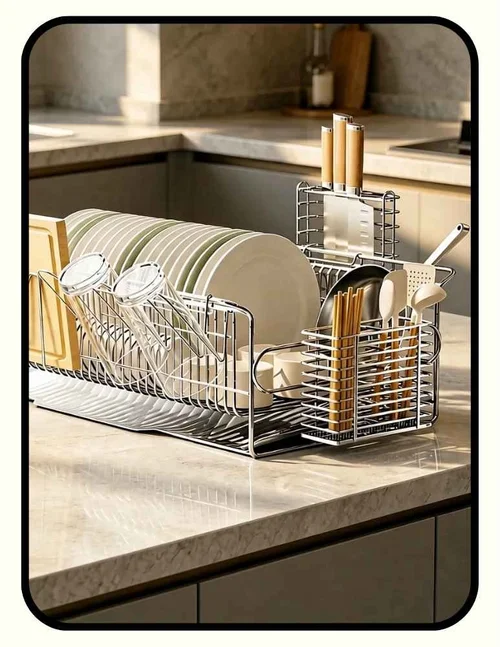 Saint Lawrence 100% Pure Stainless Steel Dish Rack
So many stainless steel or metal dish drying racks start great, but eventually disappoint with added anti-fingerprint PFAS-containing coatings, nanoparticle coatings without good safety profiles, plastic accessories, or poor ratings. It can be surprisingly hard to find one made with just pure stainless steel that works well. But this one from Saint Lawrence is made with just that: 100% polished stainless steel and well rated for durability and practicality. Even the drip tray and caddies are steel instead of plastic and have a slope to drain into your sink instead of pooling water. These also have the advantage of drying quickly with the excellent amount of air flow they offer.
Product rating
See the rating scales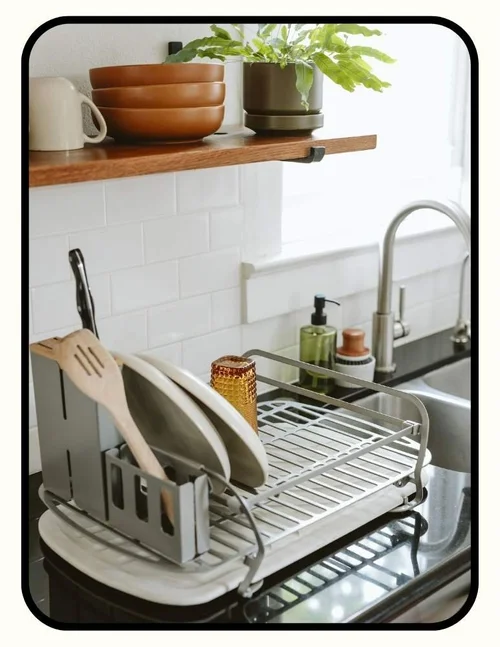 Dorai Plastic-Free Dish Drying Rack
I use Dorai’s plastic-free dish rack made with metal, wood, and diatomaceous earth (DE). While silicone and plastic can be really useful for resisting mold and mildew in a kitchen, this is a really nice plastic-free alternative. The aluminum frame is powder coated; it’s inert from a chemical standpoint and prevents rust, and is something I feel very safe using. The diatomaceous earth pad dries instantly, is formed into shape with paper, and I love not having to wash a damp dish drying towel regularly. After about a year, the DE needs more than cleaning with sandpaper and an afternoon in the sun, so I appreciate that you can buy replacements for just the stone part that slide into the metal frame. The knife holder has wooden slots for drying sharp tools. Sturdy, functional, and very healthy.
Product rating
See the rating scales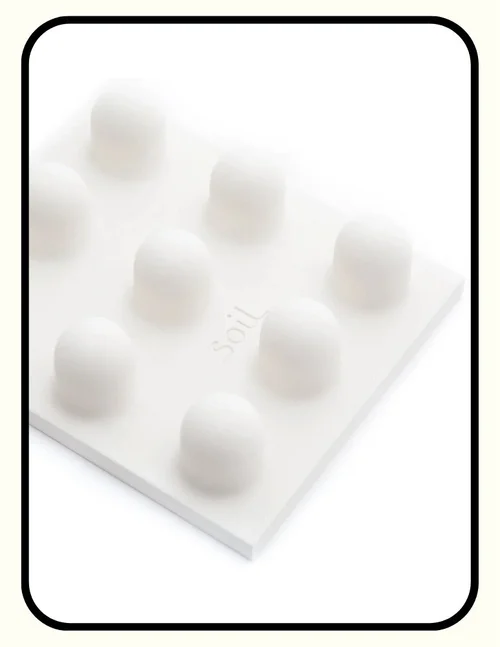 SOIL Non Toxic Bottle Drying Rack
Diatomaceous earth comes from soil, this brand’s namesake. This bottle drying rack is made of diatomaceous earth mixed with vermiculite, a mineral, for near-instant drying. An incredibly simple, healthy, and plastic-free bottle drying setup to complement your regular dish rack.
Product rating
See the rating scales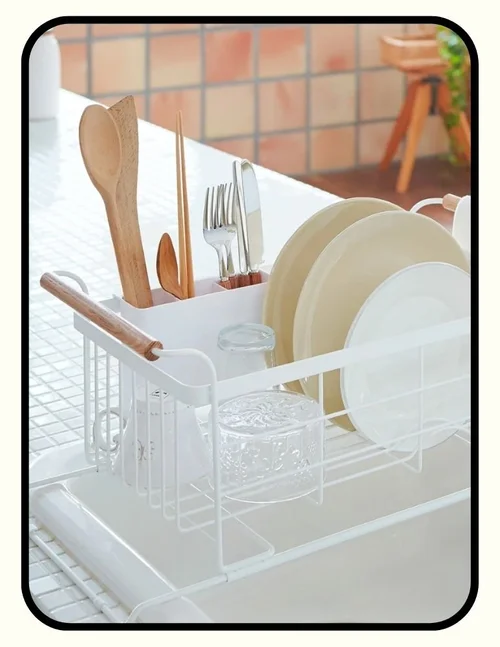 Yamazaki Home Metal and Wood Over Sink Dish Rack
This non-toxic over sink dish drying rack is made with just powder coated steel and ash wood for handles, making this a completely healthy choice. They also offer dish racks with plastic trays or silicone mats that go underneath them if dripping over the sink isn’t your style. In general, while I avoid plastics including silicone, waterproofing is the one exception I make. Plastic is affordable and can sometimes be a healthier choice long term when it prevents mold, mildew, or bacteria buildup. Further, a dish tray represents a very low exposure risk to you. Less plastic is always best, but if you don’t have the budget for premium natural materials, focus on cookware and other high-contact areas of the home, and don’t worry about a dish tray too much. Read more in my Top 5 Places to Start Guide.
Product rating
See the rating scalesNon-Toxic Dish Drying Racks
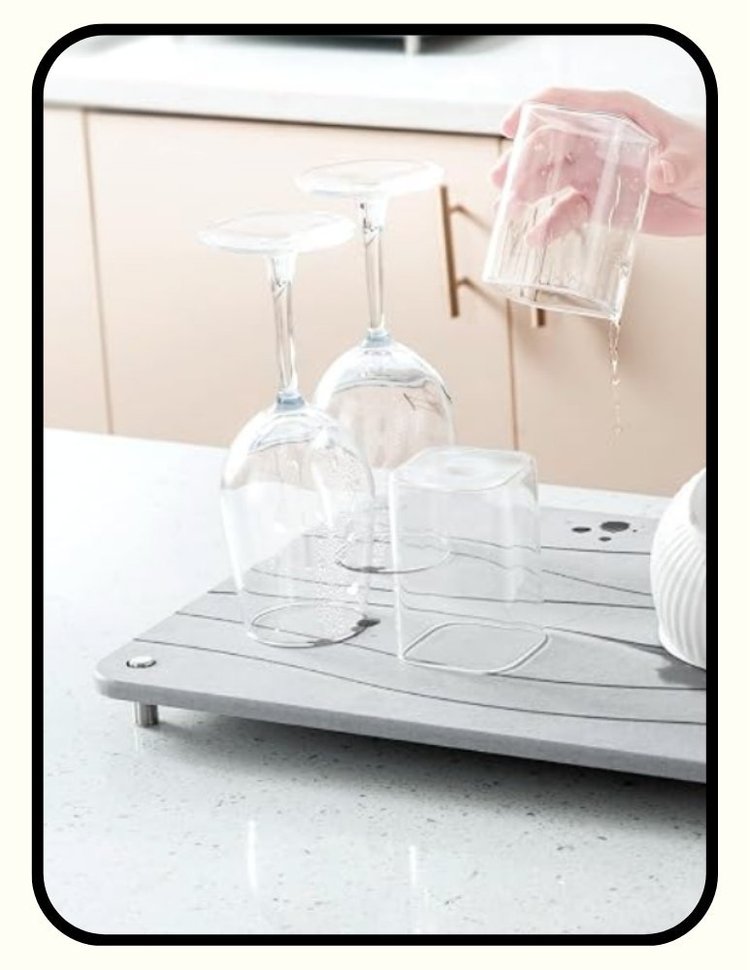 Diatomaceous Earth Dish Drying Mat with Feet
The stone dish drying pad pictured above is made with diatomaceous earth, is affordable, well-rated, and has feet that keep it elevated off the countertop for good air flow. It’s a rare combination in a world of stones that break and ones that sit directly on your countertop. If you pair it with a wood or metal rack it’ll reduce the risk of mold and mildew and having to do extra laundry at the same time. The only reason I rate it second to Dorai (above) is that the vast majority of diatomaceous earth companies don’t disclose what they blend it with to form it into shape. There’s a possibility it’s a polymer or resin and while it could be healthy, like EVA glue is, it’s just a little less transparent. Still overall, a healthy option and regardless of binder, would represent such a low amount of material leaching risk.
Product rating
See the rating scales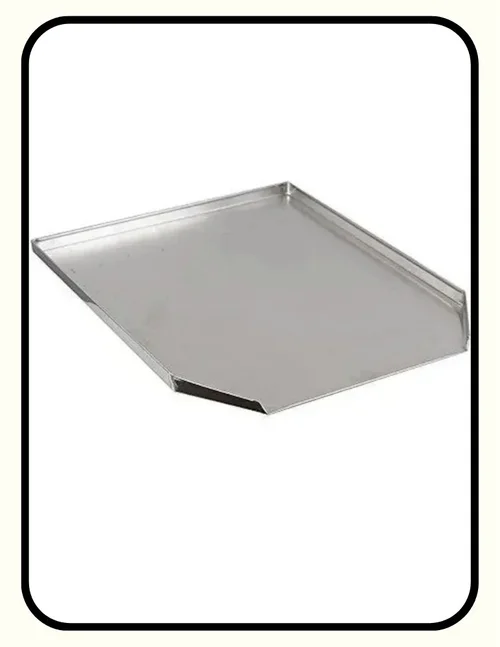 Stainless Steel Dish Drying Drip Tray
True stainless steel drain boards are durable, healthy, and incredibly hard to find. An Amish company makes them, and you can buy one either through Walmart or the Homeplace Market. MUJI used to sell one, too, though it is either discontinued or hard to find anywhere other than eBay. This, paired with a rack, is a more affordable version of the Saint Lawrence setup above.
Product rating
See the rating scales Etsy Solid Wood Dish Drying Rack
Etsy is great for solid wood dish drying racks. Unfinished wood is actually the healthiest, most anti-microbial type, since finishes can reduce some of the bacteria-killing properties that natural wood has as it wicks moisture. Finishes can also introduce unknowns in terms of health, but a lot of people like the way they look, so just ask. There are so many different styles and types on Etsy, I can’t rank them all, but the seller should easily answer specific questions about the materials they use. Can set on any diatomaceous pad or steel drip tray. Read more at the bottom about what to look for in a non-toxic wood dish rack, including why bamboo isn’t always a healthy choice.
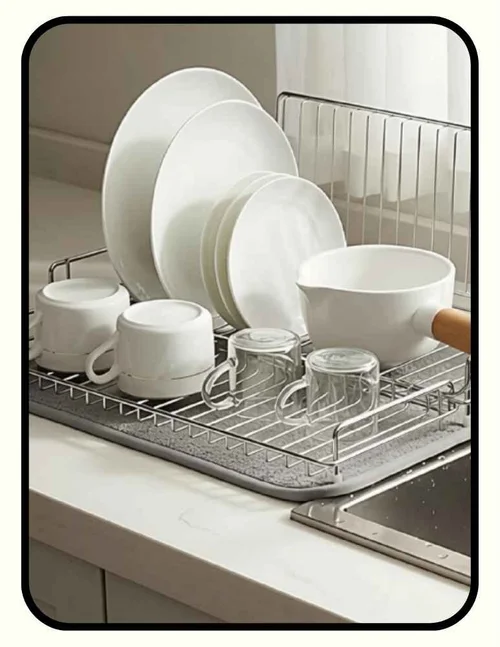 Affordable Stainless Steel Simple Dish Drying Rack
Above is a basic, foldable stainless steel dish drying rack that folds up for storage from Amazon. It doesn’t have a drip tray or utensil holder, but is very affordable, well rated, and made of just 304 stainless steel without coatings. A very healthy and durable choice that you can pair with the drying pad or drip tray of your choice. Likewise, Target also has a collection of powder-coated stainless steel dish racks; again without healthy utensil holders or drip trays, but are another good option. Read more below about what to look for in a truly non-toxic stainless steel dish rack.
Product rating
See the rating scalesDish Drying Mats & Drainage Boards
Less Toxic Silicone Dish Drying Racks
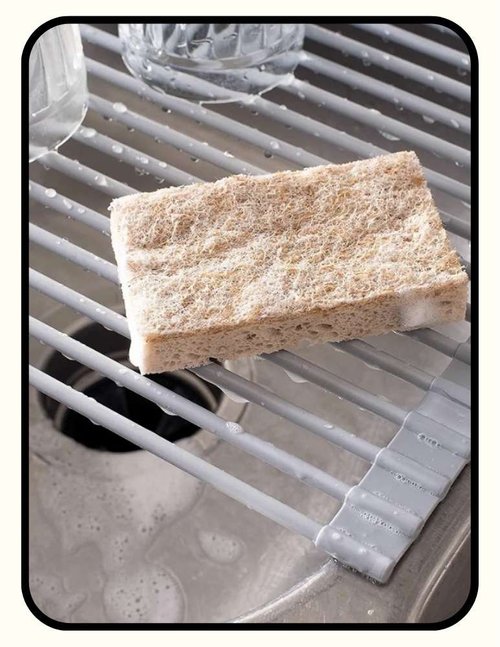 LFGB Certified Silicone Over Sink Dish Drying Rack
“Platinum cured,” “medical grade” and “food safe” don’t mean a lot for silicone: none of these terms are regulated, and with silicone, it’s important, because like any other plastic, it’s made with additives and can leach them, including siloxanes. This is less of an issue for dish racks, where they’ll just have cold or warm water dripped up on them, rather than actively leaching into food that’s being cooked or baked. Still, material transparency and third party certifications are an important part of understanding what we bring into our homes, and a big part of Interior Medicine. Di Oro is the only brand I know of that legit has LFGB certified silicone, which means it’s undergone testing for leaching and adheres to strict EU standards. Read more in my Plastic Guide if you’re curious. Otherwise, this is the safest silicone drying rack available.
Product rating
See the rating scales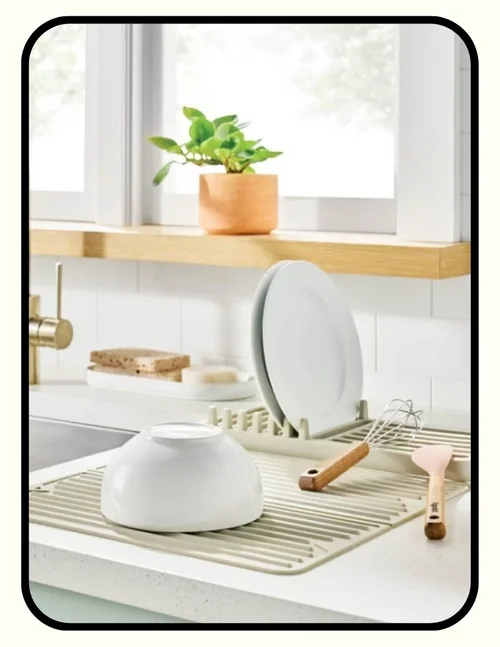 Target Affordable Silicone Dish Drying Mat
This silicone drying mat (with optional polypropylene plastic rack) from Target is only $12 and is dishwasher safe. If you didn’t read the Yamazaki Home review or Di Oro reviews, the short version is: plastic and silicone are affordable and can be a healthier choice long term if they’re used in situations where they prevent mold, mildew, and bacterial build-up, especially in low-touch, low-leach contexts like a dish rack. I think this can be a cost-effective choice that prevents a musty microfiber foam dish drying mat and looks a little nicer than a similarly priced all-plastic rack that you’d be tempted to toss.
Don’t see what you’re looking for? Request a review, or check it yourself in seconds with the Second Opinion Product Checker. Spot something outdated? Let me know and I’ll update it. Join the spam-free newsletter for interesting info and to hear when new reviews are up.
FYI, “non-toxic” has no official definition, so I rate every product with the same method. It’s built on third-party certifications and published test data, not brand claims. For a deeper dive, my free course walks you through it.
Everything on Interior Medicine is educational information, not medical advice. Read my full disclaimer.
More Healthy Design For You

How Interior Medicine Rates Dish Racks
"Non-toxic" has no legal or scientific definition, so it's become a marketing word. I still think a healthier home is worth working toward, and the way to get there is with a consistent system. Every product on Interior Medicine is rated with the same method, based on its materials, ingredients, and third-party certifications. This makes it easier to compare products fairly, spot healthwashing, and make informed decisions.
The rating card under each product shows its Material Health. Every material is rated on its own scale, from Healthiest to Harmful, and each brand is rated on the healthiest option it offers. Differences between models are noted in the description.
The guides show what qualifies for each tier, what to look for, and what to ask a brand.
More About Healthy Dish Racks
What are the best plastic-free dish rack materials?
Stainless Steel: stainless steel is the most durable, safe, and naturally mildew, mold, and rust-resistant material for a dish rack. It’s the best choice for most kitchens, especially any that struggle with humidity.
Diatomaceous Earth / Diatomite: diatomaceous earth (DE), also called diatomite, is a naturally occurring powder mostly made of the element silica, and is very safe for people. It has millions of microscopic pores that absorb and release water nearly instantaneously, so it can work really well as a drying surface.
Solid Wood: solid wood is a great material for a dish drying rack, partly because it’s safe and non-toxic for people, and partly because of its inherent anti-bacterial properties. Studies show that bacteria die quickly when exposed to wood in the kitchen.
LFGB-Certified Silicone: silicone is technically a plastic, despite what brands say, but it can be a safer plastic that leaches fewer chemical additives, especially if it has LFGB certification, which means it was actually leach tested. Terms like medical-grade, food-grade, and platinum-cured don’t actually mean much without testing.
What to look for in a stainless steel dish rack
Stainless steel dish racks are very healthy, incredibly durable, and inherently rust-resistant. However, they’re sometimes finished with coatings, and it’s important to understand how healthy those are:
Uncoated or polished: this is the most straightforward, healthy kind of stainless steel.
Powder-coated: safe. Powder coating uses no solvents during application, doesn’t off-gas like regular paint or plastic coatings, cures to an inert finish that’s chip-resistant, and doesn’t even require a Prop 65 warning in the factories. It’s a good way to make metal more durable and attractive.
Anti-fingerprint coatings: this is a really popular finish for stainless steel, including for stainless steel dish racks, but I’d recommend avoiding it unless the brand explicitly states it is completely PFAS-free. Most anti-fingerprint coatings are a thin layer of PFAS, which resist your hand’s natural oils. There’s no need to bring that into your kitchen.
Anti-microbial nanoparticle coatings: testing shows that soap and water is more effective than antimicrobial coatings under realistic conditions and that the coatings show limited or no efficacy against common bacteria and viruses. Nanoparticles are relatively new to us and behave in different ways than their normal-sized counterparts. Animal studies show that they may not be safe, so I would recommend waiting to purchase products coated in these until we learn more.
What to look for in a diatomaceous earth dish rack
Diatomaceous Earth (DE) can be a great material for dish racks because it’s very safe and dries instantly. That said, there are a three additional things to consider when shopping for one:
What the DE is held together with: diatomaceous earth is naturally a powder that doesn’t hold together on it’s own. It has to be mixed with something and compressed into a rigid shape. Dorai uses paper, and Soil uses vermiculite for this. Other brands use materials like different mineral blends, EVA glue, or polymer resins, but don’t state what they use. These may be safe in a kitchen context where your plates are coming into short, light contact with the material, representing low potential for leaching. But for transparency reasons, this kind of disclosure may or may not be important to you.
Air flow: DE, as fast as it can potentially dry, still needs some air flow to resist mildew or molding like any material. Look for a rack that has legs on its underside, or consider adding bumpers to the bottom to improve ventilation. If you live in a dry climate or have a sunny south facing window that allows UV rays to fall onto your dish rack, that could be sufficient, too.
Breakage: reputable brands with good durability ratings offer diatomaceous earth stones that will not break. However, inexpensive or cheaply made ones are sometimes bonded together with brittle materials, causing the DE dish rack to break early. Pay careful attention to the binders used or the reviews about durability.
What to look for in a wood dish drying rack
Solid wood is a great material for a dish drying rack because it is safe for people, but there are three things to consider when looking for a non-toxic wood dish rack:
Unfinished: Unfinished wood is best at absorbing and killing bacteria. It also has the advantage of not introducing solvent-based finishes or polyurethane coatings onto an otherwise healthy material.
Safe Wood Finishes: not everyone likes the look or feel of unfinished wood. Look instead for safe finishes, like 100% plant-based hardwaxes, beeswax, tung oil, or food grade linseed oil. Look for full ingredient disclosure, as some are made with catalysts, solvents, and pigments you may not want to introduce into your kitchen. Learn more in my Wood Guide.
Solid wood: while bamboo is a nice idea, it’s not actually solid wood. It’s a grass, and it is often ground up and reformed with resins, or strips of it are held together with glues. After that, they’re typically finished, sometimes with a shiny, water-resistant polyurethane shellac. Look instead for solid woods like mahogany, teak, walnut, and cherry.
Does a healthy dish rack matter?
Yes, a healthy dish rack matters for three reasons.
Microbial contamination: like your bath mat, dish racks are loaded with bacteria and can easily harbor mold. The kitchen is one of the warmest, wettest places in the house, which is why dish pads tend to smell.
Off-gassing VOCs: a dish rack made entirely of plastic and the additives mixed into it has the potential to off-gas VOCs, making a product that otherwise you don’t come into close contact with, a direct exposure for your airways. Likewise, wood coated in a solvent-based finish will off-gas as well.
Skin contact: in general, you likely don’t touch your dish rack directly very often, especially not the tray portion. However, some stainless steel dish racks are coated with PFAS-containing anti-fingerprint finishes or antimicrobial nanoparticle finishes with limited safety data.
Choosing a dish rack made with safe materials is an easy way to reduce your exposure to mold, bacteria, VOCs, and under-studied finishes.